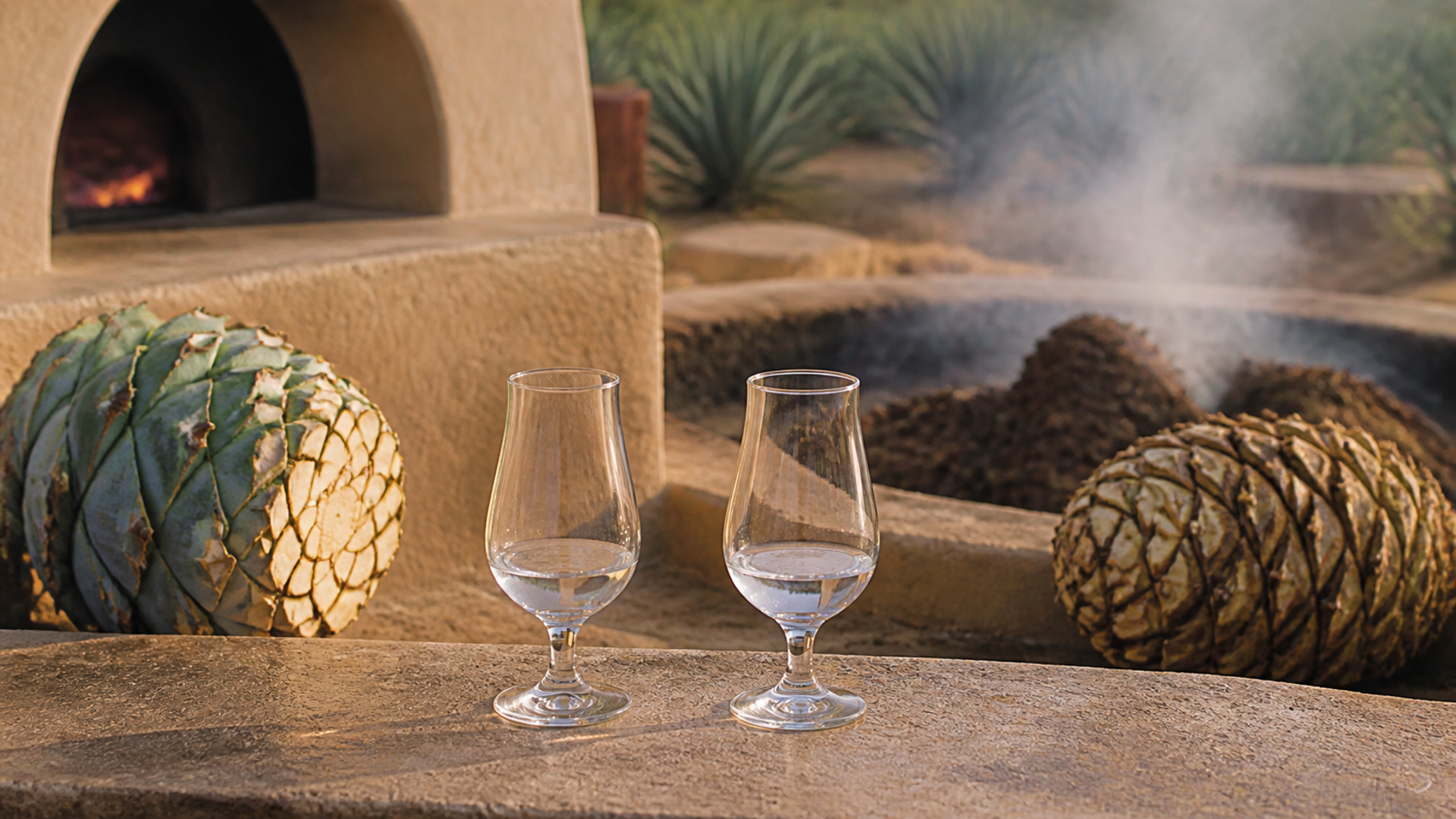
Tequila and mezcal are both Mexican agave spirits, but they are not interchangeable style labels. Each has a protected production framework, geographic scope and labelling rules. Tequila is associated with blue Weber agave and regulated regions; mezcal can involve several permitted agave species and diverse regional practices. Roasting method can influence aroma, yet describing all mezcal as smoky hides fermentation, still type, proof, maturation and producer decisions. The bottle's denomination, producer, batch and official label matter more than a generic hierarchy.
Read the protected identity before the tasting note
Choose tequila when the desired profile, cocktail structure or provenance matches a verified tequila bottling. Choose mezcal when agave variety, regional production and the individual producer's character are central. Choose by the exact bottle when category stereotypes begin to decide for you: compare disclosure, alcohol strength, batch information and taste under equal conditions before paying for age or scarcity.
| Decision factor | Tequila | Mezcal | Choose by the exact bottle, not category |
|---|---|---|---|
| Protected identity | Tequila denomination and authorised origin | Mezcal denomination and authorised origin | Verify the label and producer record |
| Agave | Primarily blue Weber agave under tequila rules | Several permitted agave species may be used | Do not infer flavour from species alone |
| Cooking | Ovens or autoclaves can shape conversion | Earthen roasting is common but not universal | Ask for the exact production method |
| Fermentation and still | Industrial and artisanal ranges both exist | Vessel, ambient culture and still vary widely | Producer detail outranks category romance |
| Age statement | Blanco, reposado and añejo indicate maturation classes | Joven and aged styles require label context | More wood is not automatically more quality |
| Service | Cocktail or neat service depends on bottle | Neat tasting can reveal batch character | Serve responsibly and compare equal measures |
This tequila vs mezcal matrix is the article's working value object. Read the tequila vs mezcal rows together: the decisive failure mode depends on this topic's evidence, operating context and reader objective.
Agave and production shape more than smoke
Evidence 1. The U.S. Alcohol and Tobacco Tax and Trade Bureau regulates distilled-spirit labelling in the U.S. market, while Mexican denominations and standards govern identity at source.
Evidence 2. The Consejo Regulador del Tequila provides authorised tequila-origin and certification context; a luxury bottle shape does not establish compliance.
Evidence 3. Agave species, maturity, cooking, fermentation, distillation and proof all affect flavour, so smoke is only one possible mezcal cue.
Evidence 4. Age categories describe time and vessel conditions within the relevant rules; they do not guarantee balance, complexity or authenticity.
Reader-visible sources checked for this article:
ttb.gov — reader-visible current or official evidence
crt.org.mx — reader-visible current or official evidence
For tequila vs mezcal, these sources establish only the claims inside their documented scope. Recheck every changeable specification, availability condition, price, policy or service term in the relevant market before acting.
Taste at equal strength and temperature
For protected identity, the first route works when tequila denomination and authorised origin; the second requires mezcal denomination and authorised origin. The control for the third is verify the label and producer record. Verify this row against the exact product, property, account or environment before it can reverse the decision.
The agave row exposes a practical boundary. Route one assumes primarily blue Weber agave under tequila rules, while route two is defensible only when several permitted agave species may be used. Route three depends on do not infer flavour from species alone. If that evidence is absent, keep the more reversible option.
Read cooking as a stop/go test: ovens or autoclaves can shape conversion supports the first option; earthen roasting is common but not universal supports the second; and ask for the exact production method supports the third. Record which source proves the condition and when it was checked.
A buyer can resolve fermentation and still without starting from a brand preference. Ask whether industrial and artisanal ranges both exist; compare that with whether vessel, ambient culture and still vary widely; then use producer detail outranks category romance as the third route's safeguard. An unknown condition stays unknown.
On age statement, popularity is not enough. The evidence for option one is that blanco, reposado and añejo indicate maturation classes. Option two means joven and aged styles require label context. Option three is rational where more wood is not automatically more quality. Recheck any changeable term immediately before commitment.
The decision changes at service. Choose the first path only if cocktail or neat service depends on bottle; move to the second when neat tasting can reveal batch character; use the third when serve responsibly and compare equal measures. Save the downside that would make this row fail.
Facts that would reverse the current choice
Reversal control 1 — Protected identity. Before choosing Tequila, write down how the decision changes if “Tequila denomination and authorised origin” proves false. Do the same for Mezcal and “Mezcal denomination and authorised origin”. Keep the Choose by the exact bottle, not category route available until “Verify the label and producer record” is verified. This control belongs to tequila vs mezcal; update it from the cited source or exact supplier rather than copying a generic checklist.
Reversal control 2 — Agave. Before choosing Tequila, write down how the decision changes if “Primarily blue Weber agave under tequila rules” proves false. Do the same for Mezcal and “Several permitted agave species may be used”. Keep the Choose by the exact bottle, not category route available until “Do not infer flavour from species alone” is verified. This control belongs to tequila vs mezcal; update it from the cited source or exact supplier rather than copying a generic checklist.
Reversal control 3 — Cooking. Before choosing Tequila, write down how the decision changes if “Ovens or autoclaves can shape conversion” proves false. Do the same for Mezcal and “Earthen roasting is common but not universal”. Keep the Choose by the exact bottle, not category route available until “Ask for the exact production method” is verified. This control belongs to tequila vs mezcal; update it from the cited source or exact supplier rather than copying a generic checklist.
Reversal control 4 — Fermentation and still. Before choosing Tequila, write down how the decision changes if “Industrial and artisanal ranges both exist” proves false. Do the same for Mezcal and “Vessel, ambient culture and still vary widely”. Keep the Choose by the exact bottle, not category route available until “Producer detail outranks category romance” is verified. This control belongs to tequila vs mezcal; update it from the cited source or exact supplier rather than copying a generic checklist.
Reversal control 5 — Age statement. Before choosing Tequila, write down how the decision changes if “Blanco, reposado and añejo indicate maturation classes” proves false. Do the same for Mezcal and “Joven and aged styles require label context”. Keep the Choose by the exact bottle, not category route available until “More wood is not automatically more quality” is verified. This control belongs to tequila vs mezcal; update it from the cited source or exact supplier rather than copying a generic checklist.
Reversal control 6 — Service. Before choosing Tequila, write down how the decision changes if “Cocktail or neat service depends on bottle” proves false. Do the same for Mezcal and “Neat tasting can reveal batch character”. Keep the Choose by the exact bottle, not category route available until “Serve responsibly and compare equal measures” is verified. This control belongs to tequila vs mezcal; update it from the cited source or exact supplier rather than copying a generic checklist.
Decode the label
Record denomination, category, class, alcohol strength, producer identifier, lot and claimed origin. Reconcile the physical label with the relevant regulator or certification source where possible. For this tequila versus mezcal decision, record the exact room, garment, vehicle, drink, device or configuration and the time of the check. Separate measured behaviour from category shorthand, then repeat the comparison in the intended setting rather than an ideal demonstration. If identity or origin cannot be resolved, pause before treating the bottle as collectible. Preserve the evidence that would reverse the choice: a material change in fit, specification, maintenance, safety, cost or environment must reopen the decision rather than inherit an old conclusion.
Trace production claims
Ask which agave, cooking vessel, fermentation material, still and maturation vessel were used. Separate producer-documented facts from retailer storytelling and influencer shorthand. For this tequila versus mezcal decision, record the exact room, garment, vehicle, drink, device or configuration and the time of the check. Separate measured behaviour from category shorthand, then repeat the comparison in the intended setting rather than an ideal demonstration. If the production claim lacks a direct source, remove it from the value decision. Preserve the evidence that would reverse the choice: a material change in fit, specification, maintenance, safety, cost or environment must reopen the decision rather than inherit an old conclusion.
Run a blind tasting
Use equal clean glasses, equal measures and the same temperature, then randomise service order. Score aroma, texture, sweetness, acidity, alcohol integration, finish and dilution response. For this tequila versus mezcal decision, record the exact room, garment, vehicle, drink, device or configuration and the time of the check. Separate measured behaviour from category shorthand, then repeat the comparison in the intended setting rather than an ideal demonstration. If the preferred category changes blind, bottle quality was more important than label expectation. Preserve the evidence that would reverse the choice: a material change in fit, specification, maintenance, safety, cost or environment must reopen the decision rather than inherit an old conclusion.
Match the occasion
Test the spirit neat, with water and in the intended cocktail using a controlled recipe. Include guest familiarity, food, service pace and responsible serving size. For this tequila versus mezcal decision, record the exact room, garment, vehicle, drink, device or configuration and the time of the check. Separate measured behaviour from category shorthand, then repeat the comparison in the intended setting rather than an ideal demonstration. If a subtle bottle disappears in the intended drink, allocate budget differently. Preserve the evidence that would reverse the choice: a material change in fit, specification, maintenance, safety, cost or environment must reopen the decision rather than inherit an old conclusion.
Protect storage and provenance
Keep bottles upright, sealed, away from heat and direct light and preserve purchase documentation. Track opening date and fill level for long-kept bottles. For this tequila versus mezcal decision, record the exact room, garment, vehicle, drink, device or configuration and the time of the check. Separate measured behaviour from category shorthand, then repeat the comparison in the intended setting rather than an ideal demonstration. If storage or resale rules are uncertain, buy for drinking rather than promised investment. Preserve the evidence that would reverse the choice: a material change in fit, specification, maintenance, safety, cost or environment must reopen the decision rather than inherit an old conclusion.
Four occasions, four answers
Highball or bright citrus cocktail
A clean verified tequila can provide a predictable structure. Define the fact that would reverse this recommendation before committing.
Slow comparative tasting
A transparent mezcal producer may offer more production detail to explore. Define the fact that would reverse this recommendation before committing.
Prestige gift
Clear identity, provenance and recipient taste outrank decorative packaging. Define the fact that would reverse this recommendation before committing.
First agave-spirit purchase
Small pours across several bottles teach more than one expensive assumption. Define the fact that would reverse this recommendation before committing.
Action checklist
Read denomination.
Record producer ID.
Check agave disclosure.
Verify origin.
Ask cooking method.
Ask fermentation vessel.
Compare proof.
Taste blind.
Test intended serve.
Store upright.
Keep receipt.
Serve responsibly.
Continue the decision
The linked VERTU articles expand adjacent parts of the tequila vs mezcal decision. They do not substitute for the external evidence above.
The tequila-versus-mezcal verdict
Choose tequila when the desired profile, cocktail structure or provenance matches a verified tequila bottling. Choose mezcal when agave variety, regional production and the individual producer's character are central. Choose by the exact bottle when category stereotypes begin to decide for you: compare disclosure, alcohol strength, batch information and taste under equal conditions before paying for age or scarcity.
Keep the tequila vs mezcal decision reversible until its material cost, safety, access, privacy and compatibility facts are verified. Unknown evidence stays unknown; it is never silently scored as favourable.