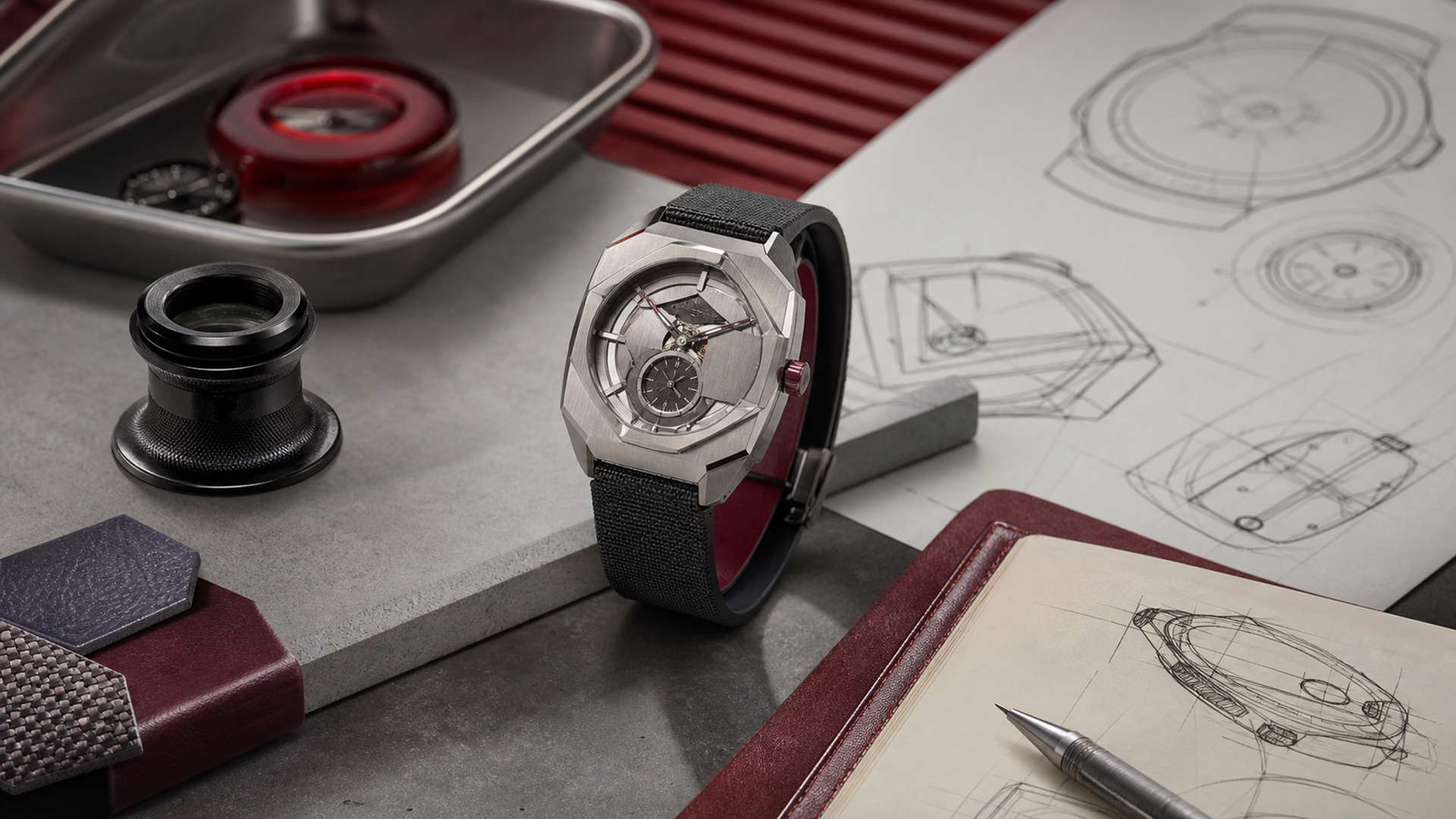
Off-White launched TIME, its first watch collection, on 7 July 2026. The debut brings a recognisable fashion label into a category where design, mechanics, provenance and long-term service all compete for attention. The collector's question is not whether a fashion house is “allowed” to make a watch. It is whether the object offers enough substance to remain interesting after the launch moment passes.
The answer cannot be reduced to logo versus movement. Some fashion-led watches become culturally important; many technically accomplished watches never develop a collector audience. TIME should be judged through several separate lenses.
What Off-White has launched
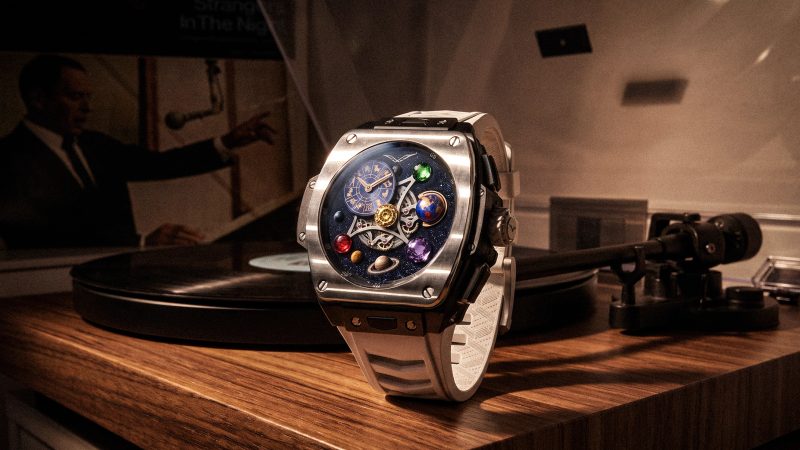
The collection comprises five models and introduces geometric cases, industrial details and the brand's design language to the wrist. Off-White's current watch collection page is the authoritative place to confirm available models and regional commerce information. Launch reporting says the range is intended to expand through colourways, limited editions and related collectibles.
That roadmap can create excitement, but future scarcity should not be priced in before editions, quantities and distribution are documented. A first collection is historically notable; it is not automatically rare.
The fashion-watch collector scorecard
| Dimension | What to verify | Strong signal | Weak signal |
|---|---|---|---|
| Design authorship | Named creative direction and coherent forms | Recognisable design beyond a logo | Existing generic case with branding added |
| Movement | Calibre, supplier, service route and accuracy specification | Transparent, serviceable architecture | No movement or maintenance information |
| Materials | Case, crystal, strap and finishing | Specific materials and visible finishing logic | Vague “premium” language |
| Production | Edition size and model continuity | Documented quantities or a clear core line | Artificial urgency without evidence |
| Cultural relevance | Link to the house's design history | Watch advances a known visual language | Trend imitation disconnected from the brand |
| Ownership | Warranty, water resistance and parts support | Clear after-sales path | Uncertain repair or replacement strategy |
| Market | Completed transactions over time | Stable demand across more than one channel | Launch-week asking prices only |
The scorecard prevents one impressive dimension from hiding another weak one. A bold case can be worth owning as design, even if the movement is conventional. It should then be priced and described honestly as a design-led object.
Fashion relevance and horological substance are different axes
A traditional collector may begin with calibre architecture, hand finishing and manufacture history. A fashion collector may begin with authorship, silhouette and cultural context. Neither approach is inherently superior, but they produce different reasons to buy.
TIME's strongest initial proposition is design relevance: a first expression of Off-White's visual world in watch form. Its horological proposition depends on information a buyer should verify for the exact model—movement, crystal, water resistance, case finish, strap construction, warranty and service.
If those details are difficult to obtain, treat that uncertainty as part of the ownership cost. A watch can survive a season aesthetically and still become inconvenient when it needs a crown, crystal or movement service.
Do not confuse limited availability with collectability
Collectability usually emerges from a combination of documented scarcity, design importance, condition, provenance and continuing demand. A product being sold out can reflect a small first delivery rather than a durable secondary market.
Use three evidence windows:
Launch window: What did the brand actually release, at what price and through which channels?
Ownership window: How does the watch wear, age and receive service over the first year?
Market window: Do completed resale transactions show repeated demand after initial publicity?
Avoid using social-media listings as transaction evidence. A high asking price proves only that someone asked.
Who might reasonably buy the first collection?
The Off-White archive collector
For someone building a documented archive of the house, a first watch category can matter regardless of conventional watch-market performance. Preserve the box, receipt, model information and launch material.
The design collector
If the case and dial resolve into a distinctive object, the watch may earn a place alongside industrial design rather than traditional complications. Try it on. Geometric forms can look compelling in photographs and behave very differently on the wrist.
The watch-first buyer
Compare the exact specification and service proposition with established watches at the same price. Do not give up durability, fit or maintenance clarity merely for novelty.
The resale speculator
This is the weakest reason to buy. There is not enough completed-market evidence at launch to support a confident investment thesis. Treat any future value as uncertain.
An in-person inspection checklist
Read the exact model and reference information.
Inspect dial printing, hand alignment and case transitions under neutral light.
Check the crown, clasp and strap attachment for tactile consistency.
Confirm the movement type and expected service route.
Ask who supplies replacement crystals, straps and crowns.
Test the watch on the wrist from several angles.
Record warranty terms and water-resistance guidance.
Photograph the complete delivery set for provenance.
For a broader collection, balance cultural experiments with durable foundations. Our entry-level luxury watch guide shows how established collector criteria can anchor a newer design-led purchase. TIME is most naturally evaluated as a character piece until longer-term evidence develops.
What would make TIME enduring?
Off-White does not need to imitate a century-old manufacture. It needs consistency: a design language that develops rather than resets, transparent specifications, credible service and enough restraint to make special editions genuinely special.
Collectors should watch whether the five-model debut becomes a coherent family. Repeated case architecture, thoughtful material changes and documented collaborations can build lineage. Endless colour drops without technical or design development can dilute it.
Movement transparency matters even for a design-led watch
A movement does not need to be made in-house to be credible. It needs to be identified, appropriately specified and serviceable. Ask whether it is quartz or mechanical, who can service it, what battery or maintenance interval is expected and whether replacement parts will remain available.
The answer changes how the watch should be collected. A reliable standard movement can be a rational choice for a fashion object because service is simpler. A proprietary module may be more distinctive but create long-term parts risk. Neither is automatically better; opacity is the problem.
Water resistance should also be treated as an operating limit, not a permanent property. Seals age, crowns can be left open and leather straps have their own exposure limits. Follow the exact model instructions and test resistance after service when water use matters.
Document the first edition properly
Early collections are easiest to misunderstand later because names, colourways and distribution evolve. Keep the reference, original product URL, purchase date, retailer, receipt, warranty document, box and tags together. Save a PDF or screenshot of the official specification without relying on a resale listing.
If later limited editions appear, compare documented production quantity and physical changes. A new colour on the same platform is not equivalent to a new case, movement or collaboration. Collectors benefit from describing those differences precisely rather than allowing every short release to become “rare”.
The practical verdict
Off-White TIME is already relevant as the label's first move into watches. Whether it becomes collectible horology will take longer to establish. Buy it for a specific design, a documented place in an Off-White archive or the pleasure of wearing it—not because launch coverage predicts scarcity.
The strongest collector position is patient curiosity: verify the object, preserve the evidence and let ownership quality—not release-week noise—decide its importance.