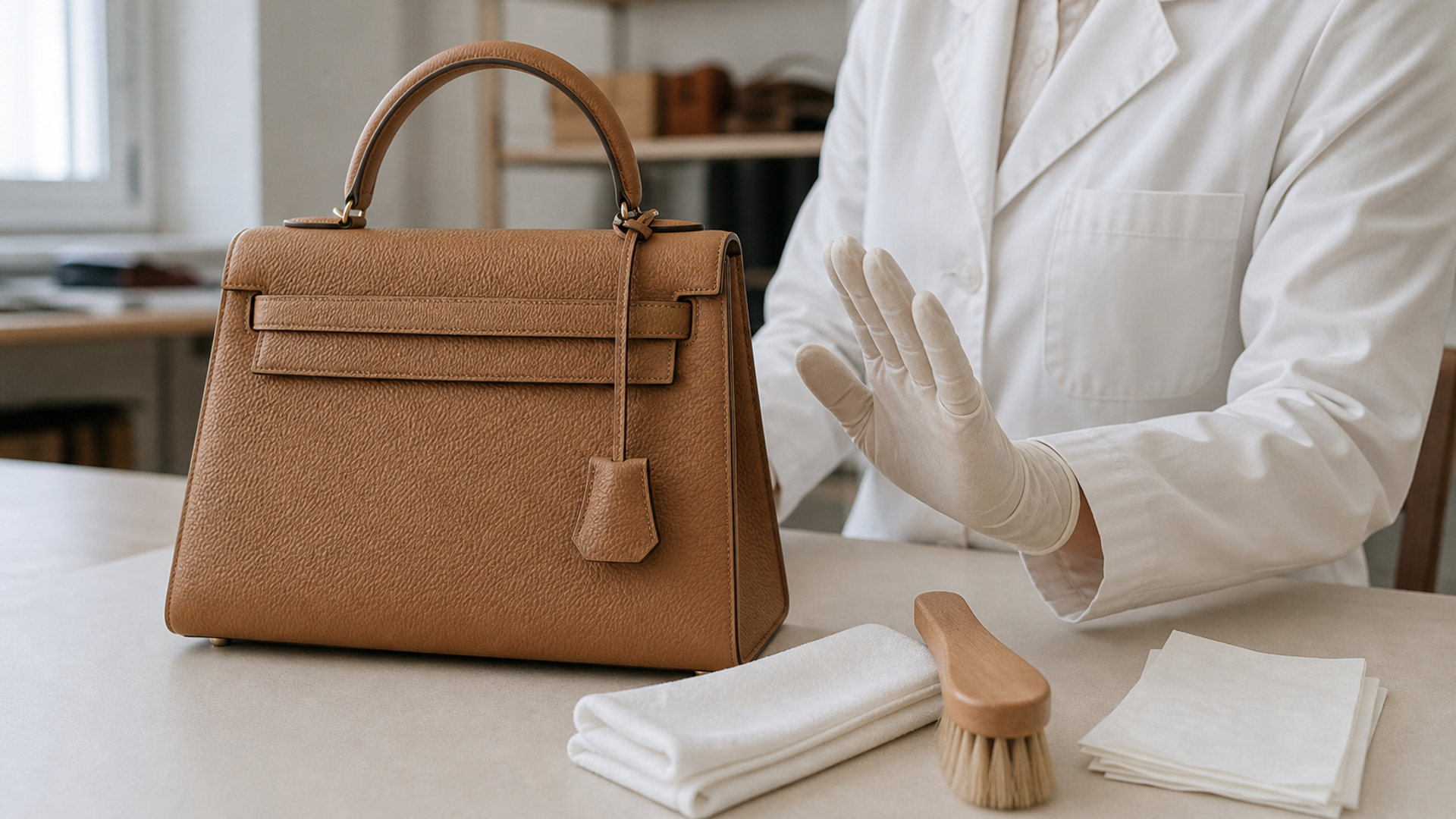
The safest way to clean a leather handbag is to identify the leather and finish, remove loose dust with a soft dry cloth, test any treatment in a hidden area and stop before moisture or friction changes the surface. For a valuable, pale, exotic, suede, nubuck, patent, metallic or heavily stained bag, professional assessment is usually safer than a general household method.
Leather is not one washable material. Full-grain calfskin, corrected-grain leather, vegetable-tanned leather, suede, patent leather and coated canvas respond differently to water, oils, alcohol and abrasion. Even two bags from the same house can require different care. The maker’s current instructions and a qualified leather specialist take priority over universal “hacks”.
First identify the surface
| Surface | Typical visual clues | Main cleaning risk | Safe first action |
|---|---|---|---|
| Smooth finished leather | Even surface, light sheen, some resistance to a dry wipe | Removing finish or creating tide marks | Soft dry microfibre cloth |
| Aniline or minimally finished leather | Natural pores and colour variation, readily darkens with moisture | Permanent darkening, staining and uneven absorption | Dry dusting; specialist advice for marks |
| Suede or nubuck | Velvety raised nap | Flattening, water rings and colour loss | Appropriate suede brush used gently |
| Patent leather | Glossy coated surface | Dye transfer, clouding and cracking | Clean dry cloth; isolate from coloured materials |
| Metallic or pearlescent finish | Reflective surface treatment | Finish lifting or dulling | No rubbing; maker-approved care only |
| Exotic skin | Distinct scales or texture | Lifting scales, drying and finish damage | Dust in the direction of scales; specialist care |
| Coated canvas with leather trim | Printed or coated body plus leather components | Product safe for one material damaging the other | Treat each component separately |
If the material cannot be identified from the invoice, care booklet or maker’s site, do not experiment to find out. A hidden test reduces risk but cannot predict every long-term reaction.
Build a safe cleaning area
Empty the bag completely and photograph its condition. Remove detachable straps and accessories only if the maker’s design allows it. Support the bag with clean, colourfast tissue or an undyed soft cloth so that seams are not under tension. Work in neutral daylight away from direct sun, heaters, hair dryers and open windows carrying dust.
Wash and dry your hands, remove rings and keep food, make-up and pens away from the table. Use white or colourfast cloths so that dye transfer is visible. Prepare a separate clean cloth for each product; mixing residues can create unexpected reactions.
Read the manufacturer’s instructions before touching the surface. Hermès, for example, advises protecting leather from humidity, heat, light, liquids and unsuitable products and recommends professional attention through its boutiques. Mulberry publishes care guidance and repair routes for its products. These instructions are conservative because the cost of over-cleaning can exceed the cost of leaving a small mark.
Step 1: remove dry dust
Start with the least invasive action. Use a clean, soft, dry cloth and light pressure on smooth leather. Move across panels rather than rubbing one small spot aggressively. Dust accumulates around piping, handles, seams and hardware; use a very soft brush only where it cannot scratch metal or disturb finish.
For suede or nubuck, use a brush designed for the material and follow the nap. Over-brushing changes texture and colour. Do not use a smooth-leather cloth routine on a raised surface. Exotic skins should be dusted in the direction of the scales, never against them.
Inspect after dry cleaning. Many bags look substantially better once surface dust is removed. If the remaining issue is patina, colour variation or a shallow scratch, further intervention may make it worse.
Step 2: decide whether a damp method is permitted
Do not assume that mild soap and water are safe. Water can darken aniline leather, mobilise dye, leave rings and stiffen edges. Alcohol wipes, hand sanitiser, baby wipes, make-up remover and household cleaning sprays may strip finish or leave residues. Vinegar, baking soda and oils are not universal leather treatments.
If the maker permits a damp cloth on the exact material, use minimal moisture. The cloth should be barely damp, not wet. Test on an inconspicuous area such as the underside of a strap or interior edge, then allow the test to dry fully. Check colour, gloss, texture and dye transfer before proceeding.
Work on a whole panel or follow the maker’s method rather than saturating the centre of a stain. Feathering random moisture outward can enlarge the tide mark. Stop immediately if colour transfers, the area darkens sharply, the finish becomes tacky or the cloth drags.
Step 3: treat common incidents correctly
Fresh water
Blot gently with an absorbent white cloth. Do not rub. Let the bag dry naturally at room temperature with its shape supported. A hair dryer can shrink, harden or distort leather. If a ring remains, seek specialist advice instead of repeatedly re-wetting the surface.
Oil or make-up
Lift surface material without spreading it. Do not add more oil as a “conditioner”. Powders and solvents recommended online can alter colour and should not be used on valuable leather without material-specific guidance. A fresh grease stain is a strong reason to contact a specialist promptly.
Ink
Ink can penetrate rapidly and alcohol-based removal can dissolve finish. Do not use hairspray, sanitizer or acetone. Protect the area from further contact and arrange professional treatment. Complete removal may be impossible; early restraint preserves more options.
Colour transfer
Dark denim and unstable dyes can transfer to pale leather or patent surfaces. Stop wearing the bag against the source and separate it in storage. Aggressive rubbing often spreads the stain or removes the bag’s own pigment. Manufacturer service is the safest route for a high-value piece.
Food or sugary liquid
Blot solids and liquid without pressing deeper into seams. Sugar residue can remain sticky and attract dirt. Because a general damp method may create a larger mark, consult the care instructions or a specialist, particularly on absorbent leather.
Conditioning is not automatically cleaning
Conditioners add lubricants or protective ingredients; they do not simply remove dirt. An unsuitable product can darken leather, soften structure, create gloss, clog a suede nap or interfere with future restoration. “Natural” oils such as olive or coconut oil can oxidise, migrate and stain.
Use a conditioner only when the maker approves it for the exact surface. Test and apply sparingly. A handbag does not need conditioning on a fixed social-media schedule. Climate, use, finish and storage determine whether the leather is actually dry.
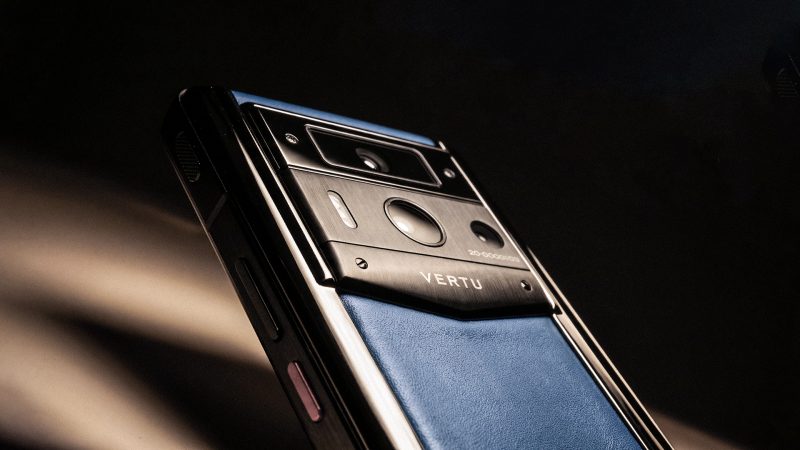
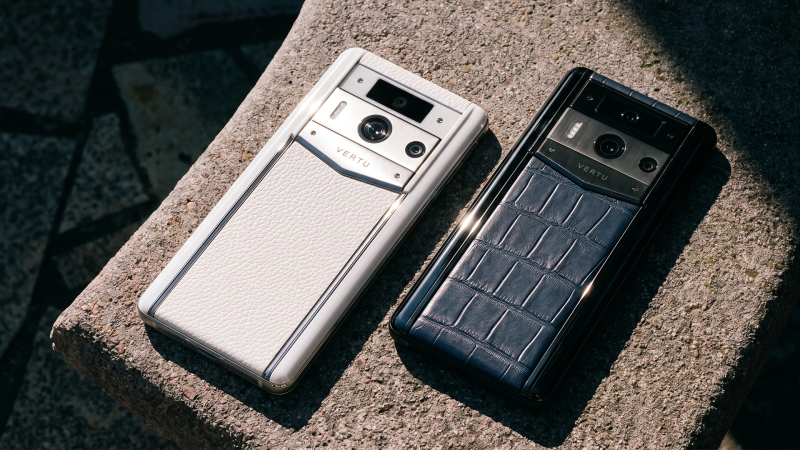
For VERTU products that use selected fine or rare leathers, the same restraint applies: the product knowledge base does not authorise a generic cream, animal species assumption or universal procedure. Follow the specific product care route.
Clean the lining without contaminating the exterior
Identify whether the lining can be pulled out without stressing seams. Remove crumbs with a low-suction handheld tool held away from loose threads, or use a soft brush. For fabric marks, follow the maker’s instructions and keep moisture away from leather edges.
Do not soak a fixed lining. Liquid can migrate through interlinings and create exterior stains or adhesive failure. Ink, perfume and cosmetics may require professional treatment. If the bag contains electronics or a tracker, remove them before work and check pockets twice.
Hardware should be wiped with a separate dry cloth. Metal polish can abrade plating and stain surrounding leather. Do not tape over hardware with an adhesive that may lift finish.
Drying and reshaping
Let the bag dry naturally with air circulation, out of direct sunlight. Support the body lightly; overstuffing can stretch panels, while newspaper may transfer ink. Keep zips and flaps in a relaxed position unless the maker instructs otherwise.
Do not place the bag on a radiator, use a clothes dryer or accelerate the process with hot air. Heat can shrink leather, warp edge paint and weaken adhesives. Allow more time than expected before judging colour: damp leather may appear darker and recover as it dries.
Once dry, check seams, texture, colour and odour. If the surface has become stiff, sticky, pale or uneven, stop. Applying a second product to correct the first is how a small cleaning problem becomes a restoration problem.
Storage prevents more damage than cleaning fixes
Store the bag clean and dry in a breathable dust bag. Avoid sealed plastic, direct sun and locations with large heat or humidity swings. Fill the body lightly with acid-free, colourfast material, but do not distort it. Rest chain straps so that they do not press permanent marks into leather.
Keep pale leather away from dark textiles and patent leather away from materials that can transfer dye. Do not leave cosmetics, pens, hand sanitiser or food inside. Rotate bags so handles and bases are not under continuous load.
Humidity control must be appropriate to the environment. Desiccant placed directly against leather can overdry a local area, while damp wardrobes encourage mould. Mould on a valuable bag needs careful containment and professional advice; brushing it indoors can spread spores.
When to stop and call a specialist
Professional care is warranted for valuable or sentimental bags, uncertain materials, extensive water exposure, ink, oil, mould, structural deformation, peeling finish, lifted exotic scales, colour transfer or previous failed treatment. Ask the specialist to explain the proposed method, likely limitations and whether the work is cleaning, recolouring or refinishing.
Recolouring may produce an attractive result but changes originality and can affect how a collector views the bag. Obtain before-and-after documentation and keep invoices. If the brand offers an official repair service, compare that route with an independent conservator before authorising irreversible work.
Where VERTU fits
VERTU’s relevant contribution is material stewardship, not a claim that a phone maker can restore handbags. Selected VERTU products use fine or rare leathers and the Signature V is described as one-craftsman assembled. That makes careful material identification and authorised aftercare part of the ownership culture. For eligible users, Concierge may help coordinate a supported service request where available, but it cannot guarantee a third-party restoration outcome, and any external action requires user authorisation.
Ten-minute safe-care checklist
Confirm the material and read the maker’s care instructions.
Photograph the bag and empty every compartment.
Support the shape on a clean, protected surface.
Remove loose dust with the least abrasive suitable tool.
Stop if dry cleaning solves the problem.
Never apply alcohol, wipes, kitchen oil or an untested cleaner.
Test any maker-approved product in a hidden area and let it dry fully.
Use minimal pressure and moisture.
Air-dry naturally away from heat and sunlight.
Escalate ink, oil, mould, colour transfer and uncertain finishes to a specialist.
Verdict
Successful handbag cleaning is conservative. Identify the surface, start dry, test slowly and treat the maker’s instructions as the controlling evidence. A faint mark with an intact finish is often preferable to a spotless patch that has lost colour or gloss. When the bag is valuable, unusual or emotionally important, restraint is not inaction—it is preservation.
Related VERTU reading
Preventive storage is covered in how to store a luxury handbag in heat and humidity. The VERTU guide to caring for sapphire, leather and precious-metal phones applies the same material-specific restraint to luxury technology.