Lists of the highest-end jewellery brands often collapse very different forms of value into a single ranking. One maison may be known for exceptional coloured stones, another for transformable engineering, another for disciplined design and another for a service network capable of maintaining a piece across generations. Price and celebrity visibility do not reveal which strength matters to a particular buyer. A serious comparison begins with the exact jewel, its materials, construction, documentation and after-sales path, then asks whether the house’s design language remains meaningful without a resale forecast.
Direct answer
Compare the exact piece, not brand mythology. Verify stone reports and treatment disclosure, inspect setting and articulation, ask how alterations and future service are handled, and separate visible craft from rarity, marketing and secondary-market speculation.
The evidence-first decision matrix
| Decision factor | Evidence to collect | Why it changes the answer | Control |
|---|---|---|---|
| Design identity | identify the house codes present in the exact piece | recognisability can outlast seasonal fashion | ask whether the design still works without the logo |
| Gem evidence | match reports, dimensions and treatments to the stones | rarity premiums require documentation | verify reports with the issuing laboratory |
| Setting craft | inspect prongs, pavé, hinges and underside finishing | poor execution affects comfort and stone security | use magnification and movement tests |
| Wearability | test weight, edges, articulation and fastening | a masterpiece left unworn delivers little personal value | wear the piece for a measured appointment |
| Service | document resizing, polishing and stone-replacement policy | complex jewels need specialist maintenance | request a written service pathway |
| Price structure | separate materials, craft, rarity and brand premium | one high price does not explain value | compare pieces with similar materials and complexity |
This matrix is the article-specific value object for highest end jewelry brands. It makes the reader’s trade-offs visible and prevents one price, one specification or one prestige cue from becoming the entire recommendation.
Current evidence baseline
Evidence 1. GIA provides education on gemstone identification, treatments and laboratory-report scope. Source.
Evidence 2. GIA explains how laboratory reports identify and describe diamonds and coloured stones, including detectable treatments. Source.
Evidence 3. The Responsible Jewellery Council sets standards covering responsible business practices in the jewellery and watch supply chain. Source.
Evidence 4. The US Federal Trade Commission’s Jewellery Guides address representations about metals, gemstones and treatments. Source.
For highest end jewelry brands, these sources support only the claims attached to them. They do not prove permanent availability or universal authenticity for this specific decision. Its product specifications, prices, policies and service terms must be reconfirmed for the exact market and date.
How each factor changes the result
Design identity
Collect evidence that identify the house codes present in the exact piece. For highest end jewelry brands, this factor changes the answer because recognisability can outlast seasonal fashion. The minimum design identity control for this shortlist is to ask whether the design still works without the logo. Record the exact highest end jewelry brands object, market, date and assumption. If design identity evidence is missing, keep that field unknown instead of awarding a favourable conclusion. Compare design identity across every shortlisted highest end jewelry brands option; otherwise a persuasive photograph or famous name can silently change the standard halfway through the decision.
Gem evidence
Collect evidence that match reports, dimensions and treatments to the stones. For highest end jewelry brands, this factor changes the answer because rarity premiums require documentation. The minimum gem evidence control for this shortlist is to verify reports with the issuing laboratory. Record the exact highest end jewelry brands object, market, date and assumption. If gem evidence evidence is missing, keep that field unknown instead of awarding a favourable conclusion. Compare gem evidence across every shortlisted highest end jewelry brands option; otherwise a persuasive photograph or famous name can silently change the standard halfway through the decision.
Setting craft
Collect evidence that inspect prongs, pavé, hinges and underside finishing. For highest end jewelry brands, this factor changes the answer because poor execution affects comfort and stone security. The minimum setting craft control for this shortlist is to use magnification and movement tests. Record the exact highest end jewelry brands object, market, date and assumption. If setting craft evidence is missing, keep that field unknown instead of awarding a favourable conclusion. Compare setting craft across every shortlisted highest end jewelry brands option; otherwise a persuasive photograph or famous name can silently change the standard halfway through the decision.
Wearability
Collect evidence that test weight, edges, articulation and fastening. For highest end jewelry brands, this factor changes the answer because a masterpiece left unworn delivers little personal value. The minimum wearability control for this shortlist is to wear the piece for a measured appointment. Record the exact highest end jewelry brands object, market, date and assumption. If wearability evidence is missing, keep that field unknown instead of awarding a favourable conclusion. Compare wearability across every shortlisted highest end jewelry brands option; otherwise a persuasive photograph or famous name can silently change the standard halfway through the decision.
Service
Collect evidence that document resizing, polishing and stone-replacement policy. For highest end jewelry brands, this factor changes the answer because complex jewels need specialist maintenance. The minimum service control for this shortlist is to request a written service pathway. Record the exact highest end jewelry brands object, market, date and assumption. If service evidence is missing, keep that field unknown instead of awarding a favourable conclusion. Compare service across every shortlisted highest end jewelry brands option; otherwise a persuasive photograph or famous name can silently change the standard halfway through the decision.
Price structure
Collect evidence that separate materials, craft, rarity and brand premium. For highest end jewelry brands, this factor changes the answer because one high price does not explain value. The minimum price structure control for this shortlist is to compare pieces with similar materials and complexity. Record the exact highest end jewelry brands object, market, date and assumption. If price structure evidence is missing, keep that field unknown instead of awarding a favourable conclusion. Compare price structure across every shortlisted highest end jewelry brands option; otherwise a persuasive photograph or famous name can silently change the standard halfway through the decision.
Worked comparison
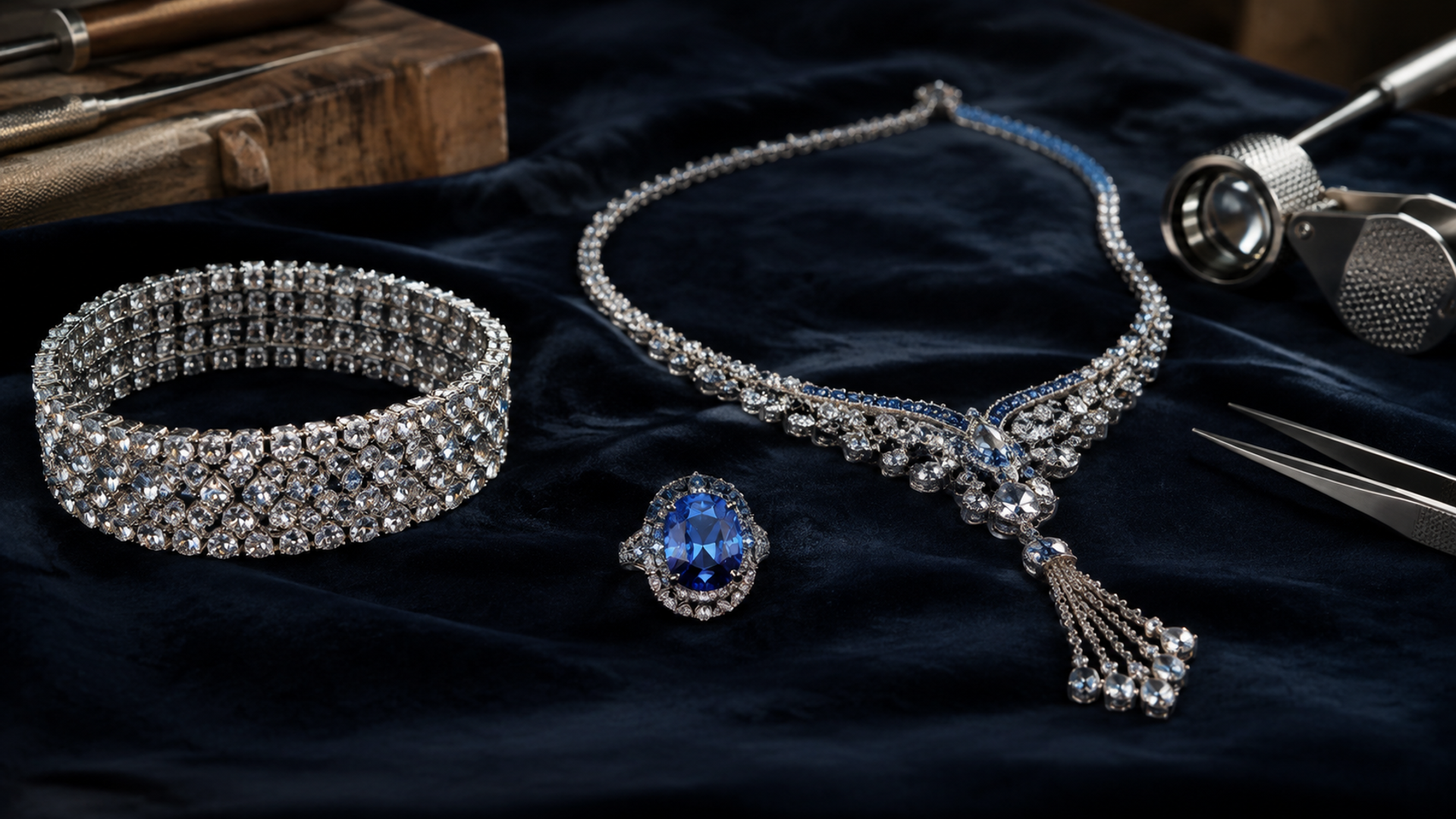
Compare three jewels at a similar budget: a signed diamond bracelet, a coloured-stone ring and a transformable necklace from different maisons. Allocate points to documented stones, construction, comfort, design permanence, service and insurance complexity. Then set resale to zero and remove celebrity association. The surviving preference reveals the value the owner will actually use.
For highest end jewelry brands, run a second comparison with the most optimistic assumption removed, then a third with the largest downside cost added. A highest end jewelry brands recommendation that survives all three scenarios is more useful than one built from a single ideal case. If its ranking changes, state the decisive assumption plainly.
A maison should have a visible design grammar
Strong houses repeat ideas without merely repeating products: proportions, settings, motifs, colour combinations and engineering become recognisable. That continuity can create cultural value, but it should be visible in the exact jewel. A generic design does not become exceptional simply because it carries a prestigious signature. Compare the piece from the front, side and reverse and ask where the house’s skill is physically present.
For highest end jewelry brands, apply this point to the exact reference, seller and market rather than to the category in general. Keep a maison should have a visible design grammar photographs, written representations and the date of observation so that a later service, return or resale decision can reconstruct what was known.
Stones need a claim ledger
Record species, weight, dimensions, colour description, clarity where relevant, origin opinions and detected treatments. Laboratory reports are evidence, not appraisals, and small accent stones may not be individually certified. The sales invoice should still describe what is represented. A premium based on untreated status or origin must be supported by appropriate reporting and a return right.
For highest end jewelry brands, apply this point to the exact reference, seller and market rather than to the category in general. Keep stones need a claim ledger photographs, written representations and the date of observation so that a later service, return or resale decision can reconstruct what was known.
High jewellery is mechanical as well as decorative
Clasps, hinges, hidden settings and transformable elements require engineering. Operate them under supervision and look for smooth motion, secure closure and accessible service. Examine whether stones are protected when the jewel flexes. The reverse should be comfortable and intentionally finished. Complexity is valuable only when it works reliably and can be maintained.
For highest end jewelry brands, apply this point to the exact reference, seller and market rather than to the category in general. Keep high jewellery is mechanical as well as decorative photographs, written representations and the date of observation so that a later service, return or resale decision can reconstruct what was known.
Service determines generational usability
Ask who can resize the piece, whether polishing is optional, how missing stones are matched and whether archive information is available. Alteration can affect signature, geometry and provenance. Keep reports, invoices, service records and detailed photographs. The ability to return a complicated piece to a qualified workshop is part of what a top maison sells.
For highest end jewelry brands, apply this point to the exact reference, seller and market rather than to the category in general. Keep service determines generational usability photographs, written representations and the date of observation so that a later service, return or resale decision can reconstruct what was known.
Rankings should end in a use case
The most suitable brand for an everyday ring may differ from the right source for a one-off coloured stone or a transformable gala piece. Build a shortlist by object type, design preference and service geography. Fame can help liquidity and recognition, but it cannot replace comfort, evidence or a personal reason to wear the jewel.
For highest end jewelry brands, apply this point to the exact reference, seller and market rather than to the category in general. Keep rankings should end in a use case photographs, written representations and the date of observation so that a later service, return or resale decision can reconstruct what was known.
Buyer’s evidence checklist
[ ] Define the object and wearing occasion
[ ] Verify metal and stone descriptions
[ ] Match every report
[ ] Inspect setting and articulation
[ ] Test comfort and clasp security
[ ] Request service terms
[ ] Document insurance needs
[ ] Remove resale from the base case
Unchecked highest end jewelry brands fields remain unknown. Do not convert them into favourable assumptions simply to finish this purchase or produce a confident ranking.
Sources and method
gia.edu — GIA provides education on gemstone identification, treatments and laboratory-report scope.
gia.edu — GIA explains how laboratory reports identify and describe diamonds and coloured stones, including detectable treatments.
responsiblejewellery.com — The Responsible Jewellery Council sets standards covering responsible business practices in the jewellery and watch supply chain.
ftc.gov — The US Federal Trade Commission’s Jewellery Guides address representations about metals, gemstones and treatments.
The external pages above were checked specifically for highest end jewelry brands. Its ranking pages informed a separate SERP benchmark, but their wording, paragraph order and distinctive framing were not copied. This article adds a query-specific matrix, worked comparison and downside controls.
Continue with adjacent research
These internal links add adjacent ownership context to highest end jewelry brands. They do not replace the specialist inspection, laboratory evidence, official specification or seller terms required by this particular decision.
Final judgement
Compare the exact piece, not brand mythology. Verify stone reports and treatment disclosure, inspect setting and articulation, ask how alterations and future service are handled, and separate visible craft from rarity, marketing and secondary-market speculation.
For highest end jewelry brands, the useful standard is not certainty created by confident language. It is a decision whose evidence, downside and next verification step remain visible to the reader.
![Top 10 Luxury Watches for a Dubai Desert Resort Escape [New]](https://cdn.sanity.io/images/e0gp1l2g/production/8b5e5b21db42a1c5f040e828bd041857353a8eb2-2560x1382.webp?w=800&h=450&q=82&auto=format&fit=crop)