A luxury mechanical watch does not become valuable merely because it contains many parts or avoids a battery. The premium can come from calibre architecture, regulation, hand finishing, case and bracelet construction, design continuity, production scale, service capability and the commercial power of the name on the dial. Those elements are not interchangeable. An elaborately finished movement may live in a delicate dress watch, while a less decorative calibre can deliver better daily robustness. Buyers should identify which forms of value they can see, use and maintain. This guide turns a vague luxury claim into a reference-level evidence ledger without promising scarcity or resale performance. It also separates engineering difficulty from practical benefit. A thin movement, complex calendar or hand-finished bridge can be impressive even when it adds fragility, setting time or service cost. The buyer does not need to dismiss that craft; the buyer needs to decide whether observing and owning it is worth the trade-off.
Direct answer: luxury mechanical watches
Evaluate the exact reference across movement architecture, declared accuracy, finishing, case and bracelet, water resistance, production context and service support. Decide which premium is for visible craft, which is for engineering, which is for brand and which is for market scarcity. Buy only when the use case still works after resale appreciation is removed. Keep service and insurance visible.
| Decision factor | Evidence to collect | Why it changes the answer | Control before purchase |
|---|---|---|---|
| Calibre architecture | maker identifies movement origin, reserve and functions | in-house language alone does not prove superiority | study the exact calibre |
| Finishing | inspection distinguishes functional, machine and hand-applied work | decorative vocabulary can be vague | use macro images and independent expertise |
| Timekeeping | written tolerance or certification is available | price does not automatically improve accuracy | compare specification and real use |
| Case and bracelet | fit, machining, clasp and water resistance are tested | most daily contact occurs outside the movement | wear the exact reference |
| Production and scarcity | maker and market evidence separate limited output from hype | unavailability can be engineered or temporary | avoid paying with assumed appreciation |
| Service | parts, estimate process and global support are confirmed | ownership can span decades | model downtime and cost |
This matrix is the article-specific value object for luxury mechanical watches. It prevents a famous name, a single specification or one price from silently becoming the recommendation.
Current evidence baseline
Evidence 1. COSC publishes independent chronometer certification information for movements submitted by manufacturers. Source.
Evidence 2. The Federation of the Swiss Watch Industry publishes sector statistics that describe exports and market structure rather than individual quality. Source.
Evidence 3. The Fondation Haute Horlogerie provides educational material on movements, complications and watchmaking craft. Source.
Evidence 4. Rolex describes a worldwide service network, illustrating why after-sales infrastructure is part of long-term watch ownership. Source.
For luxury mechanical watches, these sources support only the claims directly attached above. They do not establish permanent availability, universal authenticity, future appreciation or suitability for every owner.
How the decision factors change the result
Calibre architecture. Collect evidence showing that maker identifies movement origin, reserve and functions. This changes the decision because in-house language alone does not prove superiority. The practical control is to study the exact calibre. Record the exact object, date, source and assumption that would reverse the conclusion. If the evidence remains unavailable, mark this factor unknown rather than converting uncertainty into a favourable score.
Finishing. Collect evidence showing that inspection distinguishes functional, machine and hand-applied work. This changes the decision because decorative vocabulary can be vague. The practical control is to use macro images and independent expertise. Record the exact object, date, source and assumption that would reverse the conclusion. If the evidence remains unavailable, mark this factor unknown rather than converting uncertainty into a favourable score.
Timekeeping. Collect evidence showing that written tolerance or certification is available. This changes the decision because price does not automatically improve accuracy. The practical control is to compare specification and real use. Record the exact object, date, source and assumption that would reverse the conclusion. If the evidence remains unavailable, mark this factor unknown rather than converting uncertainty into a favourable score.
Case and bracelet. Collect evidence showing that fit, machining, clasp and water resistance are tested. This changes the decision because most daily contact occurs outside the movement. The practical control is to wear the exact reference. Record the exact object, date, source and assumption that would reverse the conclusion. If the evidence remains unavailable, mark this factor unknown rather than converting uncertainty into a favourable score.
Production and scarcity. Collect evidence showing that maker and market evidence separate limited output from hype. This changes the decision because unavailability can be engineered or temporary. The practical control is to avoid paying with assumed appreciation. Record the exact object, date, source and assumption that would reverse the conclusion. If the evidence remains unavailable, mark this factor unknown rather than converting uncertainty into a favourable score.
Service. Collect evidence showing that parts, estimate process and global support are confirmed. This changes the decision because ownership can span decades. The practical control is to model downtime and cost. Record the exact object, date, source and assumption that would reverse the conclusion. If the evidence remains unavailable, mark this factor unknown rather than converting uncertainty into a favourable score.
Worked decision scenario
Compare three watches at the same price: a high-volume sports reference, a hand-finished independent dress watch and a complicated watch from a major maison. Score movement interest, visible finishing, fit, daily resilience, service reach and design longevity. Add insurance and two conservative service events over fifteen years. Set resale proceeds to zero, then add a separate uncertain resale scenario. The watch that wins both has utility independent of market optimism.
In-house is a fact, not a verdict
A movement designed or manufactured within a group can offer integration and identity, but it may also make parts more proprietary. A specialist-supplied calibre can be robust, well understood and finely finished. Ask who designed, made and services the movement, then examine architecture, reserve and regulation. The label matters less than whether the calibre delivers qualities the owner values and can be maintained.
Finishing needs close evidence
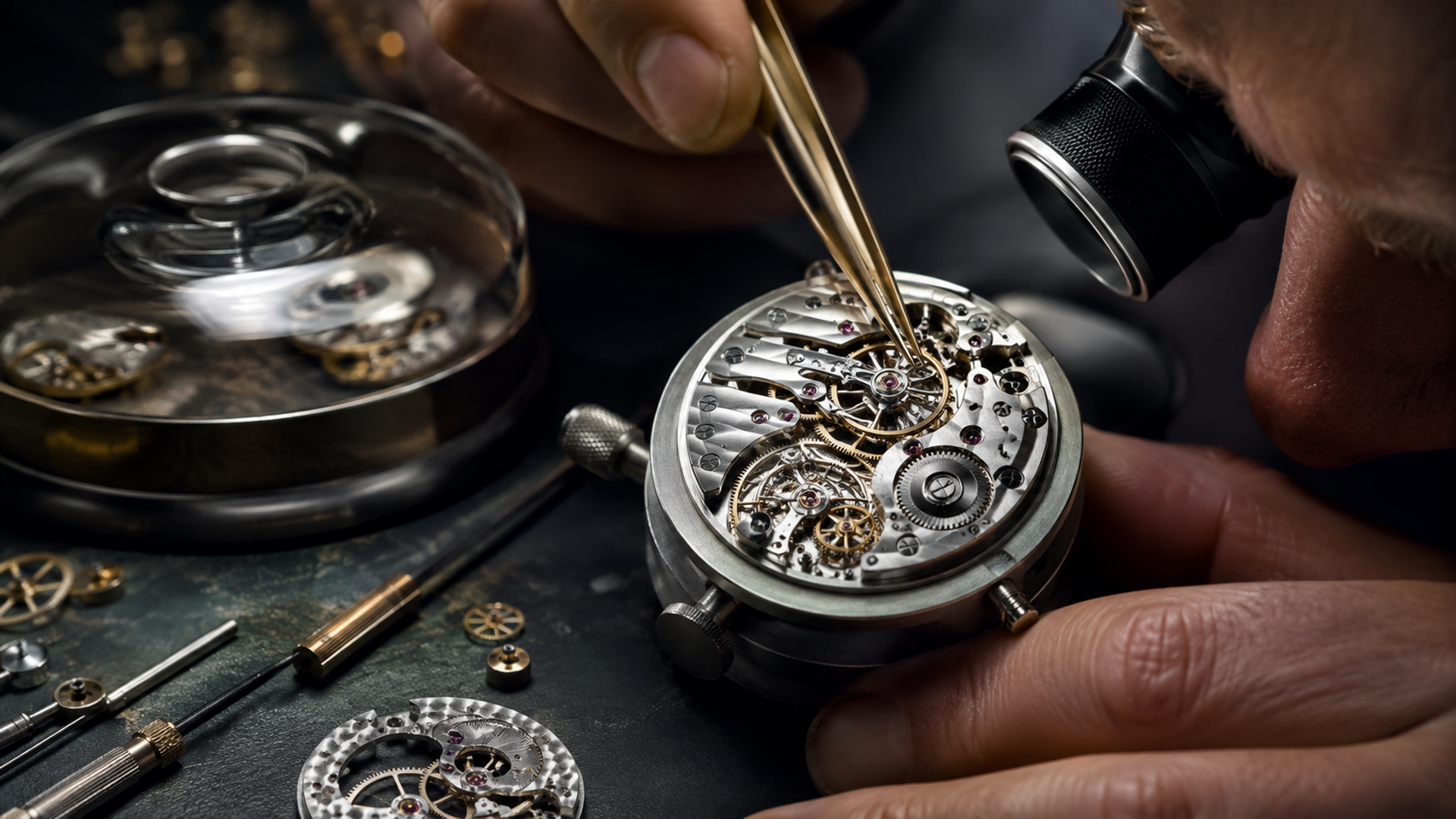
Anglage, black polishing, graining, Geneva stripes and hand engraving describe different processes. Some improve function; others express visual craft. Marketing photographs can exaggerate contrast, so inspect the actual watch under magnification where possible. Look for consistency at interior angles, screw heads, countersinks and hidden surfaces. Do not demand handwork everywhere. Decide how much of the premium is visible and emotionally meaningful.
The case is not packaging
Case geometry, crown action, crystal, seals, bracelet articulation and clasp adjustment determine daily experience. A spectacular movement in an uncomfortable case will not be worn. Check thickness under a cuff, lug overhang, sharp edges, winding feel and the maker’s water-resistance guidance. Precious metal adds weight and cost; titanium changes feel. Compare the complete object rather than ranking movements in isolation.
Scarcity must survive verification
Limited editions should state the production boundary, while regular references may still be difficult to obtain. Dealer premiums and waiting lists do not prove permanent rarity. Examine production history, comparable completed sales and whether a successor is likely. If the purchase only makes sense because supply is expected to tighten, it is speculation. A durable design and satisfying ownership are stronger reasons to absorb a luxury premium.
Service is part of the movement
Ask how estimates are approved, whether refinishing is optional, how replaced parts are handled and how long service may take. Vintage and independent watches can require specialist support; major brands can still have costly proprietary parts. Keep water-resistance tests and service records. Over decades, the quality of the service relationship can matter as much as the original calibre specification.
Evidence checklist
[ ] Identify exact calibre
[ ] Inspect finishing
[ ] Read accuracy tolerance
[ ] Wear exact case and bracelet
[ ] Verify edition claims
[ ] Price insurance
[ ] Confirm service route
[ ] Remove appreciation from base case
For the luxury mechanical watches decision, unchecked fields remain unknown and should not be converted into favourable assumptions merely to complete a purchase.
Reader-visible sources and method
The external pages above were checked for this luxury mechanical watches analysis. Price, availability, service, tax, regulation and platform terms must be reconfirmed for the buyer's market and date. Ranking pages informed a separate SERP benchmark; their wording and paragraph order were not copied.
Continue with adjacent VERTU editorial research
For luxury mechanical watches, these links provide adjacent premium-lifestyle and decision context; they do not replace specialist or official evidence for the exact decision.
Final judgement
Evaluate the exact reference across movement architecture, declared accuracy, finishing, case and bracelet, water resistance, production context and service support. Decide which premium is for visible craft, which is for engineering, which is for brand and which is for market scarcity. Buy only when the use case still works after resale appreciation is removed. Keep service and insurance visible.
The useful standard for luxury mechanical watches is not certainty created by confident language. It is a decision whose evidence, downside and next review point are visible to the reader.