Cashmere and merino wool can both feel luxurious while solving different wardrobe problems. Cashmere often wins when softness, light warmth and an intimate layer matter; merino often wins when repeated travel, temperature changes, odour management and resilience matter. The best choice is not a permanent ranking. It is a material decision shaped by climate, abrasion, washing, layering and whether the garment must look composed after a day in a suitcase.
The short answer by wardrobe role
Choose cashmere for a low-abrasion, softness-first layer that can be stored and cared for deliberately; choose merino for a more active travel layer that must regulate temperature and recover from repeated wear; or combine both by assigning each to the role it handles best. Check fibre composition, knit density, care instructions and the actual climate before paying for a name alone.
| Decision factor | Soft cashmere layer | Travel merino layer | Mixed material wardrobe |
|---|---|---|---|
| Primary benefit | Softness and light warmth | Temperature range and repeated wear | The right fibre for each layer |
| Travel abrasion | Needs protection from straps and rough surfaces | Handles active use more confidently | Garments are assigned to separate journeys |
| Climate | Cool, dry and low-sweat settings | Variable, active or humid conditions | Layering changes through the day |
| Odour routine | Air and rest between wears | Fibre and knit support repeated use | A rotation limits washing pressure |
| Care | Hand wash or specialist routine is accepted | The label allows a practical wash plan | Storage and repair are organised |
| Value | Soft hand and long ownership justify care | Resilience and use-per-wear justify cost | The wardrobe avoids paying for the wrong role |
This cashmere vs merino wool matrix is the article's working value object. Read the cashmere vs merino wool rows together: the decisive failure mode depends on this topic's evidence, operating context and reader objective.
What warmth and durability look like in practice
Evidence 1. The Woolmark Company describes merino wool's fibre and performance characteristics, including its use across apparel; product results still depend on fibre blend, knit, finish and care label.
Evidence 2. The FTC's wool-label guidance requires fibre-content information in relevant US textile commerce; buyers should read the composition and care label rather than relying on a product title such as 'cashmere feel'.
Evidence 3. Cashmere softness and warmth-to-weight can be valuable, but fine fibres are vulnerable to abrasion, friction and poor storage; a cashmere layer needs a different travel routine from a hard-wearing base layer.
Evidence 4. Merino is not maintenance-free: sweat, oils, knit structure and washing method still affect odour, shape and longevity, and the care label for the exact garment remains authoritative.
Reader-visible sources checked for this article:
woolmark.com — reader-visible current or official evidence
ftc.gov — reader-visible current or official evidence
For cashmere vs merino wool, these sources establish only the claims inside their documented scope. Recheck every changeable specification, availability condition, price, policy or service term in the relevant market before acting.
Build the care and packing routine
On primary benefit, popularity is not enough. The evidence for option one is that softness and light warmth. Option two means temperature range and repeated wear. Option three is rational where the right fibre for each layer. Recheck any changeable term immediately before commitment.
The decision changes at travel abrasion. Choose the first path only if needs protection from straps and rough surfaces; move to the second when handles active use more confidently; use the third when garments are assigned to separate journeys. Save the downside that would make this row fail.
For climate, the first route works when cool, dry and low-sweat settings; the second requires variable, active or humid conditions. The control for the third is layering changes through the day. Verify this row against the exact product, property, account or environment before it can reverse the decision.
The odour routine row exposes a practical boundary. Route one assumes air and rest between wears, while route two is defensible only when fibre and knit support repeated use. Route three depends on a rotation limits washing pressure. If that evidence is absent, keep the more reversible option.
Read care as a stop/go test: hand wash or specialist routine is accepted supports the first option; the label allows a practical wash plan supports the second; and storage and repair are organised supports the third. Record which source proves the condition and when it was checked.
A buyer can resolve value without starting from a brand preference. Ask whether soft hand and long ownership justify care; compare that with whether resilience and use-per-wear justify cost; then use the wardrobe avoids paying for the wrong role as the third route's safeguard. An unknown condition stays unknown.
Facts that would reverse the current choice
Reversal control 1 — Primary benefit. Before choosing Soft cashmere layer, write down how the decision changes if “Softness and light warmth” proves false. Do the same for Travel merino layer and “Temperature range and repeated wear”. Keep the Mixed material wardrobe route available until “The right fibre for each layer” is verified. This control belongs to cashmere vs merino wool; update it from the cited source or exact supplier rather than copying a generic checklist.
Reversal control 2 — Travel abrasion. Before choosing Soft cashmere layer, write down how the decision changes if “Needs protection from straps and rough surfaces” proves false. Do the same for Travel merino layer and “Handles active use more confidently”. Keep the Mixed material wardrobe route available until “Garments are assigned to separate journeys” is verified. This control belongs to cashmere vs merino wool; update it from the cited source or exact supplier rather than copying a generic checklist.
Reversal control 3 — Climate. Before choosing Soft cashmere layer, write down how the decision changes if “Cool, dry and low-sweat settings” proves false. Do the same for Travel merino layer and “Variable, active or humid conditions”. Keep the Mixed material wardrobe route available until “Layering changes through the day” is verified. This control belongs to cashmere vs merino wool; update it from the cited source or exact supplier rather than copying a generic checklist.
Reversal control 4 — Odour routine. Before choosing Soft cashmere layer, write down how the decision changes if “Air and rest between wears” proves false. Do the same for Travel merino layer and “Fibre and knit support repeated use”. Keep the Mixed material wardrobe route available until “A rotation limits washing pressure” is verified. This control belongs to cashmere vs merino wool; update it from the cited source or exact supplier rather than copying a generic checklist.
Reversal control 5 — Care. Before choosing Soft cashmere layer, write down how the decision changes if “Hand wash or specialist routine is accepted” proves false. Do the same for Travel merino layer and “The label allows a practical wash plan”. Keep the Mixed material wardrobe route available until “Storage and repair are organised” is verified. This control belongs to cashmere vs merino wool; update it from the cited source or exact supplier rather than copying a generic checklist.
Reversal control 6 — Value. Before choosing Soft cashmere layer, write down how the decision changes if “Soft hand and long ownership justify care” proves false. Do the same for Travel merino layer and “Resilience and use-per-wear justify cost”. Keep the Mixed material wardrobe route available until “The wardrobe avoids paying for the wrong role” is verified. This control belongs to cashmere vs merino wool; update it from the cited source or exact supplier rather than copying a generic checklist.
Match fibre to the climate and activity
A soft cashmere layer is comfortable in a cool cabin, restaurant or dry city evening, but it should not be asked to carry a shoulder bag all day in warm humidity. Merino is often the more forgiving base layer when the body moves between air-conditioning, walking and outdoor heat. Think in layers: a breathable merino base can manage a changing day while cashmere adds softness at the point where the garment touches the skin or the outfit needs a refined finish.
Measure travel durability by friction
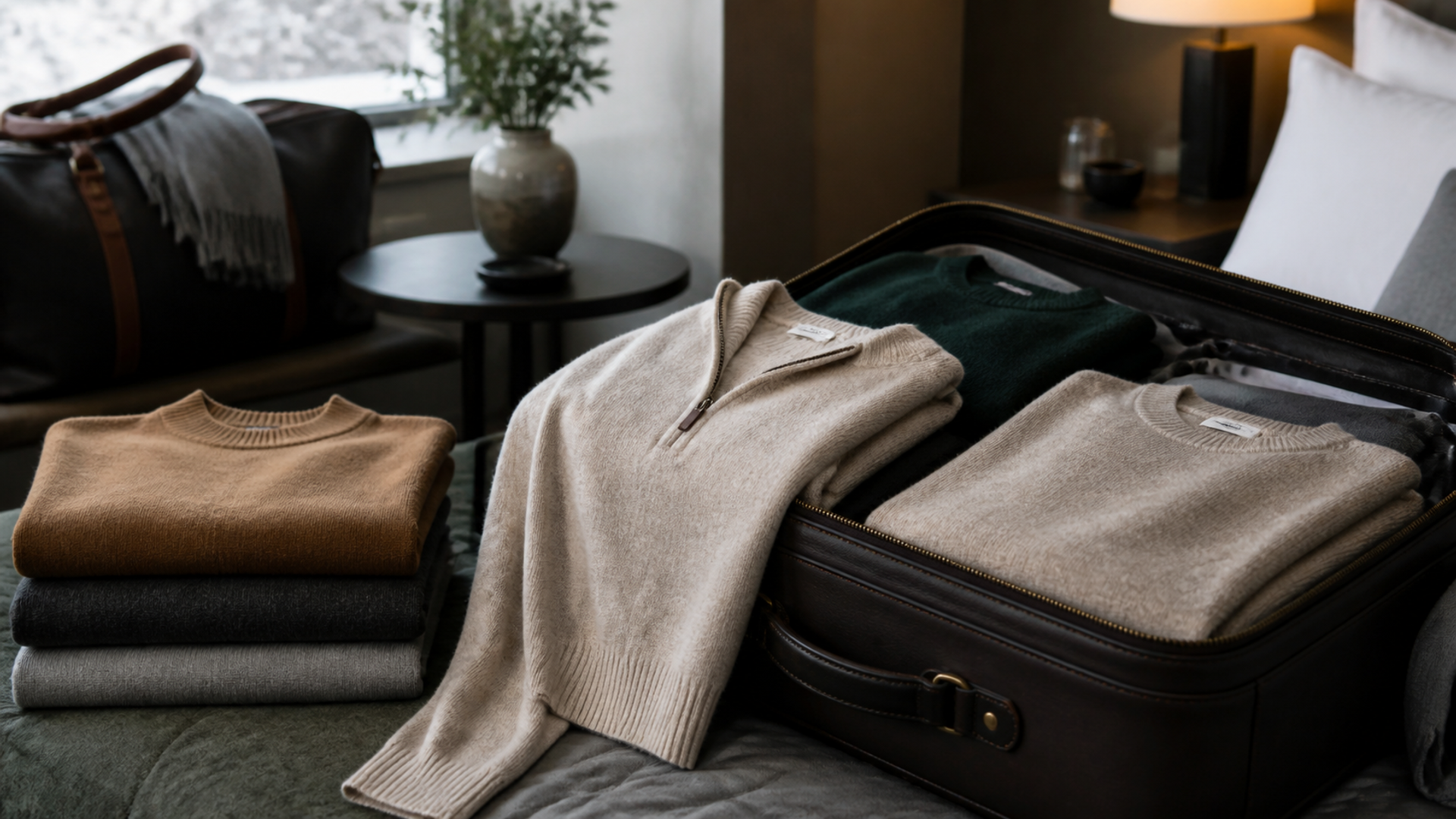
The enemy of fine knitwear is often not a dramatic spill but repeated rubbing from a seatbelt, bag strap, table edge or suitcase zip. Fold rather than compress, use a breathable pouch and keep jewellery or hardware away from the surface. Rotate the garment rather than wearing the same layer on every flight. Merino can tolerate more activity, but it can still pill or lose shape if washed aggressively. A material's strength is only useful when the travel system respects it.
Build a wash, air and storage rhythm
Air a garment between wears, follow the exact care label and avoid washing a fibre simply because it was packed. If a wash is required, use the approved temperature and drying method; heat, friction and a hanger can change shape faster than a traveller expects. Store cashmere clean and dry, protected from insects, and keep merino folded when the knit is heavy. Repair a small snag early instead of allowing it to become a long line across the front.
Use price as cost per successful wear
A lower ticket is not automatically better value if the garment is too warm, too fragile or too difficult to care for the way the owner travels. Write the use case: ten flights, a winter commute, a summer meeting or a hotel wardrobe. Then ask which fibre will still be chosen on the fifth, tenth and twentieth use. Cashmere may win the softness test while merino wins the travel test. A mixed wardrobe can be more luxurious because it removes the pressure to make one material do everything.
Three travel wardrobes that change the choice
The cool-climate executive
Cashmere is compelling as a soft, low-abrasion layer when it can rest between wears and travel in protected storage. Define the fact that would reverse this recommendation before committing.
The active multi-city traveller
Merino is the more practical base layer when temperature changes, walking and repeated use define the itinerary. Define the fact that would reverse this recommendation before committing.
The compact luxury wardrobe
Combining merino for the base and cashmere for the refined outer layer assigns each fibre to its strongest job. Define the fact that would reverse this recommendation before committing.
Action checklist
Define the climate and activity before buying.
Read fibre composition and the exact care label.
Check knit density and seam construction.
Plan abrasion from straps and seatbelts.
Fold and protect garments in the suitcase.
Air between wears instead of washing automatically.
Keep cashmere clean and insect-protected.
Use the correct drying and storage method.
Repair snags and pilling early.
Judge value by successful wears, not softness alone.
Continue the decision
The linked VERTU articles expand adjacent parts of the cashmere vs merino wool decision. They do not substitute for the external evidence above.
The cashmere-and-merino verdict
Choose cashmere for a low-abrasion, softness-first layer that can be stored and cared for deliberately; choose merino for a more active travel layer that must regulate temperature and recover from repeated wear; or combine both by assigning each to the role it handles best. Check fibre composition, knit density, care instructions and the actual climate before paying for a name alone.
Keep the cashmere vs merino wool decision reversible until its material cost, safety, access, privacy and compatibility facts are verified. Unknown evidence stays unknown; it is never silently scored as favourable.