An AI agent phone is worth considering when it can help complete a repeatable task under your control, not merely produce a clever answer. Forecasts show AI capability becoming common in smartphones, but hardware availability and everyday usefulness are different measures. Before upgrading, ask what the assistant can do with your actual apps, language, accounts and privacy settings.
What does the shipment forecast really say?
Counterpoint Research's June 2026 forecast projects that GenAI-capable smartphones will account for 45% of global shipments in 2026 and 52% in 2027. The same research says AI capability has become standard in high-end phones, yet has not given consumers a compelling upgrade reason by itself. Those percentages describe shipments of capable devices. They do not state that 52% of owners regularly use an agent, nor that 52% of phones can autonomously complete the same tasks.
The distinction matters because “AI-capable,” “assistant” and “agent” are used loosely in marketing. A device can contain an on-device model yet have limited app access. Another can answer spoken questions but not book, message or organise on behalf of a user. A forecast about a hardware category cannot stand in for a survey of actual task completion. Claims that a particular share of premium phones will have agentic capability need their own clear definition and primary source.
What should an AI agent phone actually do?
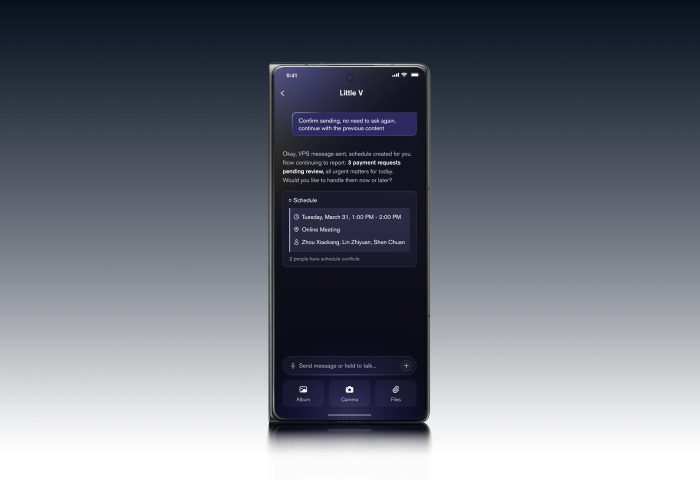
An agent-like experience begins with an intention such as “summarise the messages about tomorrow's meeting and propose a reply.” The assistant must understand the request, access authorised information, prepare a useful result and let you review any consequential action. The value is in reducing steps, not in replacing your judgement. A typed summary alone may be useful, but it is a different promise from moving securely among services and completing a task.
Identify the moments where your current phone makes you repeat work. You may copy an address from a message into a calendar entry, find a travel booking number, or convert a long document into a short briefing. These examples are concrete enough to test. “Be more productive” is not. If a new phone cannot improve the recurring task you care about, its AI label should carry little weight in your purchase decision.
Why might people keep their existing phones?
Many familiar actions are already fast. If you can send a short message in seconds, a multi-step voice workflow may be slower. Users also have concerns about accuracy, permission scope, cost and the uncertainty of new features. Counterpoint's August 2026 commentary places AI around sixth or seventh among consumers' smartphone-upgrade reasons in its latest surveys. That is a directional observation from the research firm, not a universal percentage for every market or buyer.
An upgrade also competes with the qualities people already assess: battery endurance, camera, screen, service and familiar software. Even a sophisticated assistant must fit those foundations. An AI workflow that only works on a strong connection, in one language or with a limited set of apps may still be valuable to some owners; it should simply be described in those terms rather than as a general transformation.
How do you test an agent before buying?
Write down three ordinary tasks. Keep each small enough to finish in a demonstration: prepare a meeting brief from an authorised document, find an item in a personal photo library, and draft a reply based on a calendar event. For each task, record the starting material, the desired output and what the assistant may do without confirmation. Ask the seller to show the same task on the current device software, not a prerecorded video.
Watch for failure handling. Does the assistant say when it lacks an app connection? Does it invent a detail from a missing document? Can you inspect the draft before it is sent? If a reservation or purchase is involved, can you stop or correct the action before a commitment is made? The test should include an ambiguous request, because real users rarely speak in perfectly structured commands.
Where do permissions and privacy enter?
A useful agent often needs access to data that a simple search does not: messages, calendar, files, contacts or location. Ask which permissions are required for the task you want and whether access can be limited or revoked. Learn whether processing occurs on the device, in a service, or across both; the answer may differ by feature. Avoid interpreting “private” or “secure” as an absolute guarantee. Evaluate the controls and documented data path for the exact feature.
For work accounts, consult your organisation's policy before connecting a personal assistant. A tool may be convenient but still inappropriate for confidential documents. The best agent experience lets you choose what it may see, shows you the action it proposes and keeps a clear boundary between assistance and unreviewed decisions. Practical control is a purchase criterion, not a small print issue.
How does VERTU position Agent Q?
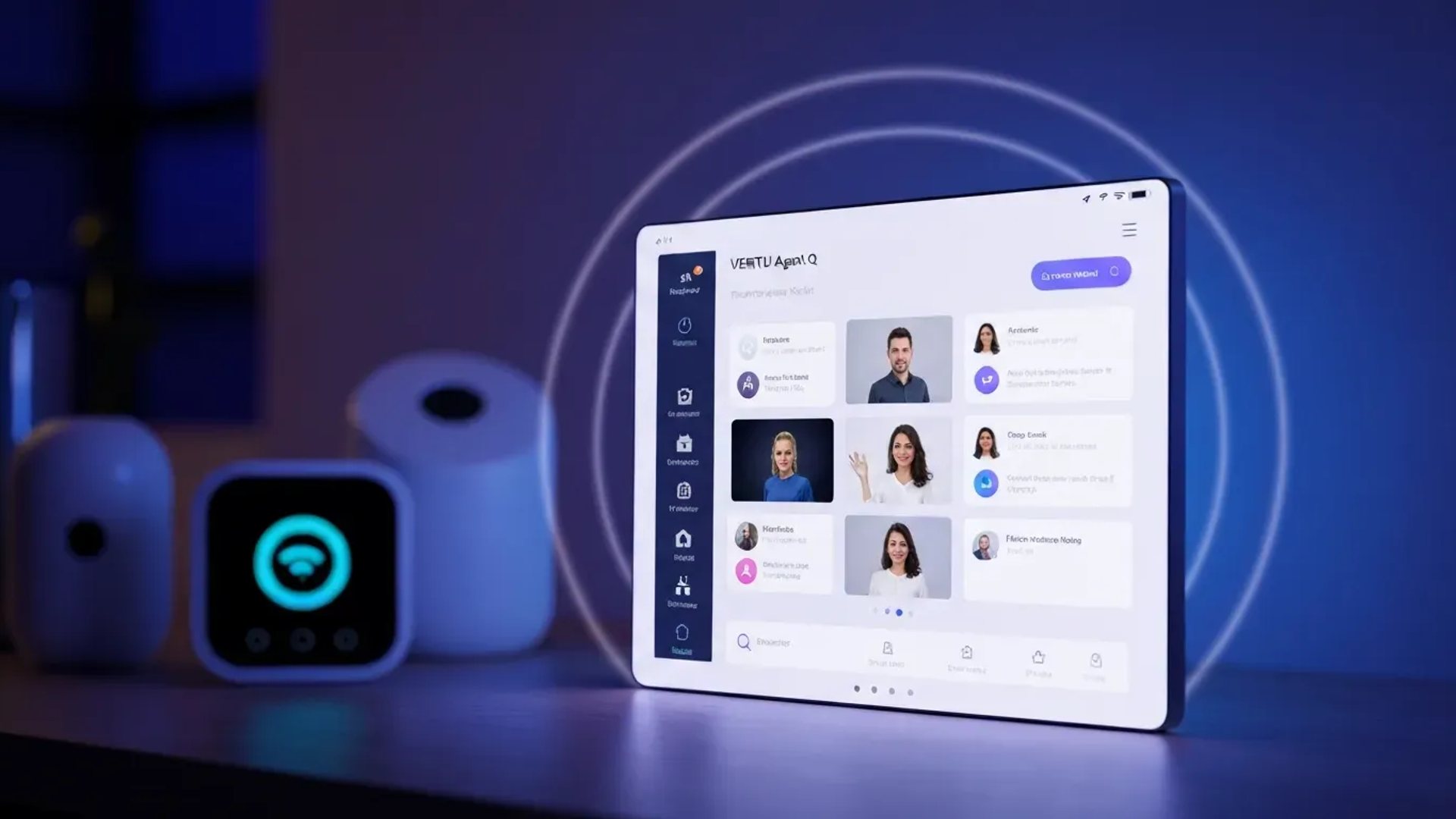
VERTU presents Agent Q as an AI agent phone designed to move from a user's intention toward an action, with Ruby Talk as a physical access point to the assistant experience. The current product knowledge base describes that positioning and the device's premium construction, but any specific task should be tested against current software, supported services and the user's market. Do not infer that every third-party app is available or that an agent can act without authorisation.
A buyer considering Agent Q should ask to see a complete task, including the review stage, on the edition available locally. The official Agent Q collection provides a path to current models and regional product details. Compare what the assistant actually completes with what your present phone and apps already accomplish. That reveals the incremental value more clearly than comparing feature counts.
What about ALPHAFOLD and Hermes Agent?
ALPHAFOLD adds a larger foldable workspace to the Hermes Agent proposition. VERTU's knowledge base describes summaries, reminders, supported app orchestration and business workflows for authorised enterprise deployments. Its 8.05-inch inner display may also make reviewing an agent's proposed output easier. Yet a larger screen and deeper integration do not remove the need to verify app support, permissions and local service terms.
For an executive use case, test one approved workflow, such as a summary of a document that may legally be shared with the service. Ask what must be configured privately for enterprise connections and what is included on an ordinary consumer device. This prevents a product story about possible integrations from being mistaken for a ready-to-use entitlement in every purchase.
When is an upgrade justified?
A sensible threshold is a task you perform often, a demonstrable time or quality improvement and controls you understand. If an agent helps you prepare a daily briefing or coordinate travel more clearly, the value may be real. If the only demonstration is a generic answer you can get from an existing app, waiting may be sensible. Include the total device cost, subscription terms if any, support and expected software updates in the decision.
Track your own evidence for a week. List the tasks you repeatedly postpone or move between apps to complete. Bring that list to a product demonstration. The phone that performs the most relevant tasks reliably, with appropriate review, earns stronger consideration than one with the most ambitious language. Adoption forecasts tell us how widespread capability may become; your task test tells you whether capability matters now.
Three real tasks to test, with a measurable baseline
| Task | Observable outcome | Critical approval |
|---|---|---|
| Travel booking research | Options with provider, time, price and source | No payment or reservation until user confirms |
| Meeting notes | Action list traceable to authorised notes | Review names, deadlines and consent before sharing |
| Across-app follow-up | Calendar proposal and draft message based on the same event | Approve account access and final send separately |
For each task, record the start time, final verified outcome, number of manual corrections and whether an external action actually happened. Then perform the same task on the existing flagship phone with its current assistant and apps. Compute time saved as baseline time minus agent-phone time; report the task, software build, network and sample size. We have no controlled comparison data for Agent Q against a named flagship, so no saved-minutes claim is made here.
The difference to test is the ability to move from a question to a supported, user-approved action. A summary or draft may already be available on a mainstream flagship. VERTU Agent Q's Ruby Talk positioning makes the task workflow central, but the buyer should verify supported apps, permissions and recovery from failed steps on their exact configuration.
Frequently asked questions
Is every GenAI phone an AI agent phone?
No. GenAI capability may produce or summarise content without taking authorised actions across services. Ask what the device can complete and what approvals it requires.
Does the 52% forecast mean owners will use AI daily?
No. Counterpoint's figure is a forecast share of global smartphone shipments in 2027, not a usage rate or a measure of agent satisfaction.
Should an agent send a message without asking me?
For consequential communication, insist on a review and confirmation step that suits your preferences and the feature's settings. Test this explicitly before connecting important accounts.
Can an AI agent replace a human concierge?
Not as a general rule. An assistant may organise information and prepare requests; human service may involve judgement and third-party coordination. Check the actual VERTU entitlements and availability separately.
Conclusion
An AI agent phone earns an upgrade only when it improves tasks you already need to complete, with permissions and confirmation you can control. Growing GenAI shipment forecasts signal availability, not guaranteed usefulness. Test the current device with your own routine before deciding.