

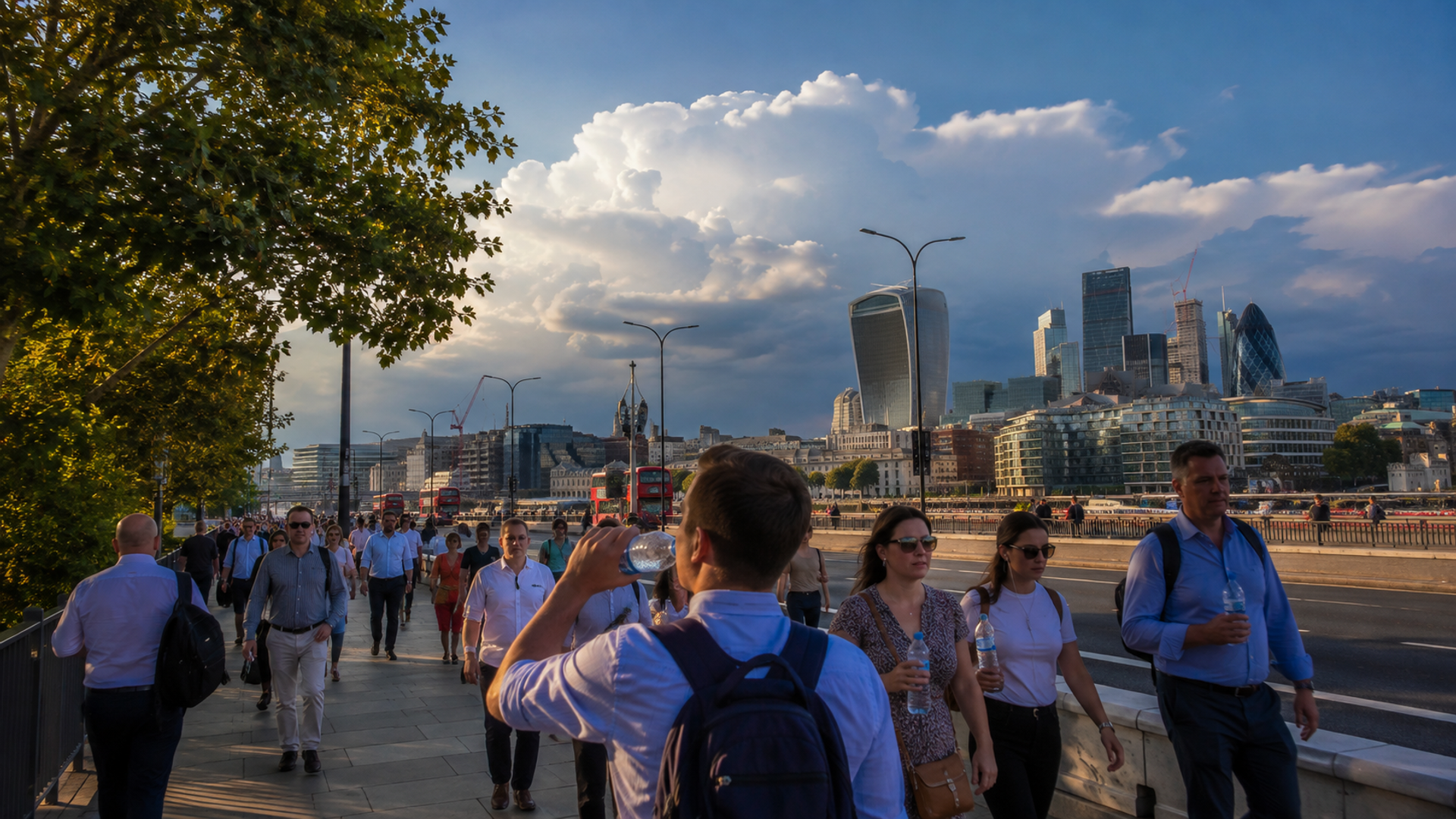
Search interest in a UK September heatwave often rises before the forecast is settled. A national headline can compress several different things: a short warm spell in the south, temperatures above the seasonal average, an official heat-health alert, or merely a computer-model scenario. Those are not interchangeable. A useful forecast article therefore has to show what is known now, where it applies, when confidence weakens and which decisions can wait for the next update. This guide uses official weather and health sources to turn the current interest into a practical planning framework rather than a dramatic temperature promise.
Direct answer
Treat the phrase ‘September heatwave’ as a question, not a forecast. The practical answer is the location-specific Met Office outlook, its update time and any active warning. Plan for warm spells without assuming every UK region will be hot, and keep a wet-weather alternative because confidence falls as the forecast horizon lengthens.
The status of heatwave weather forecast can change after publication. Use the update dates and source links below before making a time-sensitive, financial, safety or travel decision.
What is confirmed now
Evidence 1. The Met Office location forecast supplies updated local conditions and should be checked again close to travel. Read the source.
Evidence 2. The Met Office long-range outlook explicitly describes broad patterns and uncertainty rather than a precise local forecast. Read the source.
Evidence 3. NHS heat guidance identifies vulnerable groups and practical ways to reduce heat illness. Read the source.
Evidence 4. UK government hot-weather guidance recommends planning around hydration, shade, ventilation and signs of heat stress. Read the source.
These sources support only the claims attached to them. They do not prove that every social post, reseller listing, weather headline, schedule or interpretation about heatwave weather forecast is current.
The decision matrix
| Decision factor | Evidence to collect | Why it changes the answer | Control |
|---|---|---|---|
| Location | the exact town and route rather than a UK-wide maximum | a coastal, northern or elevated location can differ sharply from London | save two official location forecasts |
| Update time | when the forecast and any warning were last refreshed | rapidly changing pressure and cloud can alter the useful answer | recheck the evening before and morning of travel |
| Forecast horizon | whether the day is inside the detailed or long-range window | precision falls with lead time | make reversible plans first |
| Night temperature | overnight minima as well as daytime highs | poor overnight cooling increases health and sleep stress | plan ventilation and recovery |
| Warning status | official weather and heat-health alerts for the destination | impact depends on vulnerability and infrastructure, not temperature alone | follow the relevant agency action |
| Fallback plan | shade, water, indoor alternatives and flexible transport | weather value comes from resilience rather than prediction theatre | set a trigger for changing the day |
The matrix is the article-specific value object for heatwave weather forecast. It forces the reader to compare evidence, consequence and control instead of relying on one emotional cue. A useful result can be cautious: unknown is more accurate than a confident answer built from a missing field.
How each factor changes the result
Location
For heatwave weather forecast, verify the exact town and route rather than a UK-wide maximum. This matters because a coastal, northern or elevated location can differ sharply from London. The practical control is to save two official location forecasts. The avoidable failure is that a national number becomes a false personal forecast. Write the observation beside its date, market and source; if the evidence is missing, mark the location field unknown. Do not award a favourable conclusion merely because another factor looks strong. A reader can then see whether location changed the answer or only changed the confidence around it.
Update time
For heatwave weather forecast, verify when the forecast and any warning were last refreshed. This matters because rapidly changing pressure and cloud can alter the useful answer. The practical control is to recheck the evening before and morning of travel. The avoidable failure is that an old screenshot outlives the evidence. Write the observation beside its date, market and source; if the evidence is missing, mark the update time field unknown. Do not award a favourable conclusion merely because another factor looks strong. A reader can then see whether update time changed the answer or only changed the confidence around it.
Forecast horizon
For heatwave weather forecast, verify whether the day is inside the detailed or long-range window. This matters because precision falls with lead time. The practical control is to make reversible plans first. The avoidable failure is that distant model output is treated as certainty. Write the observation beside its date, market and source; if the evidence is missing, mark the forecast horizon field unknown. Do not award a favourable conclusion merely because another factor looks strong. A reader can then see whether forecast horizon changed the answer or only changed the confidence around it.
Night temperature
For heatwave weather forecast, verify overnight minima as well as daytime highs. This matters because poor overnight cooling increases health and sleep stress. The practical control is to plan ventilation and recovery. The avoidable failure is that a moderate daytime headline hides cumulative heat. Write the observation beside its date, market and source; if the evidence is missing, mark the night temperature field unknown. Do not award a favourable conclusion merely because another factor looks strong. A reader can then see whether night temperature changed the answer or only changed the confidence around it.
Warning status
For heatwave weather forecast, verify official weather and heat-health alerts for the destination. This matters because impact depends on vulnerability and infrastructure, not temperature alone. The practical control is to follow the relevant agency action. The avoidable failure is that social posts substitute for an alert. Write the observation beside its date, market and source; if the evidence is missing, mark the warning status field unknown. Do not award a favourable conclusion merely because another factor looks strong. A reader can then see whether warning status changed the answer or only changed the confidence around it.
Fallback plan
For heatwave weather forecast, verify shade, water, indoor alternatives and flexible transport. This matters because weather value comes from resilience rather than prediction theatre. The practical control is to set a trigger for changing the day. The avoidable failure is that sunk costs force unsafe timing. Write the observation beside its date, market and source; if the evidence is missing, mark the fallback plan field unknown. Do not award a favourable conclusion merely because another factor looks strong. A reader can then see whether fallback plan changed the answer or only changed the confidence around it.
Worked scenario
A family is planning a London museum day followed by an outdoor evening event. The seven-day headline suggests exceptional warmth, but the local forecast shows a warm afternoon, a cooler evening and a chance of showers. The sensible plan keeps the museum booking, moves the longest walk to morning, carries water, reserves an indoor dinner option and checks the warning page at 07:00. No cancellation is needed, yet the plan no longer depends on one sensational number.
Now stress-test the heatwave weather forecast result. Remove the most optimistic assumption, add the largest plausible friction and ask whether the action still makes sense. If the recommendation changes, name the decisive assumption. That is more useful than hiding uncertainty behind a single score.
Why a heatwave headline can be technically true and practically useless
A headline may use the warmest model run, a single location or a comparison with the seasonal average. It rarely tells a traveller whether the warmest period lasts two hours or three days. The reader needs local maxima, overnight minima, cloud, wind and warning status. Treat percentages and records cautiously unless the source defines the comparison period and observation station.
In this heatwave weather forecast decision, apply that principle to the exact date, location, product, account or route described above. Keep the source and the decision trigger together. If conditions change, update the conclusion rather than quietly preserving an attractive headline.
Build a forecast ladder instead of choosing one number
Start with the official location forecast, then check the warning page and the broader outlook. Use radar only for near-term rain movement, not for a seven-day temperature claim. Record update times. If two products differ, prefer the one designed for the decision and lead time rather than averaging incompatible outputs.
In this heatwave weather forecast decision, apply that principle to the exact date, location, product, account or route described above. Keep the source and the decision trigger together. If conditions change, update the conclusion rather than quietly preserving an attractive headline.
Heat planning is mostly about timing
Move walking, queuing and outdoor exercise away from the hottest part of the day. Schedule water and shade before discomfort appears. For children, older people or anyone taking medication, the threshold for changing plans should be lower. A comfortable hotel room at noon does not guarantee adequate overnight cooling.
In this heatwave weather forecast decision, apply that principle to the exact date, location, product, account or route described above. Keep the source and the decision trigger together. If conditions change, update the conclusion rather than quietly preserving an attractive headline.
Travel disruption may come from storms after the heat
Warm, humid air can precede thunderstorms, local flooding or rail-speed restrictions. Check the return journey as carefully as the outward leg. Keep power banks charged, carry water through interchange stations and avoid a connection plan with no recovery time. The risk is often the transition, not the headline maximum.
In this heatwave weather forecast decision, apply that principle to the exact date, location, product, account or route described above. Keep the source and the decision trigger together. If conditions change, update the conclusion rather than quietly preserving an attractive headline.
When to stop refreshing and make the decision
At long range, decide only the refundable elements. At three to five days, choose clothing, timings and backup activities. Inside 24 hours, use the latest warning and location details. This staged approach prevents repeated forecast checking from creating false confidence while still letting fresh evidence improve the plan.
In this heatwave weather forecast decision, apply that principle to the exact date, location, product, account or route described above. Keep the source and the decision trigger together. If conditions change, update the conclusion rather than quietly preserving an attractive headline.
Reader checklist
[ ] Save the exact local forecast
[ ] Record the update time
[ ] Check official warnings
[ ] Compare day and night temperatures
[ ] Identify vulnerable travellers
[ ] Move strenuous activity
[ ] Carry water and sun protection
[ ] Keep one indoor alternative
Unchecked fields for heatwave weather forecast remain unresolved. They should trigger a recheck, a smaller commitment or a decision to wait; they should not be silently converted into approval.
Sources and method
weather.metoffice.gov.uk — The Met Office location forecast supplies updated local conditions and should be checked again close to travel.
metoffice.gov.uk — The Met Office long-range outlook explicitly describes broad patterns and uncertainty rather than a precise local forecast.
nhs.uk — NHS heat guidance identifies vulnerable groups and practical ways to reduce heat illness.
gov.uk — UK government hot-weather guidance recommends planning around hydration, shade, ventilation and signs of heat stress.
The external sources above were checked for this heatwave weather forecast treatment. Ranking pages were used only to identify repeated coverage and missing reader value. Their wording, paragraph order and distinctive structure were not copied. This article contributes its own matrix, scenario, failure modes and action checklist.
Continue with adjacent research
These contextual links provide adjacent planning or ownership information for heatwave weather forecast. They do not replace the official sources, professional help or current local conditions required for the decision in this article.
Final judgement
Treat the phrase ‘September heatwave’ as a question, not a forecast. The practical answer is the location-specific Met Office outlook, its update time and any active warning. Plan for warm spells without assuming every UK region will be hot, and keep a wet-weather alternative because confidence falls as the forecast horizon lengthens.
The Discover opportunity for heatwave weather forecast comes from timely usefulness and a concrete visual subject, not from a guarantee of distribution. The durable standard is a decision readers can verify, act on and revise when new evidence arrives.



![Top 10 Tourbillon Watches for Men [2026 Latest]](https://cdn.sanity.io/images/e0gp1l2g/production/8cb6bc45133cf9453382fc7d074465af588bb610-1800x1080.webp?w=800&h=450&q=82&auto=format&fit=crop)