Foldables are easy to shop for badly.
A spec sheet tells you the screen sizes, the hinge marketing name, and the chipset. What it doesn’t tell you is whether the phone will feel calm when you’re juggling a flight change, a document review, and a long call, all on a device that’s thinner than your wallet.
If you’re searching for a Snapdragon 8 Gen 3 foldable phone, you’re already ahead of the usual “best foldable” rabbit hole. You’re asking the right question: not just “Which foldable is popular?”, but “Which platform is strong enough to carry a big inner display, multitasking, and on-device AI without turning the whole thing into a heat problem?”
This guide stays criteria-based. No benchmark chest-thumping. No pricing. No availability guesses. No “best”. Just what to look for, and what to ignore.
Key takeaways
Snapdragon 8 Gen 3 matters most when you care about sustained performance, on-device AI features, and fast, reliable connectivity.
In a foldable, the chipset is only one part of the experience. Hinge engineering, thermal design, battery sizing, and software multitasking decide whether you still love the device six months in.
A quick way to choose: define your two non-negotiables (e.g., privacy + battery, camera + multitasking) and shop for those first.
What “Snapdragon 8 Gen 3” actually changes in a foldable
Think of the chipset as the phone’s ceiling. It doesn’t guarantee excellence, but it sets a limit on how far the device can go before it feels strained.
Qualcomm positions Snapdragon 8 Gen 3 as a flagship platform built around on-device AI, premium connectivity, and top-tier CPU/GPU capability. If you want the official framing, start with Qualcomm’s Snapdragon 8 Gen 3 Mobile Platform page.
For foldables, three effects show up in real life.
On-device AI becomes practical (not just a cloud demo)
On-device AI is attractive for a simple reason: speed and discretion.
If a feature runs locally, it can respond faster, work when your connection is mediocre, and keep certain data flows off external servers. That doesn’t mean “private by default” (permissions still matter), but it does change what’s practical.
In a foldable context, on-device AI often shows up as:
offline-friendly voice features
faster photo and document processing
smarter typing and summarization that doesn’t stall when you multitask
Sustained performance matters more than peak performance
Foldables ask the device to do “tablet-like” work in a phone body.
Split-screen. Floating windows. Two apps running full-time while another one is in the background. Video calls with notes open. That load is steady.
Snapdragon 8 Gen 3 can help here, but only if the phone is designed to keep it cool. Which brings us to a quiet truth: you’re not shopping for a chipset. You’re shopping for a thermal system.
Connectivity is the unseen quality-of-life upgrade
For global buyers, a foldable is often a travel device as much as a work device.
A platform built for modern connectivity (including Wi‑Fi 7 support in many flagship implementations) improves the boring but essential moments: stable calls, quick tethering, smoother cloud sync, fewer “why is this taking forever?” surprises.
The foldable-first checklist: what to evaluate beyond the chip
If you only remember one section, make it this one.
A Snapdragon 8 Gen 3 foldable phone can still be disappointing if the foldable fundamentals are weak.
The hinge and the crease: durability, feel, and long-term tolerance
A hinge is not just mechanics. It’s the daily sensation of opening the device 80 times a day.
Look for:
consistent resistance (not stiff, not loose)
an inner display that feels secure when you tap near the fold
a crease you can stop noticing
Collector’s note: Don’t over-index on “thinnest”. Thin is impressive. But thin only matters if it stays rigid and stable over time.
Thermal design: the hidden deal-breaker
If a phone warms up quickly, you’ll see it in behavior, not numbers:
camera performance feels less predictable
multitasking becomes less smooth
the device becomes “fine” instead of effortless
A foldable has less room for heat spreaders than a slab phone, and its internal layout is more complex. The chipset can be excellent; the experience can still feel tense.
Battery sizing: bigger screens create bigger expectations
Foldables create a specific kind of battery disappointment: you don’t use them gently.
When you open an 8-inch class display, you naturally do more. You read longer, write longer, compare more things at once. That’s the point.
So battery evaluation should be scenario-based:
Do you need it to handle a full day of mixed work (calls, maps, messaging, documents) with frequent inner-screen use?
Or is it a “second device” that you use in bursts?
Avoid relying on published “hours” unless you trust the test method. Instead, look for practical intent: generous battery capacity, fast charging, and software tools that help manage heavy multitasking.
Inner-screen usability: productivity is a software decision
The inner screen is the feature. But the software is the reason it either matters or doesn’t.
Check whether the foldable experience supports:
stable split-screen behavior (not a novelty)
app pairs or quick launch for recurring two-app workflows
good keyboard behavior when switching between cover and inner screens
If the phone makes multitasking feel like you’re fighting it, the extra screen becomes decorative.
Update policy and long-term support
A foldable is a long-term relationship. You’re asking the hinge and screen to age well.
So you want a brand that treats software updates as part of the product, not a footnote.
This matters even more for chipset-led searches like “Snapdragon 8 Gen 3 foldable phones”, because many devices share similar silicon while support quality varies.
A practical way to choose your Snapdragon 8 Gen 3 foldable phone
Here’s a method that works because it forces tradeoffs.
Step 1: Pick two non-negotiables
Choose two. Not three.
Examples:
battery + multitasking
camera + durability
privacy boundaries + service experience
travel usability + one-handed cover-screen comfort
Those two choices will automatically filter out most of the market.
Step 2: Define your red flags
Red flags are personal, not universal.
Common ones for foldables:
the cover screen feels cramped for your typing style
the hinge doesn’t open flat or doesn’t feel consistent
the inner display feels fragile under pressure
multitasking UI feels unfinished
security features are vague marketing lines with no concrete controls
Step 3: Verify the platform, then move on
If your shortlist is “Snapdragon 8 Gen 3 foldable phone” specific, confirm the platform and avoid assumptions.
You can verify Snapdragon-powered devices using Qualcomm’s device finder.
Then return to the checklist. The foldable fundamentals decide the outcome.
Where Snapdragon 8 Gen 3 matters most for foldable use cases
Not every buyer needs the same kind of “flagship”. Here’s how the chipset tier lines up with real scenarios.
For heavy multitaskers
If you regularly do two things at once (calendar + email, call + notes, document + messenger), you’re not chasing peak performance. You’re chasing consistency.
A Snapdragon 8 Gen 3 foldable phone can make that consistency easier to achieve, but your success still depends on thermal design and software.
For frequent travelers
Travel turns a phone into a command center.
You want:
fast, stable connectivity in unpredictable environments
battery that doesn’t create anxiety
privacy boundaries that prevent accidental oversharing
This is where the “platform” story matters. Not because it’s glamorous, but because it reduces friction.
For on-device AI users
If you care about on-device AI, you likely care about two things at once: capability and discretion.
Capability is easy to market. Discretion is harder.
When evaluating AI features on a foldable, ask:
Does the feature run locally, or is it a cloud call in disguise?
Can you control permissions and what data the assistant can access?
Does it work well when you’re multitasking on the inner screen?
A note on Snapdragon 8 Gen 3 for Galaxy and foldables
If you’re seeing “Snapdragon 8 Gen 3 for Galaxy” in your research, it’s essentially a tuned variant used in Samsung flagship devices.
Qualcomm explicitly links this platform to foldables like Galaxy Z Fold6 and Z Flip6 in its 2024 release about Snapdragon 8 Gen 3 for Galaxy. The useful takeaway isn’t a performance claim. It’s that major foldable lines treat this platform tier as appropriate for premium foldable workloads.
How a luxury foldable fits into a chipset-led search
If you arrived here by searching “Snapdragon 8 Gen 3 foldable phone”, you might assume every relevant option is a spec-sheet sibling.
But foldables split into two worlds.
One world competes on mainstream ecosystems.
The other world competes on a different definition of value: craftsmanship, privacy posture, and service.
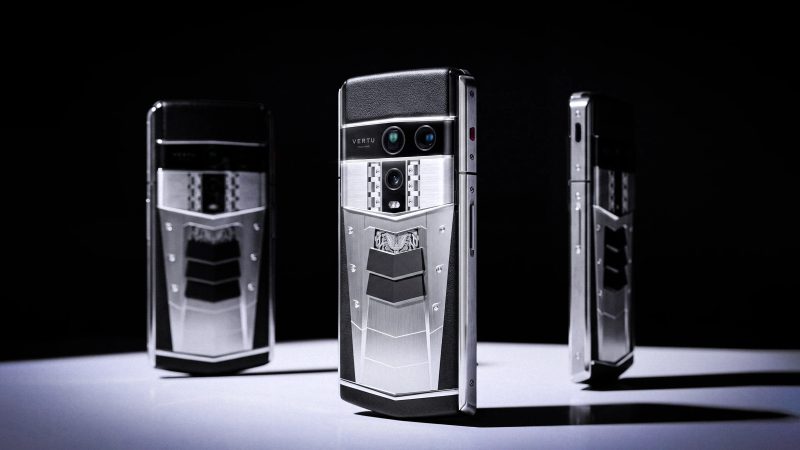
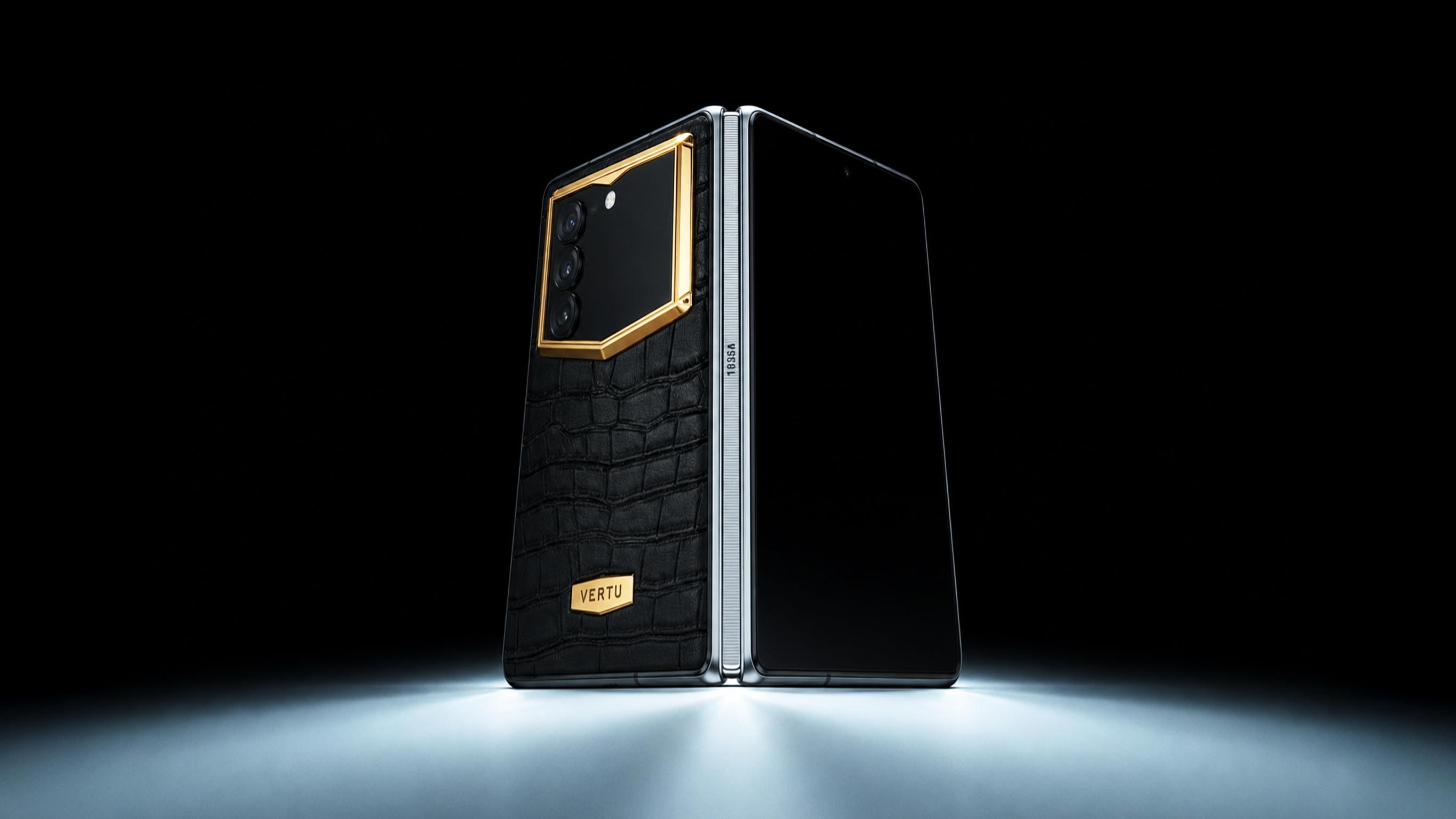
That’s where a category like VERTU Alpha Fold fits. It’s not a “chip-first” proposition. It’s a “workflow-first” one.
To keep this criteria-based, here’s the only point that matters: if your buying criteria includes service and privacy posture as first-class requirements, you should evaluate devices that treat those as core product design choices.
FAQ: Snapdragon 8 Gen 3 foldable phones
Is Snapdragon 8 Gen 3 still a good choice for a foldable?
Yes, for most buyers. It’s a flagship-tier platform designed for premium phones, and it’s widely used in high-end devices. The deciding factor is less “Is the chip strong enough?” and more “Is the foldable engineered and cooled well enough to stay smooth?”
Will a Snapdragon 8 Gen 3 foldable phone guarantee good battery life?
No. The chipset helps, but battery life is the result of battery size, display efficiency, software tuning, and how you actually use the inner screen. Treat it as a supporting ingredient, not the outcome.
What should I prioritize: the chip, the hinge, or the software?
If you’re buying a foldable, prioritize in this order:
hinge feel and long-term comfort
software multitasking quality
thermal and battery behavior in your real scenarios
chipset tier (as a baseline requirement)
How can I confirm which foldables use Snapdragon 8 Gen 3?
Start with device pages you trust, then double-check using Qualcomm’s device finder.
Next steps
If you want to keep shopping criteria-based, write down:
your two non-negotiables
your red flags
whether on-device AI matters more for capability or for discretion
Then evaluate your shortlist with those filters.
If your shortlist includes a luxury, service-led foldable category, explore that angle with the same rigor: service model, privacy controls, long-term care, and how the device supports your day.
Disclosure: This article references VERTU pages. Editorial judgment remains the priority.