Introduction (premium limited edition tech gifts for the 2026 World Cup)
Limited edition tech gifts work in business settings for one reason: they do two jobs at once. They’re useful—something the recipient will actually keep in rotation—and they also carry a story: scarcity, provenance, and a sense of being chosen rather than purchased in bulk.
For 2026, that “story” matters more than usual. The World Cup is global, visible, and heavily copied. If you’re gifting to executives, clients, partners, or private assistants buying on someone else’s behalf, a gift that looks uncertain (or overly “fan”) can quietly backfire.
Why limited edition tech gifts resonate for 2026 business gifting
A premium tech gift is rarely judged by specs alone. It’s judged by signals:
Scarcity (was this easy to get, or deliberately selected?)
Finish (materials, weight, tactility, packaging)
Usefulness (travel, workdays, meetings, long-haul flights)
Provenance (is it legitimate, documented, and risk-free?)
Limited editions simplify the story. They give your gifting team a clean explanation that doesn’t feel like a pitch: “We reserved a small allocation early.”
What officially licensed means and why authenticity matters
“Officially licensed” is not marketing fluff. It’s a legal permission to use tournament intellectual property—names, marks, design elements—on products made by authorized partners.
FIFA explains its licensing and brand-protection approach in its Brand Protection guidance, and the tournament’s FIFA World Cup 26™ IP Guidelines (June 2024) outline what counts as official IP and how it is controlled.
For corporate gifting World Cup 2026 programs, that authenticity proof is part of the gift’s value—because it protects the recipient and your reputation.
Why you should care, even for “just gifts”:
- Reputational riskCounterfeits are obvious to the people you most want to impress.
- Legal riskUnlicensed customization (even “small” logo additions) can create infringement exposure.
- Procurement riskIf a vendor can’t prove rights, they can’t reliably deliver.
Start with the channel. The safest baseline is the Official FIFA Store’s World Cup 2026 collection. If you’re sourcing elsewhere, ask for proof of authorization and look for official authentication markers (hang tags/labels, legal notice, and other brand-protection features as described by FIFA).
How to use this guide by budget, licensing, and lead times
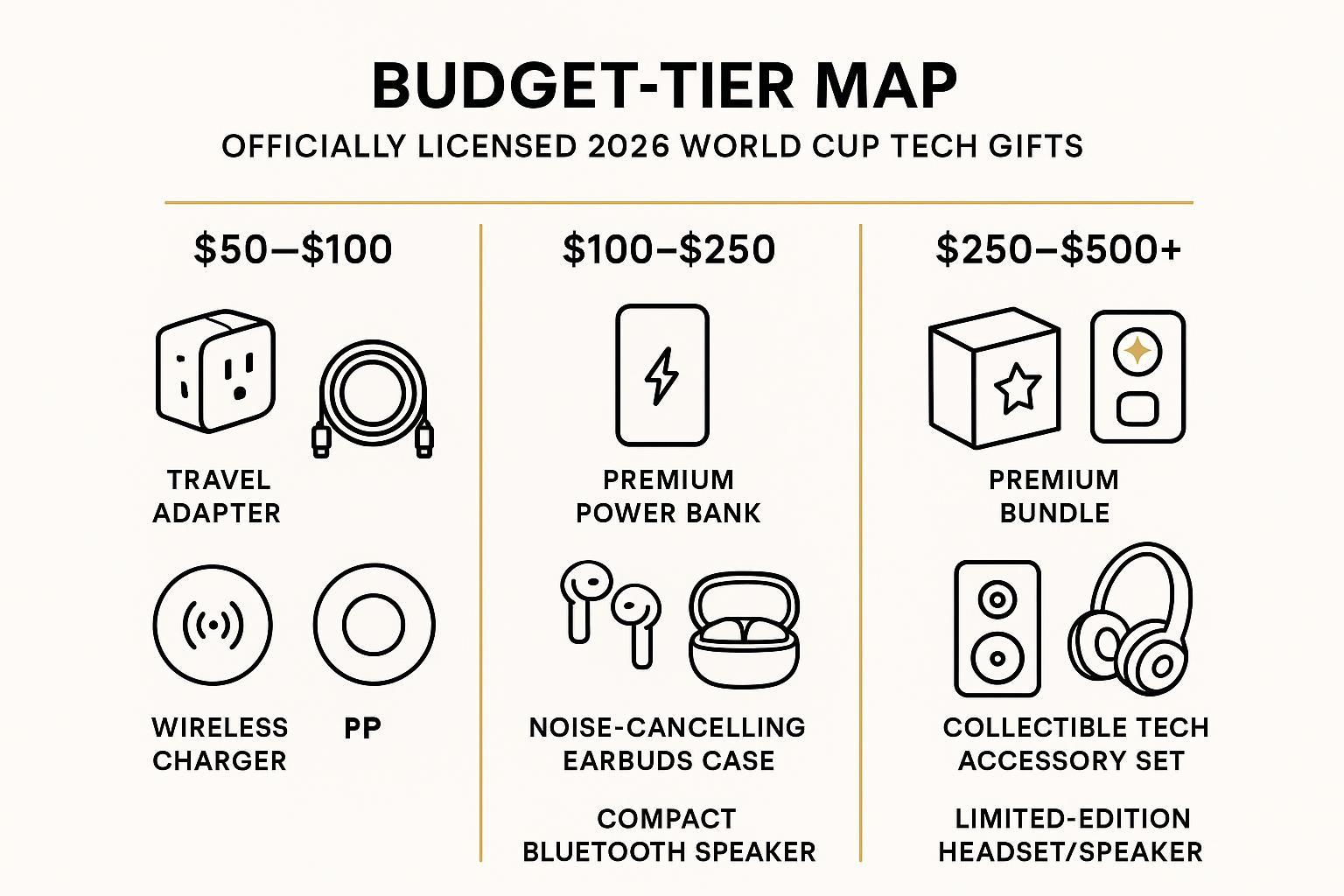
Use the budget tiers to decide how much story you need.
Lower tiers win on practicality and high-quality packaging.
Mid tiers win on perceived performance (travel-ready tech that feels “considered”).
Premium tiers win on scarcity and presentation—collectible sets, limited bundles, and concierge-level handling.
If you’re buying officially licensed World Cup 2026 merchandise, the “story” is already half-written—your job is to prove it, package it, and deliver it on time.
Then use the last two sections—compliance and timeline—to decide whether you can execute safely and on time.
Budget-tier licensed tech picks (premium World Cup 2026 gifts by spend)
The constraint that keeps this guide useful: these are categories designed for engraving or corporate-ready packaging, and they avoid gifts that require apps, accounts, or personal data collection.
$50–$100: Practical licensed tech
At this tier, you’re buying reliability and finish. Look for items with enough surface area for tasteful engraving (or a presentation card) and packaging that doesn’t feel mass.
Strong category picks
Cable and charging kits (travel-ready pouch, premium braiding, metal ends)
Why it works: universally useful, easy to package, minimal tech friction.
Travel adapters (multi-region, solid build, clean case)
Why it works: feels “executive practical” when presented well.
Desk-ready wireless charging pads (simple, weighted, premium texture)
Why it works: no app dependency; easy to place in an office.
What makes it feel premium (without going flashy)
A rigid gift box with a magnetic close.
A simple insert card that explains licensing verification and care.
Engraving on metal or leatherette surfaces (not printed branding).
Collector’s note: In the $50–$100 tier, the packaging is the product. If the box feels disposable, the gift feels disposable.
$100–$250: Mid-tier performance picks
This is the range where recipients notice performance—weight, battery confidence, audio quality, and how well it travels.
Strong category picks
Premium power banks (high-capacity, metal body, clean indicator)
Why it works: always useful; easy to engrave; no account required.
Compact Bluetooth speakers (premium grille, sturdy case, minimal controls)
Why it works: social, travel-friendly, and giftable.
“Work kit” bundles (charger + cable kit + travel case)
Why it works: cohesive, presentation-friendly, and easy to scale across recipients.
The mid-tier trap to avoid
Don’t buy “smart” gadgets that require onboarding, accounts, companion apps, or behavior data. Even when the gift is well-intended, onboarding friction becomes the experience.
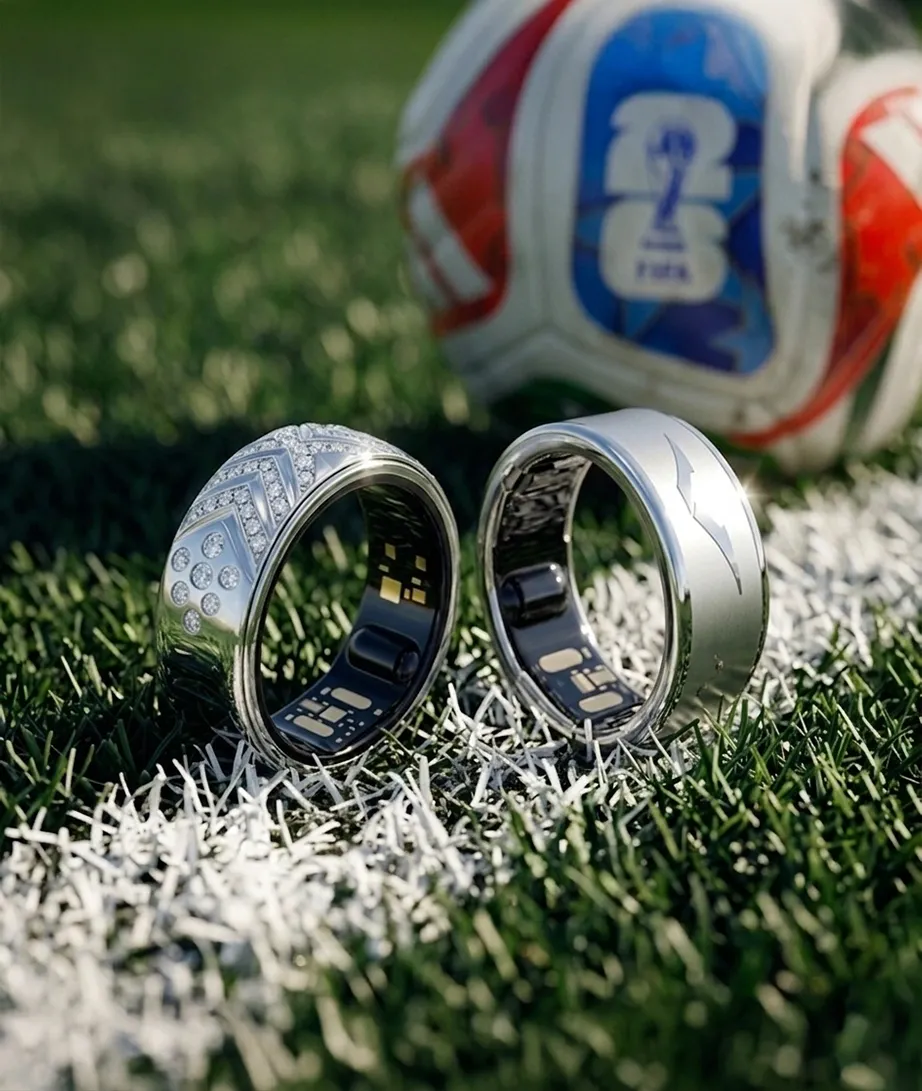
$250–$500+: Premium collectibles and bundles
In premium gifting, “collectible” often means documented: a clean story of authenticity, allocation, and presentation.
Strong category picks
Limited-edition bundles built for travel and events
Example bundle logic: power + audio + travel adapter + premium case.
Display-worthy desk sets
Example logic: weighted charger + cable kit + presentation base.
Premium audio accessories with a gift-ready case
Avoid biometrics/health features; prioritize “no account required” use.
What to ask vendors for at this tier
Proof of official licensing/authorization chain.
Samples (or high-fidelity photography) of tags/labels.
Packaging options (rigid boxes, sleeves, and insert cards).
Lead time split: production vs personalization vs freight.
Personalization, branding, and compliance
Personalization should increase perceived value—not turn the gift into promotional merchandise.
Premium personalization that feels bespoke
The best personalization is the kind you notice on the second look:
Micro-engraving (initials, date, or a discreet dedication inside the lid)
Serial-style labeling on the insert card (not on the product surface)
Materials-first packaging (leatherette, textured paper, minimalist foil)
Aim for “private club” energy. If the recipient can imagine the item being sold in a premium boutique, you’re on the right track.
Subtle branding rules that protect value
A simple rule: the more premium the gift, the less branding it should carry.
Use branding on packaging, not on the device.
Prefer a small mark on an insert card or the underside of a case.
Avoid oversized logo placement that competes with licensed design elements.
This protects the recipient’s willingness to use the item publicly. It also protects your own brand: subtlety reads like confidence.
Licensing and legal checks before you commit
Treat licensing as a procurement workstream, not a last-minute checkbox.
Start with FIFA’s official materials:
FIFA’s Brand Protection guidance describes why counterfeits are a major risk and highlights the role of official authentication markers.
The tournament’s FIFA World Cup 26™ IP Guidelines (June 2024) outline what is protected and how official intellectual property should be handled.
For direct purchasing, the Official FIFA Store’s World Cup 2026 collection is the simplest authenticity baseline (Official FIFA Store).
Your internal checklist
- How to verify authentic FIFA merchandisedocument the seller’s authorization, inspect authentication markers on samples, and keep an internal approval trail.
Confirm the vendor can document authorization to sell officially licensed products.
Confirm your customization does not add protected marks, names, or lookalike designs.
Require written warranties: authenticity, right-to-sell, and indemnity language.
Keep an approval record: proof files, samples, and packaging sign-off.
⚠️ Warning: The fastest way to create risk is to “improve” a licensed design by adding marks you don’t own. If you need co-branding, do it on packaging, not on the licensed artwork.
Procurement timeline and sourcing tips
World Cup timing creates two pressures: allocation (limited runs sell through) and lead times (personalization and logistics compress fast).
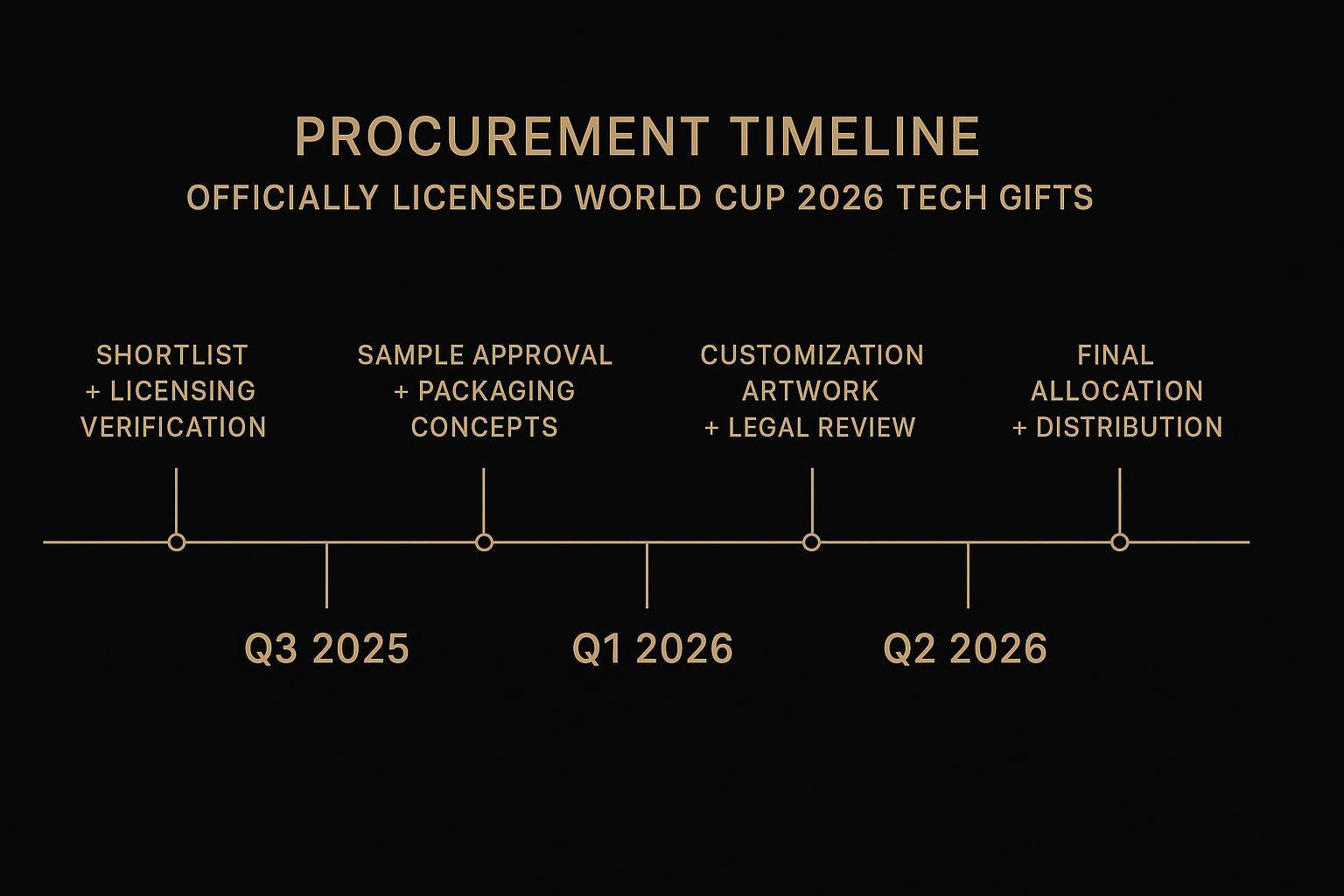
Your 2026 World Cup procurement timeline
A practical timeline that reduces risk:
- Q3 2025Decide recipient tiers; shortlist licensed categories; begin channel verification.
- Q4 2025Request samples; lock packaging direction; confirm personalization feasibility.
- Q1 2026Finalize artwork (if any), legal review, and order quantities; reserve allocations.
- Q2 2026Production + quality control; confirm freight and distribution plan.
- Q3 2026Final delivery windows; contingency shipping; staged distribution.
Authentic channels and allocation strategy
Start with channels where authenticity is structurally enforced.
The baseline: the Official FIFA Store’s World Cup 2026 collection.
For large programs, favor partners publicly named as official retail operators. For example, Fanatics announced it was selected to operate FIFA World Cup 2026 stadium and fan-festival retail experiences in its official press release (2025).
Allocation strategy that avoids last-minute compromises:
Reserve a core allocation early for top-tier recipients.
Keep a secondary allocation for late adds (PAs will thank you).
Order samples in parallel with legal checks so you’re not delayed at the end.
Risk management and fallback planning
Your primary risk isn’t cost. It’s uncertainty.
The risk management logic is simple: you can keep premium World Cup 2026 gifts on track if you design a fallback before you need it.
Build a fallback that keeps the gift premium even if one element slips:
- Fallback A (product)a different licensed item in the same tier, already sample-approved.
- Fallback B (personalization)switch from engraving to insert-card personalization.
- Fallback C (logistics)ship bulk to a local pack-out partner for last-mile control.
Key TakeawayIf your program relies on a single vendor, a single SKU, and a single delivery window, it’s not a premium gift program—it’s a gamble.
Conclusion
If you want premium World Cup 2026 gifts that don’t introduce risk, keep the decision simple:
Use budget tiers to choose the right level of performance and presentation.
Treat official licensing as a credibility requirement, not a design detail.
Build personalization around craftsmanship (engraving, packaging, insert cards) rather than loud branding.
Start early enough that you can verify, sample, and reserve allocations—without rushing.
Immediate next steps:
Choose your tiering (top clients vs broader list) and lock your target categories.
Confirm your sourcing channel can document authenticity.
Request samples and packaging options.
Put the Q3 2025–Q1 2026 milestones on a real calendar so you’re never forced into last-minute substitutions.