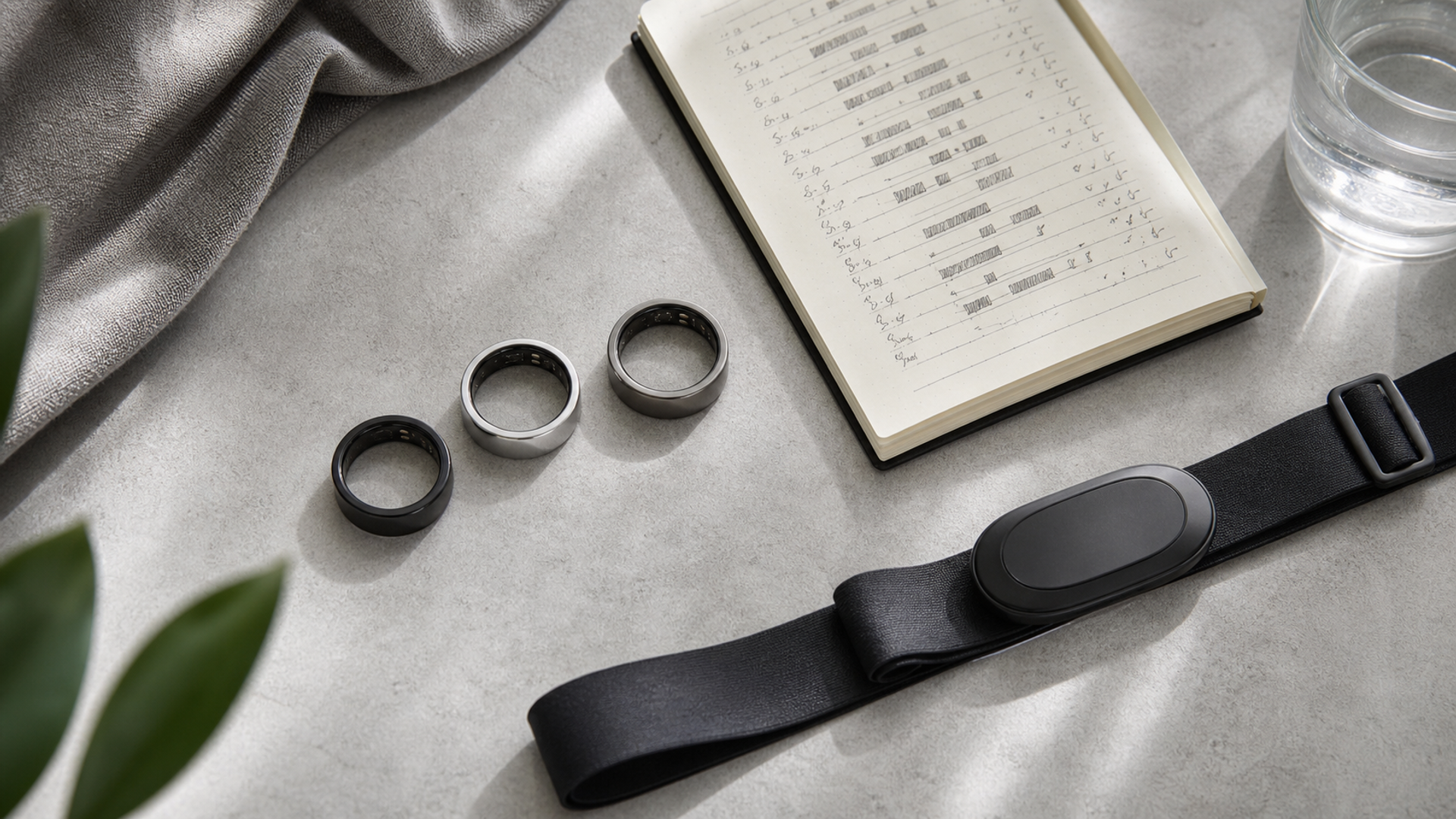
There is no honest single answer to "Which smart ring is most accurate?" Accuracy changes with the metric, the fit, the activity and the person wearing it. Oura Ring 4 is the safest overall choice for consistent overnight trends and a mature interpretation layer. Samsung Galaxy Ring is strongest when paired with Samsung Health and other Galaxy devices. Ultrahuman Ring AIR is attractive for recovery and circadian coaching without a mandatory fee, but a serious buyer should compare the experience metric by metric rather than trust one headline score. For the adjacent decision, see our 24-hour smart-ring sizing test.
The answer at a glance
| What you care about | Best starting choice | Why |
|---|---|---|
| Sleep and overnight consistency | Oura Ring 4 | Mature sleep presentation and adaptive sensor system |
| Galaxy ecosystem | Samsung Galaxy Ring | Samsung Health integration and Energy Score |
| Subscription-free coaching | Ultrahuman Ring AIR | Core data without a recurring access fee |
| Live running or cycling metrics | None of them alone | A GPS watch or chest strap is the better instrument |
| Medical decisions | None | Consumer rings are wellness devices, not clinical assessments |
This table is a buying recommendation, not a laboratory ranking. Manufacturers update algorithms frequently, and an independent test from one firmware version may not describe the product six months later.
What "accuracy" means for a smart ring
Reviewers often compress five different questions into one word.
Measurement accuracy: how close a reading is to an appropriate reference instrument.
Repeatability: whether the ring produces a similar result under similar conditions.
Coverage: how often it captures a usable signal instead of leaving a gap.
Classification: whether the software labels sleep stages or activities correctly.
Interpretation: whether the final score leads to a sensible decision.
A ring can measure overnight pulse consistently yet misclassify a workout. It can estimate sleep duration well while disagreeing with another device about sleep stages. It can also generate a beautiful score from incomplete data. Those are different failures.
Oura Ring 4: strongest overall consistency
Oura Ring 4 uses what the company calls Smart Sensing. Its algorithms select signal paths based on the wearer's finger and current conditions. The hardware uses green and infrared photoplethysmography sensors for heart rate, a temperature sensor and an accelerometer. Oura states that correct orientation places the sensors on the palm side of the finger; fit therefore remains part of the measurement system, not a cosmetic detail.
Oura's advantage is continuity. The app has years of product development behind its sleep, readiness and activity views. It automatically detects many activities and asks the wearer to confirm or edit them. That request for confirmation is a strength, not an embarrassment. A ring has no screen and limited context; letting the user correct the record prevents a confident error from becoming part of a long-term trend.
For fitness, Oura's 2026 live activity feature is useful but revealing. Live pace and distance appear in the phone app, while live heart rate can come from a third-party monitor. In other words, Oura itself acknowledges the limit of a ring as a real-time sports instrument.
Buy Oura when your priority is a dependable daily picture rather than the absence of any imperfect reading. Remember that the complete experience requires an active membership.
Samsung Galaxy Ring: accurate enough is not the whole story
Samsung combines the Galaxy Ring's measurements with Samsung Health. Its Energy Score uses sleep, daily activity and heart-rate information to summarise readiness. The ring includes multiple sensors, weighs between 2.3 and 3.2 grams by size and is designed for continuous wear.
Its most persuasive case is ecosystem context. If a Galaxy Watch and Galaxy phone are already part of your routine, Samsung can reconcile information inside one health platform. That may be more useful than a narrow win in a single benchmark.
The trade-off is portability. A buyer who may change to another phone brand should check what remains available, how data exports work and whether every desired feature survives outside the Galaxy environment. Accuracy that is trapped in an ecosystem can become irrelevant after the next handset purchase.
Ultrahuman Ring AIR: useful interpretation without the monthly fee
Ultrahuman Ring AIR uses infrared, red and green optical sensors, a skin-temperature sensor and motion sensors. The company quotes four to six days of battery life and does not charge a recurring fee for access to core ring data.
Its app focuses heavily on timing: sleep, recovery, movement and the relationship between behaviour and the user's circadian rhythm. For an engaged user, this framing can turn data into experiments. Move a late coffee earlier. Compare recovery after an evening meal. Watch what happens during a travel week.
The weakness is the same quality that attracts enthusiasts. More prompts and interpretations create more chances to overreact. If a ring tells you that one night was poor, that is not a command to cancel training. Look for a pattern over several days and compare it with how you feel.
Ultrahuman has also introduced newer hardware in selected markets. Verify the exact model, regional availability and regulatory wording rather than assuming every online review describes the product you can actually buy.
Metric-by-metric buying judgement
Sleep duration
For most buyers, total sleep time and sleep timing are more actionable than a minute-by-minute stage chart. Oura's mature presentation gives it the edge here. Samsung is competitive for someone already committed to Samsung Health. Ultrahuman makes the timing relationship especially prominent.
Do not compare three rings against one another and call the majority correct. They may share similar sensors and assumptions. The right reference for a formal validation study is not another consumer wearable.
Resting heart rate and overnight trends
All three can be useful when the ring fits correctly and the wearer is still. The point is not whether one night differs by a beat or two. The useful signal is a sustained change from the wearer's own baseline.
Cold fingers, loose fit, movement and tattoos or skin characteristics can affect optical sensing. A sizing kit and consistent wearing position often improve data more than switching brands.
Workout heart rate
This is where a ring is least likely to replace a chest strap. Gripping weights, rapid arm movement and changing blood flow make a clean optical signal harder. Rings can record the session and contribute to a daily activity picture, but athletes who train by heart-rate zones should use a dedicated sports sensor.
Steps and activity detection
Automatic classification is convenient, but it remains an inference. Oura explicitly allows detected activities to be confirmed, edited or dismissed. Samsung and Ultrahuman also depend on software interpretation. The best system is the one that makes correction easy and avoids double-counting imported workouts.
Recovery scores
Recovery is not measured directly. It is a model built from several measurements and the company's weighting choices. Two rings can read similar overnight signals and produce different advice. Treat the score as a hypothesis to test against mood, soreness, travel, training load and schedule.
A fair home test before the return window closes
Run a simple seven-night check.
Wear the ring in the recommended position and at the same tightness.
Keep your normal routine; do not manufacture a perfect week for the device.
Note bedtime, wake time and any long awake period by hand.
Record two or three workouts using your usual trusted sports device.
Count missing data, implausible events and corrections, not just headline scores.
Check whether the app helps you make one better decision.
The best ring is the one that survives this ordinary-life test. A product that wins a controlled review but loses connection, irritates the finger or requires constant correction will not produce accurate long-term data.
Why two people can get different results from the same ring
Optical wearables do not observe the body from a laboratory bench. They observe light reflected through moving tissue. Fit, finger anatomy, temperature, skin characteristics, circulation and motion can change signal quality. Software then decides which samples to keep and how to turn them into a nightly result.
That explains several common review contradictions. A ring may perform well for one tester and leave gaps for another. A firmware update may improve one activity while changing battery consumption. A larger ring size may carry a different battery capacity. One reviewer may compare against a chest strap during intervals; another may compare only overnight resting values.
When reading an accuracy claim, ask four questions:
What reference instrument was used?
How many people and nights were tested?
Which firmware and app version were installed?
Was the result a group average, or did it describe individual error?
Without those details, a percentage can create more confidence than knowledge.
Consistency usually beats novelty
For everyday use, a stable personal baseline is often more useful than chasing the newest score. If the ring has recorded six months of sleep and resting trends, switching platforms resets part of the interpretation. Export the old data where possible, overlap the devices for a week and expect their scores to disagree. The goal is continuity of decisions, not forcing two proprietary models to show the same number.
Final verdict
Oura Ring 4 is the best default answer for most people asking about overall smart-ring accuracy because it combines consistent overnight sensing with the most mature user experience. Samsung Galaxy Ring is the better answer for a Galaxy household. Ultrahuman Ring AIR is the rational subscription-free alternative for an engaged user.
None is "most accurate" at everything. Choose the metric that changes your decisions, then judge fit, missing data and interpretation around that metric.
Consumer smart rings provide wellness information. They do not diagnose disease, and their readings should not replace professional medical assessment.