

Introduction
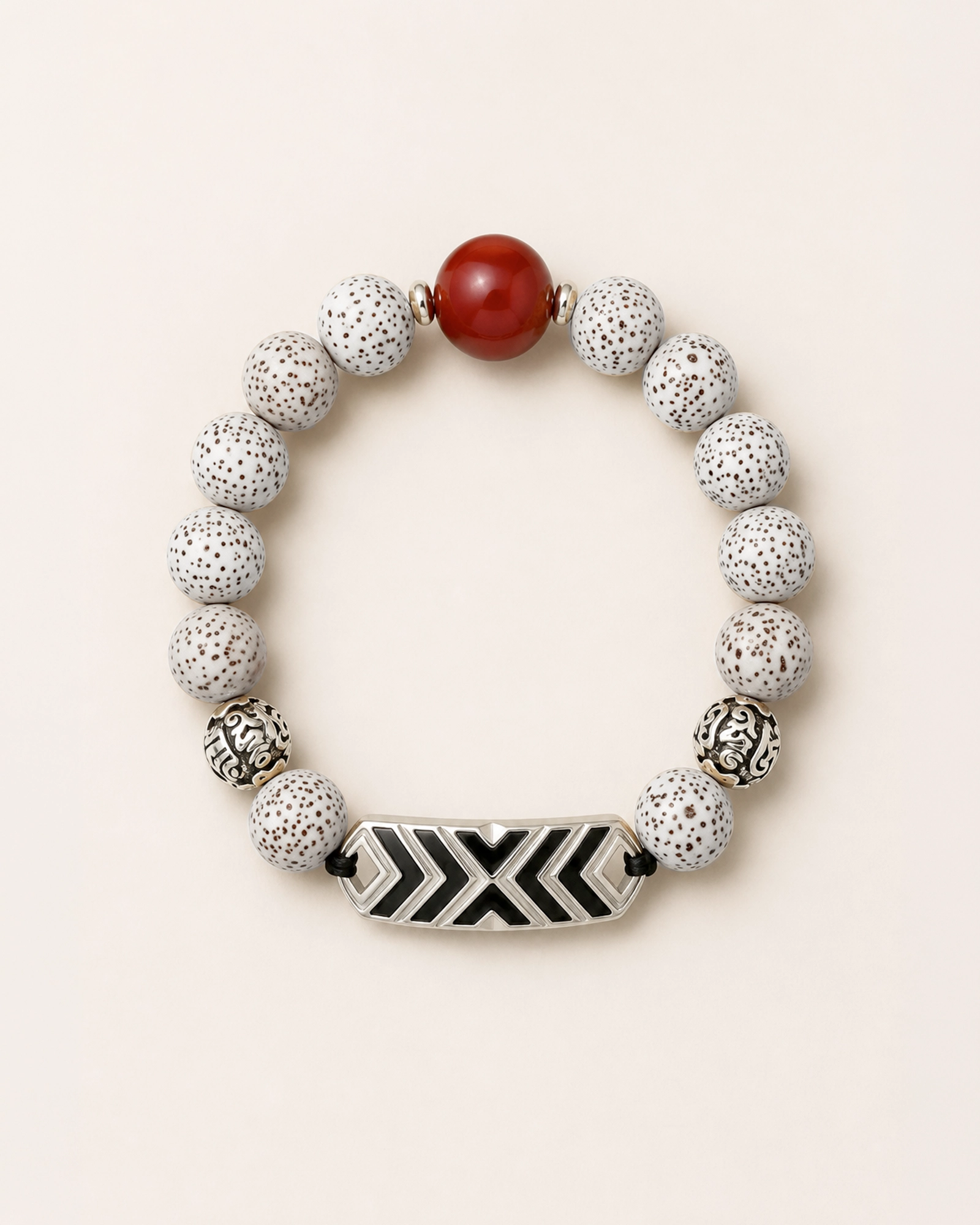
A new kind of Web3 tool is quietly becoming relevant: the luxury hardware wallet wearable. Not a gadget that asks for attention. A piece of discreet hardware that lets you approve what matters, when it matters.
Three forces are driving it.
First, more serious value now moves through on-chain workflows—treasury transfers, fund rebalancing, NFT custody, tokenized access—often initiated away from a desk. Second, threat models have matured. The biggest losses are no longer “someone hacked the chain,” but someone tricked a signer, swapped an address, or pushed a blind approval. Third, taste has shifted: for some owners, security hardware should feel like jewelry—durable, personal, and quietly engineered.
The people who benefit are predictable: executives who need clean approvals without exposing their phone; travelers who sign while moving between lounges, meetings, and borders; active investors who rebalance across chains; collectors who treat NFTs and tokenized assets as part of a portfolio with provenance.
And it’s distinct from phones and smartwatches.
Phones are powerful but noisy: they’re general-purpose computers with broad attack surfaces. Smartwatches are great at notifications, but typically not designed as dedicated signing devices with the same “what you see is what you sign” assurance.
The promise of a luxury hardware wallet wearable is narrower, and therefore stronger: secure, discreet, stylish approvals—built around hardware isolation and clear confirmations.
Key TakeawayIf your signing device can’t show you what you’re approving, convenience becomes a liability.
What it is
A luxury hardware wallet wearable is a dedicated signing device you can wear—typically a ring or wrist-wearable—built to keep private keys isolated while still enabling fast approvals in real life.
Core form factors
The two common forms are:
- Ring-style signersminimal, tactile, private. Designed for quick confirmation gestures.
- Wrist-wearablesmore surface area, which matters for security—more room for a trusted display that can show critical details.
In both cases, the objective is the same: keep the signing key in a hardware boundary and make confirmation ergonomically easy.
Why it matters
The most important “feature” is not wireless. It’s separation.
A wearable hardware wallet is valuable because it creates a deliberate friction point between “a request to sign” and “your final approval.” That friction is where modern theft is stopped.
When you can glance at a trusted display and confirm an address, an amount, and a network, you collapse an entire category of attack: malware or phishing that changes what you think you’re approving.
Key differences
A wearable hardware wallet differs from a typical phone wallet in one architectural idea: the private key doesn’t live in the same place as your browsing, messaging, and app installs.
Hardware wallets are designed to keep keys offline and sign internally; the phone or computer proposes a transaction, but the signer is the gatekeeper. That separation is why cybersecurity guidance so often distinguishes “hot” software wallets from “cold” hardware wallets.
If you want a deeper explanation of how a Web3 phone differs from traditional smartphones, VERTU’s guide on digital ownership is a useful conceptual bridge.
Security architecture
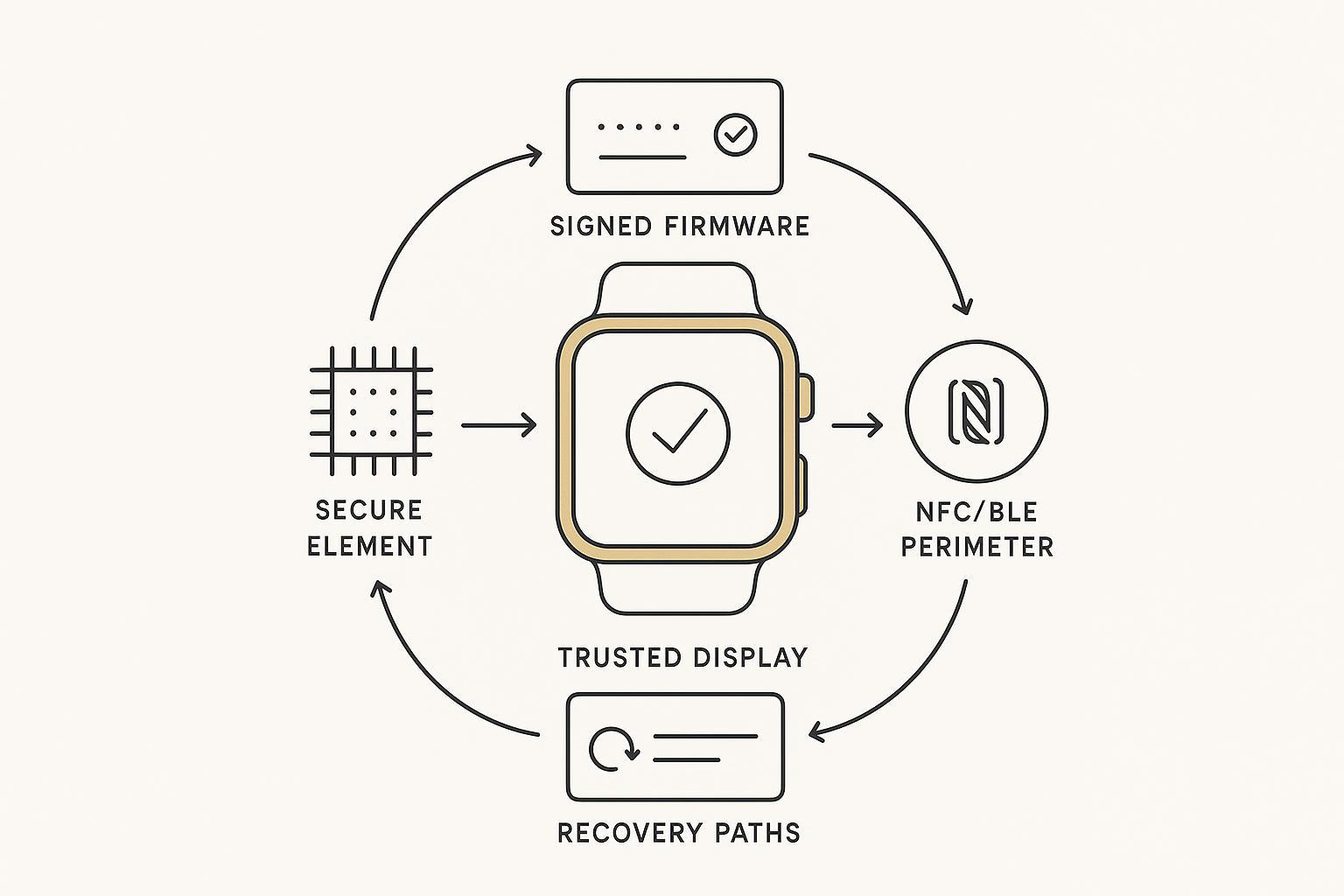
A luxury hardware wallet wearable earns its place when it gives you two things at once: a credible signing boundary, and a confirmation flow you can actually trust.
Secure elements
A secure element is a tamper-resistant chip built to store and process secrets, like cryptographic keys, inside a hardened boundary. The point is simple: the private key stays inside, and only the signature leaves.
Analog Devices explains the role of secure elements as dedicated security components in AN2604 on secure elements. For hardware wallet context, Ledger’s security team describes why the secure element matters in its secure element overview.
So what? If the key never leaves the secure element, a compromised phone can still ask for signatures—but it can’t quietly steal the key.
Connectivity choices
Wearables typically rely on NFC and/or Bluetooth Low Energy (BLE). That scares some people, but it’s the wrong place to focus.
The radio link isn’t the trust boundary. The confirmation is.
Even in Ledger’s own explanation of a wireless model, the claim is not “Bluetooth is invulnerable,” but that the device’s security relies on the secure element and explicit user consent on-device—see Ledger’s Nano X Bluetooth security model (2019).
A more conservative way to think about it is threat modeling. Cossack Labs’ discussion of NFC wallet vulnerabilities treats NFC as “available for active and passive MitM” and argues you should assume both parties could be compromised—see Cossack Labs’ NFC wallet threat modeling (2023).
What to evaluate in practice:
A good wearable hardware wallet doesn’t ask you to trust the phone. It gives you a readable, verifiable moment.
⚠️ WarningNever approve “Data Present,” unreadable hex, or a vague prompt you cannot verify. That’s blind signing.
If you want a wearable-specific checklist lens, VERTU’s overview of what makes a smartwatch act like a signer is a helpful frame: hardware wallet smartwatch features.
Recovery and AA
Wearables make approvals elegant. Recovery is where seriousness shows.
Traditional self-custody often relies on a seed phrase. It works, but it’s unforgiving: lose it, and you may lose access.
Account abstraction (AA) changes the mental model. Instead of a wallet being “a key,” the account can become programmable logic—allowing guardrails like spending policies and recovery paths such as trusted guardians (social recovery). Ethereum’s own roadmap describes the idea and motivation in Ethereum.org’s account abstraction roadmap.
So what? A wearable can be your daily signer, while AA-style recovery and policy can reduce single-point-of-failure risk—if configured carefully.
Lifestyle and utility
A luxury wearable signer is not just about “on-chain.” It’s about keeping decision-making friction low while keeping assurance high.
Travel approvals

Travel compresses time and attention. That’s exactly when you’re most likely to approve something you shouldn’t.
A wearable shifts the workflow:
The phone can remain the interface.
The wearable becomes the final checkpoint.
Approval happens with a glance and a deliberate action.
How to verify: In airports and hotels, treat the environment as hostile. Verify the destination address on the wearable itself, not on the phone screen.
Identity and access
Wearable form factors pair naturally with access control—physical presence, intentional gestures, and low-visibility authentication.
In practice, the most valuable use is not “sign everything.” It’s segmenting risk:
Use the wearable for approvals that must happen fast.
Keep deep cold storage separate.
Treat identity credentials like keys: purpose-built, not all-in-one.
Portfolio and NFTs
For active investors and collectors, wearables make two things easier: frequent, small approvals and a consistent approval ritual.
The most important discipline is still custody structure. Keep a “spend” wallet small, and keep the rest behind slower, higher-assurance controls.
Within VERTU’s ecosystem, crafted devices quietly align luxury wearables with Web3 ownership and wallet-linked experiences—see VERTU MetaWatch.
Conclusion
A luxury hardware wallet wearable is not about turning finance into fashion. It’s about discreet assurance: approvals you can trust, in moments where trust is usually weakest.
Modern recovery matters as much as modern hardware. Seed phrases remain a reality, but account abstraction can introduce policy and recovery options that reduce catastrophic failure—when implemented with care.
Match the form factor to your risk profile. If you need maximum clarity, prioritize a wearable with a truly readable trusted display. If you need maximum discretion, prioritize ergonomics—but do not sacrifice verification.
Start small, then scale custody. Begin with a limited “travel” wallet, practice the approval ritual, and only then expand the value you allow it to authorize.
Disclosure: This article references VERTU pages. Editorial judgment remains the priority.
![Top 10 Tourbillon Watches for Men [2026 Latest]](https://cdn.sanity.io/images/e0gp1l2g/production/8cb6bc45133cf9453382fc7d074465af588bb610-1800x1080.webp?w=180&h=180&q=78&auto=format&fit=crop)
![Top 10 Tourbillon Watches for Men [2026 Latest]](https://cdn.sanity.io/images/e0gp1l2g/production/8cb6bc45133cf9453382fc7d074465af588bb610-1800x1080.webp?w=800&h=450&q=82&auto=format&fit=crop)
![Top 10 Anniversary Gift Watches for Men [Full Guide]](https://cdn.sanity.io/images/e0gp1l2g/production/00dfa030a876edbe6ea7b146f6b1d8197c7656b0-3840x1860.webp?w=800&h=450&q=82&auto=format&fit=crop)