

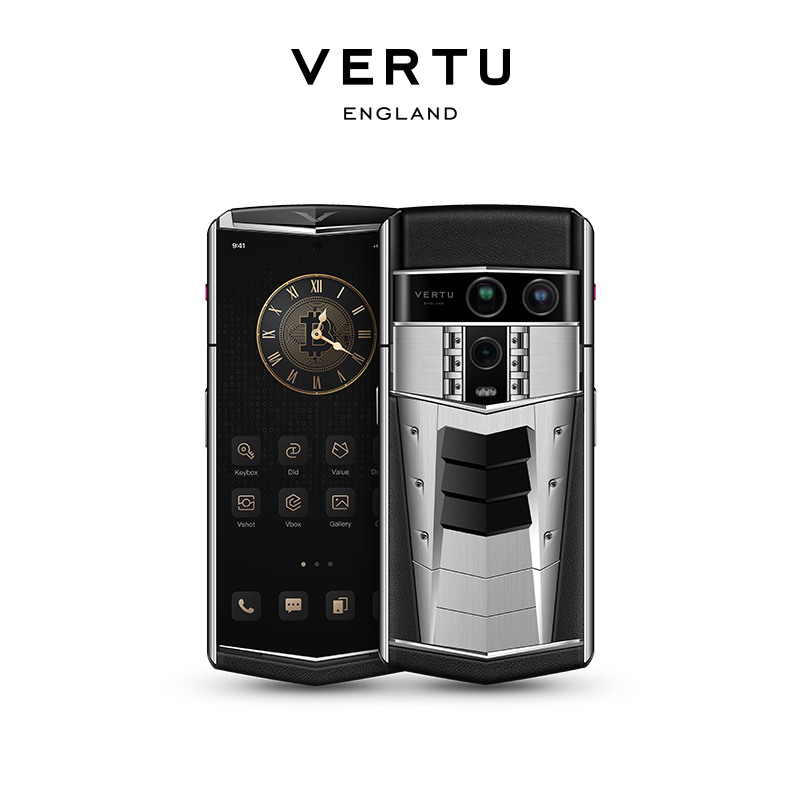
Key takeaways
An “AI agent phone” is designed to complete work, not just answer questions.
A practical way to evaluate any agent system is the loop: perception → memory → planning → execution.
The right question isn’t “Can it do X?” It’s “Where does it ask for approval, and what stays under your control?”
The problem Agent Q is trying to solve
If you’re running a business, most “mobile productivity” advice misses what actually burns time.
It’s not the lack of apps. It’s the work between apps: copying details from a message into a calendar invite, turning a meeting into follow-ups, translating intent into five separate micro-actions, and doing all of it while you’re moving.
VERTU frames Agent Q as a move from apps to agents. The promise is simple: state the outcome, then approve what matters.
What makes an AI agent phone different from a chatbot
Most people have tried an AI assistant and walked away with the same conclusion: helpful for drafting, not reliable for execution.
The difference is autonomy.
IBM describes AI agents as systems that can plan and act toward a goal using the tools and permissions available to them, rather than staying purely reactive to each prompt (IBM’s explanation of AI agents vs. AI assistants). That framing matters because it changes what you should expect from the device.
A chatbot answers. An agent keeps going.
A chatbot responds to your wording. An agent tracks your outcome.
That does not mean you should hand over control. It means the interface shifts from “open app, do step” to “state intent, review results, approve actions.”
How Vertu Agent Q turns intent into action
VERTU’s own description of the system starts with VAOS, the Vertu Agent Operating System. The company describes VAOS as a four-part cognitive loop: perception, memory, planning, and execution (VAOS (VERTU Agent Operating System)).
Here’s how to translate that into a mental model you can actually use.
1) Perception: capturing intent without forcing “app language”
Perception is the part that listens for what you mean, not just what you say.
In practice, that implies three things. You can speak in outcomes. The system has to read context. And it has to decide what it doesn’t know.
If you say “Move my Friday flight earlier,” a capable system has to clarify which Friday and which flight, then propose options that respect your calendar and time zone. Guessing is the fastest way to lose trust.
Collector’s note: A luxury device earns its place when it reduces cognitive load, not just taps. The best test is whether you can state intent in one sentence and be asked only what’s necessary.
2) Memory: preferences that reduce repeated decisions
Memory is where an agent system stops feeling like a demo.
When a phone can reuse stable preferences, it removes dozens of small decisions you’d otherwise re-make every week: seating preferences, the way you like meeting notes formatted, which time zone you default to when you travel, which contacts require higher discretion.
VERTU positions this as on-device intelligence and preference learning within the VAOS model (see the VAOS reference above). The buyer-relevant consequence is straightforward. If memory is real, your future requests get shorter.
3) Planning: turning one request into a sequence
Planning is where most assistants fail.
A request like “Prepare me for the meeting” is not one task. It’s identifying the meeting and participants, pulling relevant history, summarizing what changed since last time, drafting the questions that matter, and turning decisions into follow-ups.
VERTU describes VAOS as having a planning engine that decomposes goals into workflows and coordinates multiple agents (see the VAOS reference above).
Your evaluation lens here is simple: does the system show you the plan in a way you can correct, or does it hide the steps and hope you won’t notice when it gets something wrong?
4) Execution: doing the work, then surfacing what needs approval
Execution is the “so what.” It’s the part that takes the plan and performs actions.
In an agent phone, execution typically means coordinating different specialist capabilities and returning outputs you can accept, edit, or reject. That could be a drafted email, a set of travel options, or a meeting summary with tasks assigned.
VERTU positions Agent Q as orchestrating a network of specialist agents through VAOS (see the VAOS reference above). Whether that matches your expectations depends on one thing: how the phone handles boundaries.
Ruby Talk: how requests are initiated and routed
Workflows begin with a trigger.
On Agent Q, VERTU positions Ruby Talk as the one-touch entry point that activates the agent system and routes the request to the right mix of AI and human support (Ruby Talk).
The operational point is not the button itself. It’s the routing philosophy.
In VERTU’s description, you don’t have to choose between “AI” and “human” first. You state what you need, and the system routes it.
That matters most for requests that have real stakes: a sensitive schedule change, a high-touch travel plan, a relationship-driven introduction.
Approvals, boundaries, and trust: what you should verify
A phone that can execute is only useful if it’s governed.
So before you get excited about agent workflows, ask three sober questions.
Where does it ask for approval?
If the system proposes actions, you should be able to review the output before it commits. Drafts before sending. Options before booking. Summaries before they’re shared.
What stays local, and what leaves the device?
VERTU positions Agent Q with an “Edge Autonomy” approach and on-device reasoning within the VAOS loop (see the VAOS reference above).
Even if you’re comfortable with cloud tools, the discipline is the same. Define what counts as sensitive for you, and ensure the system’s behavior matches that.
What happens when intent is ambiguous?
Ambiguity is not an edge case. It’s the daily reality of executive work.
A capable agent system should ask a precise clarification question when needed, and make its assumptions visible when it proceeds.
How to verify: Before you trust any agent workflow, run a controlled test. Give it a request that could be interpreted in two ways, and see whether it asks the right follow-up question, shows a proposed message, and waits for your approval.
A realistic workflow example: travel and meeting follow-up
Here’s a scenario most leaders recognize.
You’re leaving a meeting, walking into a car, and your next stop is an airport. You need a clean summary of what was decided, follow-ups drafted to the right people, and your travel plan adjusted without a cascade of app work.
A workflow-style system would treat that as a single intent. You initiate the request. The system captures context, generates outputs, and pauses at the points where approval is required.
If you want the official overview of the device family this is built around, start with VERTU Agent Q and read it with the evaluation questions above in mind.
Common misconceptions (and what to expect)
“If it’s an agent, it should never ask questions”
The opposite is true. The most reliable systems ask fewer questions, but they ask them at the right time.
“More agents means better outcomes”
Not necessarily. What matters is orchestration: how the system chooses the right capability, sequences steps, and surfaces decisions back to you.
“Agent workflows are only about speed”
Speed is a side effect. The main benefit is reduced cognitive load and fewer dropped details when you’re moving between contexts.
Next steps
If the idea of a phone that translates intent into workflows fits how you operate, review VERTU’s Agent Q page and focus on the mechanics: how it initiates requests, where it asks for approval, and how it handles sensitive context.
Disclosure: This article references VERTU pages. Editorial judgment remains the priority.
![Top 10 Tourbillon Watches for Men [2026 Latest]](https://cdn.sanity.io/images/e0gp1l2g/production/8cb6bc45133cf9453382fc7d074465af588bb610-1800x1080.webp?w=180&h=180&q=78&auto=format&fit=crop)
![Top 10 Tourbillon Watches for Men [2026 Latest]](https://cdn.sanity.io/images/e0gp1l2g/production/8cb6bc45133cf9453382fc7d074465af588bb610-1800x1080.webp?w=800&h=450&q=82&auto=format&fit=crop)

![Top 10 Anniversary Gift Watches for Men [Full Guide]](https://cdn.sanity.io/images/e0gp1l2g/production/00dfa030a876edbe6ea7b146f6b1d8197c7656b0-3840x1860.webp?w=800&h=450&q=82&auto=format&fit=crop)