Key Takeaways
- A consumer wellness ring can organise personal trends; it cannot determine a diagnosis, direct treatment or prove that a symptom is harmless.
- An unusual score is a prompt to check context, not a stand-alone medical verdict. A normal-looking score is not an all-clear.
- For symptoms or treatment questions, use qualified medical advice and appropriate urgent care rather than waiting for an app alert.
- VERTU COR RING is documented for general wellness and personal insight; its interpreted scores are estimates, not clinical measurements.
Ring data can tell you how certain tracked signals have changed over time, but it cannot tell you what disease you have, whether a prescribed treatment should change or whether a concerning symptom is safe to ignore. A smart ring is most useful when its trends are treated as personal context. Decisions about symptoms, tests and treatment belong with a qualified healthcare professional. If you have an urgent medical concern, seek appropriate urgent help without waiting for a ring reading or notification.
What a smart ring can usefully show
Consumer rings may collect or estimate information about heart rate, heart-rate variability, sleep, activity and related wellness patterns. A sequence of observations can make it easier to notice that your routine has changed: you slept less this week, your recorded resting pattern shifted, or an interpreted recovery score moved away from its usual range. This can support reflection and help you formulate a question for a clinician.
Personal baseline matters. One number is less informative than the circumstances around it and whether a similar pattern appears repeatedly. Even a repeated pattern needs interpretation: illness, exercise, travel, stress, medicines, ring fit and data gaps can all be relevant, and a ring cannot determine which explanation applies to you. The device may display a precise number, but precision of display is not proof of clinical accuracy or diagnostic meaning.
The US Food and Drug Administration's 2026 general-wellness guidance distinguishes low-risk healthy-lifestyle uses from claims to diagnose, monitor or manage disease. That regulatory distinction helps explain why a wellness trend should not be treated as a medical conclusion. It does not establish the regulatory status of every ring; evaluate the stated intended use of the exact product and feature.
What ring data cannot determine
A ring cannot identify the cause of fatigue, dizziness, a change in sleep or an unusual heart-rate pattern on its own. It cannot rule out a problem because its dashboard looks ordinary. It cannot confirm that a medicine is working, select a dose or replace a test ordered by a clinician. A recovery or 鈥渁ge鈥?score is an interpretation of inputs, not an examination of all possible causes.
It also cannot guarantee an alert at the moment you need help. The absence of a notification is simply an absence of a notification. Sensors can have gaps, a ring may be off the finger, a battery may be depleted, an app may not be connected or the feature may not be designed to detect the situation at all. Do not use a quiet app screen as a reason to dismiss symptoms.
The American Heart Association's heart-rate explainer describes pulse as one tool for understanding health and advises seeking professional advice for a heart rate that is unusual for you, particularly with symptoms. Its guidance illustrates why a number must be considered alongside how a person feels. A ring-derived number is not a substitute for the assessment it describes.
How to respond to an unusual score
- Start with symptoms and safety. If you feel seriously unwell or have an urgent concern, seek urgent medical help according to local guidance. Do not wait to collect more ring data.
- Look for obvious context. Note recent sleep, activity, travel, stress and whether the ring was worn and charged as usual. Do not use a possible explanation to rule out a medical problem.
- Record the pattern without diagnosing it. Save the time, the app's trend, your symptoms if any, and any relevant changes in routine. Note missing data or a loose fit.
- Ask the right professional question. For a non-urgent concern, share the record with a healthcare professional and ask whether clinical evaluation is warranted. Follow the professional's advice about validated tests and treatment.
Do not change, stop or start a prescribed treatment because an app score rises or falls. If a medication or care plan concerns you, contact the prescribing professional. A ring can help you describe when you noticed a change; it cannot establish that the medicine caused it or what action is safe.
Why a reassuring dashboard can mislead
Many people focus on alarming scores, but false reassurance is just as important. A person can feel unwell while their ring shows a familiar baseline. That may happen because the device does not measure the relevant issue, the signal is missed, or the score summarises a different aspect of daily life. Symptom decisions should not depend on a green indicator or the absence of a warning.
Conversely, a low recovery score after poor sleep may reflect the algorithm's interpretation of a common change rather than a diagnosable condition. You do not need to turn every score into a medical event. The useful distinction is between observing a pattern and making a clinical decision. Keep the observation; do not appoint the score as the decision-maker.
For a narrower discussion of one interpreted metric, VERTU's COR RING score-limits guide addresses that feature. This article gives a decision rule across ring data and symptoms rather than interpreting a specific score.
What to take to a healthcare professional
A concise record is often more useful than a large collection of screenshots. Note when the change began, what you felt, whether symptoms were constant or intermittent, and which ring trend caught your attention. Include a clear statement that the data comes from a consumer wellness ring. If you have information from a clinical device or a measurement your professional asked you to keep, label it separately.
Ask whether the ring information is relevant to the question you are discussing and whether a validated test is needed. A clinician may decide the trend is useful context, irrelevant or incomplete. The point is to improve the conversation, not to force a diagnosis from the data. Protect your privacy when sharing exports or screenshots; use the secure channels requested by the practice.
Apply the boundary to VERTU COR RING
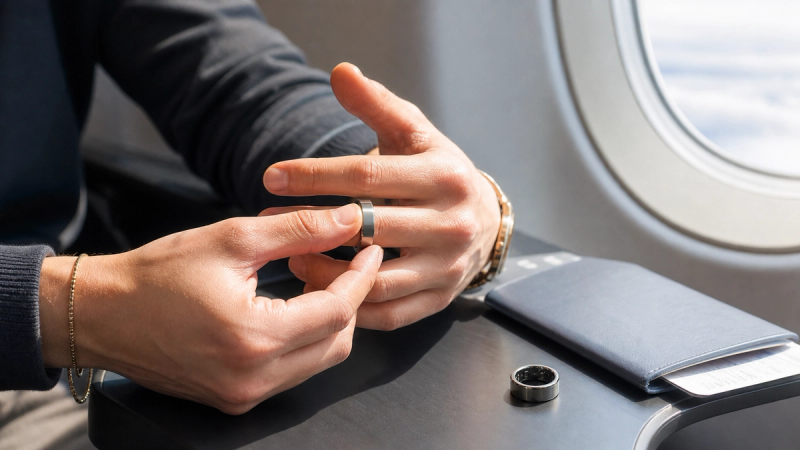
VERTU's COR RING product information and product knowledge base describe a jewellery-led ring for general wellness and personal insight across heart rate, heart-rate variability, sleep, recovery, stress and activity. They explicitly say COR RING is not intended to diagnose, treat, cure or prevent disease. Interpreted scores, including recovery and Heart Age, are estimates rather than clinical measurements. This is the appropriate boundary for using its trends.
Supported features, app functions, sharing and service options may vary by market, operating system, account and plan. A health concierge option, where available, can help organise information or connect users with professional resources; it does not turn the ring itself into a diagnostic device or replace urgent care. Check the current terms for the specific model and service before relying on an advertised capability.
VERTU's smart jewellery overview also frames these products around general wellness. Owners who need a device for diagnosis, disease monitoring or treatment decisions should discuss the appropriate authorised tools with their healthcare professional.
FAQ
Can my smart ring diagnose a condition?
No. A general-wellness ring can show selected trends, but those readings do not establish a diagnosis. A clinician can decide whether an examination or validated test is needed.
Should I change medicine because my recovery score dropped?
No. Do not alter a prescribed plan based on a ring score. Contact the prescribing professional with the timing, symptoms and relevant context.
What if I feel unwell but my ring looks normal?
Take your symptoms seriously and seek appropriate medical advice. A normal-looking score or missing alert cannot rule out a problem.
Can I show ring trends to my clinician?
Yes, as clearly labelled consumer-wellness context. Bring a short timeline with symptoms and routine changes, and let the professional decide what weight to give it.
Does a wellness alert mean an emergency?
Not by itself. Follow the device's stated use and assess symptoms. For an urgent concern, seek appropriate urgent help rather than relying on the alert to classify the situation.
Conclusion
Use ring data to notice and describe personal patterns, not to diagnose, change treatment or dismiss symptoms. Record the context behind a change and share it with a qualified professional when appropriate. For COR RING, the documented purpose remains general wellness and personal insight; a score is an estimate, while medical decisions require clinical judgment.