To protect a fountain pen from rain, keep it capped in a closed case inside a bag compartment that stays dry. If water reaches the pen, wipe the exterior gently with a soft cloth, inspect the cap and filling area, and let the case dry separately. Waterproof ink concerns the mark on paper; it does not make the writing instrument waterproof.
Rain poses two different problems. Moisture can affect the pen's finish and fittings, while wet paper can turn even a sound writing system into a poor-looking line. A practical routine protects the object during travel, gives you a dry place to write, and handles any exposure without forcing water into the nib or cap.
What is the best way to carry a fountain pen in rain?
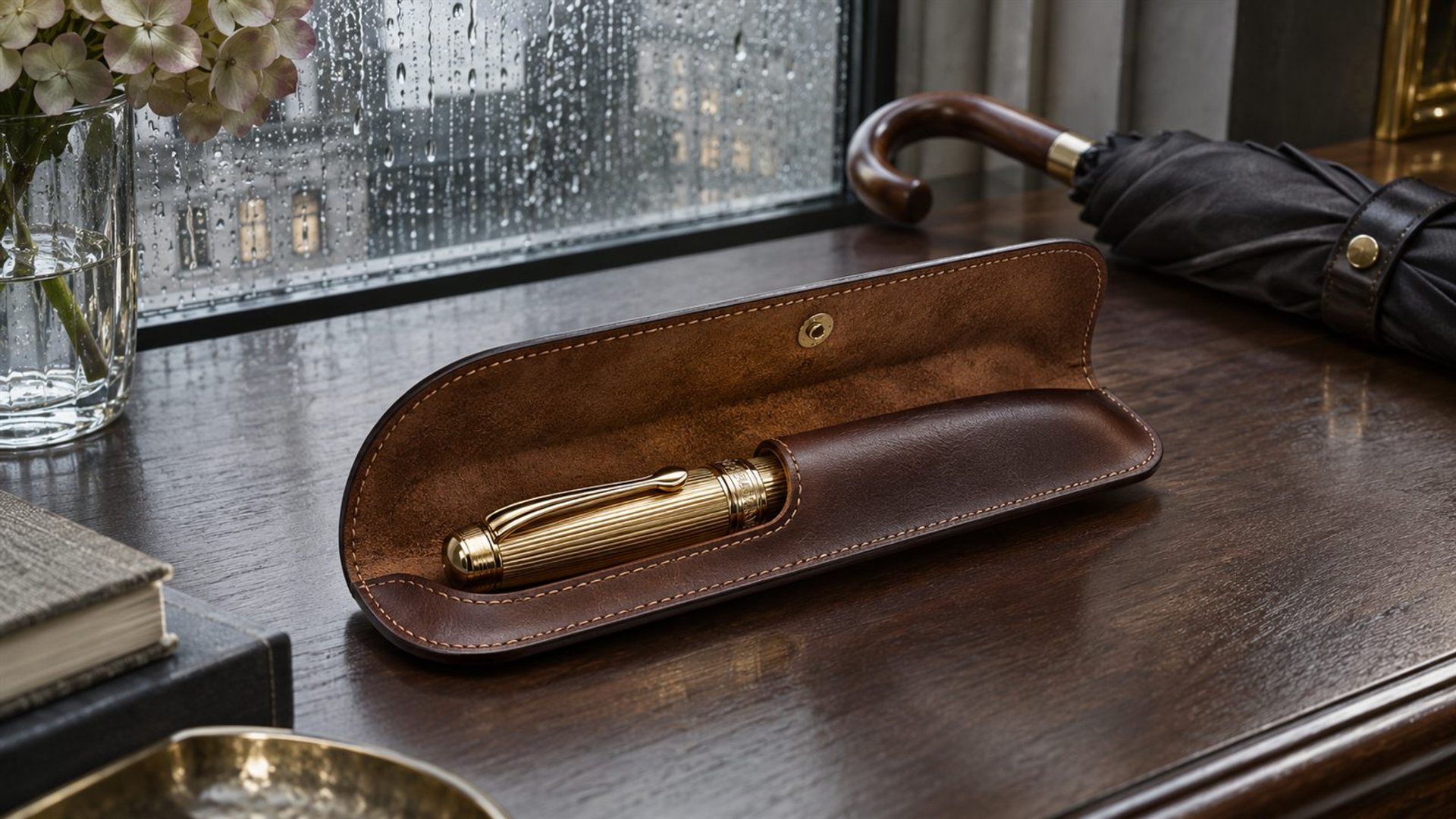
Put the capped pen in a fitted sleeve or case, then place that case in an interior zipped pocket. A bag's outside slip pocket may catch rain when you open an umbrella or board a vehicle. Keep the pen away from a damp coat, leaking water bottle and wet keys. If the case itself is leather or fabric, remember that it can absorb moisture even when the pen looks dry.
For a brief walk, a closed bag may be enough. For a long exposed journey, consider a separate protective pouch inside the bag. Do not seal an already wet pen into an airtight plastic bag for hours; the trapped moisture then remains in contact with the finish. The aim is to keep rain out, not to create a damp storage chamber.
Check the cap before leaving. A secure cap helps prevent nib drying and ordinary splashes reaching the writing point, but it is not evidence of a waterproof seal. Avoid carrying the pen loose beside sharp metal objects that can scratch the exterior while the bag moves.
Should you write outside while it is raining?
Move under shelter if the writing matters. Rain on the page affects absorbency and line appearance, and droplets on your fingers can reach the grip. A quick signature under an awning is different from taking a full page of notes in open weather. Use a dry, stable surface and cap the pen whenever you pause.
If the paper is visibly wet, change sheets rather than pressing harder to force a line through it. Excess pressure will not fix wet fibres and may damage the nib. Keep a spare sheet in a dry folder. When a document must survive rain after writing, choose paper and ink for that purpose, but treat that as a separate choice from protecting the pen.
Our waterproof fountain-pen ink guide addresses permanence of the written mark. An ink that resists water after drying cannot prevent moisture entering a case, staining a finish or affecting a cartridge connection.
What should you do when the outside of the pen gets wet?
Move to a dry room and keep the pen over a soft cloth. Blot visible droplets; do not rub grit across a polished or plated surface. Remove the pen from a wet case and dry the case separately. Inspect around the cap lip, grip, clip and any decorative seams. If you see only superficial moisture, let the closed instrument rest in a stable indoor environment before use.
Do not use a hairdryer, radiator, direct sun or strong solvent to speed drying. Heat and cleaning chemicals can create a second problem. Montblanc's care guidance advises protecting its writing instruments from moisture and avoiding corrosive or solvent-containing cleaners. Its instructions apply to its own products; use your pen maker's material-specific directions for the actual cleaning step.
If water appears to have entered the cap or filling system, avoid immediate vigorous writing. Note where the moisture is, check the maker's instructions, and seek authorised advice when the construction is unfamiliar. Disassembling a decorative cap without a guide may cause more harm than leaving it to a specialist.
How can you tell rainwater from an ink leak?
Clear moisture on the outside after a shower suggests rain or condensation. Coloured marks around the nib, grip or cap may indicate ink. Use a clean white cloth to blot a small area and inspect it under good light. Do not spread ink across a plated barrel with a large wet wipe.
A loose cartridge or converter can leak independently of rain. If the pen was shaken inside a bag, the timing may be coincidental. Once the pen is dry, check the ink source according to the model's instructions. Persistent coloured moisture or unexplained flow changes deserve service advice rather than an assumption that the exterior merely needs polishing.
Should you rinse the pen after rain?
Do not rinse the whole instrument by default. Rainwater on the outside and ink residue in the feed require different care. A maker may recommend clean-water rinsing of certain writing components, but that is not permission to immerse the barrel, cap or decorative materials. Wipe external moisture with the recommended soft cloth and follow the exact model's feed-cleaning procedure only when needed.
A.T. Cross's maintenance guidance discusses cleaning pen components and keeping an instrument in good condition. It is useful context for distinguishing internal cleaning from external drying; it is not a reason to dismantle a different brand's pen without instructions.
If rainwater has mixed with ink or you notice repeated skipping after exposure, stop and get model-specific advice. Adding household cleaner to a cartridge or applying alcohol to a finished barrel is not a shortcut to restoration.
How should you dry and store the carry case?
Open the case indoors and let it air-dry away from direct heat. Check seams and lining before replacing the pen. A dry-looking outside can conceal a damp interior. If the case has been heavily soaked, ask its maker about appropriate material care. Do not store a valuable pen in a case with a persistent damp smell.
Choose a cool, dry storage place once both pen and case are ready. Long-term humidity is a different issue from one rainy commute: a repeatedly damp closet can undo careful drying after each journey. Keep a small clean cloth with the case so that you can remove surface droplets promptly without using a rough tissue.
What is different about the VERTU Marengo Fountain Pen?
The VERTU Marengo Fountain Pen has a gold-plated brass body, zirconia details and a custom German SCHMIDT writing system with an approximately 0.5 mm line, according to VERTU's current product information. These material details make finish care important; they do not establish a rain-resistance rating.
VERTU instructs owners to keep Marengo capped and in its case in a cool, dry place, wipe gently with a soft cloth and avoid direct contact with perfume, alcohol and hand sanitiser. The page also describes feed rinsing with clean water after two to three ink fills, followed by air drying. Do not confuse that limited maintenance instruction with permission to wash the whole pen after rain.
For a wet journey, keep the pen inside its case and the case inside a dry bag compartment. If the exterior becomes damp, blot and inspect it before returning it to storage. Ask VERTU for advice if water reaches seams or a mechanism you cannot safely access.
What is a simple rainy-day routine?
Before leaving, secure the cap and pack the pen in a closed case inside the bag. Write only on dry paper under shelter. After arriving, inspect both pen and case. Blot any moisture, let the case dry separately, and return the pen only when both are dry. If ink appears or the pen writes inconsistently, follow its maker's care directions.
This routine does not require calling a fountain pen waterproof or choosing a particular ink chemistry. It protects the writing instrument while allowing you to enjoy it in ordinary, changeable weather.
Frequently asked questions
Can rain damage a fountain pen?
It can affect finishes or reach vulnerable areas, depending on the pen and exposure. Protect it in a case and dry the exterior promptly if it gets wet.
Is waterproof ink enough protection?
No. Waterproof ink refers to the writing on paper after it dries. It does not make the pen's barrel, cap or filling system waterproof.
Can I dry a wet pen with a hairdryer?
Avoid direct heat. Blot gently and let the pen and case air-dry indoors according to the maker's care instructions.
Should I remove the cartridge after rain?
Not automatically. Inspect for water or ink around the filling area and follow the model's instructions. Seek authorised advice if moisture appears inside.
How should I carry Marengo in rainy weather?
Keep it capped in its case inside a dry bag pocket. VERTU recommends cool, dry storage and gentle exterior wiping; it does not publish a rainproof rating.