A fountain pen in hot weather needs shade and stable storage more than a special summer accessory. Keep it capped, in a case, and out of a parked car or direct sun. If ink flow changes after heat exposure, let the pen return to ordinary room temperature before inspecting the nib and filling system. Do not cool it abruptly in a refrigerator or apply chemicals to the feed.
Heat can affect the writing experience and the instrument's finish in different ways. A thin line, a wet first stroke, an ink stain near the grip and a warm metal barrel are different observations. Diagnose them separately instead of assuming that a single hot afternoon has permanently damaged the pen.
What can heat do to fountain-pen ink?
Fountain-pen ink contains liquid that can change behaviour as temperature rises. Evaporation over time can concentrate ink in a cartridge, converter or feed, particularly if a cap does not seal well. A very warm pen can also show more ink around the nib or joint. The exact response depends on the ink formula, filling system, cap and duration of exposure; no universal safe temperature applies to every pen.
Look at the conditions before blaming the ink. Was the pen left in a closed vehicle? Was it stored uncapped? Has the cartridge sat in place for weeks without use? Was the ink changed recently? These details tell you whether the immediate issue is heat, an ordinary dried feed, a loose cartridge or a different maintenance need.
Do not try to correct a dry line by adding water or solvent directly to the ink reservoir. Use only ink intended for fountain pens and follow the maker's cleaning and refilling instructions. An improvised mixture may change flow or leave residue that is harder to remove.
Why is a parked car a poor place for a pen?
A closed car in sunlight can become much hotter than the surrounding air, with sudden changes when the air conditioning starts. The pen may sit beside a window, in a dashboard compartment or under a seat where its temperature is not obvious. Bring it with you rather than treating a glove box as a storage case.
For a short journey, put the capped pen in a protective sleeve inside a bag that remains with you. Do not leave ink bottles or spare cartridges in the vehicle either. The same stability that protects the pen's finish helps preserve its supplies. If a business trip involves repeated stops, choose a bag compartment away from direct sun.
Montblanc's writing-instrument care guidance advises protecting its instruments from heat and sunlight. That is guidance for Montblanc products, not a quantified limit for VERTU, but it reinforces a conservative storage habit for fine writing instruments.
How should you carry a pen outdoors in summer?
Use a sleeve or case that separates the pen from keys, sunscreen and a water bottle. Carry it in the shade where possible. Avoid a transparent bag left on a café table in full sun. A closed case protects the exterior from abrasion, but it does not make a pen heatproof; the entire bag can warm if left exposed.
Cap the pen between writing sessions. An uncapped nib can dry out rapidly in warm moving air, producing a hesitant first stroke later. Keep a clean sheet for a short test before writing a letter or signing a document. If the line skips, move into a cooler indoor space and reassess rather than pressing harder.
Be careful with hand sanitiser, perfume and sunscreen on your fingers. These products can contact the barrel and finish during normal use. Wipe your hands before handling a detailed or plated pen. A soft cloth is preferable to an abrasive wipe for ordinary fingerprints.
What should you do if a pen has become very hot?
Keep it capped and let it cool naturally in a dry room. Do not put it under cold water, in a freezer or directly against an air-conditioning outlet. When it feels normal, open it over a protective cloth and inspect the nib, grip and cartridge or converter connection. Check for ink stains or an unusual odour before making a test mark.
If the pen has leaked, clean the outside gently and identify the source. A loose cartridge can be addressed differently from damage to a filling system. Stop using the pen and seek maker-specific advice if there is persistent leakage, visible cracking or a part that resists normal movement. Forcing the mechanism risks compounding the problem.
If the pen is dry but otherwise sound, follow its cleaning guidance rather than shaking it. Many fountain-pen feeds can be rinsed with clean water, but disassembly and drying steps vary by model. Leave decorative components and finish treatments out of the cleaning solution unless the maker explicitly permits immersion.
Does hot weather change the writing line?
It can appear to. Ink flow, paper absorbency and a damp hand can all affect the line you see. Test the same pen and ink on a familiar sheet indoors once the instrument has returned to room temperature. If the line is normal there, the outdoor paper or conditions may be the larger factor.
A broad wet mark or ink spot at the start of a stroke deserves inspection, not a claim that all hot-weather ink “expands” by a fixed amount. If a pen consistently leaks in warm conditions, ask the maker or a qualified service technician to examine the filling system. Keep notes on when and where it happens.
How should you store a fountain pen during a hot season?
Choose a stable, dry indoor cupboard or drawer away from windows and radiators. Keep the pen capped and protected from impacts. If it will not be used for an extended period, remove the ink and clean it according to the manufacturer's instructions. A pen left filled for months may suffer dried residue irrespective of the season.
A.T. Cross's fountain-pen care advice also recommends avoiding extreme temperatures and recapping the pen to protect the nib from drying out. Use that as general context, while following the instructions supplied for your own model.
Store ink bottles upright with lids closed, away from direct light and heat. Label the date you opened a bottle if you use several colours. Inspect old ink before filling a fine pen and follow the ink maker's advice if you see contamination or a marked change in appearance.
What care does the VERTU Marengo need?
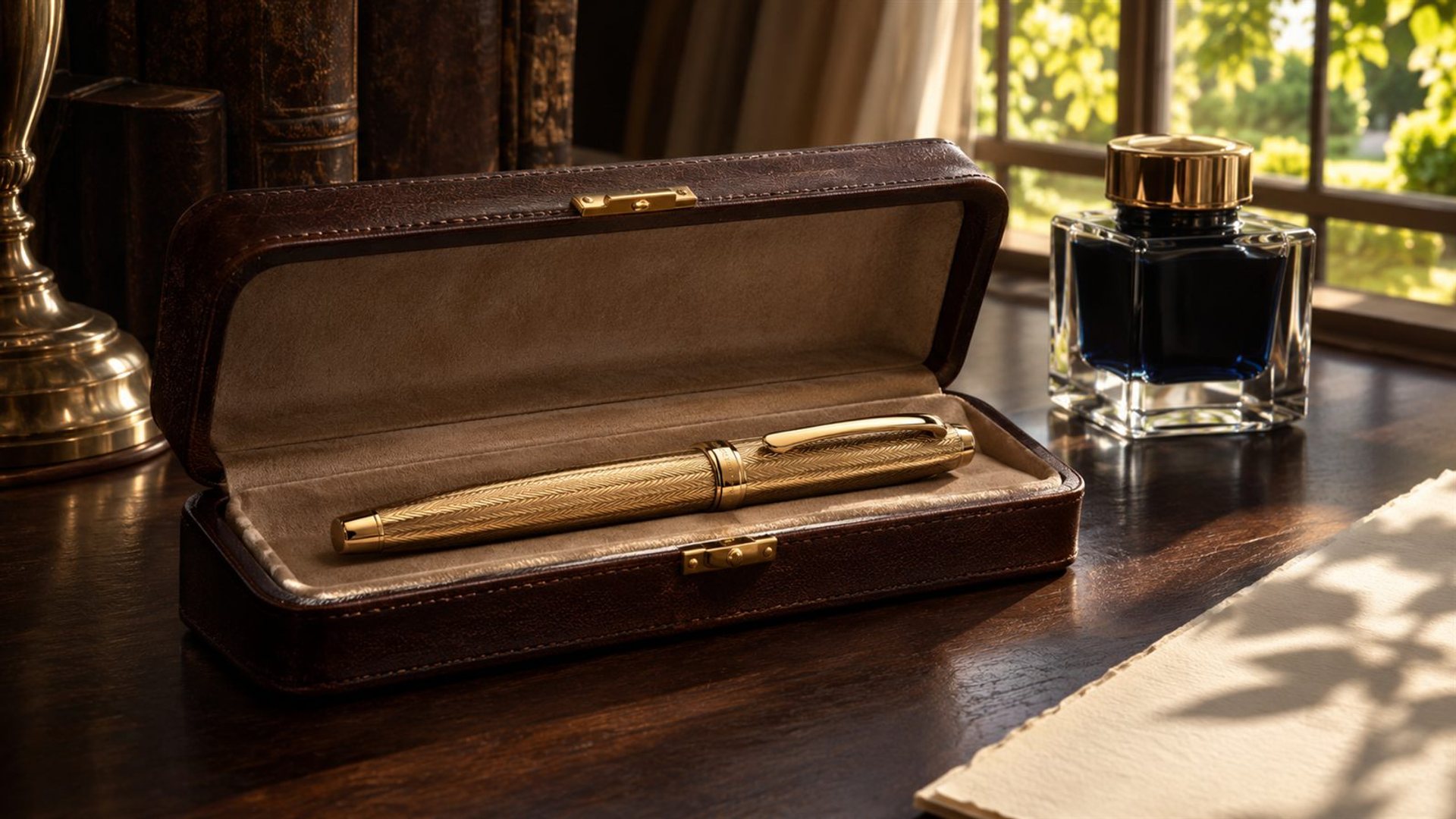
The VERTU Marengo Fountain Pen is described in VERTU's product knowledge as a gold-plated brass pen with zirconia details and a custom German SCHMIDT writing system producing an approximately 0.5 mm line. Its current product page lists cartridge and converter options. It does not establish a heatproof rating, so treat the exterior and ink system with the same stable-storage caution.
VERTU's current care note says to keep Marengo capped in its case in a cool, dry place, wipe it gently with a soft cloth, avoid direct contact with perfume, alcohol and hand sanitiser, and rinse the feed with clean water every two to three ink fills before air drying. Apply these product-specific directions before a generic internet cleaning routine.
Heat is a different problem from freezing. Our cold-weather fountain-pen guide addresses gradual warming after a winter journey; the common principle is avoiding abrupt extremes, but the signs and storage choices differ.
What is the practical summer routine?
Before leaving home, confirm the pen writes well and the cartridge or converter is secure. Carry it capped in a case that stays with you. Do not leave it in a parked car, on a sunlit table or beside a heat source. If the line changes, let the pen settle indoors, inspect for leaks, then clean only as directed.
This modest routine protects the writing experience without relying on an invented temperature threshold or a promise that a particular ink cannot leak. It also separates everyday care from a persistent fault that needs service.
Frequently asked questions
Can I leave a fountain pen in a car in summer?
Avoid it. Parked cars can become very hot, and prolonged heat is an unnecessary risk for ink and finishes. Take the pen indoors with you.
Should I put a hot pen in a fridge?
No. Let it return gradually to room temperature. Sudden cooling is unnecessary and can introduce condensation.
Why does my pen skip after a hot day?
The nib may have dried while uncapped, ink may have concentrated, or another filling issue may be present. Test it indoors and follow the maker's cleaning guidance.
Is Marengo safe to use outdoors in heat?
Use it with ordinary care, but do not assume a heatproof rating. Keep it shaded, capped and in its case between writing sessions.
When should I seek service?
Seek model-specific help for persistent leaks, visible damage or a filling mechanism that does not move normally. Do not force parts to compensate for a heat-related symptom.