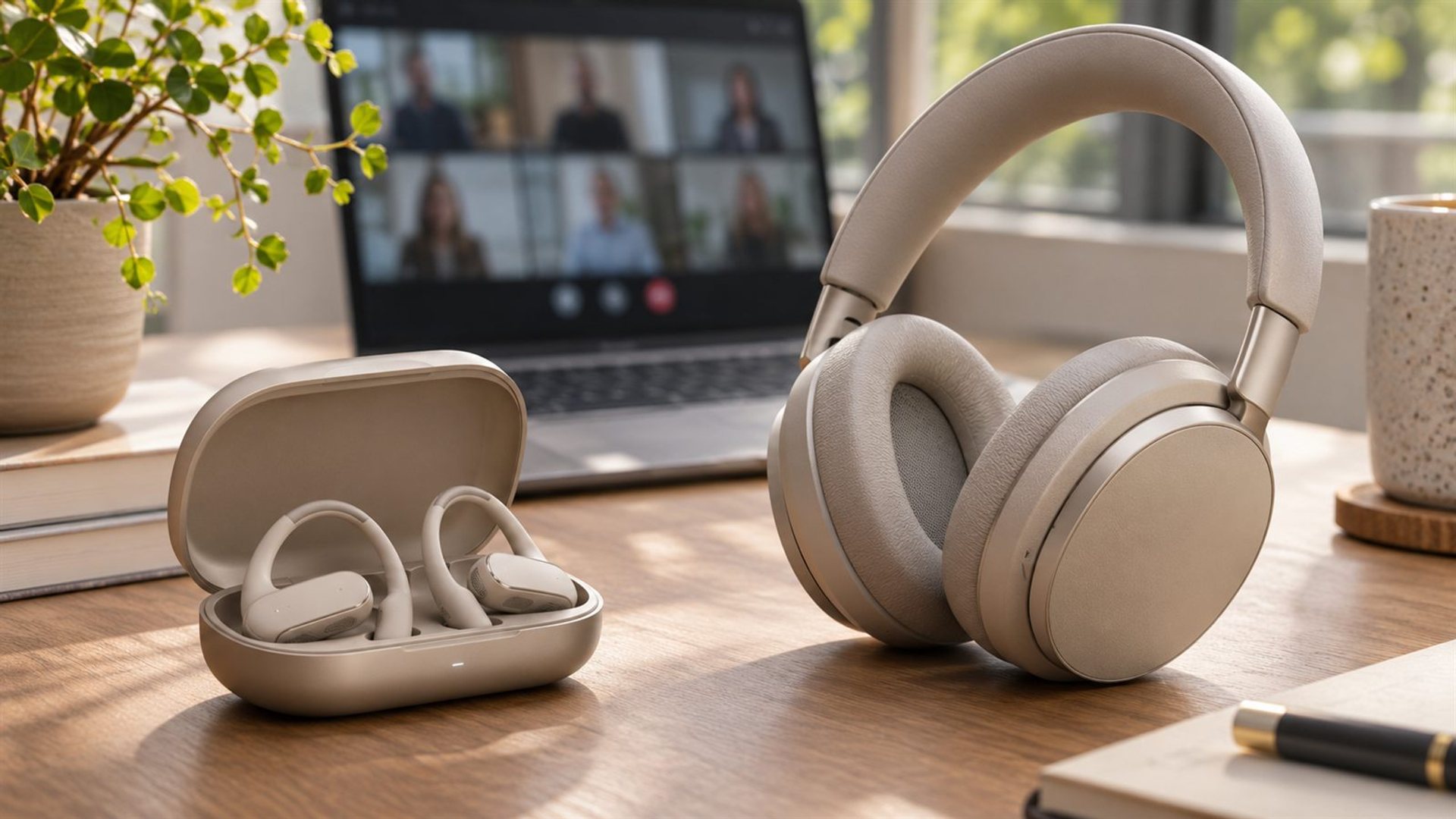
Open-ear earbuds versus over-ear headphones for calls is a choice about your room and working style, not a universal winner. Open-ear designs leave you more aware of nearby sounds and can feel lighter during long meetings. Over-ear headphones cover the ears and may help you concentrate when the room is noisy. For either type, microphone performance must be tested on the device you will actually use.
A product's speaker sound, microphone pickup and noise processing are three separate qualities. A headset that plays music beautifully may still transmit keyboard noise. Another may sound clear to colleagues while making it difficult for you to hear a doorbell or family member. Start with the problem you need to solve.
What does open-ear mean for a video call?
An open-ear design leaves the ear canal unsealed, allowing more of the surrounding room to remain audible. That can be useful at home when you need to notice a delivery, hear a colleague nearby or avoid feeling cut off between calls. It can also make a meeting harder to follow when several people are speaking near you.
Do not assume “open” means colleagues can hear your call. Sound leakage depends on device design, volume, fit and distance to others. Test it in your normal seat at a realistic volume. If the conversation includes private client information, a closed room matters more than a claim about directional audio.
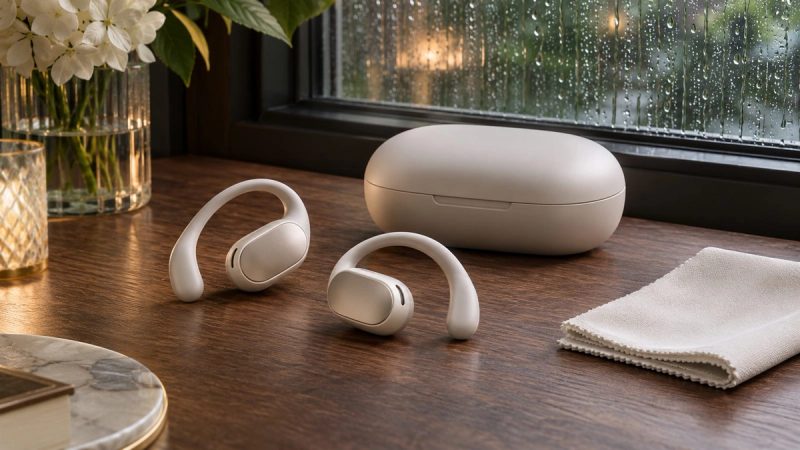
VERTU's CRUSH OWS earbuds are an open-ear example. The current product page describes an open fit and call-oriented noise processing. It does not provide a controlled comparison proving that they outperform every over-ear headset in a busy office.
When do over-ear headphones make more sense?
Over-ear headphones surround the ear and may reduce the amount of room sound you hear, especially if the model provides effective isolation or active noise control. This can help when a housemate is on another call or an air conditioner runs beside your desk. It can also make you less aware of a person approaching you or a household sound you want to catch.
The enclosure does not tell you how well the microphone rejects noise. Some headsets include a boom microphone close to the mouth; others use small microphones in the cups. Placement and software processing can make more difference to the remote listener than the size of the earcups. Compare recordings, not product photographs.
Consider heat and pressure across a full day. A cushioned over-ear set can feel comfortable for a short call yet become warm after hours. Fit depends on head shape, glasses, hair and the headset's clamping force. Try a typical meeting block before deciding.
Which is better for microphone clarity?
Neither form factor guarantees clarity. A quiet room, stable connection, correctly selected microphone and sensible distance from the mouth often matter more. Record your own voice with the meeting platform or ask a colleague to compare short samples at the same speaking volume. Include normal background conditions rather than testing only in silence.
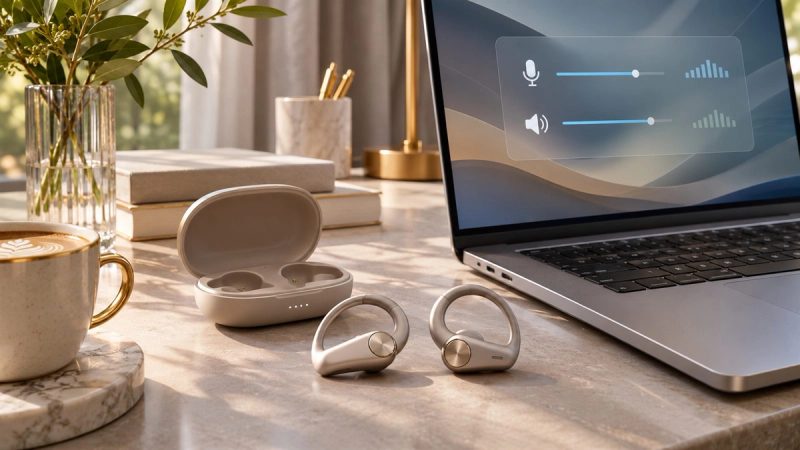
Microsoft Teams' device guide explains how to choose the speaker and microphone and run a test call on its supported desktop apps. The same principle applies to other platforms: check that the app is using the headset microphone you intend, rather than a distant laptop microphone.
Test consonants, pauses and speaking while turning your head. Noise suppression can make background sounds less prominent but may also alter soft speech. A headset that handles one steady fan well may struggle with another person talking near you. Ask the remote listener what they hear.
How does room awareness affect meetings?
For a person caring for a child or waiting for a courier, open-ear listening may be a real advantage. Sony describes an open-ring design as allowing ambient sound to remain audible in its corporate product discussion. That design principle is useful, though it is not an acoustic measurement for a different brand's earbuds.
Awareness has a trade-off: a nearby conversation may compete with your meeting. If your work requires deep concentration or you have little control over room noise, over-ear listening may be easier. If you move between a desk and another room, a lighter open-ear set can feel less intrusive. Judge the environment you actually inhabit.
What about privacy and sound leakage?
Privacy has two directions. First, others should not hear confidential audio from your speakers. Second, your microphone should not transmit private conversations in the room. An open-ear device may have directional sound, but it cannot make an open office private. Lower the volume, use a separate room and test leakage with someone seated nearby.
Over-ear headphones can reduce outgoing speaker sound, yet a high volume can still be audible. They can also make you unaware of speaking too loudly. Use meeting etiquette: mute when you are not speaking and check the app's microphone indicator. Neither product type replaces a confidential setting.
Which fit is more comfortable for long calls?
Comfort is individual. Open-ear earbuds avoid sealing the canal and can reduce the enclosed feeling some people dislike. Their contact points around the ear still need to fit correctly and may create pressure for other users. Over-ear cushions distribute weight over a larger area but can become hot or press against glasses.
Try each for a normal 60-minute call and again later in the day. Note whether you adjust it repeatedly, whether speech stays audible at a moderate level and whether you feel relieved when taking it off. A short store trial will not reveal all-day comfort.
If you already own a suitable set, spend time on setup before replacing it. Incorrect device selection, low charge or a crowded wireless environment can make a good headset appear poor. Our VERTU earbuds collection shows the range of form factors, but the specific product page should govern compatibility and current availability.
How should you compare the two at home?
Use the same meeting app, room, computer and connection. Record a short message with each headset while a normal background sound is present. Listen to the recording for voice clarity, clipped syllables and background pickup. Then ask another person to sit nearby and check whether they can hear the call at your usual volume.
Repeat with a longer call to assess comfort and battery life under realistic use. Keep the playback volume similar; louder can initially seem better even when the sound is less clear. Record your observations in plain terms: “I can hear the door”, “my voice sounds distant”, or “my ears feel warm after an hour”.
Where does CRUSH OWS fit?
CRUSH OWS is relevant if you prefer open-ear awareness and want a compact device for calls. Its current product page describes AI-based noise reduction and an open fit. Treat these as manufacturer descriptions and perform your own call test. The listing's options and availability may vary, so check the exact version before ordering.
For a quiet home office where you switch frequently between conversation and the room, that format may be attractive. For an uninterrupted meeting in a busy shared space, a well-fitting over-ear headset may serve you better. The choice should follow the call environment, not the assumption that one silhouette is inherently professional.
Frequently asked questions
Are open-ear earbuds good for work calls?
They can be, especially in a quiet room where awareness matters. Test microphone pickup and leakage on your actual meeting platform.
Are over-ear headphones always better in noise?
No. They may make incoming audio easier to hear, but remote microphone quality depends on the specific headset and its settings.
Can other people hear open-ear earbuds?
Possibly, depending on design, volume and distance. Test at normal call volume before discussing confidential information nearby.
Do I need a boom microphone?
Not always. A boom may help place the microphone close to the mouth, but an actual recording is the most useful comparison.
How long should I test comfort?
At least one typical meeting block, then another later in the day. Brief wear may hide pressure or heat that matters over hours.