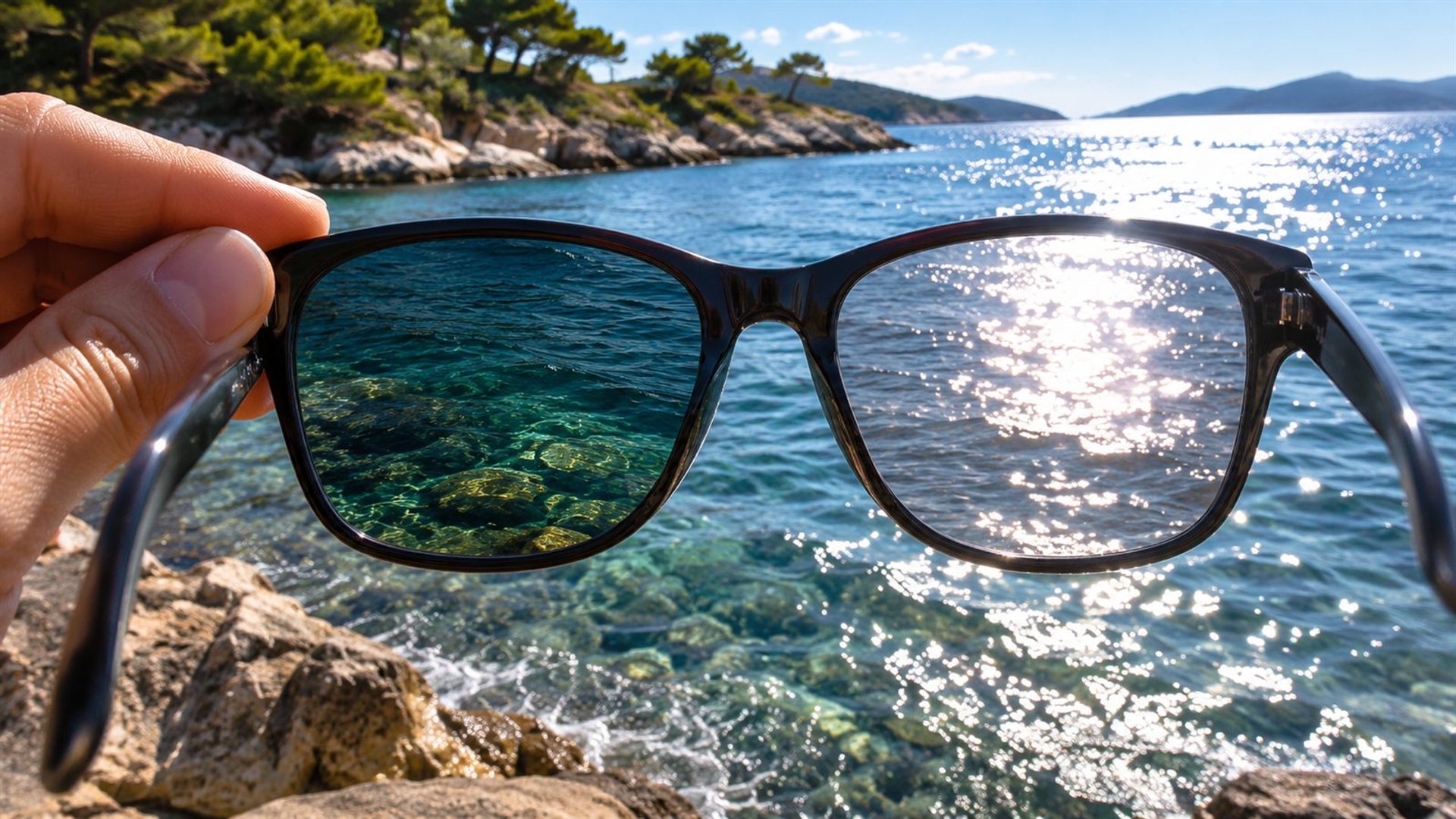
To clean polarized sunglasses, first remove loose grit with the lens maker's approved rinse method, then use a suitable lens cleaner and a clean microfiber cloth with light pressure. Dry the lenses and frame before putting them away. Do not rub sand into the surface with a shirt, paper towel or dirty cloth. Polarization reduces glare, but it does not make the lens coating immune to scratches or unsuitable chemicals.
Key Takeaways
- Check the exact eyewear maker's care instructions, especially for mirrored, coated or prescription lenses.
- Remove grit before wiping; friction against particles is a common avoidable source of marks.
- Use clean microfiber and an approved cleaner, and avoid household solvents or high heat.
- Store dry glasses in a protective case and keep the cloth itself clean.
Does polarization change how you should clean the lenses?
Polarization is an optical feature that reduces certain reflected glare. The care routine is governed by the complete lens construction, its coatings, and the frame materials. A polarized lens may also have a mirror finish, anti-reflective treatment, water-repellent layer or prescription coating. Those surfaces can have different manufacturer instructions. Do not assume that a method safe for one pair is automatically safe for another because both are called polarized.
Ray-Ban describes polarized sunglasses as reducing glare and improving clarity and contrast. That performance depends on an optically usable surface. Cleaning should preserve the coatings and avoid adding scratches that scatter light. Begin by identifying your model and retaining its care card. If you bought prescription polarized lenses from an optician, follow the lens supplier's instructions as well as the frame maker's.
What supplies should you use?
For many coated spectacle lenses, a clean microfiber cloth and a lens-specific spray or wipe are appropriate. ZEISS describes its lens spray and microfiber cloth as a matched cleaning approach for glass and plastic spectacle lenses. That supports the general value of purpose-made materials, but it is not a universal approval for every eyewear coating. Check the cleaner label and your own lens maker's guidance before use.
Keep a dedicated cloth in a clean pouch. A microfiber cloth that has collected sand, cosmetics or skin oil may move residue around or scratch the lens. Wash it according to the cloth maker's instructions and let it dry completely. ZEISS advises washing its microfiber cloths at no more than 40°C and without fabric softener, which can leave residue. Treat that as guidance for the named product, not a mandatory setting for every cloth.
A clean soft towel may be suitable for drying a frame if its maker allows it, but avoid touching the lens with abrasive fabric. Paper tissue, napkins and the hem of a shirt are convenient yet can carry grit or create friction. A dry wipe on a sandy lens is a poor shortcut even when the cloth itself is clean. Remove the particles first.
How do you clean polarized sunglasses step by step?
- Wash and dry your hands so skin oil and grit are not transferred to the lenses.
- Inspect the frame and lenses for sand, salt or loose debris.
- If the maker permits it, rinse with lukewarm water to carry particles away; avoid high-pressure spray.
- Apply an approved lens cleaner or the maker's stated gentle method.
- Wipe with a clean microfiber cloth using light strokes, including the edges where oil collects.
- Dry hinges, nose pads and frame joints carefully before storing.
- Inspect under normal light; repeat gently rather than scrubbing a stubborn mark.
The order matters. If the glasses came from a beach or dusty road, wiping before rinsing can drag particles across a coating. If you cannot rinse safely, ask an optician or use a cleaning method approved for grit-laden lenses rather than forcing the issue. Do not immerse electronic eyewear or a frame with a material that should not be soaked merely because its lenses can be rinsed.
Can you use dish soap, alcohol or household glass cleaner?
Use only what the eyewear maker permits. Some optical-lens guidance allows a small amount of mild, pH-neutral soap and water; other coatings or frame finishes may have stricter instructions. Household window cleaner, ammonia-containing products, acetone, bleach, strong degreasers and unknown alcohol mixtures can damage coatings or frame materials. An ingredient that works on a household window is not automatically suitable for precision eyewear.
ZEISS notes that some of its coated lenses can be cleaned under lukewarm running water or with its approved wipes. The point is to follow the particular lens system. If you do not know what coating you own, start with the original paperwork or ask the dispensing optician. Avoid experimenting with a concentrated cleaner on an expensive mirror finish.
Do not use saliva as a cleaning fluid. It can spread residue and is not a controlled lens-care product. Similarly, a fogging spray or anti-static treatment should be used only if the maker approves it for that lens. After cleaning, rinse or wipe off any permitted cleaner as directed so it does not leave a film that affects vision.
What if the sunglasses have mirror, gradient or prescription lenses?
Look for instructions specific to the surface. A mirror finish may reveal scratches quickly, while a gradient lens can hide residue differently across its tint. Prescription coatings may be supplied by an optician rather than the frame brand. Clean both lenses with the method approved for the most delicate layer, and avoid rubbing along an edge where coating is already lifting. If you see peeling or a persistent cloudy patch, cleaning harder will not restore a failed coating.
If the glasses include a removable lens or interchangeable shield, clean according to the manufacturer rather than disassembling them by force. Check whether a loose lens, cracked frame or damaged hinge needs repair first. Water trapped behind a lens or decorative insert can leave marks. Dry the assembly as instructed before closing it in a case.
How do you remove salt, sunscreen and makeup?
Act promptly but gently. Salt crystals and beach sand are abrasive, so start with an approved rinse to remove them. Sunscreen and makeup can smear across the lens; use the correct lens cleaner rather than pressing harder. Pay attention to nose pads and temple tips, where skin products can build up. If a residue persists, ask an optician to identify it rather than using a stronger household chemical.
Frames matter too. Acetate, metal, wood and mixed-material frames can react differently to water and cleaners. A method safe for lenses may not suit an unsealed decorative element. Avoid leaving the glasses in a hot car while residue is on them; heat and contamination can worsen the situation. Wipe and dry the parts you can reach without bending delicate hardware.
What should you do when the lens still looks cloudy?
First confirm that both sides are clean and that the microfiber cloth is not transferring oil. Hold the glasses under even light and look for a smear that changes when wiped, a scratch that remains fixed, or a coating patch that appears to peel. If the mark does not move with a safe cleaning pass, stop rubbing. An optician can assess whether the problem is residue, coating failure or damage to the lens itself.
Do not attempt to polish out scratches with toothpaste, baking soda or an abrasive compound. Removing material from an optical surface can change coatings and clarity. A scratched polarized lens may need replacement. Check whether the frame supports a replacement lens and whether the lens provider can match the original tint, prescription and polarization.
How should you store and maintain the glasses?
Put clean, dry sunglasses in a case that protects both lenses and frame. Avoid placing them lens-down on a table or loose in a bag with keys and grit. Keep the case interior clean; it can otherwise reintroduce the particles you just removed. Do not leave the glasses where heat can build up, such as a dashboard in direct sun. Extreme conditions can affect coatings and frame shape.
Check the cloth, nose pads and screws periodically. A loose frame can shift and make lenses appear optically wrong even when clean. If one temple has become crooked, seek proper adjustment rather than twisting it without knowing the frame material. For a pair used on water or in a vehicle, keep a clean cloth and case accessible so you are not tempted to wipe with clothing while outdoors.
What cleaning mistakes cause the most trouble?
| Mistake | Why it is risky | Better response |
|---|---|---|
| Dry-wiping sandy lenses | Particles can be dragged across a coating | Remove grit with the maker-approved rinse first |
| Using household glass cleaner | Chemicals may not suit optical coatings | Use a suitable lens cleaner |
| Using a dirty microfiber cloth | Oil and grit can be redeposited | Wash or replace the cloth |
| Storing glasses while wet | Moisture remains near hinges and pads | Dry the entire frame before casing it |
Do not turn the table into a rigid rule when the maker provides a different procedure. The safest method is the one approved for the exact lens and frame, performed with clean tools and light pressure. If damage is already visible, further cleaning may not solve it.
Frequently asked questions
Can I wash polarized sunglasses with water?
Often, if the lens and frame maker permits a gentle rinse. Check the exact product instructions, especially for electronic or mixed-material frames.
Can I use an alcohol wipe?
Only if the wipe is approved for your lens coating. A generic household wipe may contain ingredients unsuitable for eyewear.
Does cleaning remove scratches?
No. Cleaning removes residue; it cannot restore a scratched or peeling optical coating. Ask an optician about replacement options.
How often should I clean them?
Clean when residue affects comfort or vision, and remove grit promptly. There is no universal daily schedule; avoid unnecessary abrasive wiping.
Conclusion
Cleaning polarized sunglasses safely is a matter of protecting the full lens and frame, not treating polarization as a special cleaning chemical. Remove grit before wiping, use an approved lens product and clean microfiber, and store the pair dry. Follow the exact maker's care instructions when coatings or frame materials differ, and seek an optician's assessment for persistent cloudiness or damage.