A fitness tracker that looks like jewelry should meet two tests: you would choose to wear it even without its dashboard, and its sensors and app support the information you actually want. Start with form, fit and materials, then verify measurements, phone compatibility, charging, privacy and service. A screenless ring or bracelet can look discreet, but it may ask you to open an app for every detail.
Key Takeaways
- Choose the jewelry form first: ring, chain bracelet and slim band feel different through a full day.
- Check the exact tracked signals, app, charging routine and supported phone models.
- Natural and plated finishes need care, while sensor contact still requires a suitable fit.
- Wellness trends can support reflection; they do not diagnose or treat a medical condition.
What makes a fitness tracker look like jewelry?
A jewellery-led tracker uses the language of a ring, chain, gemstone setting or polished metal rather than a miniature sports watch. That may mean no visible screen, a decorative outer band, a narrower profile or a finish designed to work with ordinary clothing. Appearance alone is not enough. The object still has a sensor, battery, charging method and companion app, and all four affect whether you will actually wear it.
Think about the moment you want to use it. A screenless design can suit a formal dinner or a meeting because it does not announce notifications on the wrist. It may be less convenient if you expect to glance at live exercise numbers. A ring preserves wrist space for a conventional watch but can feel different during lifting or hand-intensive work. A chain bracelet can make a clearer style statement, though its movement and clasp may affect comfort or sensor contact. Decide which compromise fits your day.
Should you choose a ring, bracelet or slim band?
A ring is usually the most discreet and leaves the wrist free. Its fixed circumference makes sizing crucial: a ring that is comfortable in a cool showroom may feel tight after exercise or warm weather. Ask for the maker's sizing method and try the size at different times if a trial kit exists. Check whether the style can be changed without replacing the electronics. Some designs have interchangeable outer elements; others are a single body.
A bracelet offers more visible design space. It can incorporate links, stones and a clasp, and adjustable chains can serve several wrist positions. The trade-off is movement: a loose bracelet may rotate, while an overly tight one can be uncomfortable. A slim band is often practical for exercise and may be easier to clean, but it may read as sports equipment rather than jewellery. The right choice depends on the occasions you actually wear it, not a ranking of which shape is most luxurious.
What features should you verify before buying?
Write down the signals you need: activity, sleep, heart rate, blood oxygen, HRV, or another supported metric. Then open the exact product page and app documentation to confirm each one. “Wellness tracking” is an umbrella phrase, not a specification. Ask whether data appears continuously, only overnight, or after an intentional measurement, and whether the app needs enough historical data to establish a personal baseline.
Check the phone side with equal care. Does the companion app support your operating-system version and region? Can it export records? Does it require an account or paid subscription? Are some AI features separate from basic data access? Does the manufacturer explain how it handles sensitive wellness information? A beautiful tracker becomes less useful if the app cannot run on your phone or a key feature is unavailable in your market.
| Decision | Question to answer | Why it matters |
|---|---|---|
| Form | Would you wear this ring, chain or band all day? | Unworn devices cannot build useful trends. |
| Fit | Does it stay comfortable and in sensor contact? | Poor fit can reduce comfort and data quality. |
| Data | Which exact signals and reports are supported? | Category labels can hide different capabilities. |
| App | Is your phone, region and account supported? | Some features depend on software and plan. |
| Care | How do you clean and service the finish? | Jewellery materials may need special handling. |
How much does fit affect the experience?
Fit determines both whether a piece feels like jewellery and whether it collects useful data. A ring that slips around the finger may lose consistent optical contact. A bracelet that presses against the wrist bone can be irritating during typing, while one that moves excessively can feel distracting. Follow each product's measurement guide; generic jewellery size labels do not account for sensor placement or module shape.
Try an ordinary-day test where possible. Wear the piece while writing, carrying a bag, washing hands as permitted, sleeping and putting on a coat. Notice whether it catches hair or fabric and whether you can remove it comfortably. If you plan to wear it next to a watch, test the pair for collision and wrist movement. If a design is intended for overnight data, ask whether you can sleep in it without changing habits.
Which materials and finishes need attention?
Mother-of-pearl, plating, ceramic, polished metal and stone each create a different appearance and care requirement. A jewelry-like finish may be more sensitive to impact, chemicals or abrasion than a plain silicone band. Read the manufacturer's instructions before using alcohol, perfume, lotion or an ultrasonic cleaner near the piece. Do not assume that a water-resistance statement for the electronics covers every decorative setting or cleaning method.
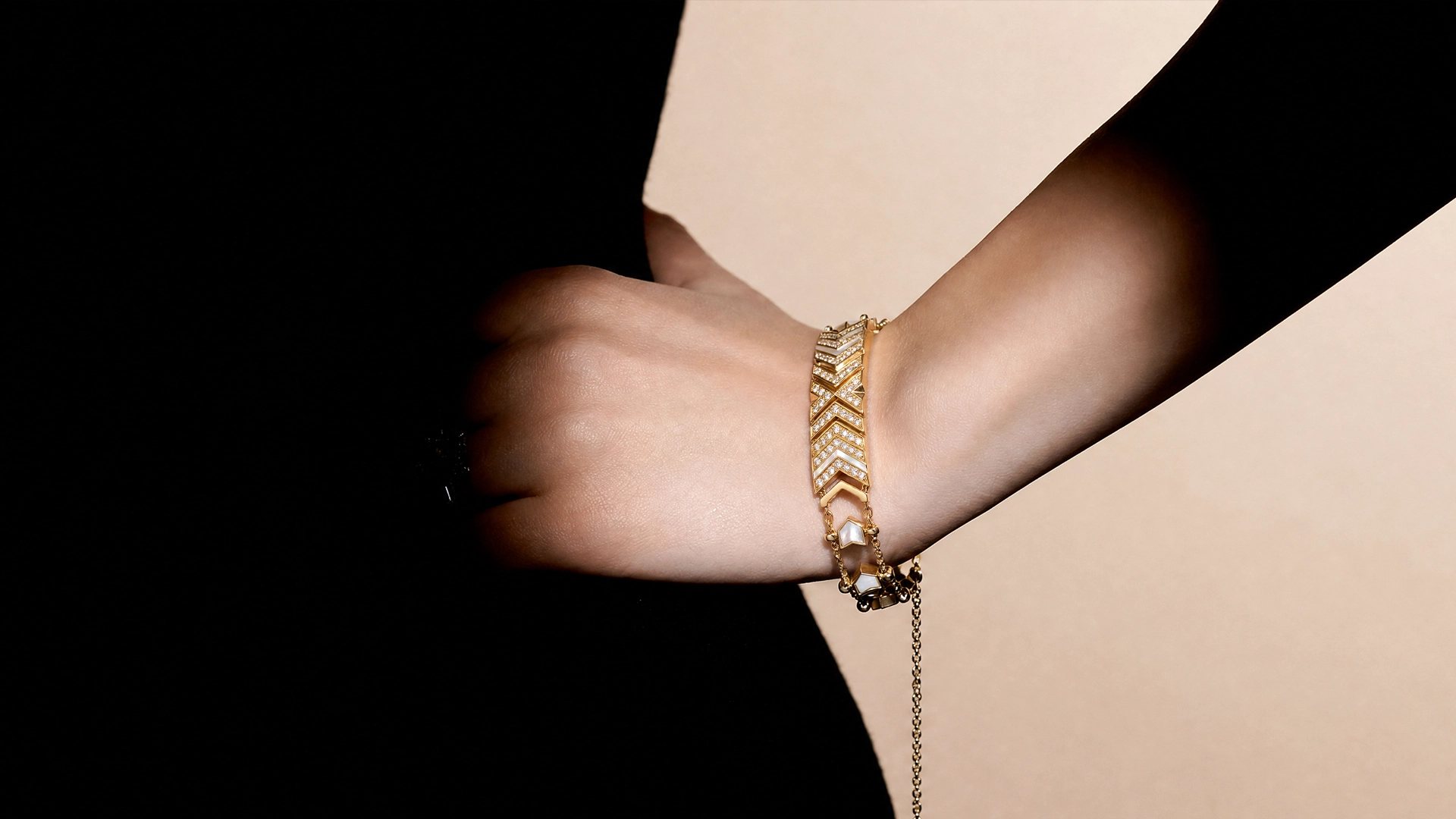
For example, the VERTU LUMINA AI Bracelet combines natural white mother-of-pearl, zircon and a 14K gold-plated stainless-steel finish in a 200 mm flexible chain with an adjustable wearing range of 140–200 mm. These are facts about that named configuration, not a description of every smart bracelet. Its visual appeal depends on the finish being cared for appropriately; its connected value depends on the supported app and how it fits your wrist.
How do VERTU's jewellery-led options differ?
LUMINA is a bracelet first in appearance: screenless, decorative and adjustable, with supported heart-rate, blood-oxygen, HRV, sleep and stress-related trends in its companion experience. A buyer who wants a visible jewellery piece and wrist adjustment should start there. The current page says compatibility covers supported iOS and Android devices, but exact operating-system versions and feature scope need confirmation at purchase.
The VERTU COR RING Inner Core takes a different approach. Its smart core can pair with compatible jewellery outer designs, giving a ring form instead of a chain bracelet. The official description distinguishes core data access from optional AI or professional service terms and says the wellness information is not a medical diagnosis. If you want to change the look over time, check which outer bands fit your core and what is included in the selected purchase.
These options should not be collapsed into a single feature score. A ring may suit someone who wears a traditional watch; a bracelet may suit someone who wants the tracker to be the visible piece. Compare the exact edition's measurements, app, care and support. A material or sensor claim on one product does not automatically apply to the other.
What can other jewellery-like trackers teach you?
Different makers solve the appearance problem in different ways. Fitbit's Luxe manual documents a slim wrist-tracker format, while Oura describes Ring 4 as a ring offered in a range of sizes. These are useful shape references, not evidence that the devices offer identical metrics, apps or materials. Compare current regional listings and support documentation for any model you are considering.
One useful method is to photograph your shortlist beside the jewellery and watch you already wear. Then make a separate functional comparison. A style winner may require an inconvenient charger; a feature-rich option may look too sporty for the setting you care about. Keeping style and function in separate columns prevents one impressive image or one long feature list from deciding the whole purchase.
How should you evaluate wellness data?
Use supported readings as personal trends, not a clinical verdict. Optical sensors can be affected by fit, movement and incomplete wear. A score may combine several inputs in a proprietary way, so ask what the app actually measures and what it estimates. If you have symptoms or a medical question, consult a qualified professional. Do not let a consumer dashboard override a clinician's assessment or your own urgent symptoms.
Review privacy before uploading or sharing wellness records. Ask whether the app permits data deletion, what sharing is optional, whether family features need separate consent and what happens if you stop using the product. These questions matter especially for a gift: the recipient should control their own account and health information. A tracker that looks like jewellery still creates a data relationship.
What should a buyer check in a five-minute shortlist?
- Name the occasions when you will actually wear the device.
- Choose ring, chain or band based on comfort and visual fit.
- Check the exact size range and try the manufacturer's sizing method.
- Confirm the specific metrics, app, phone support and regional availability.
- Read charging, battery and care information for the exact model.
- Compare warranty, replacement parts, subscription and privacy terms.
- Keep clinical decisions separate from wellness summaries.
Do not treat one marketing picture as a full fit test. If returns are allowed, check whether activation or wear changes the eligibility. If gifting, preserve sizing and exchange options. The best jewellery-like tracker is the one whose appearance invites consistent use and whose data limits you understand.
Frequently asked questions
Can a fitness tracker look like fine jewellery?
Yes. Rings and decorative bracelets can place sensors inside jewellery-led forms. Check the materials and fit of the exact product rather than assuming appearance determines performance.
Is a smart ring better than a bracelet?
Not universally. A ring preserves wrist space, while a bracelet offers adjustability and a different style. Compare comfort, supported metrics and app requirements.
Do I need a subscription?
It depends on the product and feature. Review current terms for core data, advanced insights and any optional services before purchase.
Can the tracker diagnose a health problem?
No. Consumer wellness readings can show trends but are not a substitute for clinical assessment, diagnosis or treatment.
Conclusion
A fitness tracker that looks like jewelry should satisfy both your wardrobe and your data needs. Choose a form you will wear, verify fit and app compatibility, and read the care and privacy terms. VERTU LUMINA AI Bracelet and COR RING illustrate different jewellery-led approaches; judge each exact configuration on its own published capabilities and limits.