Wearables through airport security are generally permitted, but you may be asked to remove a smartwatch, smart ring or bracelet during screening. For US departures, TSA advises passengers to remove bulky jewellery and put valuables in carry-on baggage. The officer's instructions at your checkpoint determine what happens next; there is no reliable promise that a particular accessory can stay on your body in every lane.
Two separate questions are often confused. Security screening decides how you and your belongings pass through the checkpoint. Airline battery rules decide how an electronic device or its spare charger travels in baggage. A wearable can be allowed on a flight yet still require additional inspection at security.
Can you wear a smartwatch through the scanner?
You may be able to, but prepare to remove it. TSA's travel checklist tells passengers in a standard lane to empty pockets and remove bulky jewellery, placing valuables in carry-on baggage. It does not offer a universal exemption for smartwatches. An officer can ask for the watch to be screened separately if it triggers an alarm or interferes with the process.
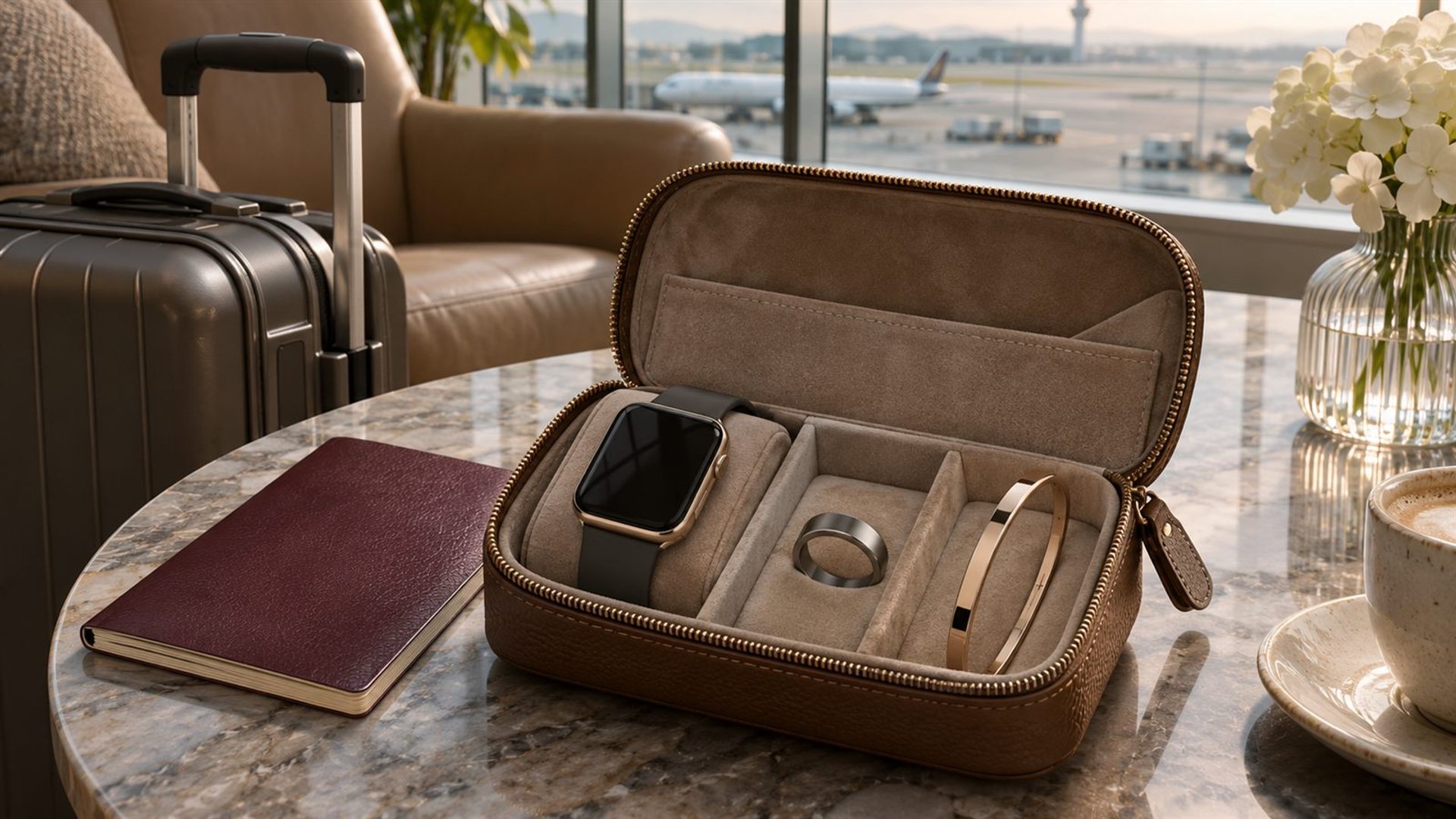
Before reaching the belt, put the watch in a small zipped compartment of your carry-on if you choose to remove it. This avoids leaving an expensive or sentimental piece loose in a tray. If you prefer to keep it on, be ready to follow a different instruction without delaying the line. Screening equipment and procedures can vary between airports and lanes.
A connected watch is still an electronic item with a battery, but that does not make it equivalent to a laptop for the usual tray rules. TSA's checklist separately discusses personal electronics larger than a cell phone. Treat the watch according to the instruction you receive at the checkpoint, rather than assuming the laptop rule applies to every device.
What about smart rings and bracelets?
The same principle applies: small wearable jewellery is not automatically prohibited, but security staff may request removal or a closer look. Metal, size, clasp design and the local screening method may affect how an item is handled. Do not rely on an online anecdote about another traveller's ring or bracelet as a rule for your flight.
For a ring that fits tightly, avoid trying to remove it in a hurry at the scanner. Tell the officer if removal is difficult and follow their screening instructions. For a bracelet with a delicate clasp, practise opening it before travel if you plan to take it off. Place both pieces in a secure pouch inside your carry-on, not directly on the conveyor belt.
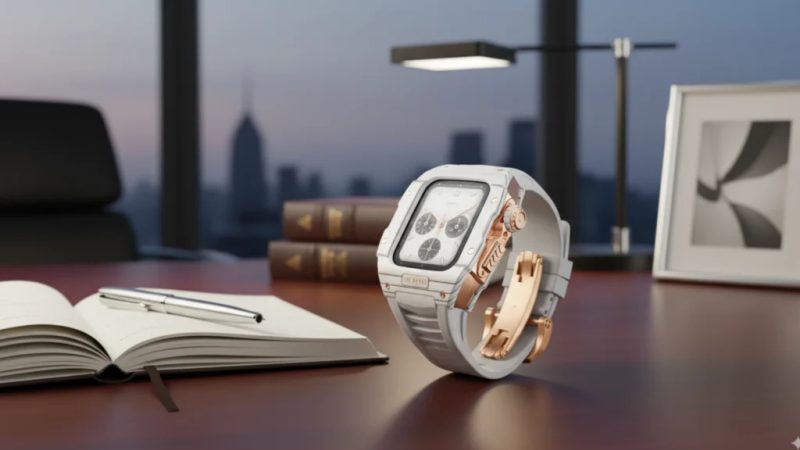
VERTU's wearables collection includes connected watches, COR RING and LUMINA AI Bracelet. These are examples of different wearable forms, not devices with special airport-security status. The selected jewellery materials and dimensions can vary by product, so the simplest preparation is a secure way to stow each piece if asked.
Should you remove wearables before joining the queue?
Decide based on the item and your ability to secure it. Removing a large watch or conspicuous bracelet in advance may save a second screening pass. On the other hand, handling a small ring in a crowded queue can increase the risk of losing it. If you do remove an item, stop at a preparation area and put it away completely before moving towards the conveyor.
Keep a dedicated zipped pocket or small rigid case for valuable accessories. Do not tuck a ring into an open coat pocket or balance a watch on top of a laptop. Count your pieces before leaving the preparation area and again after collecting your bag. The practice takes seconds and addresses a more likely travel problem than the scanner itself: leaving an item behind.
If the item is part of a medical or accessibility need, tell the officer before screening and follow the applicable assistance procedure. A general consumer wearable guide cannot substitute for individual instructions at the checkpoint.
Can a rechargeable wearable go in checked baggage?
Battery transport is a separate issue from screening. The FAA's PackSafe guidance for portable electronics says devices containing lithium batteries should be carried in cabin baggage. If such a device is checked, it must be completely powered off and protected from damage and accidental activation, subject to the applicable limits. Carrying a valuable wearable with you also makes loss or damage easier to notice.
Spare lithium batteries and power banks have stricter treatment: the FAA says they belong in carry-on baggage, not checked luggage. If a carry-on is taken at the gate, remove those spare batteries and keep them in the cabin. Check your airline's current instructions, especially for international travel or an unusual charging case.
Do not infer battery capacity from the size of a ring or watch. If a carrier asks for battery information, use the product's actual documentation. A damaged, swollen or recalled device is a different case and should not be treated like an ordinary healthy wearable.
Will airport screening erase wearable data?
Routine screening does not imply that an officer accesses your wellness history, but you should not make an absolute technical claim about every scanner or device. Back up or sync information you value before travelling and keep the paired phone secure. If you are asked to power off an item, follow the instruction and later confirm that it reconnects normally.
For a VERTU COR RING, the smart core and jewellery outer band are distinct components in supported sets. Do not separate them at the checkpoint unless the product's care instructions and the officer's request make that appropriate. A small detachable component is easier to misplace than a complete ring.
How should you pack a watch, ring or bracelet for inspection?
Use a pouch or case that prevents scratching and keeps parts together. Put it in an accessible part of the carry-on so you can retrieve it if requested without unpacking the whole bag. Keep chargers and small cables in a separate organiser. Avoid wrapping a bracelet around a power bank or wedging a ring into a charging connector.
Photograph valuable pieces before departure and note the model and purchase records in a secure place. This helps identify an item if it is misplaced; it does not change the screening requirement. If a piece has a delicate finish or set stones, the case matters more than a general promise that airport equipment is harmless to all jewellery.
When the bag emerges, move to a collection area before checking contents. Do not open a tiny jewellery pouch directly at the end of the conveyor while other bags are arriving. Refit the wearable once you are clear of the busy screening zone.
What changes outside the United States?
TSA guidance applies to US checkpoints. Another country may use different equipment, staffing and instructions. Read the departure airport and airline guidance before travel, particularly for connecting journeys. Follow the officer in front of you even if a previous airport let you keep the same watch on.
Flight rules for lithium batteries also depend on the carrier and route. The FAA's US guidance is a useful baseline for flights involving the United States, but a second jurisdiction can be more restrictive. Keep the device's specification and charger information available offline if you are travelling through several countries.
What is the simplest airport routine?
Before leaving home, charge and sync your wearable, check the clasp or ring fit, and pack a protective pouch. At the airport, place bulky or easily removable valuables in a zipped carry-on pocket before screening if convenient. Empty your pockets, listen to the officer and respond to any request for separate inspection. After screening, count your items and reconnect the device to its paired phone.
This routine works across a watch, ring and bracelet without pretending that all three have the same shape or materials. It also keeps screening, safe battery transport and ordinary ownership care as separate decisions.
Frequently asked questions
Can I keep my smartwatch on at airport security?
Possibly, but be prepared to remove it. TSA recommends removing bulky jewellery in standard screening, and an officer may request separate inspection.
Do I need to remove a smart ring?
Not necessarily. Follow the checkpoint officer's direction. If removal is difficult, say so rather than forcing the ring off in the queue.
Can my wearable charger go in checked luggage?
It depends on whether it contains a spare lithium battery. The FAA says spare batteries and power banks must travel in carry-on baggage; check the charger's actual specification.
Will a watch alarm the metal detector?
It may, depending on the item and screening equipment. There is no universal result. Secure it in a carry-on pouch if asked to remove it.
Are VERTU wearables treated differently?
No special checkpoint exemption is established for a VERTU watch, ring or bracelet. Follow the same local screening instructions as for other wearables.