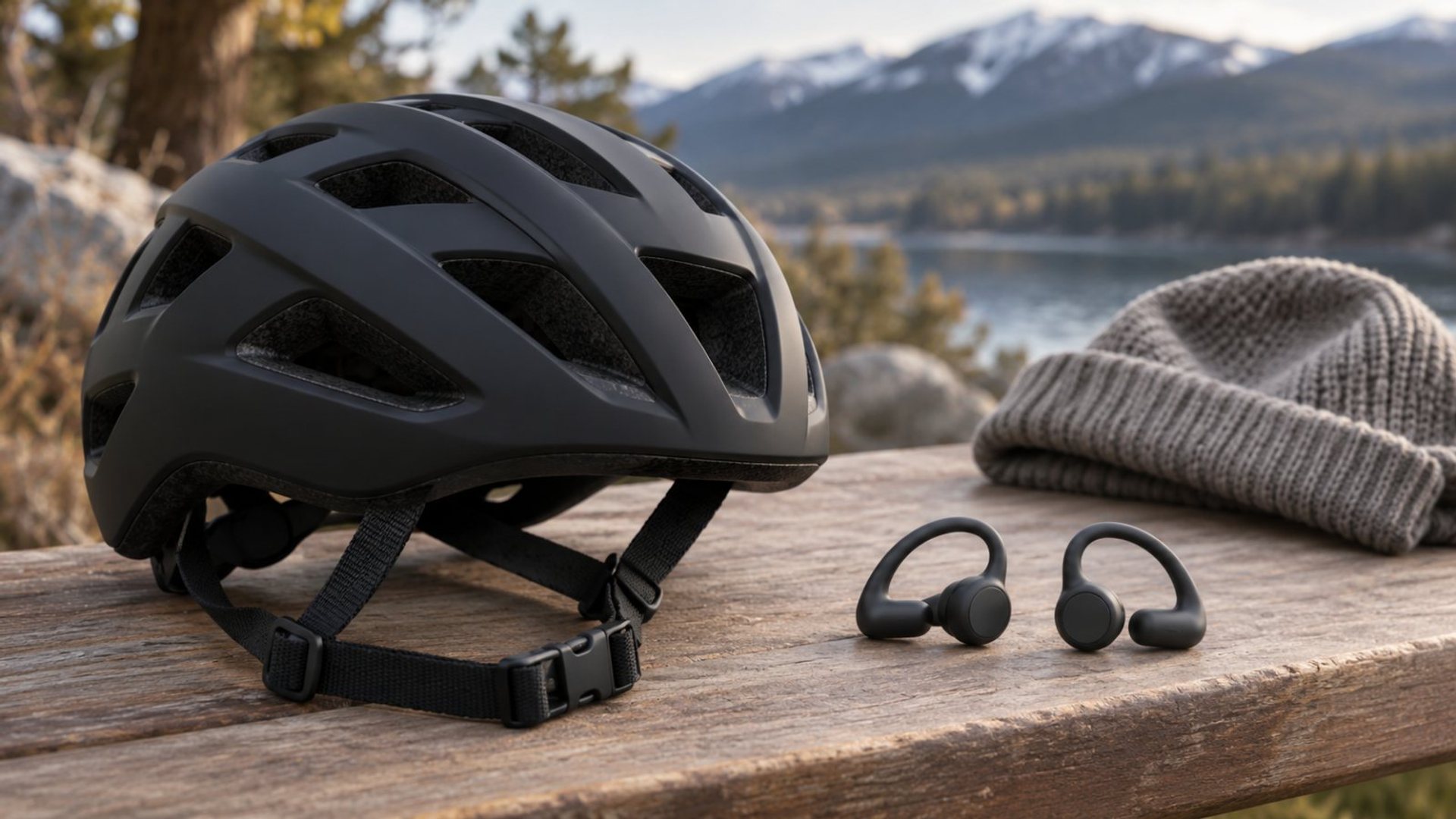
Earbuds under a helmet or hat are only workable when the headwear retains its intended fit and the earbud creates no pressure or distraction. A soft hat presents a comfort and retention question; a protective cycling or motorcycle helmet is safety equipment whose fit must follow its maker's instructions. Do not force a helmet over an earbud or use audio where it reduces awareness or conflicts with local rules. Open-ear styling does not by itself prove compatibility.
Can an earbud sit under a soft hat?
Sometimes, depending on the hat's stretch, seam placement and the earbud's profile. A loose knit hat may clear a small earbud, while a close-fitting cap or headband can press it into the outer ear. Put on the earbuds first at a low volume, then lower the hat without pushing the devices out of place. Move your jaw, turn your head and wear the combination for several minutes. Any painful point or repeated readjustment is a sign to change the arrangement.
Check whether the hat brushes the earbud's touch surface and starts or pauses media accidentally. If the device offers control customisation, see whether you can disable a troublesome gesture. Do not use adhesive or padding that traps the earbud against the ear. Moisture from rain or perspiration can affect both comfort and the product, so follow the earbud maker's stated water and cleaning guidance rather than assuming a hat protects the electronics.
A hat can also change call quality. Fabric near a microphone may muffle your voice or make rubbing noise. Make a short recorded call in the actual hat before relying on it outdoors. If the caller hears friction, reposition the hat or remove the earbud. A product's call-noise feature cannot guarantee that fabric contact will sound clear.
What changes with a protective helmet?
A certified helmet must fit the head as intended. Extra objects between the head and liner, or against the ears, may change how it sits and may cause pressure. Bell's bike-helmet fit guide says the helmet should fit comfortably and securely, with the forehead skin moving slightly when the fastened helmet is rocked. Its motorcycle manual likewise stresses a snug fit for its helmets. These are maker-specific instructions; consult the manual supplied with your own helmet.
If an earbud makes the helmet sit higher, prevents the chin strap from fastening correctly, creates a hotspot or moves when you shake your head, remove the earbud. Do not change the protective liner, cut foam or choose an oversized helmet solely to create space for audio. A ten-minute indoor fit check cannot prove crash performance. Ask the helmet maker whether a specific accessory is compatible and follow its guidance for any built-in communication system.
Full-face motorcycle helmets add another problem: pulling the shell down can dislodge an earbud and press it painfully into the ear. Removing the helmet can pull the device out and leave it inside. Even if the pair seems to fit while stationary, the combination may become distracting in use. Prefer a communication system specifically supported by the helmet maker where audio is permitted, and verify the local law for your vehicle and location.
Does an open-ear earbud solve the fit problem?
No. Open-ear designs can place their frame or hook around the outer ear, exactly where a helmet edge or strap may run. Their lack of an ear-canal seal does not make them thinner, helmet-approved or immune to pressure. An open-ear model may be comfortable beneath a loose hat and impractical beneath a tight helmet. Fit depends on the geometry of the exact products together.
VERTU's CRUSH Series OWS AI Earbuds are listed as open-ear earbuds. The brand materials reviewed for this article do not establish compatibility with any protective helmet. If considering CRUSH, test it with a soft hat for comfort and calls, but treat helmet use as a separate question for the helmet maker. Do not infer safety approval from the earbud's open-ear presentation.
Our open-ear versus bone-conduction guide explains the designs. Neither category automatically resolves helmet clearance. A headband that sits near a helmet's rear retention system can be as problematic as an ear hook near a strap. Inspect the actual contact points instead of choosing solely by a category name.
Will I still hear traffic and warnings?
Leaving the ear canal partly open is not a guarantee of awareness. Audio volume, attention and the helmet itself affect what you notice. Public cycling advice from Northern Ireland's government tells cyclists to remain aware and avoid headphones or mobile-phone use while riding. Laws and guidance differ by location. Check applicable rules and prioritise full attention, especially where traffic or other people may approach unexpectedly.
Do not use a “safe volume” number from a generic article as permission to ride with earbuds. The issue includes distraction as well as audibility. If you need directions, stop in a safe place and look at the route, or use a permitted system in accordance with the helmet and vehicle instructions. If a work call arrives while riding, pull over before answering. A missed call is preferable to divided attention.
For a stationary, low-risk activity such as walking indoors with a soft hat, try a normal speaking voice and a familiar alert at your intended volume. If you cannot hear them clearly, lower volume or pause playback. That test does not certify road safety; it simply shows how the specific setup performs in that space.
How can I test the combination before leaving?
Identify the headwear type first. For a soft hat, check comfort, retention, accidental controls and microphone sound. For a protective helmet, begin with the helmet manual and fit it without audio. Then ask whether the maker permits the intended accessory. If it does, follow its installation instructions and repeat the prescribed fit checks. If compatibility is unclear, do not improvise by squeezing earbuds underneath.
Look for red marks after a short trial, especially near the outer ear or temple. Check that straps are untwisted, the helmet is level and the buckle works as intended. Move your head, bend forward and check whether anything shifts. A tight point that seems tolerable in a shop can become distracting over a longer period. Stop the trial if pressure increases or hearing becomes impaired.
Keep the earbuds and helmet separate when the combination fails. For a hat, a different hat or smaller earbud may help. For a protective helmet, choose a manufacturer-supported communication solution if one exists and its use is allowed. Do not modify safety equipment to accommodate consumer earbuds.
What should decide the setup?
For a hat, let comfort and a clear call test decide. For a helmet, let the helmet's fit instructions, accessory compatibility and local rules decide before convenience. If any of those checks fail, leave the earbuds out. The most useful feature of an audio device is one you can use without compromising the equipment and attention your activity requires.
Frequently asked questions
Can I wear open-ear earbuds under a bike helmet?
Only if the helmet maker permits the accessory and the helmet retains its prescribed fit. Open-ear design alone does not establish compatibility.
Can I resize a helmet to make room for earbuds?
Do not choose an oversized helmet or alter protective foam for audio. Follow the helmet maker's fitting and accessory guidance.
Is a knit hat safer for earbuds than a helmet?
A knit hat is generally a comfort question, while a protective helmet is safety equipment. Still check pressure, retention and awareness with either setup.