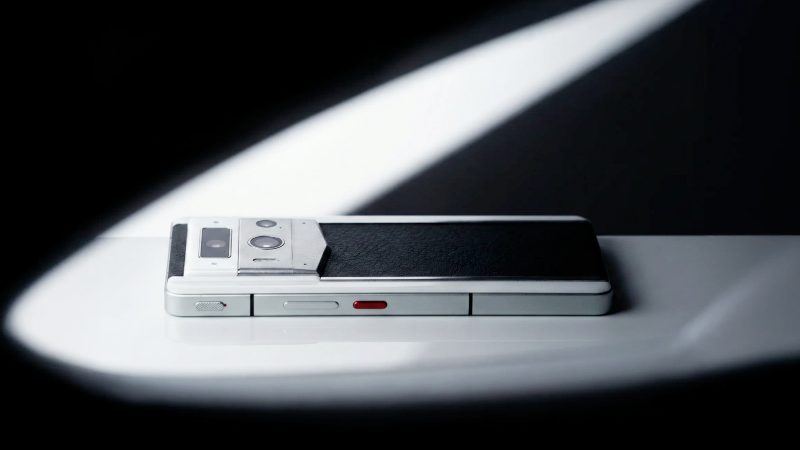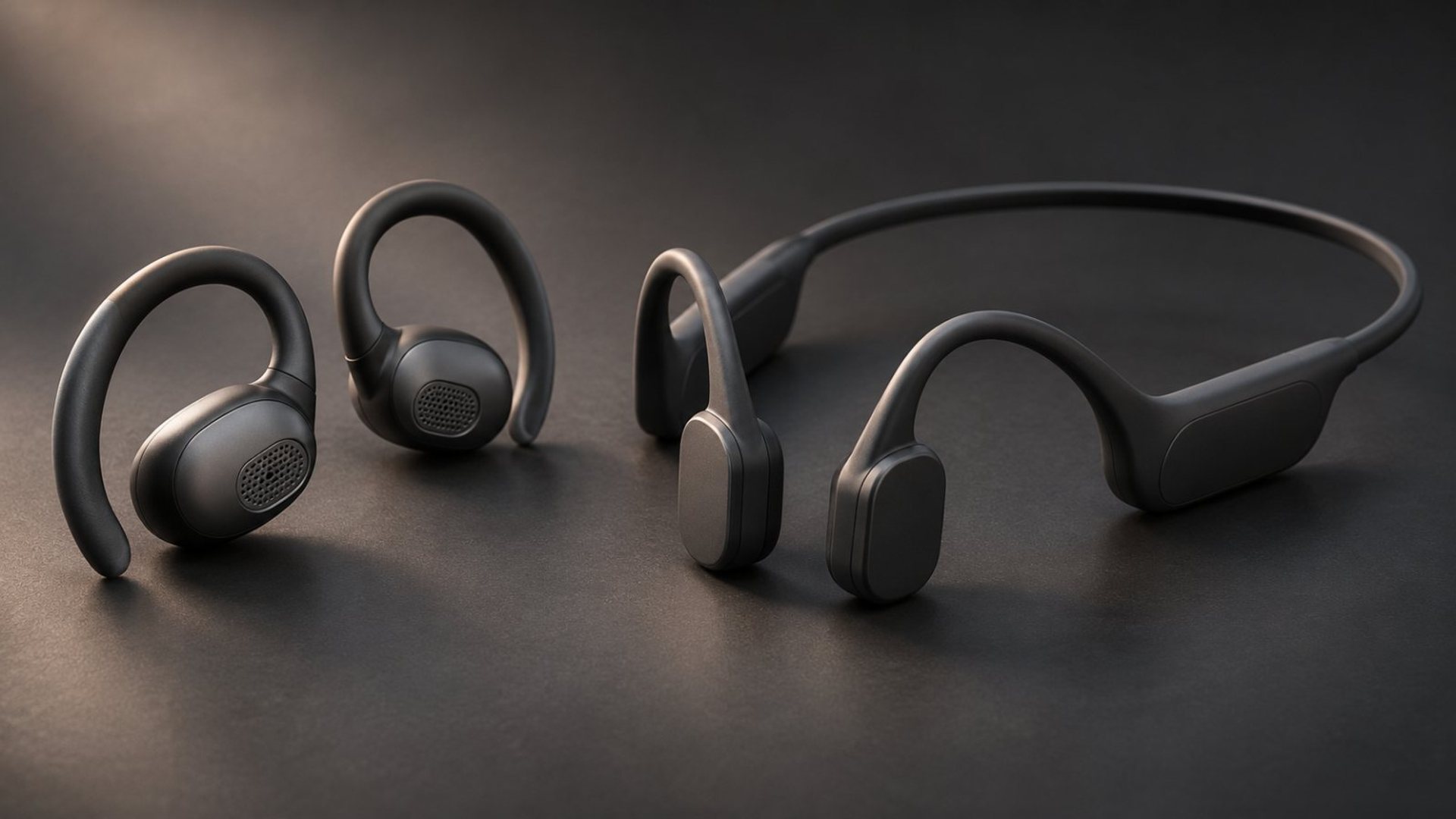
Open-ear headphones versus bone conduction is a comparison of fit and sound delivery, not two mutually exclusive product classes. An open-ear design leaves the ear canal unobstructed; it may use a small speaker near the ear to send sound through air, or a transducer that sends vibration through bone. Bone-conduction models are often open-ear. Choose by the specific model's comfort, intelligibility, leakage and suitability for your surroundings, rather than assuming either design makes listening automatically safer.
What do “open-ear” and “bone conduction” mean?
Open-ear describes where the device sits. It generally leaves the ear canal clear instead of sealing it with an in-ear tip. Bone conduction describes a route by which sound reaches the inner ear: vibration is transmitted through bones around the ear. Air-conduction open-ear designs use speakers placed near the ear; their sound still travels through air. Shokz, which sells both types, explains this distinction in its technology FAQ. The useful buying question is therefore “Which open-ear technology does this model use?” rather than “Is it open-ear or bone conduction?”
Marketing terminology is not always precise. A retailer may use “open-ear” for an ear-clip, an ear-hook or a band that rests against the cheekbone. Two products can leave the ear canal similarly open while feeling entirely different on the head. Read the maker's description of the sound mechanism and examine the actual contact points. A product photograph alone may not reveal whether it uses air or bone conduction.
How does each design feel after a long session?
Air-conduction open-ear earbuds often place a speaker beside the ear and are supported by a hook, clip or frame. The ear canal is free of an inserted tip, which some wearers prefer for long calls. But a hook can press against glasses, and a clip can feel different as the ear moves. A large outer-ear speaker can also conflict with a hat. Comfort depends on the precise geometry and the wearer, not simply on the label “open-ear”.
Bone-conduction headsets commonly rest a vibrating surface against the cheekbone area, sometimes with a band behind the head. This avoids an earbud in the canal, but the pressure and vibration can be noticeable. Some people find that stable for movement; others prefer a lighter point of contact near the outer ear. If you wear spectacles or a helmet, try both together with the headphone before buying. A design that feels fine for five minutes may press during a two-hour call.
Test comfort with ordinary movements: looking down at a phone, walking briskly and turning your head. Check whether the device shifts, whether its controls remain reachable and whether the fit changes when you smile or speak. Do not judge by an advertised weight alone. Weight distribution, contact area and clamping force can matter more than a single gram figure. If the maker offers different sizes or a fitting guide, use the guidance for that exact model.
What changes in sound and calls?
Neither method should be assumed to sound identical to a sealed in-ear earbud. With an open canal, outside sound can mix with the audio. An air-conduction design may provide familiar speaker-like detail at moderate volume, but its performance depends on speaker placement and the surrounding noise. Bone conduction has its own tonal character because the sound route and contact pressure differ. Compare speech clarity and music you know at a comfortable level, rather than relying on a broad claim that one technology always has stronger bass.
For calls, the microphone arrangement and noise handling are separate from the sound-delivery method. A headset may reproduce the other person's voice clearly yet transmit your own voice poorly in wind. Test a short call indoors, outdoors and on a moving route if those uses matter. Ask a colleague whether your voice is intelligible; the person on the other end is the best check of microphone performance. An open-ear shape alone cannot guarantee excellent calls.
Sound leakage matters in shared spaces. Air-conduction open-ear speakers can be audible to someone nearby, especially at higher volume. Bone-conduction designs can also leak sound through vibration or secondary airborne sound. The degree is model- and volume-specific. In a quiet carriage or meeting room, ask someone sitting beside you to judge at the level you would actually use. If privacy is essential, a different headphone category may be more appropriate.
Does leaving the ear open improve awareness?
It can help you hear some surrounding sounds because the canal remains unobstructed, but it does not guarantee that you will notice traffic, instructions or hazards. Loud playback and focused attention can still mask important cues. Follow local rules and the activity's safety requirements; pause audio when you need to listen to your surroundings. Treat awareness as a behaviour supported by fit, volume and context, not a certified product function.
Open-ear consumer headphones are also not hearing protection. The US Occupational Safety and Health Administration explains that ordinary consumer headphones should not be substituted for properly evaluated occupational hearing protection. That guidance concerns noisy work, but the distinction is useful elsewhere: leaving your ears open is a listening preference, not proof that a product protects them from loud sound. A similar distinction applies to medical devices; our hearing aids versus open-ear earbuds guide explains why consumer audio is not a substitute for hearing care.
Which design fits travel, work and movement?
For desk work and calls, prioritise a stable fit with glasses, a microphone that survives your normal room noise and controls you can use without breaking your flow. If you frequently enter meetings, also test how quickly the device connects and whether its case is easy to carry. The best choice may be an air-conduction open-ear earbud that fits your outer ear, or a bone-conduction band that stays in place; neither is predetermined by the category.
For walking or running, pay attention to movement and sweat according to the exact maker's rating. A behind-the-head band may feel secure, while a compact ear-clip may pack more easily. Test the device with a cap or helmet if you use one, and never assume a headphone can be worn beneath protective equipment without affecting its fit or the equipment's function. In transport, leakage and announcements may matter more than maximum bass.
Battery life is another model-level decision. Compare the stated single-charge runtime, what the case adds and whether the figures reflect the features you will use. If you already own an ageing pair, an apparent need to replace the headphones may be a charging-case or contact problem; our earbuds battery service guide sets out checks before you buy again. A category comparison is most useful when the actual options have been narrowed to models that fit your routine.
Where does the VERTU CRUSH Series fit?
VERTU's current CRUSH Series OWS AI Earbuds listing presents an open-ear design for consumer audio and calls. The official product page gives model details, but it does not identify CRUSH as a bone-conduction headset. The current VERTU knowledge base likewise has no CRUSH entry establishing a bone-conduction mechanism. For this comparison, CRUSH belongs on the open-ear consumer-earbud side; do not infer a different sound route from its appearance.
If CRUSH is on your shortlist, check its fit with your eyewear and routine, make the call and leakage tests above, and confirm the exact edition, current availability and support terms before purchase. Its design and presentation may be part of the appeal, but those qualities do not settle the acoustics or the fit for your ears. Compare it with a named bone-conduction model under the same conditions and volume, not against an abstract category.
Frequently asked questions
Are all open-ear headphones bone conduction?
No. Open-ear means the canal remains open. Some models use nearby speakers and air conduction; others use bone conduction.
Does bone conduction bypass the eardrum?
Bone conduction transmits vibration through bone toward the inner ear. That is a different route from speaker sound travelling through air, but it is not a reason to ignore volume or hearing concerns.
Which leaks less sound?
Neither category wins universally. Leakage depends on the specific design, fit and playback level. Test at the volume and distance that matter to you.
Can either type replace hearing protection?
No. Consumer open-ear and bone-conduction headphones are listening devices. Use approved hearing protection where the environment requires it.
Conclusion
The decision is between specific designs, not between “open-ear” and “bone conduction” as if they were opposites. First confirm how each model delivers sound, then test comfort, calls, leakage and awareness under your own conditions. An open ear can be convenient, but fit and responsible use determine whether the headphone belongs in your day.