Key Takeaways
- The best indirect clue is a bracelet the recipient wears comfortably, in the same style and on the same wrist you have in mind.
- Measure the usable fastening length of a chain or the inner dimensions of a rigid bangle; neither number automatically equals wrist circumference.
- Clothing size, height and a rarely worn piece are weak substitutes for a real fit clue.
- When evidence is limited, prefer a verified adjustable range and check alteration, personalisation and exchange terms before ordering.
You can choose a bracelet size without directly asking, but you should treat the result as an estimate. Start with a piece the recipient actually wears and likes, compare its useful dimensions with the new bracelet's own size chart, and keep an exchange path open. If no comparable piece is available, an adjustable design is often a better surprise than a rigid size chosen from appearance. This approach preserves the occasion while respecting the fact that wrist size and fit preference are personal.
Identify the type of bracelet before measuring anything
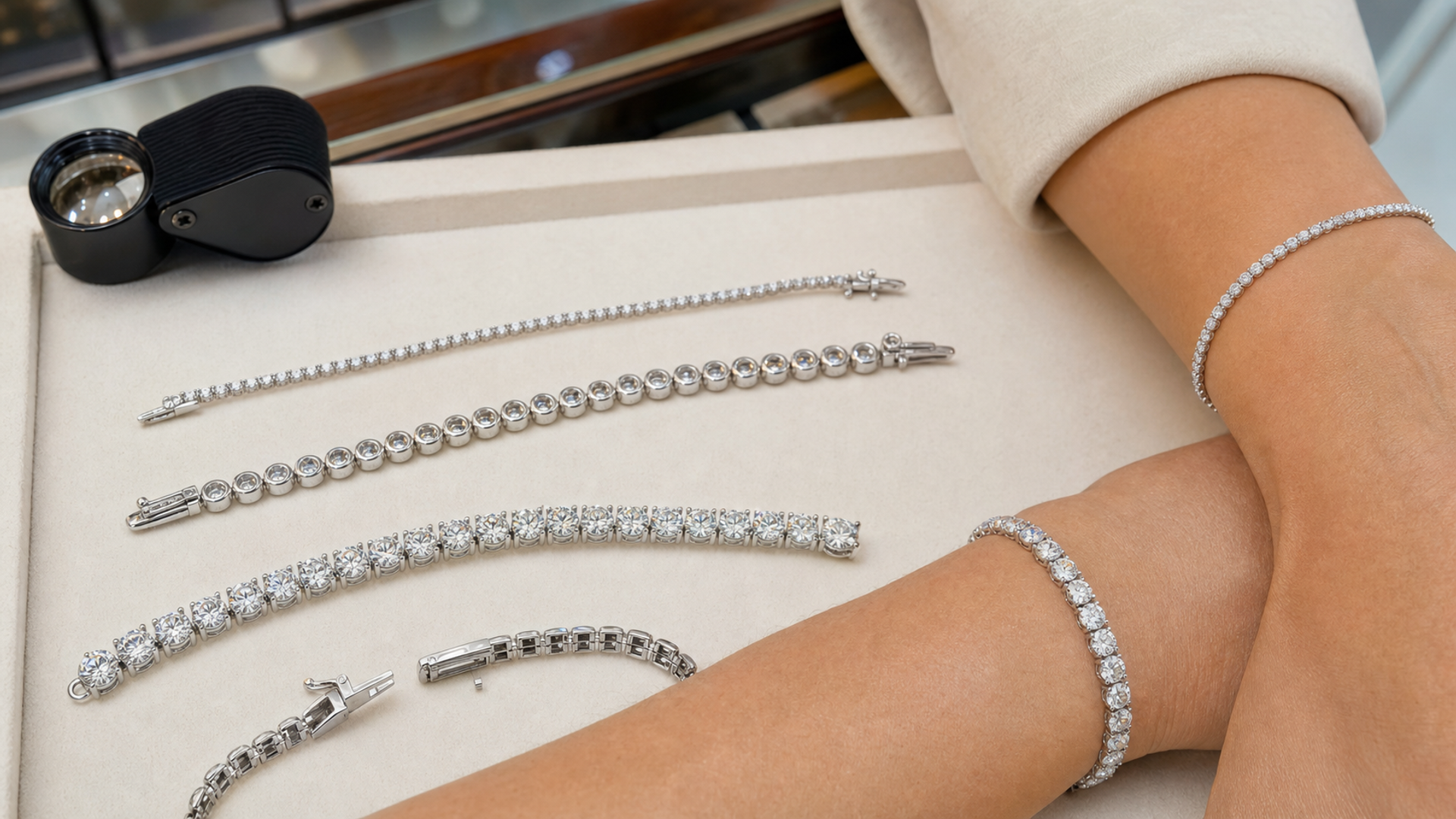
A chain bracelet wraps around the wrist and closes at a particular link or clasp position. Its listed length may include both the wrist circumference and the room that lets it move. A rigid bangle must pass over the hand, so its opening and inside diameter can matter more than a chain length. A cuff has an opening and a shaped profile of its own. These are different fit problems, even when a shop calls them all bracelets.
Tiffany's official bracelet size guide asks buyers to measure the wrist and compare with its chart. Cartier publishes its own bracelet recommendation table. Use each maker's chart for the item you are buying; do not assume that a size label or allowance transfers across brands and constructions.
Before looking for clues, write down the new piece's fastening type, adjustability and the measurement the seller actually provides. If the seller gives only 鈥渟mall鈥?or 鈥渕edium鈥?without dimensions, ask for the corresponding measurement and fit method. A surprise should not depend on an undefined label.
Rank the clues by how much they tell you
The strongest clue is a bracelet worn often, comfortably and on the intended wrist. A chain with a familiar drape tells you more about a new chain than a stiff bangle does. A second good clue is an existing watch or bracelet whose clasp setting the recipient regularly uses, provided you understand that its case or clasp may change the overall fit. A friend or family member who has recently bought jewellery with the recipient may know their preferences, but second-hand memories are less reliable than a physical piece.
A bracelet that stays in a drawer is weak evidence: it might be too tight, too loose or simply not to their taste. A bracelet worn on the other wrist may also mislead. Height, clothing size, ring size and photographs do not offer a dependable conversion to wrist circumference. They may tempt you to pick a familiar 鈥渁verage鈥?size, but that is still a guess.
Use a simple confidence scale. High confidence: a regularly worn, similar design that you can measure. Medium confidence: a piece in a different style plus a clear adjustable range. Low confidence: a visual estimate or a size remembered by someone else. When confidence is low, let the design or exchange policy absorb the uncertainty instead of pretending the number is precise.
How to measure a piece the recipient already wears
- Choose a comparable piece. Prefer a chain for a new chain, a rigid bangle for a new bangle, and a cuff for a new cuff. Note whether the recipient likes it close to the wrist or loose.
- Record the actual fastening point. Lay a chain flat without pulling it taut. Measure from the part of the clasp that engages to the link or loop normally used. If several settings are possible, photograph the regular setting so you do not mistake maximum length for worn length.
- Measure the inside of rigid pieces. For a bangle, use the inside diameter or circumference requested by the seller's chart. The outside edge includes material thickness and can overstate available space.
- Compare with the exact product chart. Match units and the maker's method. If the new piece has a bulky clasp or a very different profile, ask the retailer how that affects fit.
Do not remove links, change a clasp or borrow an item for a prolonged time just to obtain a measurement. If access is awkward, leave the surprise intact and choose a more flexible option. Also remember that a measured bracelet length is not automatically the recipient's bare wrist measurement: it includes the room the wearer prefers and may include the fastening structure.
Choose an adjustable design when the estimate is uncertain
An adjustable chain can offer several fastening positions; a slider or extension chain may provide a wider range. Yet 鈥渁djustable鈥?is not synonymous with 鈥渇its everyone鈥? Check the actual minimum and maximum wearable circumference, how securely the clasp holds, and whether the decorative part sits where intended at each setting. A piece worn at its absolute limit may feel different from one worn near the middle of its range.
For a rigid bangle, a broad size range is less useful if the hand cannot pass through the opening. A hinged bangle or open cuff may solve some fit problems, but only if its maker provides suitable dimensions and guidance. Do not bend a cuff or enlarge a bangle unless the manufacturer explicitly allows that adjustment. Material damage and altered return rights are real risks.
VERTU's existing LUMINA fit guide explains an owner-facing direct measurement approach. A gift buyer faces a different task: estimate responsibly and retain a route to fitting after the surprise. If considering the current LUMINA product listing, confirm its available size range, current configuration and exchange terms there before ordering. The VERTU knowledge base revision 427 reviewed for this article did not include LUMINA, so no product dimensions or functions are asserted here.
Protect the purchase before you personalise it
Read the return and exchange terms for the exact item, market and purchase channel. Ask whether an opened box, removed tag, engraved message, altered length or special order affects eligibility. Retain the receipt and original packaging until the recipient has tried the bracelet. If timing matters, check the exchange window against the actual gift date, not just the order date.
Consider a gift note that makes fitting part of the experience: 鈥淚 chose this for you; we can adjust or exchange the size together.鈥?The recipient can then choose the position and drape they prefer. You may also arrange a fitting appointment or ask the retailer whether adjustment is available after gifting. Confirm any service, timing and cost rather than assuming it is included.
If you are buying a high-value bracelet, ask the seller for measurements in writing and keep the response with your order record. Photographs can show a style, but they rarely prove the usable circumference or how it sits on a particular wrist. A measurement and exchange route are more useful than a confident-looking image.
FAQ
Can I use a bracelet they already own to find their size?
Yes, if they wear it comfortably and it resembles the style you want to buy. Measure the usable fastening path for a chain or the inner dimensions for a rigid piece, then compare with the new maker's chart.
Can I estimate wrist size from height or clothing size?
Not reliably. Those measures do not tell you the wrist circumference or the recipient's preferred drape. Choose an adjustable design or an exchange-friendly purchase when direct clues are absent.
Is an adjustable bracelet the safest surprise gift?
Often, if its stated range plausibly covers the recipient and the clasp works at the chosen setting. Verify the exact range; 鈥渁djustable鈥?alone is not a fit guarantee.
How much room should a chain bracelet have?
Enough for the intended movement and comfort, according to the design and wearer preference. Follow the seller's size method rather than adding one universal allowance to every chain.
What if I choose the wrong size?
Use the retailer's exchange or alteration route if available. Preserve tags, packaging and proof of purchase, and check the rules before engraving or changing the piece.
Conclusion
A thoughtful bracelet surprise does not require a blind guess. Identify the style, use a comparable piece the recipient enjoys, and compare its useful measurement with the exact product chart. When the clue is weak, choose verified adjustability and clear exchange terms. Explore VERTU's gift collection only after you know what sizing and exchange conditions you need. The recipient can then make the final fit personal after the gift is opened.