If you’re choosing a foldable for serious work, the hinge is the least interesting part.
In search terms, you might be looking for a google foldable phone, a google pixel foldable phone, or simply a pixel foldable phone—but the buying criteria that actually matter for business are consistent across the Pixel Fold line.
The real decision is where your intelligence lives:
Google Pixel Fold (the Pixel Fold line) is built to feel native inside Google’s AI and services ecosystem.
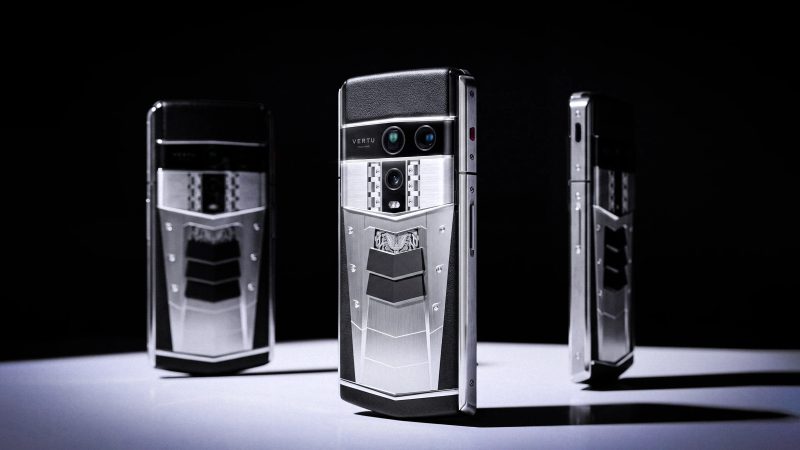
VERTU AlphaFold is positioned as a luxury, privacy-forward command surface—an executive device where AI is expected to respect boundaries and support workflows.
This guide compares them the way a business buyer (and a security lead) would: criteria first, trade-offs explicit, and privacy treated as architecture—not a settings page.
The fastest way to decide (comparison matrix)
Decision criterion | Google Pixel Fold line (Pixel Fold + Pixel 9 Pro Fold) | VERTU AlphaFold |
|---|---|---|
Best for | Google-first teams, Android purists, productivity multitaskers | Executives who want private-by-design workflows + luxury craft + concierge |
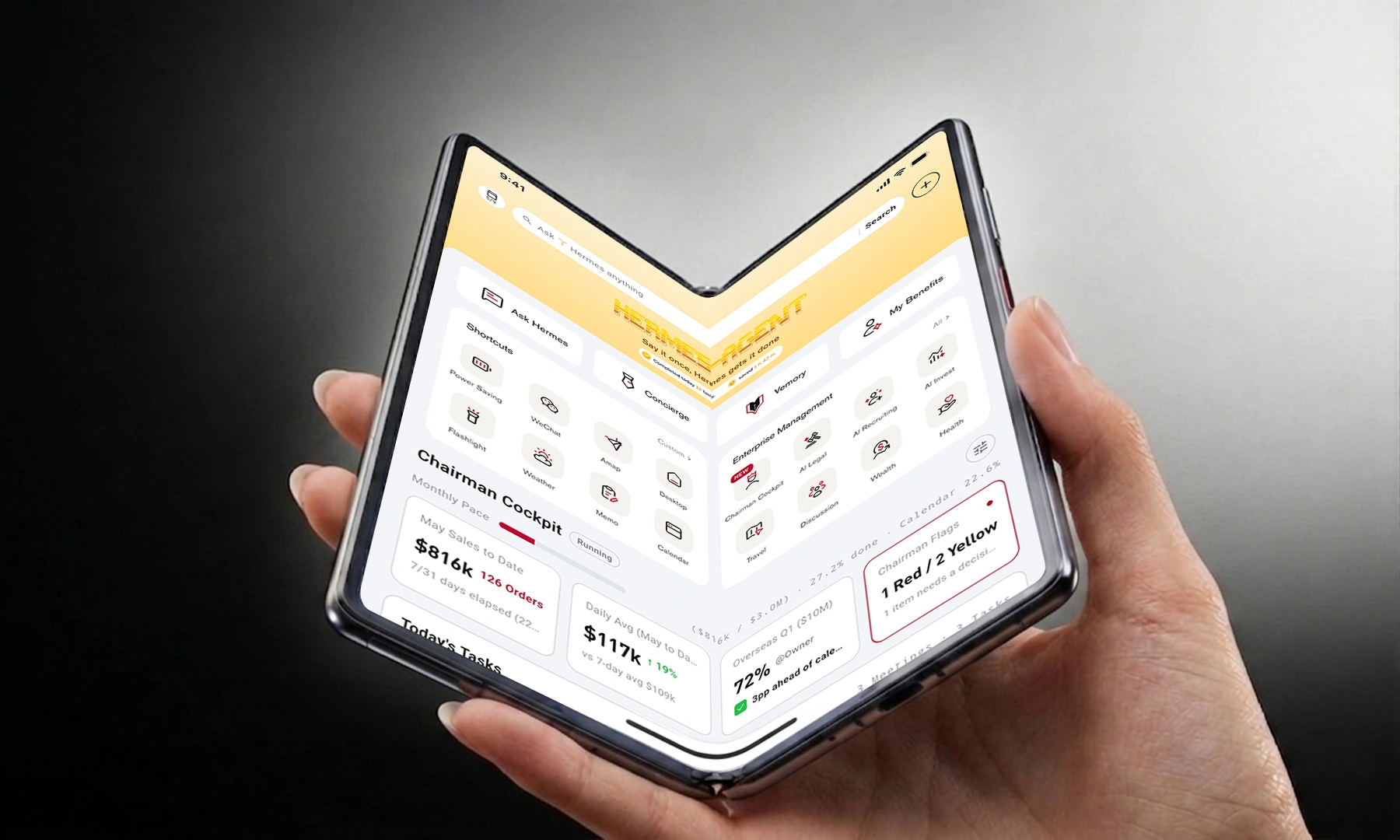
AI approach | Deep Google AI integration + device experiences designed around Google’s stack | Hermes Agent positioning: voice intent → actions across supported apps; “private AI” framing |
Privacy model | Strong platform security; privacy controls + on-device ML for specific features | Security messaging includes “Private Space,” “end-to-end encryption,” and “triple-system isolation” (per VERTU) |
Enterprise readiness | Strong update posture and Android’s work profile/MDM ecosystem | Executive workflow narrative: app orchestration + “ERP Phone” framing |
Travel reality | Broad Android app ecosystem + Google services; depends on account/config | Built for frequent travel + white-glove support expectations (VERTU concierge positioning) |
Luxury / ownership | Premium consumer flagship logic | Artisanal materials + bespoke ownership experience |
AI philosophy: Google ecosystem convenience vs private-by-design workflows
Most comparisons ask “which phone has better AI.” That’s not the useful question.
The useful question is: what must your phone do with your data to be helpful?
Pixel Fold: convenience rises with Google integration
Pixel’s advantage is coherence. Google controls Android, Pixel software, and a large part of the AI experience end-to-end—so the device tends to feel like an extension of the Google universe rather than “a phone with Google apps installed.”
Pixel also leans into on-device intelligence for some experiences, and points to privacy-preserving approaches such as federated learning and the Android Private Compute Core to keep certain processing local when appropriate (and to minimize what’s stored or shared). In Google’s own explainer, federated learning is designed to enable collaborative model improvement without centralizing raw training data.Google Research explainer on federated learning
For business users, that usually translates into speed and consistency—especially if your calendar, mail, documents, maps, and identity already live in Google.
AlphaFold: private AI phone experience as a design premise
VERTU’s AlphaFold is framed differently. Instead of “AI as a feature set,” it’s presented as a workflow layer.
On VERTU’s own product page, the company describes Hermes Agent as connecting “70+ supported apps” and turning “voice commands into actions,” learning habits and remembering preferences over time.VERTU AlphaFold (Hermes Agent phone)
And in VERTU’s broader explanation of its approach, the company argues that the premium in modern AI is not the model itself, but the “harness” that protects context, controls escalation to cloud models, and makes routine work happen locally—what it describes as PROTECT / UNDERSTAND / HELP / ORCHESTRATE.VERTU on “return on intelligence” (May 2026)
If you’re privacy-sensitive, that difference matters. You’re not only buying intelligence—you’re buying boundaries.
Google Pixel Fold line on Android: updates, control surfaces, and day-to-day friction
Both choices live in the Android world, but they feel different because they optimize for different priorities.
Pixel Fold line: security posture and the “boring reliability” advantage
For business buyers, the most underrated feature is a predictable security posture.
Google positions Pixel as “secure to the core,” built with multiple layers of security. It highlights Google Tensor plus the Titan M2 security chip as part of that stack, and links to deeper technical context from the Google Security Blog on Titan M2 (2021).
Google also notes that Pixel comes with at least five years of security updates (with details depending on availability dates and models), which matters for lifecycle planning.
That “boring reliability” is precisely what many business users want.
AlphaFold: Android as a base for a different kind of phone
AlphaFold’s differentiator isn’t “clean Android.” It’s a thesis: an executive foldable is a workflow tool first.
VERTU’s own messaging includes privacy/security phrasing such as “Private Space,” “end-to-end encryption,” “encrypted V-Talk,” and “triple-system isolation.”
If your work is high-stakes—sensitive meetings, travel coordination, approvals, credentials—then a phone that treats isolation and separation as a core narrative may be more aligned to your needs than a general-purpose ecosystem flagship.
Privacy & security: what buyers should verify (a practical checklist)
If you only remember one thing: privacy is not a promise—it’s an architecture you can audit.
Here’s the buyer checklist that matters on any Android foldable—Pixel, AlphaFold, or otherwise.
1) Where does AI processing happen—on-device, in the cloud, or both?
Some features run locally. Others require server-side processing. The important part is transparency.
Google explicitly describes “on-device intelligence” and points readers to privacy-preserving methods such as federated learning and Private Compute Core. Google’s security team introduced Private Compute Core as a way to isolate and protect sensitive computations.Android Private Compute Core (Google Security Blog, 2021)
Ask:
What data is processed on-device?
What data is sent off-device?
What gets stored, and for how long?
Key Takeaway“AI” is not one thing. Evaluate it as a set of data flows.
2) Can you separate work and personal identities?
On Android, Work Profile and enterprise management are the baseline for business separation. If you can’t isolate work apps and policies from personal apps, you don’t have an enterprise-ready phone—you have a consumer device with email.
If you’re purchasing for an organization, confirm your MDM supports Android enterprise management policies and that the device model is compatible.
3) Is security hardware-backed?
For Pixel, Google points to hardware and security design such as Tensor plus Titan M2, and links to deeper technical context from the Google Security Blog.
This category matters because hardware-backed security changes what an attacker can realistically do—especially if the device is lost during travel.
How to verify: On any Android foldable you’re considering, check the vendor’s official security documentation for (1) security chip / secure element details, (2) update policy window, and (3) enterprise management support. If the vendor won’t document it, you can’t govern it.
4) Are permissions granular—and do unused apps lose access?
Google’s Pixel privacy story includes clear controls (camera/mic toggles, permission controls, and automatic permission resets for unused apps).
Foldables often invite more multitasking and more apps on screen. That increases the risk of “permission creep.” Good permission hygiene isn’t optional.
5) Can you define what “private” means for your context?
A founder’s “private” might mean: no meeting audio retained, no sensitive documents leaving device storage, no credential sharing.
A family office’s “private” might mean: strict separation by identity, location-based restrictions, and predictable incident response.
A phone can only support privacy if you can define it.
Business workflows: meetings, travel, approvals, and cross-app execution
This is where the foldable form factor earns its keep.
Meetings: capture → summarize → action
Pixel’s strength is the ecosystem: calendar, email, notes, and documents are often already there.
AlphaFold’s positioning is more direct: Hermes Agent is described as converting voice intent into actions across supported apps.
The business question to ask isn’t “does it summarize.” It’s:
Can it turn a summary into real next steps across your apps?
Can it do that without exposing credentials or leaving a trail you can’t control?
Travel: context-switching without context leakage
Frequent international travel amplifies the risks:
unfamiliar networks
rushed decisions
device loss
Pixel adds meaningful protections like layered security and built-in anti-phishing posture as part of its Safety Center narrative.
AlphaFold adds a different promise: a concierge and an ownership model designed around high-touch support—useful when operational friction is the real cost.
Approvals and “executive latency”
Executives lose time in small delays: chasing a PDF, approving an invoice, aligning with a PA, forwarding a message to counsel.
This is where “AI” becomes valuable only if it reduces latency without expanding exposure.
If your phone can’t help you do work inside your governance, it’s just a faster way to create risk.
Luxury, craft, and ownership: what “premium” actually means here
Pixel’s premium is the familiar flagship equation: refined software experiences, consistent platform behavior, and security posture that’s understandable.
AlphaFold’s premium is different:
materials
craft
a curated ownership experience
and a phone positioned as a private command surface, not a mass-market endpoint
If you’re buying this as an executive instrument, luxury is not decoration—it’s the absence of friction.
Who should choose which
Choose the Google Pixel Fold line if…
Your work already lives in Google (Gmail, Calendar, Drive, Docs).
You want the most “native” Google AI + Android experience.
Your security team prefers mainstream platform controls with clear, primary-source documentation.
Choose VERTU AlphaFold if…
Privacy is a first-order requirement, not a preference.
You want AI framed as workflow execution (voice intent → actions) rather than a set of assistant features.
You value luxury craft and concierge-level ownership support as part of your business operating system.
Collector’s note: The right comparison isn’t Pixel vs AlphaFold. It’s “ecosystem convenience” vs “private workflow control.” Once you choose that axis, the hardware becomes obvious.
FAQ
Is Pixel “more secure” than a luxury foldable?
Security is not a brand label. It’s layers, policies, updates, and what you can audit. Pixel publishes extensive primary-source security and privacy documentation via the Safety Center and Google Security Blog.
What should I check before using an AI assistant for sensitive work?
Start with data flow:
what leaves the device
what’s stored
what’s linked to your identity
Then validate governance:
work profile separation
device management policies
permission controls
If you can’t explain the flow, you can’t defend it.
Does a foldable actually improve productivity?
It can—if you consistently use multi-window, side-by-side workflows, and treat the inner screen as a work surface (not just a bigger social feed). Otherwise, you’re paying for a capability you won’t operationalize.
Next steps
If you want a decision you can stand behind, write your own “privacy baseline” in one page: what data must never leave device control, what accounts must stay separated, and what your incident response looks like if the phone is lost during travel.
If you’re exploring a privacy-forward executive workflow device, start with the official details of VERTU AlphaFold (Hermes Agent phone), then evaluate it against the checklist above.
Disclosure: This article references VERTU pages. Editorial judgment remains the priority.