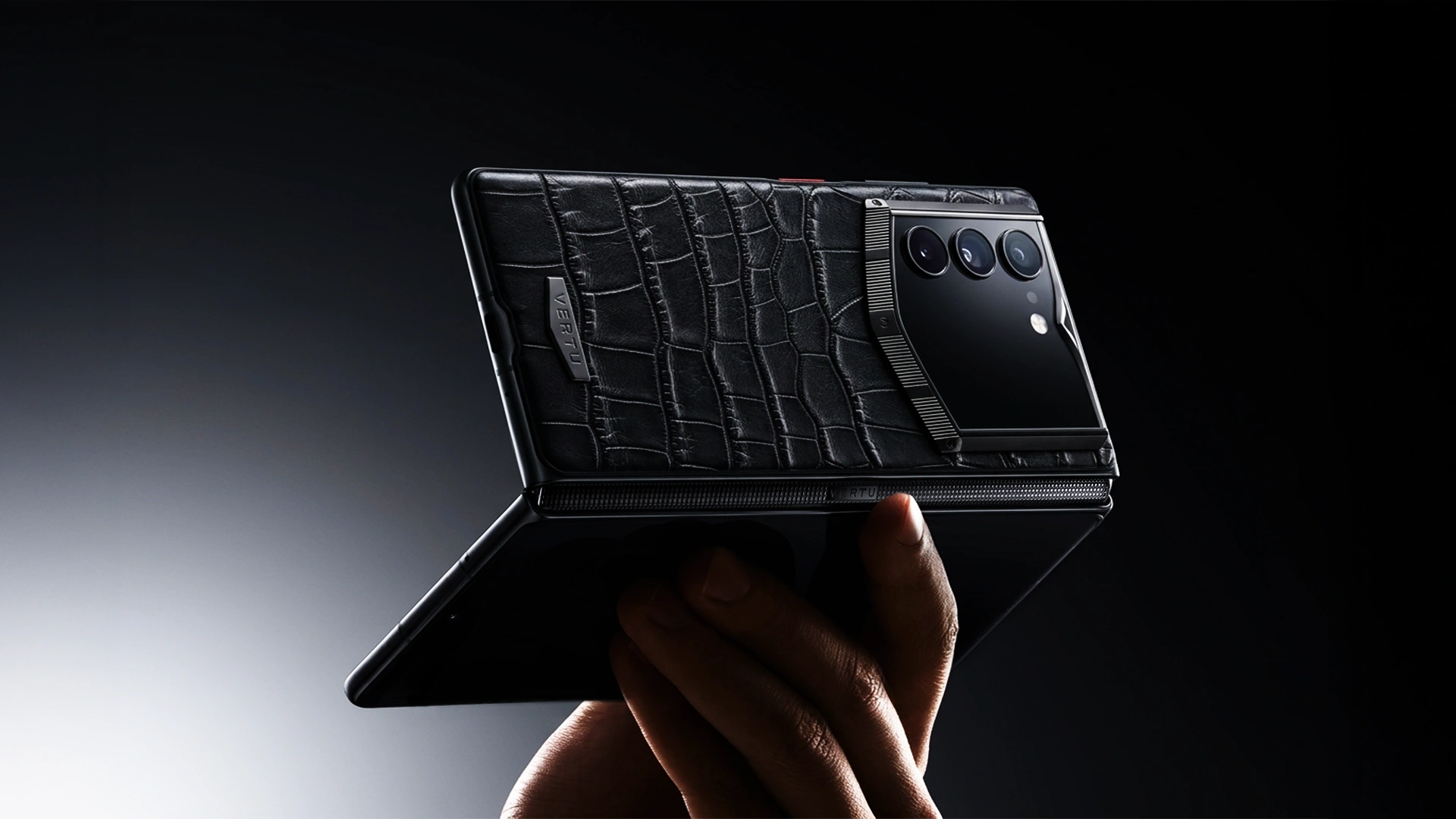
A strange thing has happened to flagship phones.
For years, “the best” meant the brightest display, the fastest chip, and the most aggressive camera stack. In 2026, those things still matter—but they no longer decide whether a phone feels premium in the moments that count.
The new dividing line is quieter:
Does the phone’s intelligence help you act—or just generate clever text?
Does it keep your private life private—or merely promise it?
Does it age with dignity—or look dated the moment next year’s model lands?
Does the brand stand behind your ownership when you travel, when you lose a device, when you need an answer now?
This is a guide to evaluating flagship phones in 2026 without falling back into spec worship.
Key TakeawayIn 2026, the most capable flagship smartphones aren’t defined by peak benchmarks—they’re defined by where AI runs, how privacy is engineered, and how well the device holds up (materials + support) over time.
Key takeaways (2026 evaluation criteria)
Treat “AI features” as an architecture question, not a marketing label.
Prioritize on-device processing for anything sensitive or frequent.
Ask what the AI can access (photos, mail, calendar) and how permissions are enforced.
Long-term security and software support now belong on the shortlist—before cameras.
Materials aren’t cosmetic when you intend to keep a phone for years.
Service isn’t “nice to have” if your phone is your travel node, authenticator, and private office.
The 2026 flagship phones shift: from specs to systems
Most modern premium phones are “fast enough.” Your day rarely fails because a CPU is 8% slower.
It fails because:
you can’t log in while traveling,
an assistant feature needs the cloud at the wrong moment,
a permissions prompt gets rushed,
an update policy leaves you exposed,
or your phone becomes a liability in a room where discretion matters.
That’s why 2026 is the year to evaluate best flagship phones as systems—a blend of intelligence, privacy posture, materials, and service.
Pillar 1: Intelligence that actually reduces your mental load
AI on a phone should do one thing exceptionally well: reduce decision friction.
Not by entertaining you. By taking the small, recurring, high-frequency burdens off your plate—without creating new risks.
On-device AI is the first question (not an advanced one)
A practical rule: if the task is personal, frequent, or time-sensitive, you want it to run locally.
Why? Because on-device AI reduces dependency—on network quality, on server load, and on third parties.
IDC even defines “next‑gen AI smartphones” by whether they can run on-device generative AI efficiently, using an NPU threshold (their segmentation uses 30 TOPS+ as a line for this category) in IDC’s definition of next‑gen AI smartphones (2024).
That doesn’t mean you should shop by TOPS. It means something simpler:
If a phone can’t do meaningful work locally, it will keep reaching for the cloud—and your privacy model becomes a trust exercise.
What “intelligence” should look like in 2026
In 2026, intelligence is not one feature. It’s a pattern:
Summarize your inputs (notes, calls, messages) into something actionable.
Translate across languages without exposing sensitive content.
Draft with your context—but only when you explicitly allow it.
Coordinate across apps in small, bounded workflows.
This is the direction described in Forbes’ 8 Smartphone Trends That Will Shape 2026 (2025): phones becoming an interface to AI copilots and more integrated agents.
The buyer’s job is to demand boundaries.
The AI “permissions question” most people never ask
When you try a new assistant feature, don’t only ask what it can do. Ask what it can see.
Specifically:
Can it read your mail and calendar, or only what you paste?
Can it access your photos library, or only a selected album?
Can it act across apps, or only suggest actions?
Because the most powerful assistant isn’t the one that writes the best paragraph. It’s the one that can quietly touch the most sensitive surfaces of your life.
Collector’s note: The quiet luxury move in 2026 is not buying “AI.” It’s buying control—the ability to decide which intelligence runs locally, which requests can ever leave your device, and which never should.
Pillar 2: Privacy that’s engineered, not promised
In 2026, privacy is no longer a settings page. It’s a design decision.
A clean mental model: where does your request go?
For any “smart” feature, there are only three possibilities:
- On-deviceyour data stays local.
- Private cloudyour request goes to a tightly controlled environment, ideally designed to avoid retention.
- General cloudyour request is handled like a typical web service—fast, scalable, and potentially exposed to broader access.
As a buyer, you don’t need to know the implementation details. You need clarity on which bucket applies.
Apple’s security team has described a privacy-by-design approach for cloud AI as “stateless” processing with transparency guarantees in Apple Security’s Private Cloud Compute overview (2024).
That’s not a blanket endorsement of any one ecosystem. It’s a useful standard: if the cloud is involved, you should expect minimization, transparency, and meaningful constraints.
Privacy in the AI era: the new risks are subtle
Traditional smartphone privacy concerns were often about:
location tracking,
ad identifiers,
app permission overreach,
malware.
Those remain.
But AI adds new failure modes:
Your phone becomes a summarizer of sensitive information. Summaries are easy to copy, share, and misroute.
“Helpful” assistants create derived data—inferences about your patterns, contacts, and preferences.
Cross-app automations turn a single permission grant into a broader capability than you intended.
So your real question becomes:
Does the phone let you benefit from AI while keeping your private surfaces compartmentalized?
The privacy checklist that matters more than megapixels
Answer 2026 flagship privacy posture should include:
Clear AI data boundaries (what stays on device, what doesn’t)
Strong permission controls (granular access, not all-or-nothing)
Reliable security updates (years, not months)
Hardware-backed protection for credentials and biometrics
You don’t need paranoia. You need discipline.
How to verify: Turn on an AI feature and watch the prompts. If a “simple” feature asks for broad access (contacts + photos + mail) with vague reasons, treat that as a red flag.
Pillar 3: Materials that age well (because you’ll keep it longer)
Premium materials are often dismissed as aesthetic theater.
That’s a category error.
If you’re buying a flagship in 2026—especially one you intend to keep for years—materials matter for three reasons:
- Longevityhow the device wears, resists scratches, and holds tolerances.
- Repair realitywhether it can be serviced without becoming fragile.
- Sustainabilitywhether the brand is building for cycles, not churn.
“Greener” can be real—if the incentives are structural
Sustainability is becoming more than a brand slogan. It’s increasingly shaped by regulation and long-term support commitments, as noted in Forbes’ 2025 roundup of smartphone trends.
For you, the practical takeaway is not moral grandstanding. It’s value:
A phone that is supported longer, built to last, and made from higher-integrity materials can be the more rational purchase—even if it isn’t the cheapest.
What to look for beyond “premium feel”
Instead of chasing buzzwords, look for signals:
Does the device feel rigid under torsion?
Are high-touch surfaces designed to patina or to degrade?
Is the brand explicit about long-term servicing and care?
In true luxury categories—watches, luggage, automobiles—materials are inseparable from ownership. Flagship phones are finally catching up to that logic.
Pillar 4: Service as a performance feature
A modern phone is not just a device.
It’s your authenticator. Your travel hub. Your secure messaging node. Your private office.
And when it fails, the cost is rarely “inconvenience.” It’s missed time.
The overlooked reality: your phone breaks when you’re busy
Most problems happen at the worst moment:
crossing borders,
in transit,
during an event,
right before a meeting,
when your assistant is also overloaded.
In those moments, service is performance.
This is where some luxury makers treat ownership differently—designing a service layer around the device.
For example, VERTU positions support as 24/7 assistance with bespoke coordination—less about device troubleshooting, more about taking logistical friction off your calendar.
That isn’t a replacement for good software. It’s a different definition of “flagship”: the phone as a gateway to continuity.
A modern pairing: AI for speed, humans for judgment
The most believable 2026 model is hybrid:
AI handles fast drafts, summaries, and routine coordination.
Humans handle nuance, discretion, and the situations where context matters.
If you care about privacy and outcomes, this pairing can be more trustworthy than “AI everywhere.”
A simple framework to choose a flagship phone in 2026
If you want a clean way to decide, use four questions.
1) Intelligence: what can it do locally?
Can it summarize, translate, and assist without a connection?
Does it feel responsive when you’re traveling?
2) Privacy: what can it access, and how is it bounded?
Are permissions granular?
Is the data flow clear?
Is there a credible privacy-by-design story when cloud compute is used?
3) Longevity: will you trust it in three years?
Update commitments.
Serviceability.
Materials that don’t degrade.
4) Service: when something goes wrong, what happens next?
Can you get help immediately?
Is the service global?
Is the support model designed for high-stakes use—or for ticket queues?
Key TakeawayThe “best” flagship phones in 2026 aren’t the ones with the loudest specs. They’re the ones that let you use intelligence without surrendering privacy—and keep that promise over time.
Red flags (even on expensive flagship smartphones)
AI features that require broad permissions with vague explanations.
“Privacy” that is only a marketing phrase, not an architectural explanation.
Short or unclear update commitments.
No credible service pathway when you’re traveling.
Materials that look premium but age poorly.
Next steps
If you’re rethinking what “flagship” should mean for you, start by defining your non-negotiables:
Which tasks must be on-device?
Which data categories can never leave your phone?
What kind of service do you expect when you’re out of time?
Then evaluate devices against that standard.
If service is part of your definition of “flagship,” you can explore how concierge-level ownership works in practice via VERTU Concierge.
Disclosure: This article references VERTU pages. Editorial judgment remains the priority.


![Top 10 Tourbillon Watches for Men [2026 Latest]](https://cdn.sanity.io/images/e0gp1l2g/production/8cb6bc45133cf9453382fc7d074465af588bb610-1800x1080.webp?w=800&h=450&q=82&auto=format&fit=crop)