Your phone has become a negotiation room, a travel desk, a bank branch, and an archive of your private life.
That was already true. AI simply makes it easier to extract value from whatever data is available, at scale, quietly. Which is why end-to-end encryption still matters. Not as a buzzword, but as a boundary.
What end-to-end encryption on a phone actually means
End-to-end encryption (E2EE) means your message is encrypted on your device and decrypted only on the recipient’s device, so intermediaries can’t read the content while it travels. IBM’s plain-language definition in its “What is end-to-end encryption (E2EE)?” overview (2021) is a good baseline.
If you strip everything else away, E2EE is a promise about who can read the content.
Without E2EE: the service or network handling the message may be able to read it.
With E2EE: only the endpoints (you and the person you’re communicating with) should be able to read it.
That’s the headline. Now the fine print matters.
Key TakeawayE2EE protects message content in transit. It does not automatically protect your phone, your backups, or your metadata.
The three misunderstandings that get people hurt
Most E2EE failures are not cryptography failures. They’re “everything around the cryptography” failures.
Misconception 1: “If it’s end-to-end encrypted, nobody can learn anything about the conversation.”
E2EE usually protects the content. It often does not protect metadata: who contacted whom, when, how frequently, from where, and sometimes how large messages were. IBM’s overview above makes that limitation clear.
If you’re in a high-trust context, metadata can be the story.
Misconception 2: “Encryption in the chat means my backups are safe.”
Backups are a separate system.
WhatsApp is a clean example. Messages and calls are end-to-end encrypted, but cloud backups historically were not protected the same way unless you enabled encrypted backups. Meta explains why backups needed a separate design in “How WhatsApp is enabling end-to-end encrypted backups” (2021).
The point isn’t WhatsApp specifically. It’s the pattern:
E2EE can be perfectly fine inside the chat.
Your backup can still be the easiest place to obtain the same content.
Misconception 3: “E2EE stops screenshots, forwarding, or screen recording.”
Encryption does not control what a recipient does after they can see a message.
If it’s visible on a screen, it’s capturable. In practice, your protection is operational: who you share with, how you verify identities, and whether your phone is locked down.
Android reality: “end-to-end encryption” usually means Google Messages + RCS
On Android, a lot of user intent behind “end-to-end encryption phone” searches comes down to one question:
“Are my normal texts encrypted?”
If you’re using Google Messages, the practical answer is:
SMS/MMS are not end-to-end encrypted.
RCS chats can be end-to-end encrypted when the right conditions are met.
Google’s own help documentation spells out the requirements in “Use end-to-end encryption in Google Messages”: E2EE applies when everyone in the conversation uses Google Messages with RCS chats turned on, and you’ll typically see a lock indicator in the UI.
How to tell if your Google Messages chat is end-to-end encrypted
Google notes two practical signals in its support page:
an RCS chat banner
a lock icon on the send button for eligible conversations
If you don’t see those, treat the conversation as not end-to-end encrypted until you confirm why.
“Turn off end to end encryption on android phone”: what people are really asking
Most of the time, there is no separate “E2EE on/off” toggle.
In Google Messages, E2EE is tied to RCS chats. If you turn off RCS chats, you’re effectively choosing a fallback to SMS/MMS where end-to-end encryption isn’t available. Google provides the off-ramp at messages.google.com/disable-chat.
If you’re searching that phrase because something broke (unreadable messages, device migration, RCS misconfiguration), the simplest way to think about it is:
You’re not turning off cryptography.
You’re changing the transport mode.
Pro TipIf the goal is reliability during travel, don’t solve it by downgrading to SMS. Solve it by choosing a messaging path you can keep encrypted consistently across networks and devices.
Why encrypted communication still matters in the AI era
The AI era doesn’t make encryption obsolete. It makes “everything that touches your plaintext” more ambitious.
AI wants to summarize, search, classify, and automate. That’s useful. But it means more systems have an incentive to see your data in readable form.
1) AI scales surveillance and analysis
The risk is not only that someone can read your messages. It’s that analysis can be automated.
Brookings describes how AI can enable public surveillance at scale in “How AI can enable public surveillance” (2025). In that world, keeping message content out of intermediate systems remains a meaningful line of defense.
2) Assistants can pressure the E2EE boundary
E2EE works cleanly when plaintext stays on endpoints.
But many AI features work best when content is processed centrally. Matt Green’s essay “Let’s talk about AI and end-to-end encryption” (2025) explains the tension: powerful models often require resources that push processing off-device, which can pull private data into environments where the classic E2EE guarantee no longer applies in the same way.
If an assistant “helps” by ingesting your messages, you’ve shifted the trust boundary.
3) LLM integrations introduce new leakage risks
Even when you think you’re only asking for help, integrations can be exploited.
The UK National Cyber Security Centre warns about risks such as prompt injection and sensitive data exposure in its blog post “ChatGPT and large language models: what’s the risk?” (2023).
Encrypted communication reduces the number of systems that ever see your plaintext. That’s still one of the cleanest risk reductions available.
AlphaFold is the quiet reminder: AI progress is powered by data
AlphaFold is not a messaging product. It’s a scientific system.
But it’s a useful lens.
EMBL’s case study “AlphaFold uses open data and AI to discover the 3D protein universe” (2023) is a clean reminder of what modern AI can do when it has the right data and scale, and it makes the dependency explicit: data access is part of the engine.
That’s the connection to AI data security.
When AI is present everywhere, the “reasonable” default drifts toward collecting more, syncing more, and processing more.
E2EE is one of the few defaults that pushes back. It insists that some categories of content should remain readable only to the people in the conversation.
Practical FAQ (phones + Android)
Is end-to-end encryption the same as device encryption?
No.
Device encryption protects data stored on your phone. End-to-end encryption protects the content of messages between devices.
You want both.
What does “end to end encryption phone” mean?
Most of the time, it’s a shorthand way of asking whether your phone’s everyday messaging is protected so only the people in the chat can read it. The important follow-up is always: which app and which mode (SMS, RCS, iMessage, WhatsApp, Signal) are you actually using?
Why does my Android chat sometimes lose the lock icon?
For Google Messages, E2EE depends on conditions such as both sides using Google Messages and having RCS chats enabled. Google outlines those requirements in its Messages E2EE support page linked earlier.
If the conversation falls back to SMS/MMS, you shouldn’t expect E2EE.
Can I turn off end-to-end encryption on Android?
If you’re referring to Google Messages, you usually can’t toggle E2EE as a standalone feature. You can turn off RCS chats, which removes the conditions under which E2EE applies.
Google’s official reset/disable flow is published at the same disable-chat page linked above.
What’s the safest way to think about encrypted communication?
Use this mental model:
E2EE protects content in transit.
Backups, notifications, screenshots, compromised phones, and AI features can still expose content.
So you don’t just “enable encryption.” You manage the whole path.
Key takeaways
End-to-end encryption is still the cleanest way to keep message content out of intermediaries.
Don’t confuse E2EE with complete privacy. Metadata, backups, and endpoints still matter.
On Android, “E2EE” often maps to Google Messages + RCS. For many users, “turn off end to end encryption on android phone” really means turning off RCS and downgrading to SMS.
AI makes data more valuable and analysis cheaper. That increases the stakes for keeping plaintext exposure narrow.
Next steps
If your phone is used for high-trust work or private coordination, treat encrypted communication as a baseline, then audit the surrounding exposures: backups, lock-screen previews, shared devices, and what your AI features are allowed to ingest.
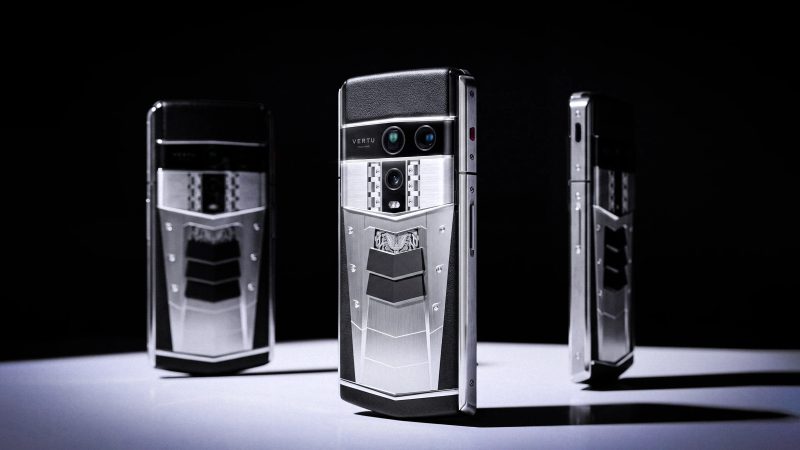
For readers who want a privacy-forward, compartmentalized approach to mobile work, VERTU’s AlphaFold positions features such as Private Space, End-to-end Encryption, and encrypted V-Talk as part of its security model.
Disclosure: This article references VERTU pages. Editorial judgment remains the priority.