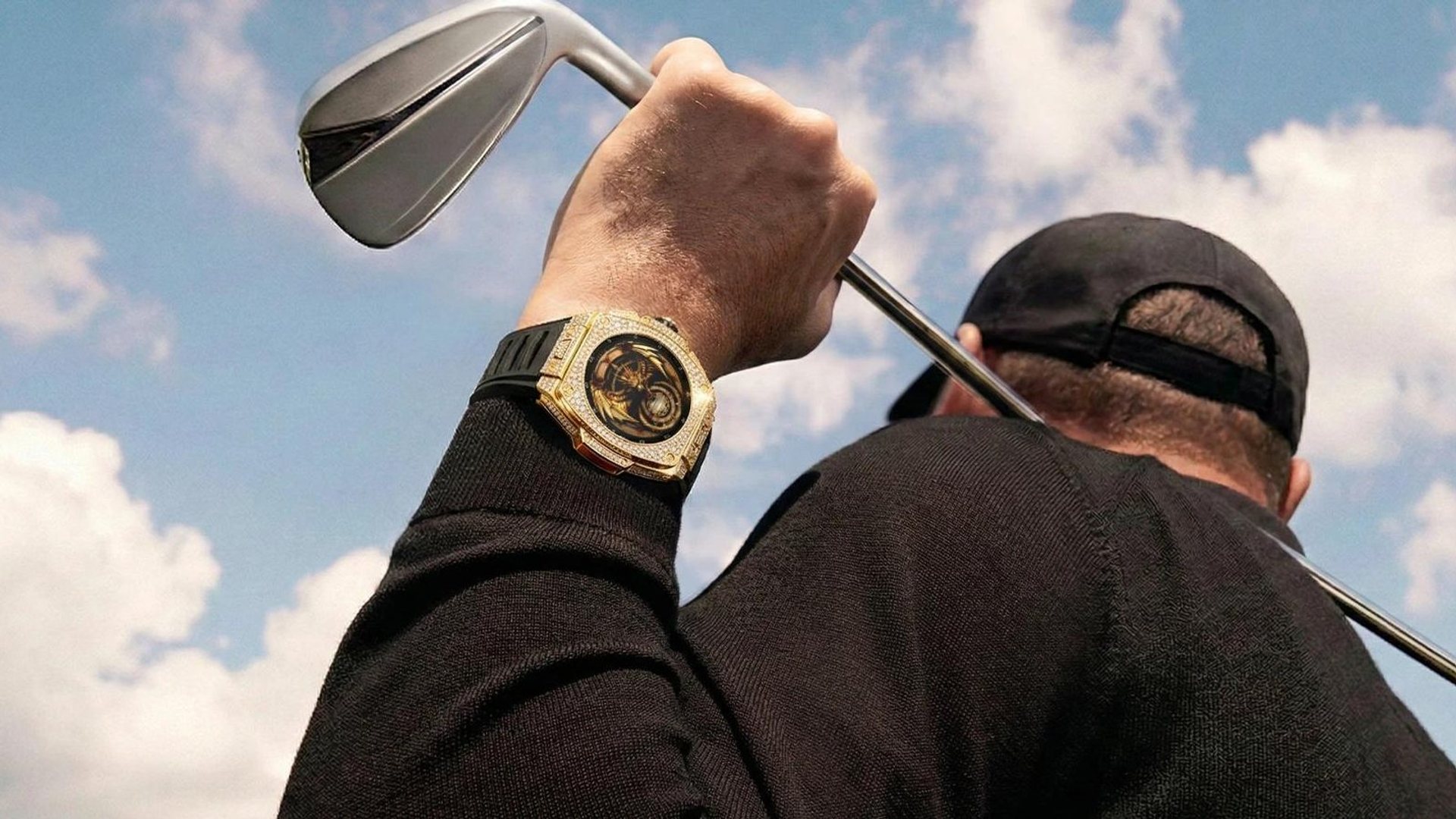
A tonneau watch case has a barrel-like outline: its sides bow outward through the middle and narrow towards the strap ends. The shape can look formal or sporty depending on its proportions, finish and dial. To judge one, compare the complete case length, thickness and how its curved back sits on your wrist, rather than relying on the word “tonneau” alone.
Key Takeaways
- A tonneau case is wider through its middle and narrower at its ends; it is a description of shape, not a movement or quality grade.
- Its visual width, case length and underside curvature together determine how large it feels.
- A rectangular case has straighter sides, while a cushion case is usually squarer and more evenly rounded.
- VERTU Grand Watch and VERTU Agent Watch show two documented, different interpretations of the silhouette.
What does “tonneau” mean in watch design?
“Tonneau” is French for barrel. Viewed from the front, a typical tonneau watch has convex sides, a fuller centre and a narrower top and bottom where the strap or bracelet meets the case. The top and bottom edges need not be perfectly straight. Some designers exaggerate the curves into an almost sculptural form; others keep them subtle enough that the watch reads as an elongated rectangle from a distance. The useful test is the overall outline, not one isolated curve.
The term describes the housing around the dial or display. It says nothing by itself about whether the watch is mechanical, quartz or digital. Nor does it establish water resistance, scratch resistance, price or origin. A tonneau watch can hold a traditional analogue movement or an electronic display. When a listing calls a watch “tonneau”, check the actual front and side photographs before treating the label as a complete description.
How is a tonneau case different from a cushion or rectangular case?
The quickest distinction is where the width sits. A classic rectangle keeps relatively straight, parallel sides, even if its corners are rounded. A cushion case tends to be closer to square, with soft corners and a width that looks more consistent from top to bottom. A tonneau usually stretches vertically and swells through the centre, then tightens towards the strap ends. Real watches blur these categories, so compare the silhouette rather than trying to force every design into a rigid box.
| Case description | Outline to look for | Fit question |
|---|---|---|
| Tonneau | Barrel-like sides, wider middle, narrower ends | Do the ends and underside follow your wrist? |
| Rectangular | More nearly parallel sides and defined corners | Does the full length extend beyond your wrist? |
| Cushion | Soft, often squarer outline with rounded corners | Does its width feel balanced on your wrist? |
| Round | Circular main outline | How do diameter and lugs affect the actual footprint? |
This comparison is a visual guide, not an official classification system. Makers may use their own language for a hybrid case. If two watches are both called tonneau, one can still be thin and restrained while the other is wide, tall and visually emphatic. The difference matters when choosing a watch for a shirt cuff or a particular daily routine.
Where did the tonneau shape come from?
The barrel case belongs to the early design history of the wristwatch, when makers experimented beyond the familiar round pocket-watch outline. The Design Museum’s Cartier exhibition notes identify a tonneau design from 1906. That historical reference establishes that the silhouette is not a recent sports-watch invention. It does not mean every contemporary tonneau design descends directly from one model or uses the same construction.
Across later decades, the shape served different goals: some cases emphasized the elegance of a long, curved profile, while others used a more architectural outline to frame a complex dial. Modern smartwatches can adopt the same external geometry without adopting a mechanical movement. The historical value of the term is therefore in recognizing a design family, not in promising a specific watchmaking tradition for every watch that shares the profile.
For a dated reference point, a museum chronology of Cartier designs dates the Tonneau wristwatch to 1906. That is a milestone for one maison, not a production year for every tonneau watch. A current VERTU Agent Watch listing shows a tonneau silhouette and a US page price of $2,380 when checked on 19 November 2026; price and stock can change. Neither figure tells you how a different case fits.
Will a tonneau watch case fit a smaller wrist?
It can, but the printed case width alone is a poor fit verdict. A tonneau case often has a long vertical axis and a back that may be curved to meet the wrist. Two examples of equal advertised width can wear differently if one has longer ends, a flatter underside or a stiffer strap. Look at the watch straight on, then from the side. Ask for the case length and thickness, and, if possible, try the exact watch for several minutes rather than judging a product photograph.
A simple fit check has four parts. First, place the case centrally on your wrist and see whether its ends remain within the flat upper surface. Second, let your arm hang naturally to see whether the watch rolls to one side. Third, move your wrist through an ordinary range of motion and note whether an edge presses into your hand. Fourth, put on the sleeve or jacket you actually intend to wear. These are practical observations, not a claim that a single measurement can predict comfort for everyone.
If you are ordering remotely, ask the seller for a straight-on wrist photograph, side profile, full case dimensions and the return conditions for the exact configuration. A curved case may appear shorter in a flat specification drawing than it feels against the wrist, while a well-shaped strap can improve a larger watch’s balance. Be especially cautious about assuming that a strap from another watch will attach or drape in the same way.
Does a tonneau case make a watch easier to read?
Not automatically. Legibility depends on dial or display contrast, marker size, reflections, lighting and the layout of information. A tonneau outline can create a broad visual stage for a design, but a decorative dial may still take longer to read than a simple round one. Conversely, a well-designed digital face can make a curved case easy to use. Judge the exact watch in daylight and indoor light, with the display settings you plan to keep.
Ask a separate question about the crystal. Its shape and surface treatment may change reflections, but the word tonneau alone does not identify the crystal material. Likewise, a case that looks substantial in a photograph may still have a comfortable profile; another with restrained imagery may sit high under a cuff. The external outline is one input in a broader usability decision.
How do VERTU watches interpret the tonneau silhouette?
VERTU offers at least two documented ways to use the form. The Grand Watch collection is presented around a tonneau case with a titanium-carbon body and sapphire screen in its current collection description. The Agent Watch product page describes a hand-polished transparent crystal case, a tonneau silhouette, a Corning glass lens, a fluoroelastomer strap and three-dimensional digital watch faces. Those are different material and design propositions even though both use the same shape word.
For a buyer, that distinction is more useful than treating “tonneau” as a single style. Grand Watch’s darker material presentation may appeal to someone who wants the case outline to carry a stronger technical character. Agent Watch’s transparent case and dimensional display are a more visible contemporary design statement. These are editorial interpretations of the published descriptions, not hands-on wear-test findings. Confirm the exact edition, current specifications and strap options before purchase.
It is also important to distinguish appearance from mechanism. Agent Watch uses digital watch faces with mechanical-inspired visual detail; the product description does not turn it into a mechanical movement. Its phone-linked voice workflow is a separate function from the case shape. Someone choosing primarily for the silhouette may therefore compare it with a traditional tonneau watch, but should compare electronics, charging and service terms on their own merits.
Ask for the exact edition’s case length, maximum width, thickness and lug-to-lug span in millimetres. No single set of dimensions defines the tonneau shape, and VERTU’s available knowledge base does not provide all four measurements for every Grand Watch or Agent Watch edition. Do not substitute a made-up “typical” size for a wrist test.
What should you check before buying a tonneau watch?
Start with the reason the shape appeals to you. If it is the elongated line, compare how different cases taper and how much of the dial they expose. If it is comfort, prioritize the underside curve, full length, thickness and strap attachment. If it is formalwear, test the watch beneath a real shirt cuff. A watch that looks ideal in a studio photograph may need a different strap or a more generous cuff in daily use.
- Identify the exact model and edition, not only the collection name.
- Request width, full length and thickness, then compare a side-view photograph.
- Check how the strap or bracelet leaves the case and whether it can be adjusted for your wrist.
- Test legibility in the light and display mode you expect to use.
- Confirm material, service, warranty and return terms for the actual market and seller.
Keep the evidence separate. A manufacturer’s specification can establish a stated material or dimension. A photograph can show proportions but may distort scale. A wrist trial can tell you how one example feels on you, but it does not prove long-term durability. Taking these steps in order is a more reliable buying method than assuming the barrel shape is inherently comfortable or prestigious.
Frequently asked questions
Is a tonneau watch case the same as a rectangular case?
No. Both can be elongated, but a tonneau typically bows outward through the middle and narrows towards the ends. A rectangle keeps its sides more nearly parallel. Some hybrid designs sit between the two descriptions.
Does tonneau describe the movement inside a watch?
No. Tonneau describes the external case silhouette. A watch with that outline can have a mechanical movement, a quartz movement or a digital display; check the exact model specification.
Are tonneau watches only for large wrists?
No. Fit depends on the case’s full length, curvature, thickness and strap geometry. Try the exact watch or request complete dimensions and a side view before ruling it in or out.
Is the VERTU Agent Watch a mechanical tonneau watch?
No. VERTU presents it as a connected watch with a transparent tonneau case and digital faces. Its mechanical-inspired visual details do not establish a mechanical movement.
Conclusion
A tonneau watch case is best understood as a barrel-shaped design choice, not a guarantee about movement, comfort or quality. Compare the case’s complete footprint and underside on your own wrist, then assess the exact material, display and service terms. VERTU Grand Watch and Agent Watch illustrate how one silhouette can support distinct products and uses.