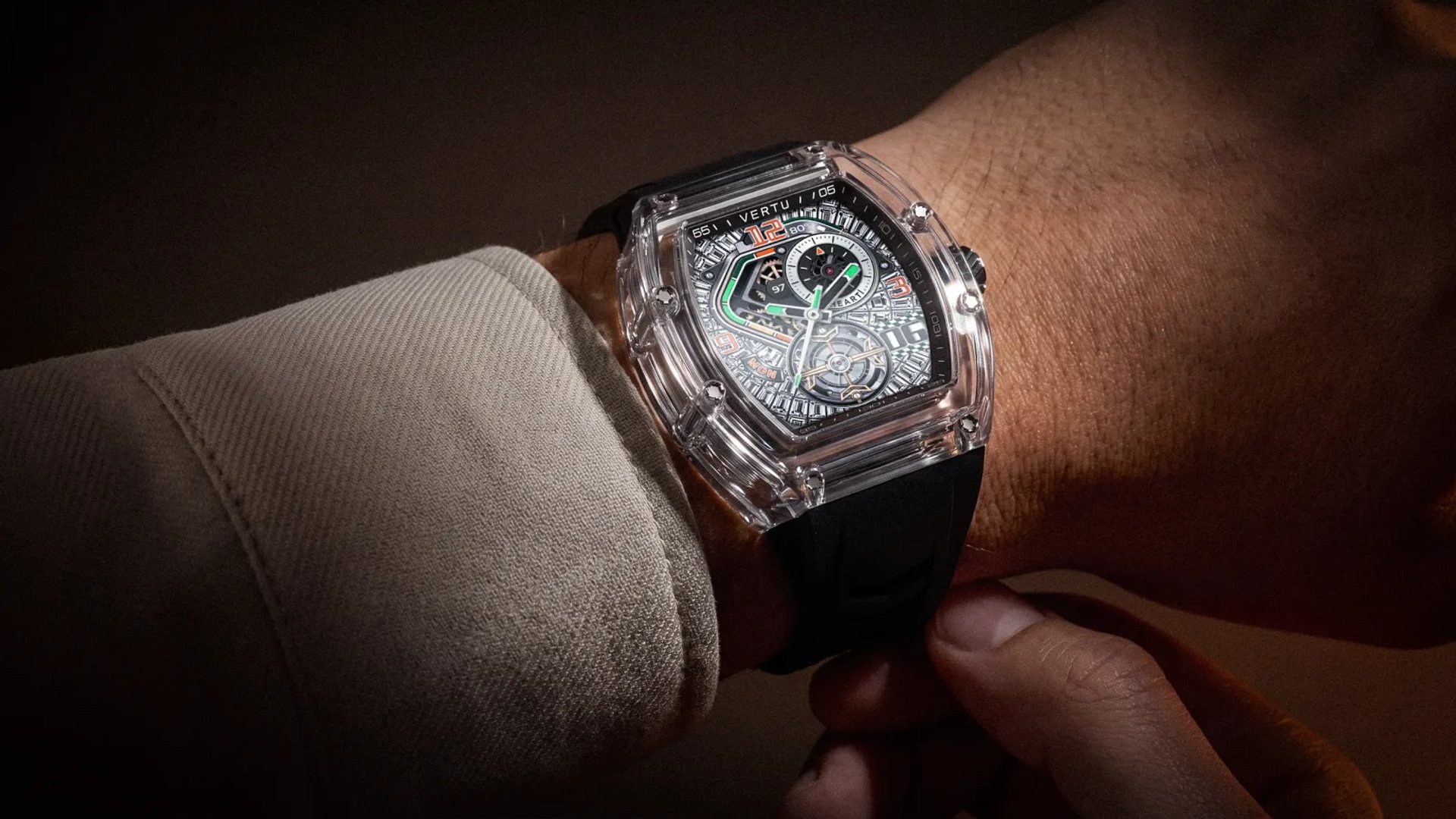
Choosing a smartwatch for small wrists starts with the complete fit: the case footprint, the way the strap turns down, and the smallest usable fastening position. Measure your wrist, then try the exact watch and strap together. A short strap cannot correct a case that presses into your hand or sits awkwardly across your wrist.
This is a buying framework based on published manufacturer guidance and practical fitting checks, rather than a hands-on ranking. “Small wrist” is a useful shopping description, not a universal case-size standard or a reason to limit yourself to a particular colour or gendered collection.
Key Takeaways
- Ask for the complete wearing range of the supplied strap before comparing features.
- Assess the case and its attachments from the side, as well as looking down at the dial.
- Test fastening, screen reading and hand movement while the exact configuration is on your wrist.
- Treat a large display or a distinctive case as a preference to evaluate, rather than evidence of a good fit.
- Confirm the phone connection and purchase terms before making a final choice.
What should you measure before shopping?
Record your wrist circumference and the position where you intend to wear the watch. Use a flexible tape without pulling it tight. If you use a strip of paper, mark the meeting point and measure the strip afterwards. Write down the result in millimetres so you can compare it with a manufacturer's published strap range without repeatedly converting units.
Take a second note about your existing watch, if you have one: where its case ends, whether the fastening sits beneath your wrist, and which adjustment you use. These observations give a salesperson something specific to work with. “This clasp presses against the desk” is more helpful than asking only for the smallest model in the shop.
Do not turn your measurement into an automatic case-diameter rule. Instead, use it to eliminate configurations whose documented minimum wearing circumference is larger than your wrist. Then reserve the final judgement for a try-on. If the brand publishes only the strap's total length, ask for the actual wearing range with the watch attached.
Why does the whole case footprint matter?
Inspect how the watch sits across the top of your wrist, including any projecting attachments. Ask which published dimension represents the case alone and which includes the strap. A dial measurement, overall product length and case width describe different things; comparing them as if they were equivalent gives you a misleading shortlist.
Look from the side with your arm relaxed. Note where the strap first bends, whether the case rests evenly, and whether either end appears suspended beyond your wrist. Then turn your palm upward and bend your hand gently. Reject a configuration that digs into the back of your hand during ordinary movement, even if the view from above appeals to you.
Use photographs as a design reference, not a fit certificate. Unless the wearer's wrist measurement and exact watch configuration are provided, a product image cannot tell you how that watch will sit on you. If buying remotely, ask for a measurement diagram and a side view of the fastening rather than relying on an attractive frontal image alone.
How should the strap fit?
Follow the instructions for the particular watch and sensor system. As one manufacturer-specific example, Apple's wearing guidance calls for a close but comfortable fit and explains that the watch back needs skin contact for certain functions. That is useful context, rather than a promise that every connected watch has identical positioning requirements.
Try the fastening at its intended position, not simply at the tightest hole you can reach. Check whether the remaining strap end is held securely, whether the keeper stays in place, and whether the buckle or clasp ends up under a comfortable part of your wrist. Ask about an approved shorter strap if the supplied one leaves an awkward tail.
If a bracelet needs links removed, ask the retailer to explain the achievable minimum size and any fine adjustment before purchase. If a strap needs cutting, confirm the procedure and the effect on returns before anything is altered. Do not assume that two attachments with the same advertised width are interchangeable; request confirmation for the exact case and connector.
Which try-on checks reveal the most?
Recreate the situations in which you will actually use the watch. A brief look in a mirror answers a different question from typing at a desk, reaching into a coat pocket or fastening a shirt cuff. Use this short sequence to make the comparison concrete.
- Fasten the watch yourself and check whether you can find a comfortable adjustment.
- Rest your forearm on a table and type a few words on your phone or keyboard.
- Read the time, a notification and the menu text at your normal viewing distance.
- Move your wrist gently through its usual range, checking the case edge and crown.
- Put on your usual cuff or outerwear and check access to the controls.
Record the result in plain language: “easy to fasten”, “clasp presses on desk”, “text readable” or “cuff catches”. These are personal observations, not laboratory scores. If the watch feels wrong, try another approved strap or another case rather than planning to tolerate discomfort because the specification sheet is impressive.
How should you assess VERTU's watch designs?
Start with the silhouette you actually want to wear. The VERTU Grand Watch collection uses a tonneau, or barrel-shaped, case. That makes its outline a more useful starting point for a fitting conversation than a generic rule written for circular watches. Ask to see the selected reference from the side and on your wrist.
A sculptural watch may be exactly the visual presence you want, but the design does not establish suitability for a small wrist. Check the supplied fastening, the complete case footprint and the available adjustment separately. Do not infer a minimum wrist size from the collection name, photographs or a material description.
If you are also considering VERTU Agent Watch, request the same fitting information for that exact configuration. Keep the question narrow: can this case and supplied strap be worn comfortably on your measured wrist? The answer should come before a discussion of connected features. Confirm the case dimensions, supplied strap range and individual fit before choosing either model for a smaller wrist.
What else belongs on the buying shortlist?
Choose the tasks you expect the watch to perform, then verify them against your actual phone, app and market. Ask whether each task happens on the watch, depends on the paired phone, or requires an additional account or service. “Compatible” should begin a conversation about your intended workflow, rather than conclude it.
For a watch you intend to wear overnight, discuss the charging routine and try the case while your wrist rests on a soft surface. For travel, check how you would charge it and manage it away from home. For exercise, ask which activities are documented and which strap the maker recommends. Avoid adding functions to the shortlist merely because they appear in a different model's description.
Before paying, confirm the exact reference, strap, market policy and any conditions attached to sizing or alterations. Keep a simple buying note: wrist measurement, chosen adjustment, phone requirements, charging plan and unresolved questions. Further VERTU buying and ownership guides can help with adjacent decisions, but the fitting result should remain specific to you.
Frequently Asked Questions
Is there a single best case size for a small wrist?
No. Use published dimensions to narrow the choice, then compare the whole case, attachments and fastening on your wrist. A diameter alone does not answer all three questions.
Can a shorter strap solve every fit problem?
No. It can address excess strap length when an approved replacement is available, but it cannot change the case shape or where its attachments sit.
Should I choose a smaller screen automatically?
No. Read the actual interface during a try-on. Choose a watch that balances readable text with a comfortable physical fit instead of treating either screen size or case size as the only priority.
Conclusion
To choose a smartwatch for small wrists, bring your measurement and a short list of real tasks to the fitting. Confirm the wearing range, inspect the case from several angles and practise using it. Choose the configuration that works on your wrist before choosing the longest feature list.