Are foldable phones durable enough for everyday use? Many current models are designed for repeated opening, but the answer depends on the exact hinge, inner screen, protective layers, water and dust rating, and repair support. A published fold-cycle figure describes a laboratory test, not a guaranteed number of years in your pocket. Compare model-specific evidence and the conditions of your own use before buying.
Key Takeaways
- A fold rating, water rating and drop claim test different things; one cannot stand in for another.
- The inner display, hinge and protective film require care that differs from a conventional glass phone.
- Check the named model's warranty, screen service price and local repair route before purchase.
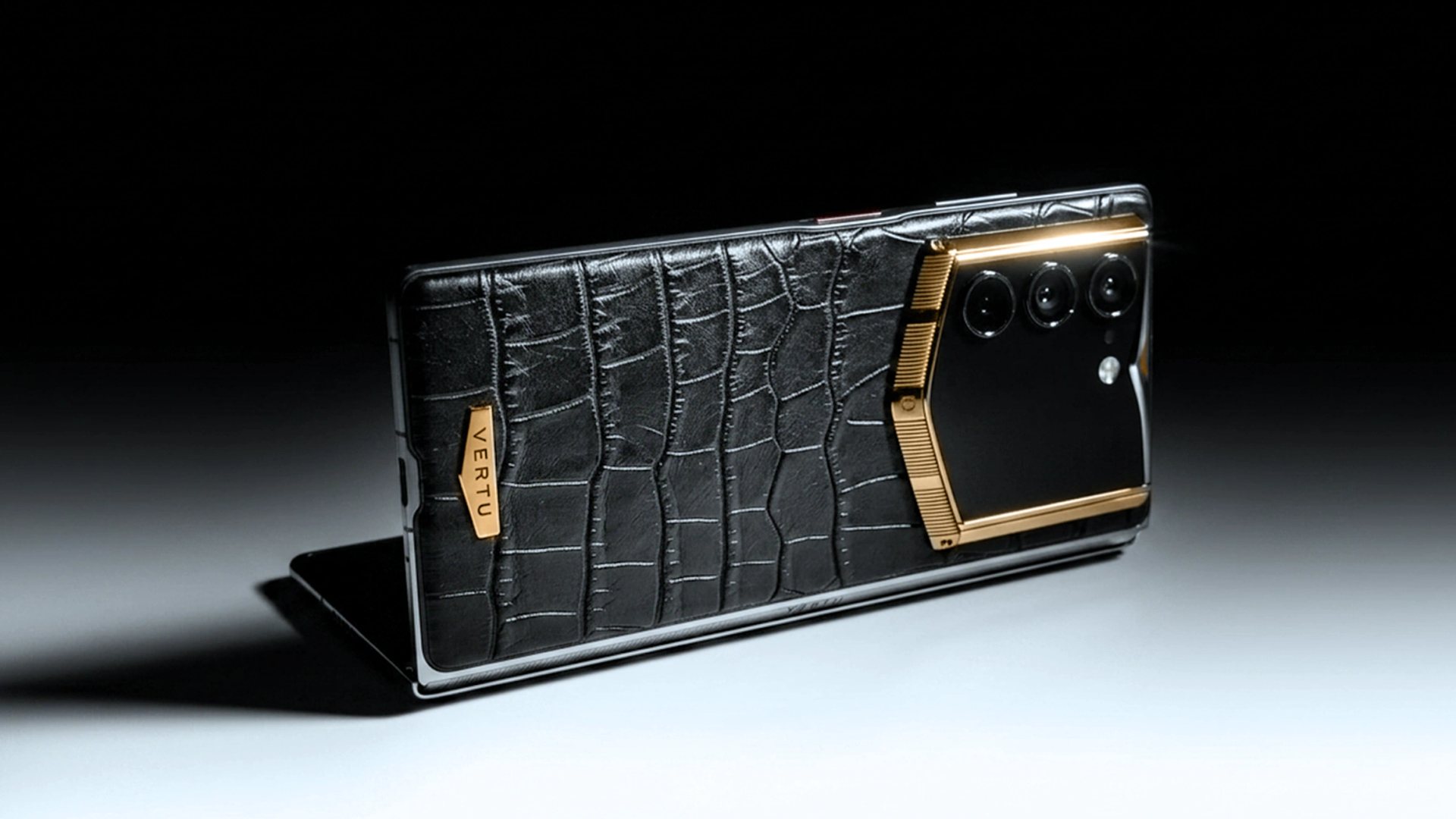
- VERTU describes ALPHAFOLD's UTG screen and titanium and liquid-metal hinge, but its public material does not establish a fold-cycle rating.
How durable are foldable phones compared with regular phones?
Foldables add a moving hinge and a flexible inner display, so they introduce failure modes that a fixed-screen phone does not have. That does not mean a well-designed foldable is automatically fragile. It means buyers need more specific evidence. A rigid phone can still break its glass in one fall; a foldable can function for years while showing cosmetic creasing. The useful comparison is between named products, their documented tests, and their service terms, not between two abstract categories.
Ask what “durable” means in your situation. Someone who opens a phone many times at a desk cares about hinge wear and screen feel. A commuter who works outdoors may care more about dust, rain, and the ability to clean the hinge safely. A person who travels without a nearby service centre needs to know what happens if the inner screen is damaged. These priorities should shape the purchase, case choice, and insurance decision.
What does a 200,000-fold rating actually tell you?
A fold-cycle figure tells you that a named model passed a defined manufacturer test under specified conditions. For example, Samsung says its Galaxy Z Fold7 and Z Flip7 are certified for up to 200,000 folds. That is useful evidence for those models. It is not a standard figure for every foldable, an individual warranty promise, or proof that the phone will survive dirt, a drop, or damage to its screen film.
Simple arithmetic can make the figure easier to understand without turning it into a lifespan guarantee. At 50 complete open-close cycles per day, 200,000 cycles would equal about 4,000 days of use; at 100 cycles, about 2,000 days. Those are illustrative calculations, not predictions. Temperature, impact, contamination, handling, and the test method affect the real outcome. More importantly, parts other than the hinge may need service before the theoretical cycle limit.
When another brand quotes a fold count, check which device was tested, whether it was a finished retail unit, the ambient conditions, how a completed cycle was counted, and what “passed” meant. A hinge that still opens is not necessarily free of play, noise, or screen damage. If those details are absent, treat the number as one data point rather than a ranking of longevity.
Is the inner screen the most vulnerable part?
The flexible inner screen needs particular attention because it bends and is usually covered by a protective layer. The outer display may use a different glass and face different risks. Do not assume that scratch resistance or a drop result for the outer screen applies to the inner one. Avoid pressing the fold with a fingernail, a pen, or another hard object, and follow the maker's instructions for any factory-applied screen protector. Some manufacturers advise against removing it yourself.
A visible crease is not the same as a failed display. Many devices show a fold line under certain lighting. Watch for changes that affect function: black spots, flicker, dead touch areas, lifting film, a new cracking sound, or unusual resistance when opening. Photograph the condition and contact the authorised service channel rather than repeatedly flexing the phone to “test” the problem. If a protector begins to lift, ask the manufacturer whether it is a service item before attempting to replace it.
Consider how you carry the device. Keys, grit, and loose objects can contact the inner display when the phone is open. A protective case may help with edges and grip, but it cannot make the flexible screen indestructible. Keep the manufacturer's approved cleaning method handy, especially if you often move between office and outdoor environments.
How much do dust and water ratings matter?
They matter, but the characters in an IP rating need to be read separately. Samsung lists the Galaxy Z Fold7 and Z Flip7 as IP48 devices and explains its test conditions as protection against solid objects larger than 1 mm and submersion in up to 1.5 metres of freshwater for up to 30 minutes. Samsung also warns that those phones are not dust- or sand-resistant and that water resistance can diminish with wear. The rating does not make beach use or pool use advisable.
A different foldable may have a different rating or none disclosed. Google's Pixel Fold safety guide, for instance, states the phone was designed to comply with IPX8 when it left the factory while explicitly saying it is not waterproof. An “X” does not mean you should infer dust protection. Read the exact model's current documentation, not an article about a later model in the same family.
Water resistance should not become a routine-use plan. If a phone gets wet, follow the manufacturer's instructions for drying and charging. If grit enters a hinge, do not force it open and shut in the hope that friction will clear it. Ask the authorised service team for guidance. Mechanical movement plus abrasive particles can create a different problem from a splash on an ordinary phone's glass back.
What do materials such as UTG and titanium prove?
Materials describe design choices; they do not, by themselves, establish a service life. VERTU describes ALPHAFOLD as using an ultra-thin glass flexible display and titanium and liquid-metal hinge engineering. Those are relevant construction details. They do not provide a public fold-cycle number, independent drop result, or model-wide waterproof claim in the cited material. A buyer comparing ALPHAFOLD with a Samsung device should not borrow Samsung's test figure for the VERTU phone.
Finish and assembly also matter. A leather exterior, metal trim, or decorated back can age differently from the folding screen. Ask what care each surface requires and whether a case interferes with the intended use. A device can retain full electronic function while showing cosmetic wear; conversely, an immaculate exterior does not guarantee a healthy hinge. Separate appearance, operation, and service coverage in your evaluation.
VERTU's foldable care guide likewise notes that the available ALPHAFOLD material description does not establish a cycle rating or cleaning procedure. The responsible next step is to request model-specific test and care documentation from the seller if those details affect your purchase, not to estimate them from the hinge's metal names.
How should you check repairability and warranty?
Request a written answer for four separate scenarios: a cracked outer glass, an inner display problem, hinge damage, and cosmetic wear. Ask whether the factory protector can be replaced, whether a damaged display requires a larger module replacement, how long assessment typically takes in your region, and whether a loan device is available. Do not assume accidental damage is included in a standard warranty. A low purchase price can become less attractive if the inner display is costly or slow to service.
Find the authorised service route before you need it. Check whether you must ship the device, who insures the parcel, whether the exact edition has replacement parts available, and what information should be backed up before service. For a business user, the downtime and data-handling process may matter more than a quoted fold-cycle figure. Confirm that backups, authentication, and account recovery can be completed without a functioning inner screen.
A seller's broad statement that a phone is “durable” is less useful than a written model-specific policy. Keep the invoice, exact variant name, serial number, and any service correspondence. If you purchase an extended protection plan, compare its exclusions with the scenarios most likely in your use rather than assuming it covers every hinge or screen issue.
What daily habits help a foldable last?
- Open and close it with a normal, even motion; do not twist the two halves.
- Keep hard objects away from the inner screen and hinge opening.
- Follow the maker's instructions for the factory screen protector and cleaning products.
- Check pockets and bags for grit before storing the phone.
- Keep regular backups so damage does not become a data-loss event.
- Stop using a hinge that suddenly binds, clicks differently, or resists movement, and seek authorised advice.
These habits are sensible risk controls, not a claim that careful users can prevent all failures. A foldable is still a portable electronic device exposed to temperature changes, impacts, and ordinary wear. The purpose of care is to avoid preventable damage while preserving evidence for a service assessment if a problem develops.
Which foldable is durable enough for your use?
Choose the model whose documented protections match your environment and whose service route you can accept. An office user might reasonably prioritise screen space, hinge feel, and warranty terms. Someone who frequently works around sand, dust, or water should pay close attention to the exact ingress rating and manufacturer cautions. A frequent traveller should check international service eligibility and the availability of a backup phone.
Build a small comparison table for the specific editions on your shortlist: fold test and its conditions, IP rating, inner-screen care, warranty exclusions, repair location, estimated out-of-warranty cost, and device weight. Mark unpublished items as “not stated” rather than filling them with another model's numbers. This makes the uncertainty visible and helps you ask the seller the right question.
Frequently asked questions
Do foldable phones break after a set number of folds?
No. A fold test is a controlled model-specific result, not a countdown timer. Real-world outcomes depend on handling, environment, components and service history.
Can I take an IP-rated foldable to the beach?
Do not assume so. A water rating does not establish sand resistance, and manufacturers may explicitly advise against beach or pool use. Follow the exact model's guidance.
Should I remove a bubbling inner-screen protector?
Check the manufacturer first. The factory film may be part of the display system or require authorised replacement. Peeling it without guidance can cause damage or affect coverage.
Does ALPHAFOLD have a 200,000-fold rating?
The cited VERTU material does not publish that figure. Samsung's 200,000-fold statement applies to its named Galaxy models and should not be transferred to ALPHAFOLD.
Conclusion
Foldable phones can be durable enough for everyday ownership, but “durable” must be checked against the exact model and use case. Review the hinge test, inner-screen instructions, dust and water rating, warranty, and repair route as separate facts. When comparing VERTU ALPHAFOLD, use its documented construction details and ask for any additional test data you need; do not substitute another manufacturer's numbers. A clear service plan is as valuable as a reassuring laboratory figure.