The most useful business travel essentials are not the ones that add capability; they are the ones that remove a dependency. A traveller who flies four countries in nine days with one cabin bag is not short of gadgets. They are short of certainty about power, connectivity, documents and the ability to work in a seat that was not designed for it. That is the filter this kit is built on, and it is also the filter worth applying to a Black Friday purchase: a discount on an item you would not carry is not a saving.
Key Takeaways
- A cabin-only kit is a set of substitutions: each item should replace something the traveller cannot depend on abroad.
- Power bank capacity is a purchase constraint, not a packing note — spare lithium batteries must travel in the cabin, within airline and regulator limits.
- Open-ear audio is the right compromise for transit because it keeps announcements audible; it is not the right choice for a noisy lounge call.
- Check four things before a Black Friday purchase: offer end date, region, return window and whether the item ships locally.
The constraint that shapes the kit
One bag changes the arithmetic. A checked suitcase allows redundancy; a cabin bag does not. The traveller has to decide, in advance, what happens when the adapter is wrong, the earbuds run out of charge, or the hotel desk cannot produce a working pen. Each item in the list below exists to answer one of those questions, and anything that does not answer one has been left out deliberately.
What earns space
- A passport wallet that holds cards separately. Not for organisation, but for the moment at a border or a car desk when a single document has to be produced without opening a bag. Separating the passport from payment cards also limits what is exposed when one of them is handed over.
- A power bank within the cabin limit. The useful size is the smallest that carries a phone through a long transit day, not the largest the rules allow. Capacity is discussed in the next section because it determines whether the item is allowed on board at all.
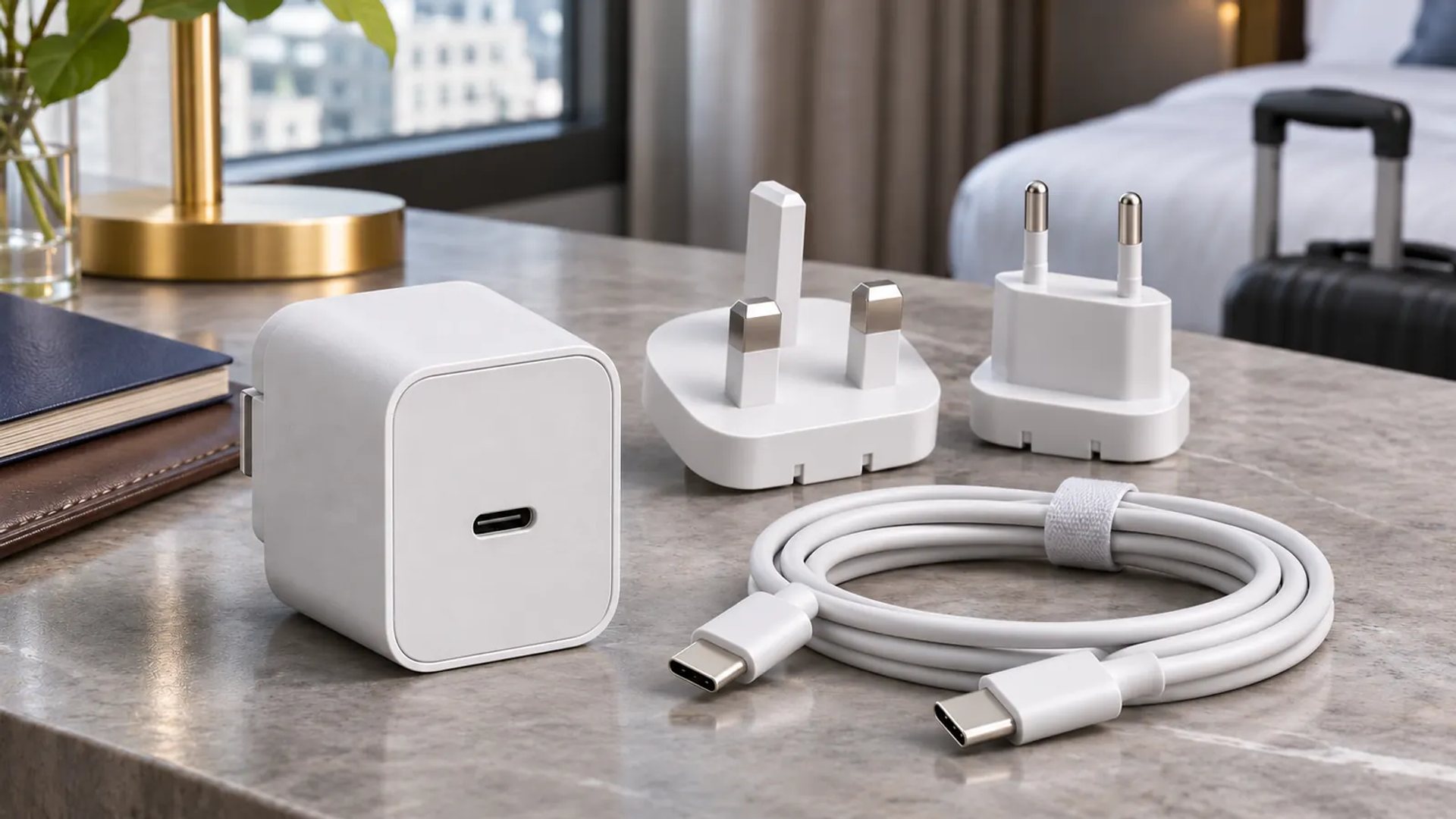
- A compact travel adapter with two outputs. One for the phone, one for the laptop, in a body small enough to stay plugged in on a hotel desk without blocking the second socket.
- Open-ear earbuds for transit. They keep gate announcements and cabin crew instructions audible while a call continues, which is the specific problem in-ear designs create at an airport.
- A wired fallback. A pair of wired earbuds that needs no charging, for the leg where the wireless pair is flat and the seat socket does not work.
- A fountain pen that travels with a cartridge. Customs forms, landing cards and hotel registration still expect ink, and a pen that has been in a bag for a month may not start first time.
- A watch set to the destination before boarding. The point is not timekeeping but the decision it forces: knowing what hour it will be on arrival changes what you do on the flight.
- A single cable pouch. One pouch, labelled compartments, no loose cables in the bag. The failure mode this prevents is not lost cables but the two minutes spent untangling them at every security tray.
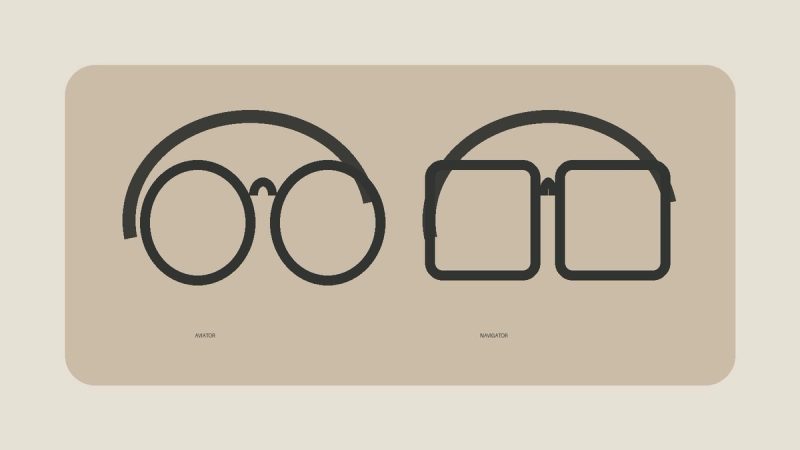
- A soft case for eyewear. Sunglasses survive a cabin bag only if they are stored separately from the laptop and the adapter, which is where most scratches happen.
The battery rule that changes the purchase
Spare lithium batteries and power banks must travel in the cabin, not in checked luggage, and airlines apply capacity limits on top of that requirement. The US Federal Aviation Administration sets out the passenger rules in its guidance on lithium batteries, and individual carriers publish their own limits and labelling requirements. The practical consequence for a buyer is that capacity is a purchasing decision: a power bank that exceeds the limit is not a better product, it is a product that stays at home.
Two further points follow. First, terminals and some carriers require the capacity to be printed on the case, so an unmarked unit can be refused even when it is within the limit. Second, a power bank that is carried but never used is weight without benefit; the useful figure is how many charges the phone actually needs between two reliable sockets, which for most transit days is fewer than expected.
Sound, calls and the fallback
Open-ear designs solve a specific airport problem and create another. Because they do not seal the ear canal, they leave announcements audible and keep a traveller aware of a gate change announced behind them. The cost is isolation: in a lounge or an engine-noise cabin, the person on the other end hears more of the room. VERTU's guide to using open-ear earbuds for training and recovery covers the wearing and positioning points that also determine call quality, since microphone placement matters more than driver size in a noisy space.
For calls that matter, the reliable pattern is a quiet corner rather than a better headset, plus a wired fallback for the leg where battery is the constraint. A wired pair also avoids the pairing dance when switching between a phone and an in-seat system.
Writing, timekeeping and the small failures
The items that fail quietly are the ones travellers remember: a pen that will not start on a landing card, a watch still on the wrong time zone during a connection, a case that scratches the only pair of glasses brought along. None of these is expensive to solve; all of them cost time at the moment when time is least available. Treating them as part of the kit rather than as afterthoughts is the difference between a packing list and a system.
Black Friday: what to verify before you buy
Seasonal pricing rewards preparation more than speed. Before ordering anything for a travel kit, confirm four things: when the offer actually ends, which region it applies to, what the return window is for a used or opened item, and whether the product ships from a local warehouse or crosses a border. The last point decides both delivery time and duty exposure, and it is the item most often discovered after purchase. VERTU's own Black Friday page states that terms and availability vary by region, which is the pattern to expect across the category this year.
A second check is whether the item replaces something already owned. A kit built around substitutions gets lighter over time; a kit built around additions gets heavier, and the traveller ends up paying twice — once for the item and once for the space it takes.
What to leave out
A second charger for a device that charges from the laptop, a travel router for a trip with two hotel nights, a case that only fits one phone, and anything that requires a companion app the traveller will not open. The test is simple: if an item cannot be described as replacing a specific dependency, it belongs in a different list. For readers assembling a broader travel technology kit, VERTU's charter technology checklist applies the same substitution logic to a different setting.
Frequently Asked Questions
Can I take a power bank in hand luggage?
Yes, in the cabin rather than checked baggage, within the capacity limits your airline publishes and with the capacity marked on the unit. Confirm the figure before you buy, not at the gate.
Are open-ear earbuds suitable for flights?
They suit transit and short calls because they leave announcements audible. For a long call in a noisy cabin, a sealed design or a quiet location will usually serve the other person better.
What should I check before buying in a Black Friday sale?
The offer end date, the region it applies to, the return window for opened items and whether the product ships locally. Each of those changes the real price.
What should I leave out of a business travel kit?
Anything that does not replace a dependency: duplicate chargers, single-purpose accessories, and items that only work with one device you are not carrying.
Conclusion
Build the kit backwards from the failures you have already had. A passport wallet for the border desk, a power bank within the limit, earbuds that keep the gate audible, a pen that starts, a watch on the right hour — these business travel essentials are unglamorous, and that is the point. Bought deliberately in a sale, they last for years; bought because they were discounted, they end up in the drawer beside the bag. Start with the four substitutions you actually need, and let the Black Friday terms decide the timing rather than the list.