The short answer to how to pack sunglasses for travel is a hard case, placed high in the bag, away from anything metal. The longer answer is that most damage does not happen in the bag at all: it happens because a pair is set down lens-first on a hotel table, wiped with a shirt, or left on a car dashboard where heat does the work that a week of transit could not. Packing is therefore less about the case than about the three moments either side of it.
Key Takeaways
- Use a hard case with a soft lining; a pouch protects against impact and does nothing about the grit that scratches lenses.
- Position matters more than padding: keep the case at the top of the bag, away from keys, adapters and the laptop edge.
- Heat and repeated wiping damage coatings more than a single drop does, especially in a car or on a balcony.
- Clean with a dedicated cloth and store the frames closed, never lens-down on a hard surface.
Why a soft pouch is not enough
A pouch stops a knock. It does not stop abrasion, and abrasion is the common failure. A small particle of sand, salt or grit enters the pouch, the pouch moves against the lens for two hours in a rucksack, and the coating is marked before the trip begins. The same mechanism explains why a hard case that has never been cleaned is nearly as risky: the lining holds the grit, and every closure presses the frames against it.
The remedy is unglamorous. A hard case with a soft lining, shaken out and wiped occasionally, is a better investment than a thicker pouch. If the case has no lining, a folded microfibre cloth inside provides one and doubles as the cleaning cloth. This is the same logic that applies to any delicate item in a bag: the inside of the container matters as much as the outside.
Where in the bag
- Not at the bottom. The bottom of a cabin bag collects the adapters, the charging brick and the shoes. Put the case at the top, where nothing heavy settles on it.
- Not against the laptop. The laptop's edge is a straight, hard line; a case that slides against it takes repeated pressure in one place.
- Not loose among cables. Cable connectors are the most common source of a single deep scratch, because they concentrate force on a small point.
- Within reach before security. If the case is buried, the temptation is to carry the frames loose through the checkpoint, which is where most pairs are dropped or sat on.
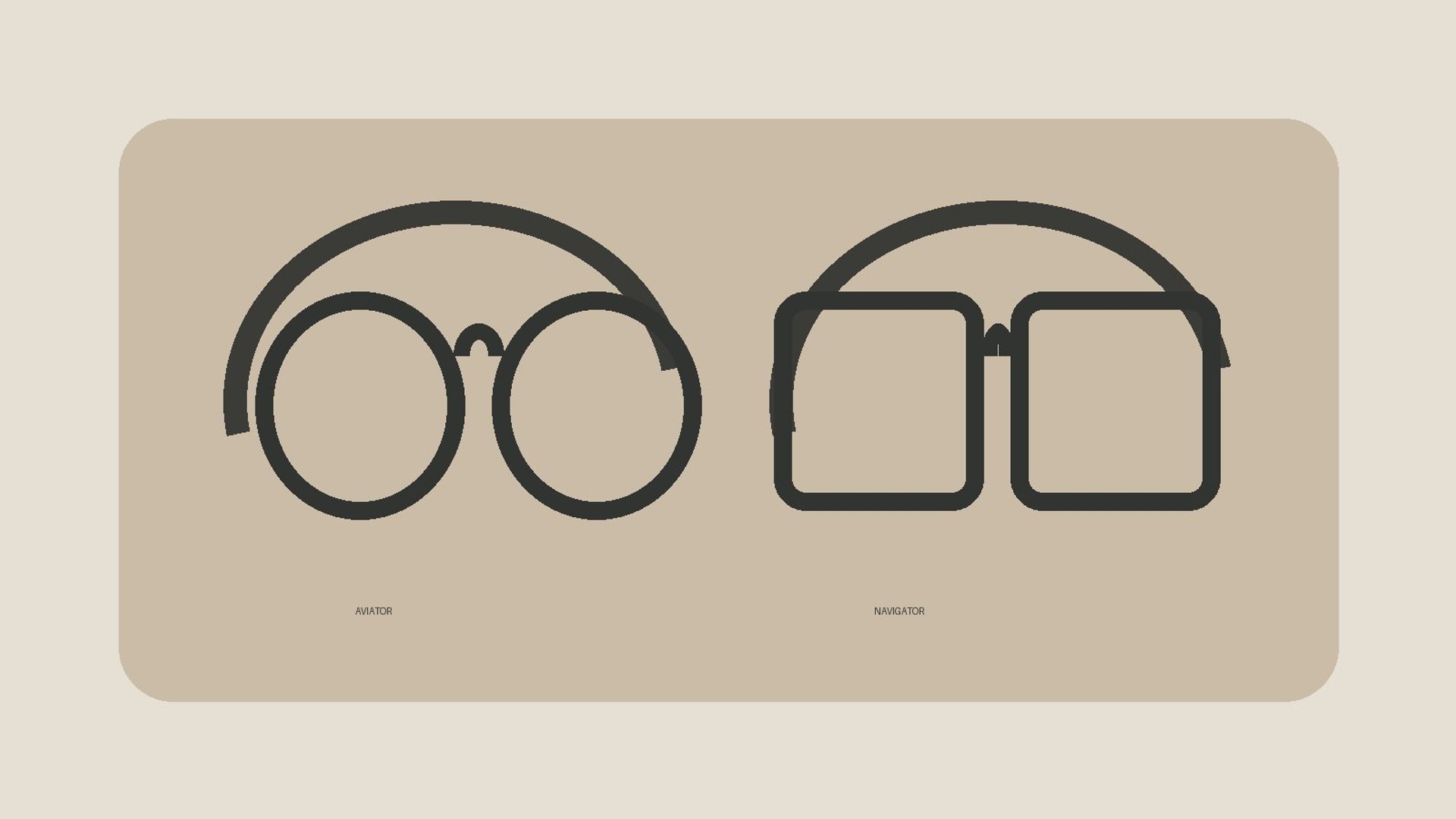
If the bag has a dedicated hard compartment, use it, but check what else lives there. A compartment shared with a metal pen or a set of keys is not a protected compartment. Folding frames and oversized aviators behave differently in a bag as well: a folding pair survives a soft pouch better because the folded profile is compact, while a large aviator frame needs a case that matches its width, since a case that is too small presses the hinges and a case that is too large lets the frame move. Measure the frame rather than assuming one case fits the collection.
Heat, humidity and the dashboard problem
Coatings are more vulnerable to sustained heat than to a single impact. A car dashboard in summer, a hotel balcony facing the sun, or a bag left in a parked vehicle all expose the frames to temperatures well above anything they meet on a face. The visible result is usually a crazed or peeling coating rather than a crack, and it cannot be repaired; the lenses have to be replaced.
Salt water and sunscreen are the second exposure. Both leave a film that people wipe off with whatever is available, and the wiping does more damage than the film. Rinse with fresh water where possible, dry with a clean cloth, and keep the frames out of direct sun when they are not being worn. VERTU's note on protecting devices from extreme heat makes the same point about materials that are comfortable on a person but not in a parked car.
Packing for a longer trip
Two pairs are better than one case if the trip is longer than a week: a spare pair removes the temptation to carry the good pair loose, and it removes the daily decision about whether to risk them. Pack the spare flat at the bottom of the bag in its own sleeve, and keep the pair in use in the hard case at the top.
For trips that mix formal evenings with water, the case should be small enough to fit a jacket pocket, because a pair left in a room is a pair that gets sat on. The same packing discipline applies to the rest of a travel technology kit, which VERTU sets out in its charter technology checklist: one container per fragile item, and no loose metal in the same compartment.
At security and on the aircraft
Security checkpoints are where loose items are lost. Keep the case closed until the tray, and put the case in the tray rather than the frames. VERTU's guide to taking a phone through airport security covers the tray discipline that applies equally to eyewear: nothing small and loose, and nothing placed in a tray that could slide.
On board, the risk shifts to the seat pocket, which is a place where frames are crushed by the tray table. Keep the case in the bag under the seat rather than the pocket, and resist the habit of hanging the frames from a shirt collar, which is how most hinges are bent.
Three habits worth keeping
- Clean with cloth, not clothing. A shirt tail carries grit and presses it into the coating; a microfibre cloth lifts it.
- Close before setting down. Frames left open on a table are exposed to the one thing that ruins them: the table itself.
- Never lens-down. Even a soft surface holds particles; the lens should never be the contact point.
Frequently Asked Questions
Should sunglasses go in hand luggage?
Yes, for anything valuable. Checked baggage is compressed, handled roughly and exposed to temperature swings, and a hard case offers little protection against the weight of a full suitcase.
Is a soft pouch enough?
For impact, often. For abrasion, no: grit inside the pouch scratches the lens as the bag moves. Add a hard case or a stiff insert if the pair matters.
How do I stop lenses scratching in a bag?
Hard case with a lining, kept clean, positioned at the top of the bag and away from keys, cables and the laptop edge.
What damages sunglasses coatings fastest?
Sustained heat and repeated dry wiping. A dashboard or a hot car does more harm in an afternoon than a week of careful carrying.
Conclusion
The practical answer to how to pack sunglasses for travel is really a question of where they spend their unprotected minutes: on a table, in a pocket, on a dashboard. A hard case at the top of the bag solves the transit part; the habits solve the rest. Neither is expensive, and together they are the difference between a pair that lasts several seasons and one that arrives home with a scratch nobody can explain.