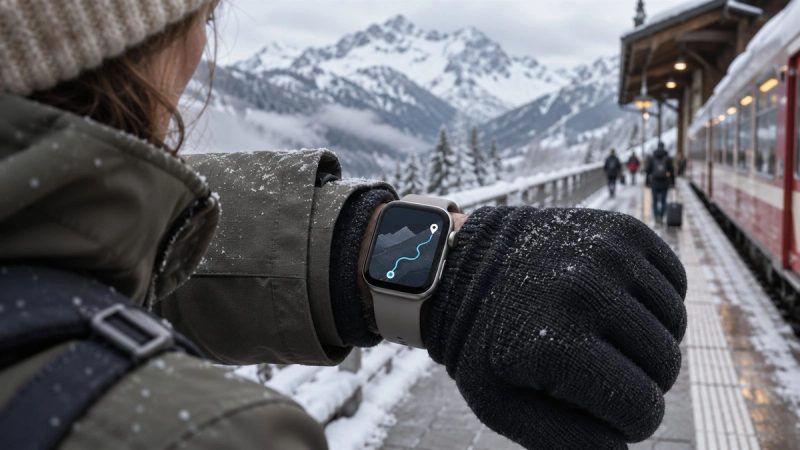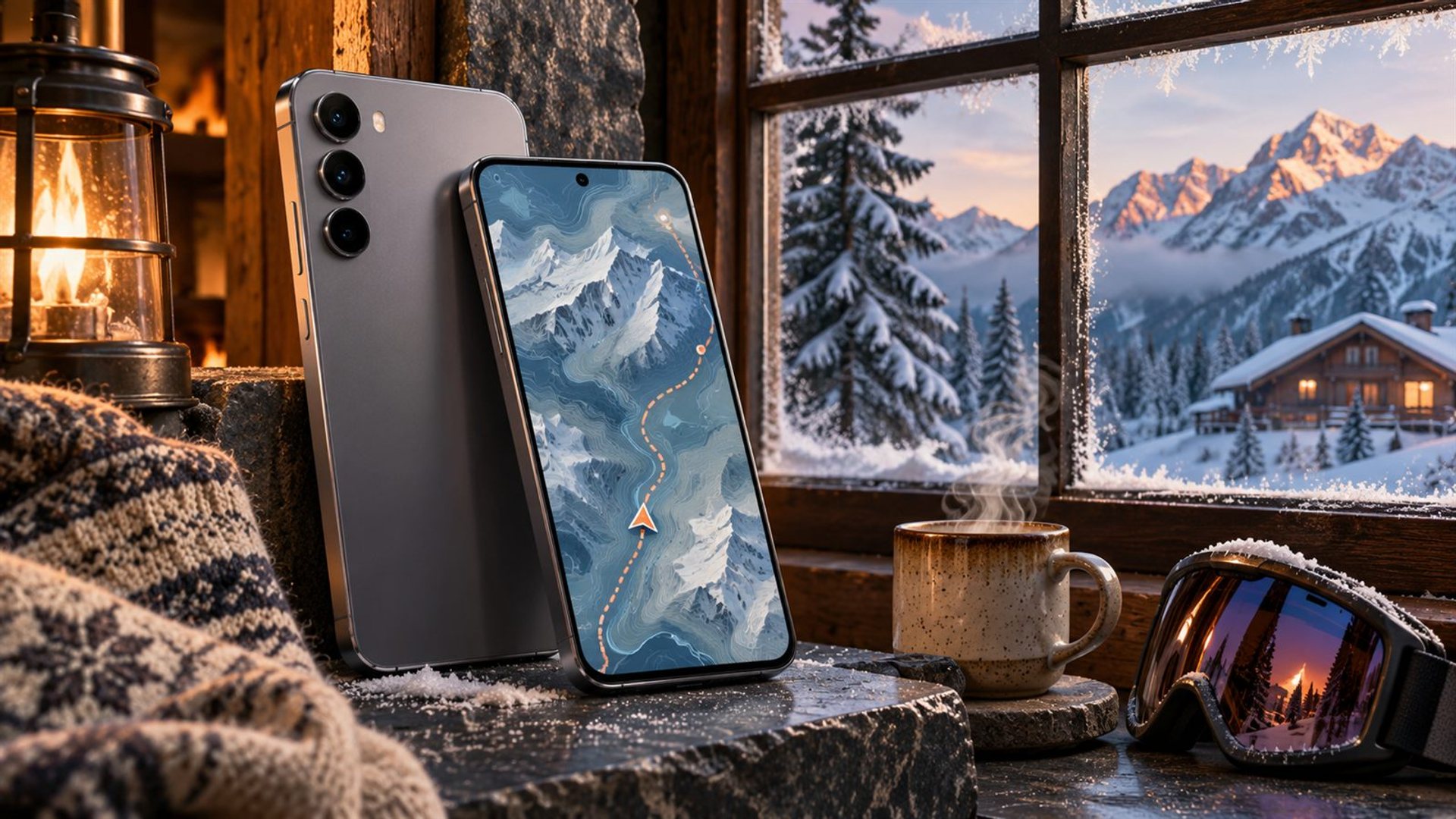
The best phone for cold weather is the one whose documented operating range and everyday controls match the journey you actually make. Compare exact-model temperature guidance, battery performance under a realistic workload, screen readability and glove use, and the ability to charge safely after time outdoors. A large battery specification cannot by itself establish winter endurance.
This is a buying framework for travellers who have a choice of phone. If your existing handset suddenly loses charge or shuts down on a cold day, start with our cold-weather battery guide. A purchase decision requires more evidence than a single episode of poor performance.
What should “best for cold weather” mean to you?
Begin with the trip. A short walk between heated buildings calls for occasional navigation and ticket checks. A long day filming, recording a route or working outdoors imposes a different load on the battery and display. A phone used beneath a coat may remain warmer than one mounted on a vehicle. Describe the expected temperature, duration and workload before comparing two models.
Separate three questions: whether the manufacturer recommends using the phone at that temperature, whether its battery will last for your intended work, and whether you can operate it with your gloves or in falling snow. The first is a documented limit. The second needs comparable testing or a conservative power plan. The third benefits from a hands-on trial. No one specification answers all three.
Do not let the marketing word “rugged” substitute for a model-specific manual. A drop or water-resistance claim does not establish cold battery duration. Nor does a foldable design, metal case or high price. Ask for evidence that matches the feature you are assessing.
Where do you find a phone's cold operating limit?
Read the official support page or manual for the exact model and edition. Distinguish operating temperature from storage and charging ranges; they can be different. If a page gives a range for another phone in the same brand, do not transfer it without confirmation. Consider the conditions in which the phone will be exposed, not just the destination's average daily temperature.
As an example of a clearly documented limit, Apple states that iPhone and iPad are designed for use at ambient temperatures of 0–35°C. The same guidance says very cold conditions outside that range can temporarily shorten battery life and cause shutdown. That range is an Apple specification, not a universal smartphone rule and not a VERTU operating limit.
Ask what happens as the device approaches its limit. Does the maker discuss temporary shutdown, charging pauses or display response? A documented limit should be read alongside the manufacturer's handling instructions, especially where a phone moves repeatedly between a cold street and a warm interior. Check the model's warranty and service route too, without assuming that a temperature rating is an unlimited guarantee.
How should you compare battery claims?
Battery capacity, measured in milliampere-hours, is only one part of the story. It describes a nominal electrical capacity, not hours of use at a particular winter temperature. Screen brightness, processor workload, camera recording, mobile signal and navigation all affect consumption. Age and battery condition also matter. Comparing two capacities without comparable workloads can give a false sense of certainty.
Look for a test that reports temperature, starting charge, screen time, signal conditions and tasks. A warm-room web-browsing test may be useful for general comparison but cannot prove all-day navigation in freezing air. If winter testing is absent, treat published battery life as a baseline and add a practical margin. Charge before departure and know where a suitable indoor charging opportunity will be.
Consider your need for an offline map and a backup contact method. The purchase question is not merely “which battery is biggest?” but “what happens if the phone is unavailable at the worst point of my route?” A separate power bank may help, provided the bank and phone are used according to their temperature and charging instructions.
What display and control details matter with gloves?
Try the actual phone with your winter gloves. Test unlocking, opening a map, enlarging directions, answering a call and accessing a ticket. Touch-sensitive displays can be difficult through insulating fabric. A physical button, voice control or a glove-compatible screen mode may reduce friction, but availability and behaviour need confirmation for the exact model and software version.
Display brightness matters outdoors, particularly against snow or low winter sun, but maximum brightness can use more power. Check whether the screen remains readable at a comfortable setting. Look at the angles from which you view it and whether the case or fold interferes with one-handed use. If an important app needs repeated taps, consider whether it can be set up indoors and left ready before you step outside.
Condensation and moisture deserve separate attention. A device that has been outside in cold air may encounter humid indoor air; follow the maker's charging and moisture guidance rather than applying direct heat. A water-resistance label, where one exists, does not automatically cover every wet, icy or ageing condition.
Should charging speed influence the choice?
Fast charging can be useful during a short indoor stop, but the advertised wattage is normally conditional on the charger, cable, battery state and device temperature. It is not a promise that a cold phone will accept the maximum rate immediately. Check the recommended charging environment and whether the equipment you will carry is compatible.
Plan the sequence rather than relying on a number: let a very cold handset return gradually to a suitable indoor temperature, inspect for moisture, then charge using approved equipment. Apple's iPhone charging guidance illustrates how a manufacturer can slow or pause charging when temperatures are unsuitable. It does not establish the behaviour of another brand's phone.
Think about service and repair availability where you travel. A phone that requires a specialised charger or has no accessible support on the route may be less convenient than one whose accessories and service arrangements you have verified in advance. This is a planning consideration, not a universal ranking of brands.
What can a VERTU buyer verify?
VERTU's Agent Q is listed in the brand knowledge base with a 5,565 mAh battery and 65 W charging. Those figures describe capacity and a stated charging capability. They do not establish winter endurance or a cold operating range. Seek the exact model's official temperature and charging guidance before deciding whether it fits a cold-weather route.
METAVERTU MAX is another VERTU phone family. Its confirmed product page helps identify the model, but the knowledge-base excerpt used for this comparison provides no tested winter battery result. We therefore cannot rank Agent Q against METAVERTU MAX for cold performance from the available evidence. Ask VERTU support for model-specific documentation and compare the actual controls in hand.
Choose by evidence in this order: exact-model recommended temperature range, realistic battery use, screen and glove interaction, charging conditions, and a backup plan. If a seller cannot provide the information needed for your journey, record that gap rather than replacing it with an assumption. The best fit is the phone you can use and support under the conditions you expect, with a sensible margin for the unexpected.
Frequently asked questions
Does a bigger battery make a phone better in the cold?
No. Capacity is relevant, but workload, battery condition and temperature all affect available runtime. Compare phones using the same test conditions whenever possible, then allow a margin for cold outdoor use.
Are foldable phones less suitable for winter?
There is no sound universal answer from the form factor alone. Check the exact model's operating guidance, hinge handling instructions and tested performance. Avoid folding or unfolding a device outside its specified conditions.
Is an IP rating a cold-weather rating?
No. An ingress-protection rating addresses defined dust or water tests; it does not by itself state battery performance, screen usability or recommended operating temperature.
Can I rely on fast charging after a day outside?
Only within the manufacturer's approved conditions. A device may limit charging when too cold, and advertised peak speed depends on several factors. Bring compatible equipment and leave time for gradual warming indoors.