

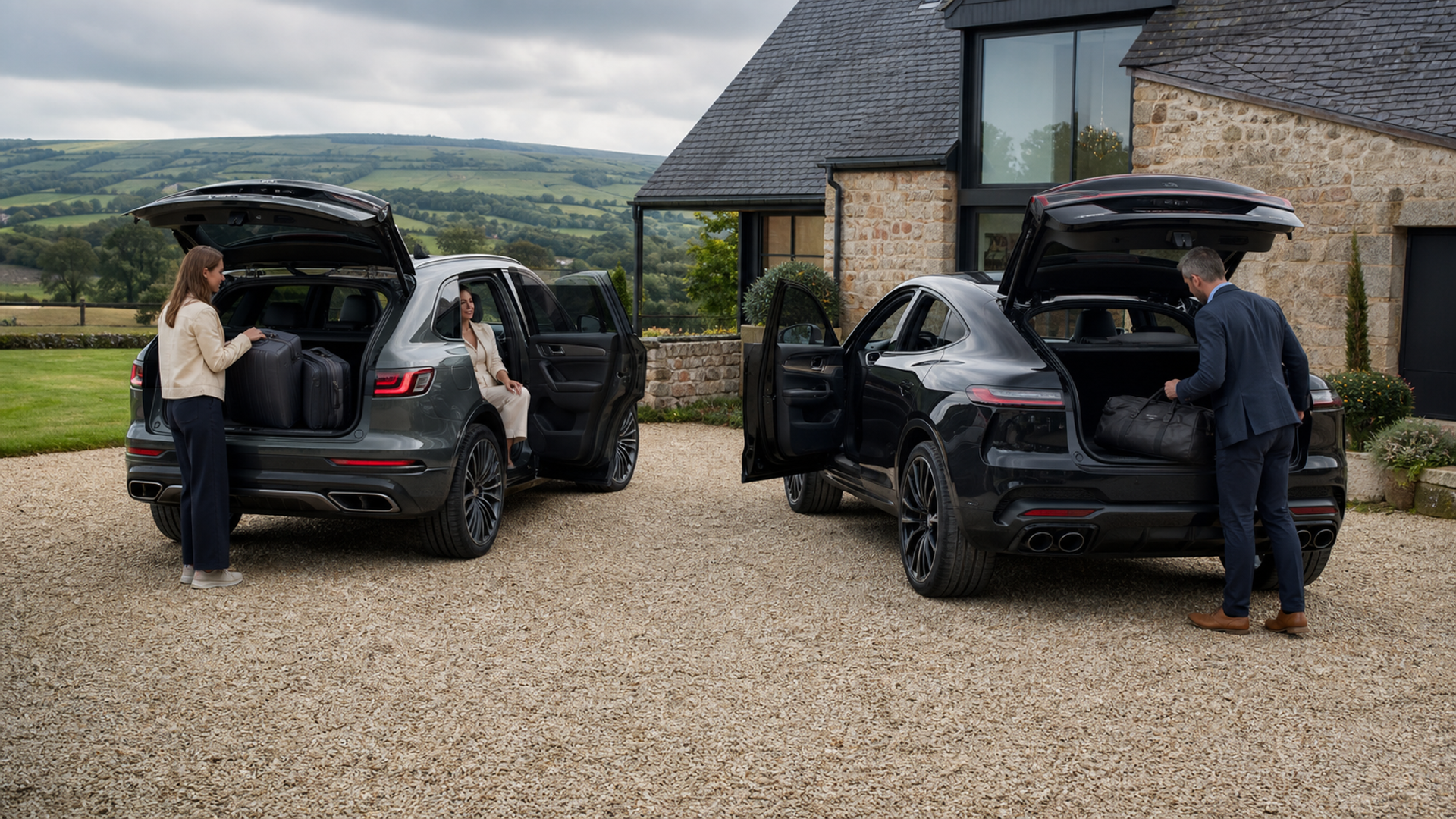
The BMW X5 and Porsche Cayenne overlap as premium two-row SUVs, but they tune space, ride, controls and driver involvement differently. The useful comparison must include rear passengers, luggage, wheel size, powertrain, insurance, tyres and local service. A short solo test drive cannot decide daily ownership.
Define the SUV's real duty
Choose the X5 when its balance of cabin utility, ride and interface fits the household. Choose the Cayenne when steering, chassis character and Porsche configuration justify the trade-offs. Test exact engines, suspension and wheels with the normal passengers and luggage before ordering.
| Decision factor | BMW X5 | Porsche Cayenne | Test exact powertrains and wheels |
|---|---|---|---|
| Ride priority | Broad comfort and control balance leads | Driver-focused chassis response leads | Test the exact wheel size |
| Rear seat | X5 space and access fit passengers | Cayenne posture and space fit passengers | Use regular occupants |
| Luggage | The X5 load bay fits the trip | The Cayenne load bay fits the trip | Load actual cases |
| Controls | BMW interface suits repeated tasks | Porsche interface suits repeated tasks | Run a fifteen-minute workflow |
| Powertrain | Local X5 engine or hybrid fits | Local Cayenne configuration fits | Model charging and fuel honestly |
| Ownership | BMW service and tyres fit the plan | Porsche service and tyres fit the plan | Price insurance and downtime |
This bmw x5 vs porsche cayenne matrix is the article's working value object. Read the bmw x5 vs porsche cayenne rows together: the decisive failure mode depends on this topic's evidence, operating context and reader objective.
What BMW and Porsche establish
Evidence 1. BMW's current X5 page is the authority for market-specific powertrains, dimensions and equipment.
Evidence 2. Porsche's current Cayenne page is the authority for its market-specific configurations and options.
Evidence 3. Wheel, tyre and suspension choices can materially change ride, replacement cost and poor-road resilience.
Evidence 4. Published cargo volume cannot replace a load test with the owner's actual luggage and rear-seat position.
Reader-visible sources checked for this article:
bmw.com — reader-visible current or official evidence
porsche.com — reader-visible current or official evidence
For bmw x5 vs porsche cayenne, these sources establish only the claims inside their documented scope. Recheck every changeable specification, availability condition, price, policy or service term in the relevant market before acting.
Drive and load the exact configuration
Read ride priority as a stop/go test: broad comfort and control balance leads supports the first option; driver-focused chassis response leads supports the second; and test the exact wheel size supports the third. Record which source proves the condition and when it was checked.
A buyer can resolve rear seat without starting from a brand preference. Ask whether x5 space and access fit passengers; compare that with whether cayenne posture and space fit passengers; then use use regular occupants as the third route's safeguard. An unknown condition stays unknown.
On luggage, popularity is not enough. The evidence for option one is that the X5 load bay fits the trip. Option two means the Cayenne load bay fits the trip. Option three is rational where load actual cases. Recheck any changeable term immediately before commitment.
The decision changes at controls. Choose the first path only if bMW interface suits repeated tasks; move to the second when porsche interface suits repeated tasks; use the third when run a fifteen-minute workflow. Save the downside that would make this row fail.
For powertrain, the first route works when local X5 engine or hybrid fits; the second requires local Cayenne configuration fits. The control for the third is model charging and fuel honestly. Verify this row against the exact product, property, account or environment before it can reverse the decision.
The ownership row exposes a practical boundary. Route one assumes bMW service and tyres fit the plan, while route two is defensible only when porsche service and tyres fit the plan. Route three depends on price insurance and downtime. If that evidence is absent, keep the more reversible option.
Facts that would reverse the current choice
Reversal control 1 — Ride priority. Before choosing BMW X5, write down how the decision changes if “Broad comfort and control balance leads” proves false. Do the same for Porsche Cayenne and “Driver-focused chassis response leads”. Keep the Test exact powertrains and wheels route available until “Test the exact wheel size” is verified. This control belongs to bmw x5 vs porsche cayenne; update it from the cited source or exact supplier rather than copying a generic checklist.
Reversal control 2 — Rear seat. Before choosing BMW X5, write down how the decision changes if “X5 space and access fit passengers” proves false. Do the same for Porsche Cayenne and “Cayenne posture and space fit passengers”. Keep the Test exact powertrains and wheels route available until “Use regular occupants” is verified. This control belongs to bmw x5 vs porsche cayenne; update it from the cited source or exact supplier rather than copying a generic checklist.
Reversal control 3 — Luggage. Before choosing BMW X5, write down how the decision changes if “The X5 load bay fits the trip” proves false. Do the same for Porsche Cayenne and “The Cayenne load bay fits the trip”. Keep the Test exact powertrains and wheels route available until “Load actual cases” is verified. This control belongs to bmw x5 vs porsche cayenne; update it from the cited source or exact supplier rather than copying a generic checklist.
Reversal control 4 — Controls. Before choosing BMW X5, write down how the decision changes if “BMW interface suits repeated tasks” proves false. Do the same for Porsche Cayenne and “Porsche interface suits repeated tasks”. Keep the Test exact powertrains and wheels route available until “Run a fifteen-minute workflow” is verified. This control belongs to bmw x5 vs porsche cayenne; update it from the cited source or exact supplier rather than copying a generic checklist.
Reversal control 5 — Powertrain. Before choosing BMW X5, write down how the decision changes if “Local X5 engine or hybrid fits” proves false. Do the same for Porsche Cayenne and “Local Cayenne configuration fits”. Keep the Test exact powertrains and wheels route available until “Model charging and fuel honestly” is verified. This control belongs to bmw x5 vs porsche cayenne; update it from the cited source or exact supplier rather than copying a generic checklist.
Reversal control 6 — Ownership. Before choosing BMW X5, write down how the decision changes if “BMW service and tyres fit the plan” proves false. Do the same for Porsche Cayenne and “Porsche service and tyres fit the plan”. Keep the Test exact powertrains and wheels route available until “Price insurance and downtime” is verified. This control belongs to bmw x5 vs porsche cayenne; update it from the cited source or exact supplier rather than copying a generic checklist.
Configure before comparing
Match engines, suspension, wheels, seats and driver-assistance equipment. A base X5 and heavily optioned Cayenne answer different questions.
Drive one repeatable route
Include rough urban surfaces, motorway noise, parking and a steep ramp. Ask rear passengers to score head movement and access.
Test the digital routine
Enter a destination, change climate, pair a phone and operate assistance settings. Repeated friction matters more than a dramatic screen.
Price complete ownership
Obtain insurance, tyre, service and energy estimates. Keep resale as a variable scenario rather than a guaranteed offset.
Three luxury-SUV patterns
Family and business mix
The X5 can win when space, comfort and broad usability lead. Define the fact that would reverse this recommendation before committing.
Owner-driver priority
The Cayenne can justify itself when chassis behaviour is a daily source of value. Define the fact that would reverse this recommendation before committing.
Option-sensitive buyer
The exact configured cars must decide because wheels and suspension can reverse comfort. Define the fact that would reverse this recommendation before committing.
Action checklist
Match exact configurations.
Seat rear passengers.
Load actual luggage.
Drive poor surfaces.
Test controls.
Check garage fit.
Price tyres.
Quote insurance.
Confirm service reach.
Avoid resale guarantees.
Continue the decision
The linked VERTU articles expand adjacent parts of the bmw x5 vs porsche cayenne decision. They do not substitute for the external evidence above.
The X5-Cayenne verdict
Choose the X5 when its balance of cabin utility, ride and interface fits the household. Choose the Cayenne when steering, chassis character and Porsche configuration justify the trade-offs. Test exact engines, suspension and wheels with the normal passengers and luggage before ordering.
Keep the bmw x5 vs porsche cayenne decision reversible until its material cost, safety, access, privacy and compatibility facts are verified. Unknown evidence stays unknown; it is never silently scored as favourable.
Final bmw x5 vs porsche cayenne pre-commitment control
For bmw x5 vs porsche cayenne, record the exact option and the one matrix row that actually decides the purchase. Repeat that topic's own test using the intended wrist, room, bag load, road, software, stone, garment or itinerary. Name the evidence that would reverse the bmw x5 vs porsche cayenne conclusion, then date the manufacturer, programme, jeweller or maker source used for that evidence.
Save the specific bmw x5 vs porsche cayenne configuration assessed, including its market, seller, warranty and return route. If a material dimension, movement, benefit, accessory, setting, construction detail or specification changes, reopen the comparison. The final log must explain why the rejected option lost on this reader's decisive constraint rather than on brand familiarity or one attractive image.
![How to Scan Receipts and Documents with Your Phone [Full Guide]](https://cdn.sanity.io/images/e0gp1l2g/production/0db13feec1d5e72b8a8a5f976d1f3e86619c9228-3840x1860.webp?w=180&h=180&q=78&auto=format&fit=crop)
![How to Scan Receipts and Documents with Your Phone [Full Guide]](https://cdn.sanity.io/images/e0gp1l2g/production/0db13feec1d5e72b8a8a5f976d1f3e86619c9228-3840x1860.webp?w=800&h=450&q=82&auto=format&fit=crop)
![Top 10 Two-Tone Carbon-Fibre Watches for Men [2026 List]](https://cdn.sanity.io/images/e0gp1l2g/production/18870799ba33fab0e038968359cd5772d7d7db30-1024x576.webp?w=800&h=450&q=82&auto=format&fit=crop)
![Top 10 Luxury Watches with Digital Complication Displays for Men [Latest]](https://cdn.sanity.io/images/e0gp1l2g/production/c4f6bf8c080f291c39f7cc85c7344ecff2fd3799-1024x553.webp?w=800&h=450&q=82&auto=format&fit=crop)