

If you’re buying a business phone in 2026, stop thinking like a consumer.
A consumer buys a camera, a screen, and a logo. An executive buys a security posture, a time-to-action advantage, and a support layer that still works at 30,000 feet.
This guide gives you a decision framework built around four standards that actually hold up in boardrooms, airports, and incident-response threads: security, efficiency, cross-app automation, and service.
Key TakeawayThe best phone for business isn’t the one with the most features. It’s the one your organization can govern, and you can rely on, when things go wrong.
Key takeaways
Choose security as an architecture + governance decision, not a checklist.
Efficiency is measured in fewer context switches and faster approvals, not benchmarks.
Cross-app automation is only valuable when permissions, data boundaries, and auditability are clear.
Security is not “nice to have.” For executives, it’s a risk-control system.
The four standards that define the best phone for business in 2026
1) Security: buy governability, not “security features”
Most executive phone failures aren’t dramatic hacks. They’re quiet leaks and small mistakes that compound: a lost device, a SIM swap, an over-permissioned app, a rushed airport Wi‑Fi login.
Start here:
Hardware-backed protection (keys and biometrics protected outside the normal OS surface)
Update horizon you can trust (and enforce)
Enterprise manageability (enrollment, policy enforcement, remote wipe, and separation between work and personal)
In 2026, the threat environment is also getting more persuasive. Samsung’s security team points to AI-driven social engineering and other mobile-specific attack paths as growing risks for enterprises (Samsung’s 2026 overview of mobile threats (AI social engineering, API exploitation)).
That matters for your purchase decision because it shifts the “best” phone question from specs to behavior:
How quickly can your device fleet be patched?
How tightly can credentials be isolated?
How cleanly can you separate high-sensitivity work from everyday apps?
Pro TipBefore you compare models, write a one-sentence threat model. Example: “If my phone is stolen during travel, I need remote wipe, strong account recovery, and no single app permission that exposes sensitive files.”
2) Efficiency: measure time-to-decision
A business phone is an executive instrument: it should compress the distance between signal and action.
In practical terms, that means:
Fast authentication (because friction creates workarounds)
Stable calls and messaging (because you can’t “retry” a critical conversation)
A screen and input setup that matches your workflow (documents, review, approvals)
If your phone is your daily control panel, productivity comes from reducing friction, not adding tools. That’s the premise of the YouTube roundup “7 Smartphones That Make You So Productive in 2026!” (YouTube, Apr 21, 2026), which argues that work phones should remove friction rather than add it.
- Cross-app automationif it can’t cross apps, it’s not automation
Most “productivity” features still stop at the edge of an app.
Cross-app automation is different. It’s when your phone can move from:
a message → to a calendar hold,
a meeting → to a follow-up list,
a document → to a decision request,
…without you copying and pasting context across five screens.
But there’s a price for that convenience: permissions, data boundaries, and trust.
Your buyer questions should be blunt:
What data does the automation layer access?
What runs on-device vs in the cloud?
Can you restrict and audit permissions over time?
If the automation fails, what’s the fallback?
This is where the concept of an AI agent phone becomes relevant. Some vendors position “AI agent phones” as devices built for cross-application task orchestration with a hybrid model where humans can step in when automation cannot.
4) Service: the executive difference-maker
Here’s the blunt reality: the best smartphone for business is often the one you can’t fully evaluate in a store.
your device fails mid-trip,
you lose access to an account,
you need an urgent booking change,
your schedule collapses and you need it rebuilt, fast.
Service is the layer that absorbs real-life volatility.
If a brand offers concierge or human support, evaluate it with the same seriousness you’d apply to a security program. Ask:
Is support 24/7?
Is there a real escalation path?
Can you get help while traveling internationally?
VERTU’s service positioning is explicit: access via a dedicated pathway (Ruby Key / app onboarding) and availability as a continuous support layer (VERTU concierge service).
The “ERP Phone” test: can your phone run the executive command center?
In the executive sense, an ERP Phone is a command center for:
approvals that cannot wait,
exception handling,
high-sensitivity communications,
and the rapid coordination required when operations move.
If you want a clean, practical test, use this scenario:
A finance exception hits after hours.
You need context, not noise.
You approve, delegate, and document.
You keep sensitive materials inside controlled boundaries.
A conventional business smartphone can support the workflow. A phone built for cross-app orchestration can reduce the switching and the risk.
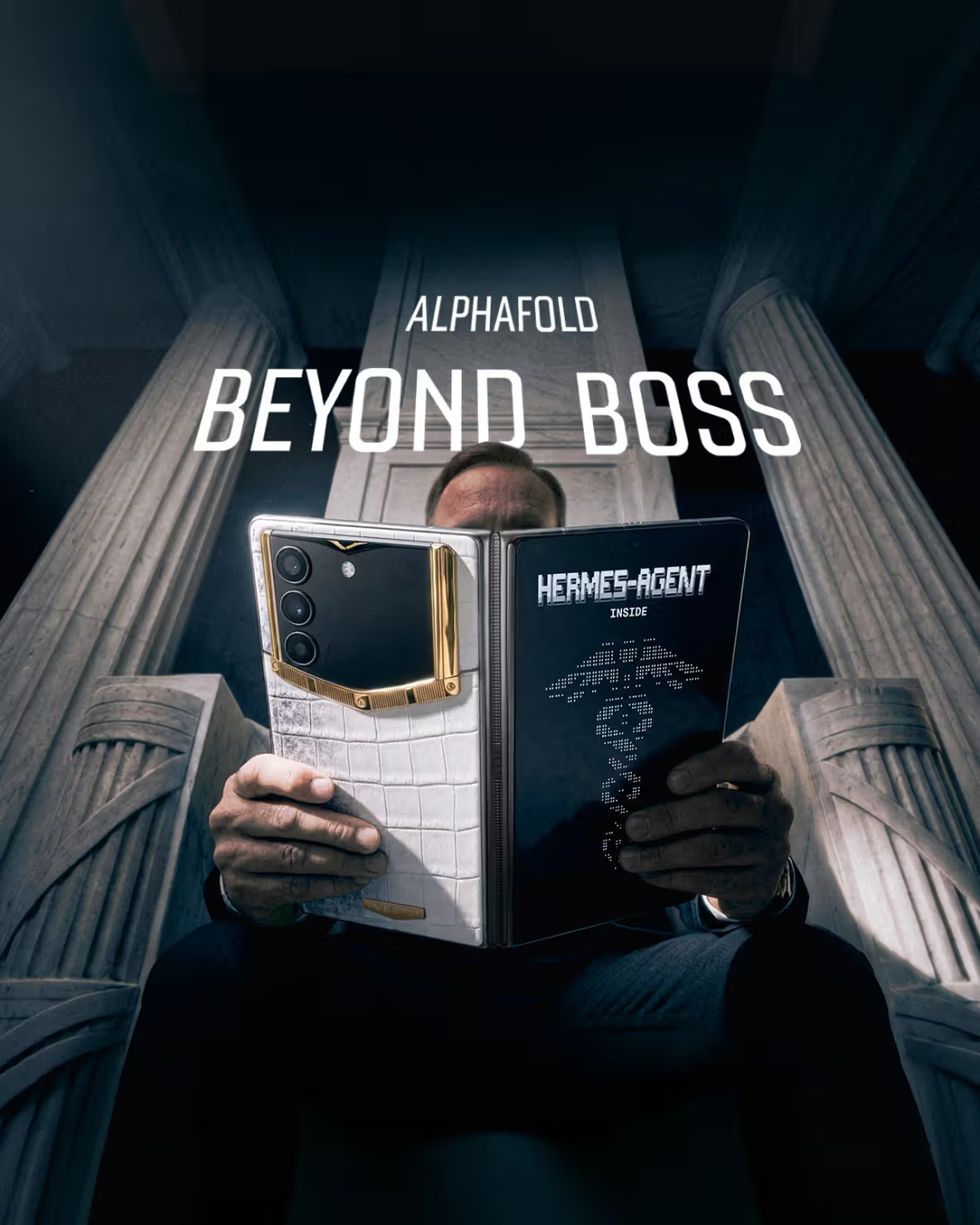
For executives considering a phone-as-command-center approach with a service layer, VERTU positions VERTU Agent Q as one example.
A short comparison set: iPhone vs Galaxy vs Pixel for executive business use
This isn’t a “top 10.” It’s a decision lens.
Criterion | iPhone Pro/Pro Max | Galaxy Ultra | Pixel Pro |
|---|---|---|---|
Security posture | Strong, consistent defaults; best when fleet governance is tight | Strong enterprise security stack; good for policy-heavy orgs | Strong security fundamentals; valued for fast updates |
Efficiency | Best if you live in Apple’s ecosystem and want predictable behavior | Best for multitasking-heavy workflows and power-user input | Best for AI-native workflows and a clean OS experience |
Cross-app automation | Strong within Apple-first workflows; less OS-level flexibility | Strong automation flexibility on Android; needs permission discipline | Strong AI and Android integrations; still requires governance |
Service layer | Excellent mainstream support; enterprise depends on your setup | Strong enterprise programs; depends on procurement and MDM plan | Strong update transparency; support depends on channel |
⚠️ WarningDon’t “choose the safest phone” and then run it unmanaged. The risk is rarely the hardware. It’s the gap between policy and behavior.
Shortlisting checklist (use this before you buy)
If you want to make a decision quickly, do this in order:
Write your top three daily workflows (not apps).
List your deal-breakers (update horizon, MDM support, separation of work/personal, travel connectivity).
Pick two finalists and test them against one travel day and one high-sensitivity day.
Alibaba’s 2026 buyer guide makes a similar point: start by mapping your top workflows and eliminate phones with weak update commitments before you obsess over specs (a 2026 business phone checklist that starts with your top three workflows).
Next steps
If you want an executive phone that treats service and cross-app execution as first-class requirements (not add-ons), explore the latest collection from VERTU.
Disclosure: This article references VERTU pages. Editorial judgment remains the priority.
![Top 10 Tourbillon Watches for Men [2026 Latest]](https://cdn.sanity.io/images/e0gp1l2g/production/8cb6bc45133cf9453382fc7d074465af588bb610-1800x1080.webp?w=180&h=180&q=78&auto=format&fit=crop)
![Top 10 Tourbillon Watches for Men [2026 Latest]](https://cdn.sanity.io/images/e0gp1l2g/production/8cb6bc45133cf9453382fc7d074465af588bb610-1800x1080.webp?w=800&h=450&q=82&auto=format&fit=crop)

![Top 10 Anniversary Gift Watches for Men [Full Guide]](https://cdn.sanity.io/images/e0gp1l2g/production/00dfa030a876edbe6ea7b146f6b1d8197c7656b0-3840x1860.webp?w=800&h=450&q=82&auto=format&fit=crop)