AI wearables have moved past step counting: on-device inference plus multimodal sensing turns a band or ring into a proactive personal assistant that reacts in context, without waiting on the cloud.
Security is decided by architecture, not marketing. Look for a hardware secure enclave, local-first processing, clear consent, and an audit trail before you trust a wearable with your data.
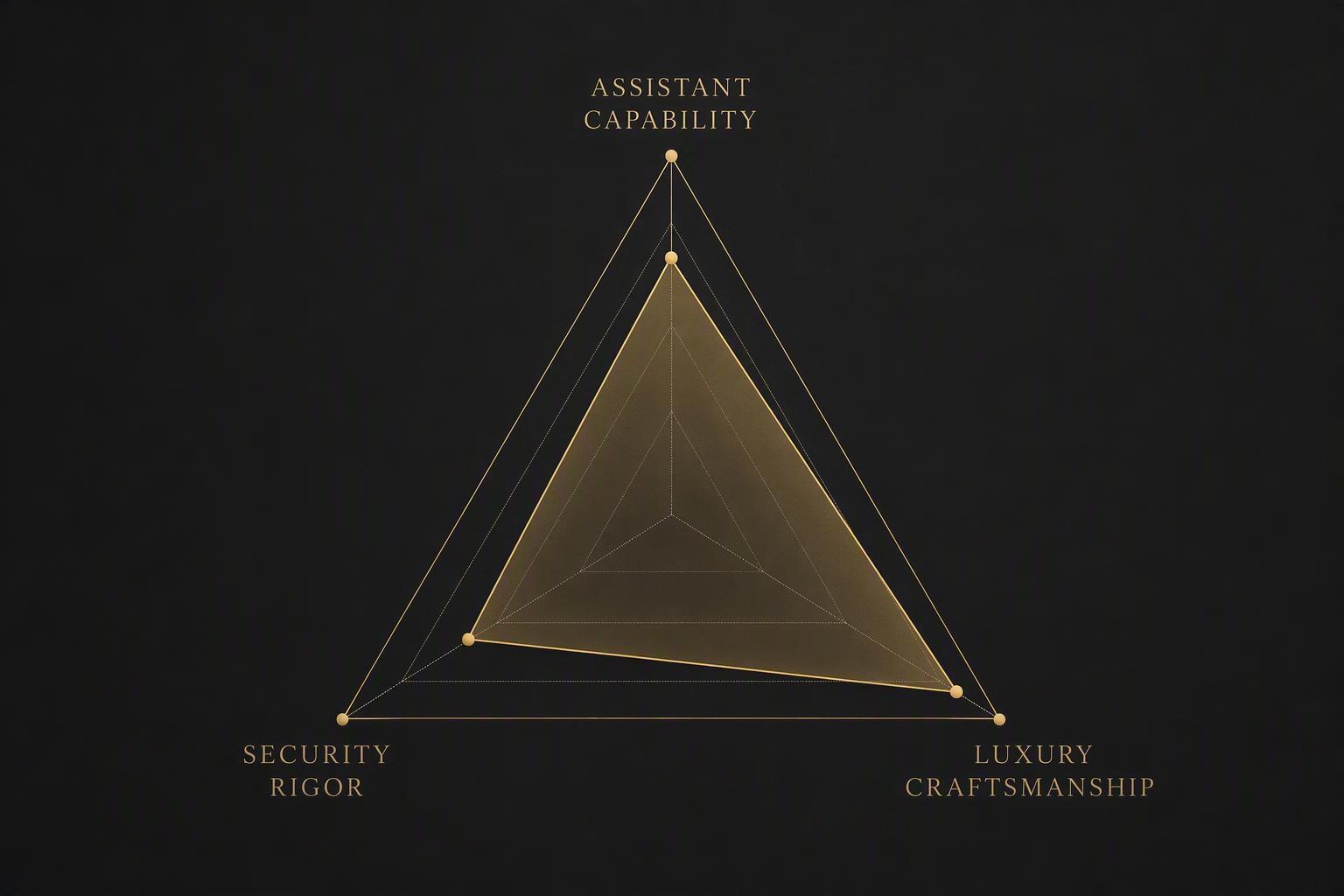
For luxury buyers, the decision rests on three axes: assistant capability, security rigor, and genuine craftsmanship and service. Judge any "smart jewelry" concept against all three.
Introduction
Walk into a private meeting, and the small note of polished metal on your wrist ends many conversations before they start. For years, smart jewelry meant fitness tracking you wore out of obligation: a step count, a heart-rate number, another glowing notification. The luxury buyer's complaint was always the same — the technology was capable, but it asked too much and gave back too little of what you actually care about.
That is changing. AI wearable technology is shifting from passive trackers to quiet personal assistants that observe, infer, and act in context. The promise is a device that knows your routines, protects your privacy, and anticipates what you need next — all while staying as discreet as a fine bracelet should be.
What luxury buyers value has not moved. Craftsmanship, privacy, and seamless service remain the true currencies. The difference is that the hardware is finally learning to honor them. This piece evaluates the concept behind a modern "Lumina AI Bracelet" — an archetype of this category — without promoting any single product. You will leave with a framework you can apply to any secure, personalized luxury wearable.
From trackers to assistants
The first generation of smart jewelry was a wrist-mounted database. It recorded; it did not understand. The shift to a personal assistant is architectural, not cosmetic, and it rests on two pillars: how the device senses the world and where it does its thinking.
Multimodal sensing, on-device AI
Modern wearables fuse many signals — heart rate, heart-rate variability, sleep stages, motion, skin temperature, and voice — into a richer picture of what you are doing and how you are feeling. That is multimodal sensing: instead of one metric, the device reads many inputs and blends them.
The intelligence then runs where it matters most: on the device itself. Local inference keeps responses instant, enables the band to act even without connectivity, and — critically for this audience — keeps your raw data off remote servers. Industry analysts expect on-device AI to appear in roughly 80% of wearables by 2032, according to an EE Times Asia outlook. New wearable silicon, such as Qualcomm's Snapdragon Wear platform with an integrated NPU, treats on-device intelligence as a first-class feature rather than an afterthought.
Ambient memory and proactive guidance
Sensing plus local inference enables something closer to ambient memory. The device learns your normal patterns — your sleep rhythm, your travel cadence, your stress load — and flags meaningful deviations rather than spitting out raw numbers. It does not ask you to study a dashboard. It tells you what matters and, when appropriate, what to do next.
This is the move from recording to responding. Instead of announcing "you walked 8,000 steps," a capable assistant notes that you are under-recovered after an overnight flight and quietly reschedules the morning. Proactive guidance is the point of the category.
Real-world exemplars across form factors
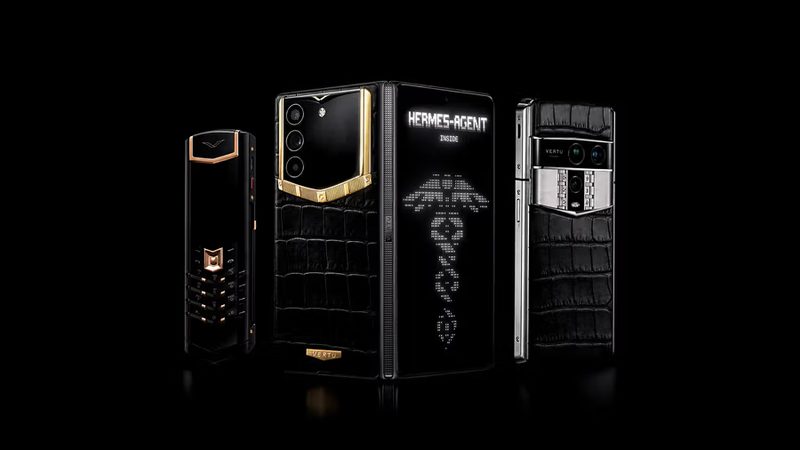
The idea is already playing out across form factors. Ring brands such as Oura and Ultrahuman have turned small finger-worn sensors into recovery and stress coaches. Smartwatches from Apple and Garmin layer AI guidance over rich biometric streams. On the luxury side, VERTU smart jewelry reimagines a traditional bead bracelet with a titanium smart module, proving that connected insight can live inside an object designed to be admired first. The form differs; the direction of travel is shared.
Security-by-design essentials
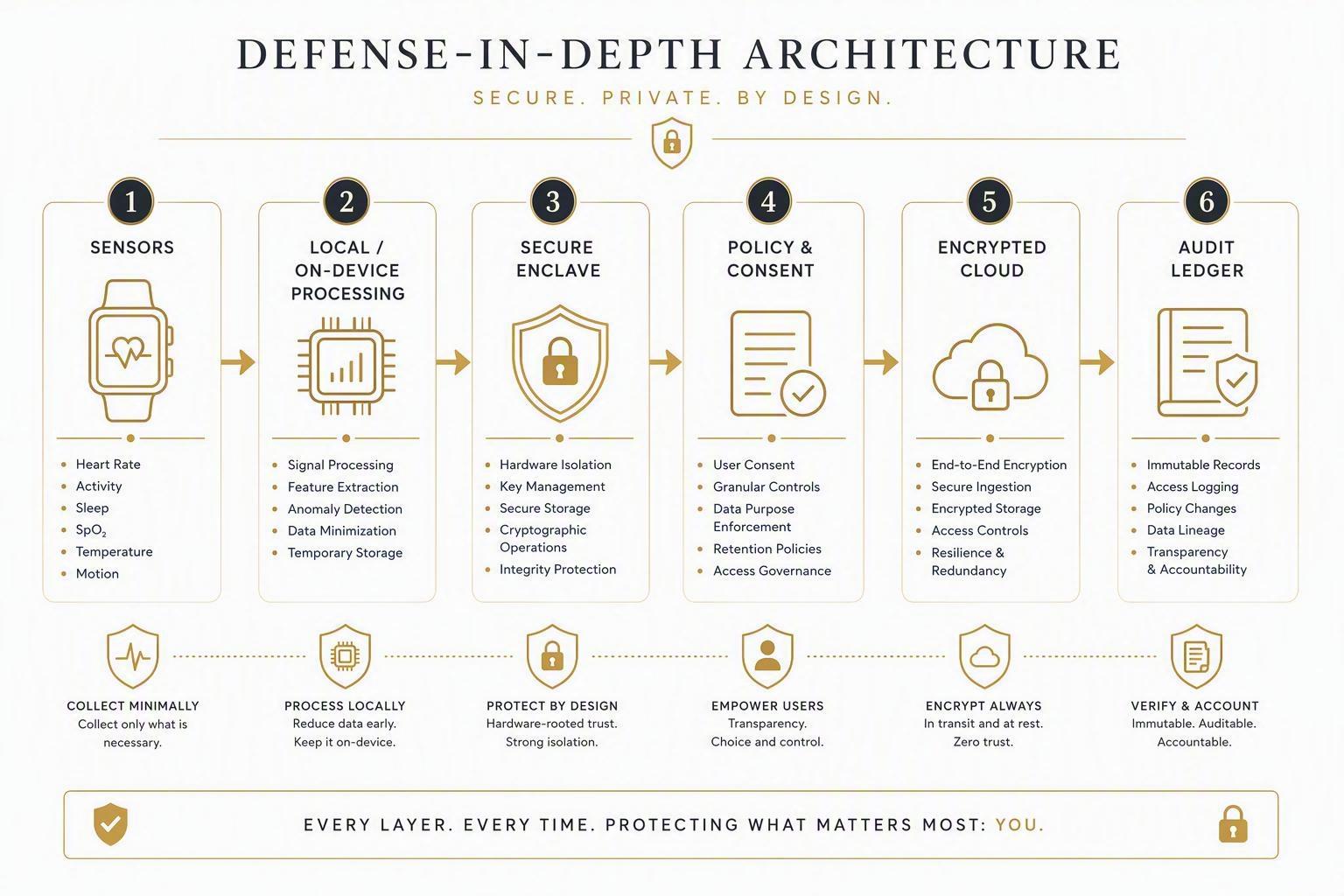
A capable assistant is only worth wearing if it can be trusted with what it sees. The bar for luxury buyers is higher than for most consumers, because the data is more sensitive and the attention is more valuable. Security-by-design means the safeguards are built into the architecture, not bolted on afterward.
Hardware roots of trust and local-first
The most important control is where your secrets live. A hardware secure enclave is a dedicated, encrypted region on the silicon that the operating system and installed apps cannot read. Signing keys and sensitive inference stay locked inside it, so even a compromised app cannot reach your data. Tinfoil's secure-enclave primer explains how the hardware decrypts data only inside that protected boundary.
Paired with this is a local-first posture: process on the device, and send only the minimum necessary output outward. Data that never leaves your wrist cannot be intercepted in transit or harvested in the cloud. This is the personal-security equivalent of keeping the ledger in your pocket.
Identity, permissions, confirmations
Trust also requires knowing who and what has access. Strong authentication at the device, least-privilege permissions for any companion app, and explicit, opt-in confirmations before data is shared give you control over your own device. Treat supported sharing as permission-based, and expect a transparent policy with deletion and export rights. CISA's Secure by Design guidance names exactly these behaviours — multi-factor authentication, logging, and strict access controls — as the baseline for secure products.
Governance, audit, and adversarial defense
No single control is bulletproof, which is why defense-in-depth matters. Secure boot and signed firmware updates prevent tampering. Encryption at rest and in transit protects data everywhere it exists. And a tamper-resistant audit ledger records logins, permission changes, and data access, so you can verify what happened rather than take it on faith.
Brands with a privacy-first heritage understand this instinctively. VERTU has long paired handcrafted materials with a secure-enclave, Web3/AI privacy ethos and 24/7 concierge — an ownership model that treats your data with the same care as your taste.
Watch how one luxury brand reasons about on-device AI and trust: this walkthrough of VERTU's Agent Q shows the difference between cloud-dependent assistants and intelligence designed to stay with you.
Evaluating a luxury AI bracelet
How should you judge a concept like the Lumina AI Bracelet? Resist the temptation to compare spec sheets. The decision that matters is whether it serves you across three axes, and a dispassionate scorecard makes that comparison quick and honest.
Assistant capability and reliability
The first axis asks whether the device is genuinely useful day to day. Does it run multimodal sensing with on-device AI, or is it a screen for a cloud chatbot? Does it learn your patterns and act proactively, or only respond when tapped? Reliability matters as much as cleverness — an assistant that misreads context is worse than none. A promising band earns points when on-device models handle the time-sensitive work and the cloud handles only the heavy lifting.
Security rigor and user control
The second axis is non-negotiable. Check for a hardware secure enclave and local-first processing before anything else; without them, the device is a data collector you happen to wear. Then confirm you control the permissions: opt-in sharing, strong authentication, and the ability to delete or export your data. Red flags appear quickly — no enclave, vague privacy policy, or silent background uploads are each enough to disqualify a device, no matter how beautiful it is.
Craftsmanship, comfort, and service
The third axis is where luxury is won or lost. Is the piece made from materials worth wearing to a boardroom or a private dinner? Does it hold up overnight and through a jet-set calendar? And is there a human relationship behind it — a concierge who can help with sizing, care, availability, or support? For affluent buyers, a bracelet that requires constant fussing fails even if the interior is brilliant. A secure, personalized assistant that feels like part of your wardrobe, backed by genuine service, is the point.
Pro TipScore any candidate on all three axes before you commit. A flawless score on craftsmanship cannot compensate for weak security, and a privacy-first design without comfort will not stay on your wrist.
Conclusion
The shift in AI wearable technology is real, and it finally respects what luxury buyers always wanted: a device that assists you, protects you, and looks like it belongs. Look for an assistant that runs on the device it lives in, a security architecture with a hardware enclave at its heart, and craftsmanship worth the space it holds on your wrist. Choose a bracelet that scores well on capability and security with equal seriousness, and you will own something neither a dashboard nor a trinket could offer.
What to watch next: as on-device AI becomes the default rather than the exception over the coming years, expect privacy and personalization to converge. Devices that keep intelligence local and trust hardware-enforced will define the secure wearables of the next decade — and the luxury bracelets worth wearing are already the ones that score highest on all three axes.
Disclosure: This article references VERTU pages and a VERTU product demonstration. Editorial judgment remains the priority.