Leadership rarely fails because the team lacks data. It fails because the right context arrives too late.
A mobile AI CRM assistant is useful only if it does two things at once: it compresses customer reality into a page you can trust, and it respects the boundaries your organization already depends on.
This article is a decision guide. Not a product pitch.
What leaders should demand from an AI CRM assistant on mobile
Most “AI in CRM” demos look impressive on a desktop. Mobile is less forgiving. If your assistant can’t deliver value in 30 seconds between calls, it becomes another system that people avoid.
Here is the standard worth holding it to:
- Context, not triviashow what changed since the last touch.
- Action, not drafting theatrecreate the follow-up task, the next step, the reminder.
- Permissioned accessnever exceed the human user’s CRM rights.
- Auditabilitya clear trail of what data was accessed and what action was taken.
Key TakeawayThe “smart” part is not the model. It is the workflow: retrieve the right facts, summarize them, draft the right next step, and route anything sensitive for approval.
Customer summary: one screen of context, tied to real records
A leader-grade customer summary is not a biography of the account. It is a decision surface.
A strong summary answers, in order:
Why this account matters right now (renewal window, expansion motion, risk signal).
What happened since the last touch (new stakeholders, pricing pressure, unresolved issues).
What the team should do next (one or two moves, not ten).
The quality bar is simple: every sentence must be traceable to something real: a CRM field, a recent email, a meeting note, a ticket, a call transcript.
If the summary cannot show its sources, you will see the failure mode quickly. It starts as “small hallucinations” and ends as the team losing trust in every other output.
A practical pattern for Salesforce, Dynamics 365, HubSpot, and Zoho
Keep the summary built from a narrow, explicit data set:
Account basics (industry, size, region)
Open opportunities and stage changes
Last 5 interactions across channels
Open issues and SLA status (if applicable)
Contract dates and renewal milestones
Then make the assistant output two layers:
Executive summary (5–7 lines)
Evidence panel (links back to the CRM objects)
Sales follow-up: draft, route, and log
Follow-up is where mobile assistance pays for itself. After a call, people either act immediately or they don’t act at all.
A mobile CRM assistant should handle three jobs:
Draft the follow-up message in the right tone.
Create the CRM updates (notes, tasks, next steps) without manual entry.
Route for approval when the content carries risk.
This is where permissioned design matters. If the assistant can auto-send messages from a generic service account, it may be fast, but it is not safe.
A conservative default is:
Draft the email/DM
Suggest the next step
Require a tap-to-approve before sending
Log the sent message and updated fields back into CRM
When you want a benchmark for the direction the market is moving, monday.com’s overview of AI phone agents for sales highlights the same operational goal: capture context fast and keep the system of record current.
Message brief: the executive briefing that fits in a lock screen
Leaders don’t need more notifications. They need fewer, better ones.
A “message brief” is not a summary of everything in Slack/Teams/email. It is a daily or pre-meeting briefing that answers:
Which deals changed meaningfully (stage movement, competitor mention, pricing risk)
Which accounts show risk signals (support escalation, silence, stakeholder churn)
Which approvals are waiting (discounts, legal redlines, comms drafts)
Two rules make it work:
- Make it small60–120 seconds to read.
- Make it actionableeach bullet ends with an explicit next step.
Pro TipIf the brief can be generated without reading the CRM, it’s a motivational quote in disguise. A real brief is anchored in the system of record.
Permissioned CRM data: the difference between a tool and a liability
A CRM assistant becomes dangerous when it is treated as a clever search box.
Agents don’t just read. They act.
That is why enterprise access control is a first-order feature. Microsoft’s security team frames AI governance as a lifecycle of classify, label, protect, and manage, with controls like RBAC, just-in-time access, DLP, encryption, and monitoring in Microsoft Security Insider’s AI security guide.
The permission sprawl problem (and why agents amplify it)
Enterprises tend to over-grant permissions over time. People change roles. Temporary access becomes permanent. Old groups are never cleaned up.
Oso’s research on enterprise authorization reports that 96% of enterprise permissions go unused over a 90-day window. Unused does not mean harmless. It means untested and unaudited.
An assistant that inherits a user’s full permission set inherits that sprawl, too.
What “permissioned” should mean in practice
For a mobile AI CRM assistant, “permissioned” should include at least:
- Delegated accessthe assistant acts on behalf of a specific user identity.
- Least privilegeit requests only the scopes needed for the task at hand.
- Record-level enforcementit can’t read a record the user can’t read.
- Action gatingsensitive actions require explicit approval.
- Audit logsevery read, export, and write is logged.
HubSpot’s own admin guidance shows the direction clearly: you can restrict CRM records so users can view or edit only their records or their team’s records, rather than everything, per object type. See HubSpot’s guidance on limiting access to CRM records.
Recommended enterprise pattern: private deployment that connects CRM, sales, and messaging
This is the practical question leaders ask next: “Can we do this without letting a general-purpose cloud bot roam across our customer data?”
A conservative enterprise pattern is:
Private deployment of the assistant’s orchestration layer
Connectors to CRM (Salesforce, Dynamics 365, HubSpot, Zoho), sales tools, and messaging
A permissions plane that maps user identity to system scopes
A monitored audit trail for reads and writes
Where VERTU AlphaFold fits (as an example, not the thesis)
For organizations that want the assistant to live where the work happens, a privacy-first mobile workspace can be part of the answer.
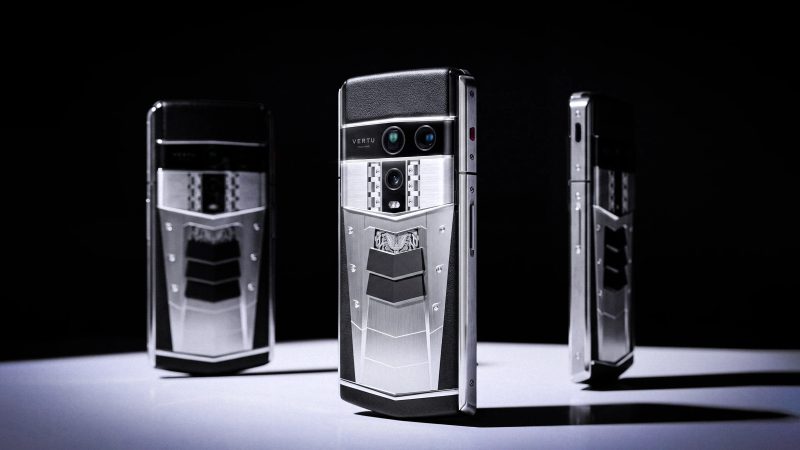
As one example, VERTU AlphaFold positions itself as a protected executive environment on mobile, and Hermes Agent emphasizes user-defined boundaries and confirmation for significant actions.
The pattern to borrow is simple: keep agency close to the user, and treat permissions as a design surface, not a legal afterthought.
<div data-type="node-video" data-provider="youtube" data-url="https://www.youtube.com/watch?v=4673nnLapS8" data-embed-url="https://www.youtube.com/embed/4673nnLapS8"></div>
⚠️ WarningIf your “assistant” needs an admin token to work, you do not have an assistant. You have an automated breach path.
Implementation checklist for leaders
Use this as a quick screen before you greenlight a pilot.
Capability checklist
Customer summary is traceable to sources (CRM objects, tickets, emails)
Sales follow-up drafts are reviewable before sending
Message briefs are short, role-specific, and updated at least daily
CRM updates are written back with audit logs
Governance checklist
RBAC is defined and kept current
Just-in-time or task-scoped credentials are used when possible
Record-level access is enforced
External sends and sensitive changes require approval
Logs are available to security and can be reviewed
FAQ
What is an AI CRM assistant?
An AI CRM assistant helps teams and leaders use CRM data to summarize accounts, draft follow-ups, recommend next steps, and keep the CRM updated with less manual work.
Why does mobile matter?
Mobile is where context gets lost: right after a call, on the way to the next meeting, in a cab, in an airport lounge. A mobile assistant succeeds when it compresses decision-grade context into a screen and lets you act immediately.
What is the biggest risk?
Over-permissioning. If the assistant inherits broad, unused access, it can expose data or take actions far beyond what was intended. This is why least privilege, delegated access, and audit logs matter.
Next steps
If you’re evaluating an AI CRM assistant, start with permissions. Make the assistant earn the right to act.
If you want to explore a private, mobile-first executive workflow pattern, begin with your existing CRM permission model, then map which actions you actually want the assistant to take.
Disclosure: This article references VERTU pages. Editorial judgment remains the priority.