Daily work noise isn’t just “too many notifications.” It’s the quiet tax you pay every time you reopen an app, re-read a thread, and reconstruct what you were doing—only to switch again.
For privacy-sensitive, high-mobility roles, the problem compounds. You’re often making decisions between meetings, in transit, across time zones, with one hand on the phone.
A modern office assistant can reduce that noise—but only if it’s designed to operate across the surfaces where work actually happens.
The hidden cost of switching: it’s not the ping, it’s the recovery
Most interruptions are small. The recovery isn’t.
Duke University summarized research indicating it can take around 23 minutes to refocus after an interruption—a useful benchmark for why context switching is more expensive than it looks (Duke Today’s summary of work interruption research (2021)).
You don’t need to accept that number as a universal law to recognize the pattern: the more fragmented the workflow, the more time disappears into “getting back into it.”
Key TakeawayThe best mobile AI assistant doesn’t just draft text. It helps reduce context switching by reducing reorientation: fewer tabs, fewer repeats, fewer lost decisions.
What an AI office assistant must cover: the six surfaces of work
When people search for “AI office assistant,” they often mean one of two things:
A drafting tool (helpful, but narrow)
An assistant that can observe, summarize, and prepare actions across your workflow
If you want less noise, aim for the second.
1) Email: reduce triage and repetition
An AI office assistant earns its place in email by doing three things well:
- Triagesummarize what changed since you last checked.
- Drafting with contextdraft replies that match the thread’s intent (and your tone).
- Action extractionturn “Can you…” into a task with an owner and a due date.
Failure mode to watch: a tool that drafts quickly but can’t prioritize correctly—so you still scan everything.
2) Meetings: convert talk into decisions and follow-ups
Meetings create noise when they generate:
untracked decisions
invisible commitments
follow-ups scattered across inbox and chat
A mobile AI assistant should help you:
prepare a brief before the meeting (agenda, last decisions, open risks)
capture a clean summary after the meeting (decisions, action items, dates)
draft follow-ups while context is fresh
Failure mode: summaries that sound plausible but miss the one real decision.
3) Documents: compress reading load, speed up review
Most professionals don’t need “more documents.” They need fewer minutes spent finding and re-reading them.
An AI assistant for work should:
pull the relevant excerpt, not the whole file
produce a decision-ready summary (what’s proposed, what changes, what’s risky)
keep a traceable link back to the source document
Failure mode: a generic summary that omits the constraints you’ll be asked about later.
4) To-dos: build a single source of truth for commitments
Noise increases when tasks live everywhere: email flags, chat reminders, calendar notes, paper.
A useful AI office assistant does not “manage tasks” in the abstract. It does this:
turns messages into tasks
deduplicates tasks that show up in multiple places
makes the next action explicit
Failure mode: an assistant that creates tasks but can’t keep them aligned with the system you already use.
5) Chat tools: tame the thread storm
Chat is where work moves fastest—and disappears fastest.
The assistant should be able to:
summarize a thread into: context, decision, next step
surface “you were mentioned” moments that actually require action
route a chat request into a task or a calendar hold
Failure mode: chat summaries that feel tidy but don’t preserve the ask.
6) Calendar: protect the day, not just schedule meetings
A true AI scheduling assistant should handle (and help reduce context switching by keeping planning in one place):
time zones and buffers
meeting conflicts and rescheduling
holding focus blocks when the week starts to fracture
Failure mode: scheduling that optimizes for availability, not for energy and priority.
A consideration-stage evaluation framework: 9 criteria to compare tools
This is the difference between “interesting demo” and “daily driver.”
1) Coverage across surfaces
Does it cover all six surfaces above—or just one (email-only, meeting-notes-only)?
2) Cross-app context and memory
Does it keep context across email/calendar/chat, or does it reset every time?
A useful reference point is Vellum’s criteria-first approach to unified email + calendar + chat assistants (Vellum’s 2026 comparison).
3) Action quality (not just writing quality)
Can it prepare the right action: schedule, follow up, file, route?
4) Mobile usability
Can you complete core actions quickly on a phone—between meetings—without more app switching?
5) Integrations and ecosystem fit
Does it fit your stack (Microsoft 365, Google Workspace, mixed), or force a new workflow?
6) Permissioning model
Does it request broad access by default, or can you scope permissions tightly?
7) Approval loop
Does it prepare actions for your approval, or act autonomously in ways that create risk?
8) Auditability
Can you see what it changed, when, and why?
9) Failure behavior
When it’s uncertain, does it fail closed (ask) or fail open (guess)?
How to verifyBefore you connect anything, review what data the assistant can access (email content, attachments, calendar details, files), how permissions can be revoked, and whether actions require explicit confirmation.
Best practices: reducing work noise with mobile-first workflows
Tools matter. Workflows matter more. Here are the practical patterns that consistently reduce noise.
Best practice 1: start the day with a single briefing
ask the assistant for a morning brief: today’s meetings, top email threads, tasks due, and one risk to watch
insist on links back to sources (email, meeting, doc)
Best practice 2: turn every meeting into a task list within 5 minutes
immediately after the meeting, request: decisions + owners + due dates
push actions into your single task system
Best practice 3: use chat as intake, not storage
when a request arrives in chat, convert it into a task or a calendar hold
reply with confirmation and next step
Best practice 4: treat email like a queue, not a reading list
ask the assistant to classify: urgent/reply/approve/delegate/read-later
draft replies only for the top tier
Best practice 5: protect focus time using scheduling rules
set rules: no-meeting windows, travel buffers, time-zone preferences
let the AI scheduling assistant propose slots that respect those rules
A practical example of an approval-gated mobile agent: AlphaFold + Hermes Agent
Not all assistants are built the same way. Some optimize for conversation. Others optimize for controlled execution.
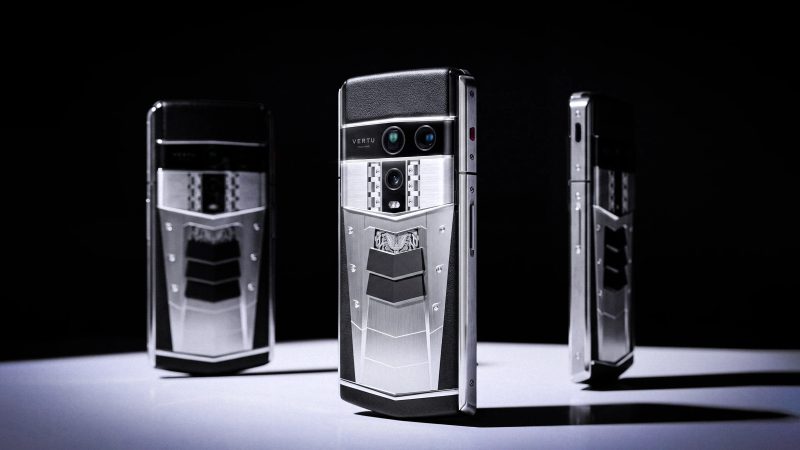
VERTU positions Hermes Agent as a private AI concierge and “intelligent command terminal” designed to prepare multi-step actions across 70+ supported apps, with boundaries and governance (Hermes Agent inside AlphaFold).
In plain terms—aligned with your definition—Hermes Agent acts as an AI second brain: it remembers what matters, understands context, and helps prepare actions across your phone and supported apps with your approval.
Where this model reduces noise
- Email → calendar“Turn that thread into a 20-minute call next week” becomes a prepared action, not a multi-app hunt.
- Meeting → tasksdecisions become assigned tasks quickly, while the context still exists.
- Docs → follow-up“Summarize the contract and draft my three questions” becomes one request, one result.
Why approval matters (especially on mobile)
If an assistant can act across apps, it can also make mistakes across apps.
Hermes Agent’s framing emphasizes least privilege, compartmentalization, and explicit approvals—treating confirmation as a feature rather than friction (VERTU’s AlphaFold announcement).
Concierge noteIn high-stakes work, the goal isn’t “automation at any cost.” It’s fewer decisions lost to noise—without giving away control.
A two-week pilot plan: test an AI office assistant without losing trust
Week 1: “read-only + drafting”
enable summarization (email threads, meeting notes, chat recaps)
keep sending/scheduling actions behind confirmation
measure: time spent in inbox + missed follow-ups
Week 2: “bounded actions + rules”
allow narrow actions (create task, propose time slots, draft follow-up)
keep high-risk actions (external sending, approvals, finance) behind explicit approval
measure: reduced app switches and faster closure of open loops
A broad integrations layer can help—but it must be controlled. Zapier’s overview of assistants and automation is a useful map of what’s possible and what to be cautious about when tools can touch many systems (Zapier’s AI personal assistant guide).
FAQ
What is an AI office assistant?
An AI office assistant is a tool that helps you manage work across communication and coordination surfaces—email, meetings, documents, tasks, chat, and calendar—by summarizing context and preparing actions from natural language requests.
What’s the difference between a mobile AI assistant and a desktop assistant?
Mobile assistants win when the workflow happens between meetings, during travel, and in short bursts. The best mobile AI assistant reduces app switching and uses voice or quick prompts to capture decisions instantly.
Are AI office assistants safe for sensitive work?
They can be, but safety depends on permission scopes, approval loops, and auditability. If a tool requires broad access with unclear controls, treat it as a risk surface, not a productivity upgrade.
Do I need one assistant or multiple specialized tools?
If your work is fragmented, one unified assistant can reduce noise. If you have strict governance requirements, you may prefer a controlled agent plus specialized tools for a few surfaces.
Key takeaways
A true AI office assistant reduces work noise by minimizing reorientation and app switching—not just writing faster.
Evaluate across six surfaces: email, meetings, documents, tasks, chat tools, and calendar.
In consideration stage, prioritize: cross-app context, mobile usability, permission scope, approval loops, and audit trails.
Mobile-first, approval-gated agent models can reduce friction while preserving control.
Next steps
If you’re evaluating options now, start with a criteria-first checklist—and pilot with read-only summaries before you enable actions.
To see how an approval-gated model is framed on mobile, explore AlphaFold, the Hermes Agent phone and the guide to Hermes Agent inside AlphaFold.
Disclosure: This article references VERTU pages. Editorial judgment remains the priority.