

Introduction
If you buy luxury for pleasure alone, trends are simply taste. If you buy luxury with an eye on optionality—resale, trade, or inheritance—trends become signals.
This guide is written for collectors who want to look current in 2026 without turning their wrist or jewelry box into a short-lived mood board. Use it as an orientation: what’s shifting, what’s enduring, and where liquidity typically concentrates.
What’s new this year is less about one “must-have” design and more about trust infrastructure: certified pre-owned (CPO) programs, digital provenance, and tighter standards around documentation. Those shifts change how quickly a piece can move—and at what discount.
Finally, a note on framing: this is not investment advice. It’s a style-and-market guide to value retention—the conditions that often support pricing power and buyer confidence.
Key TakeawayIn 2026, the best-looking pieces that also hold value tend to share three traits: recognizable design language, verifiable provenance, and condition you can defend on paper.
2026 market snapshot
Secondary-market pulse
After the post-2021 surge and a long correction, the secondary market’s most traded names look more disciplined than euphoric. The important change for 2026 is that the conversation has moved from “everything rises” to “what still trades fast.”
According to Hodinkee’s market review, “The Business Of Watches In 2025 And What To Expect In 2026”, declines slowed in 2025 with selective gains—an environment where quality, documentation, and reference-level desirability matter again.
Brand polarization and trophy effects
Polarization is the defining mood: the best-known references still act like trophies, while the middle can feel surprisingly illiquid.
In practice, that means two buyers can both “own luxury,” but only one can exit quickly. Recognition (the model line, the dial variant, the case metal) is often what turns interest into bids.
For an awareness-stage collector, the lesson is simple: if value retention is part of your intent, buy what the market can identify instantly.
CPO programs and trust shift
CPO is no longer a niche add-on; it’s a credibility layer.
Rolex’s decision to widen access to CPO—making watches eligible at two years rather than three—signals how seriously the brand treats the secondary market’s influence. Hodinkee notes this change within its 2026 outlook, alongside expectations of additional brand-controlled programs.
The practical effect is a trust shift: more buyers are willing to pay a premium when the channel, warranty, and verification process reduce downside risk.
Watches: design shifts with pricing impact
Case sizes, dials, and materials
The most “investable” watch trends in 2026 aren’t loud; they’re defensible.
Case size is drifting toward comfort and proportion over pure presence. Wearability matters because it expands the buyer pool later.
Dial character is trending toward tactile, crafted surfaces—guilloché, textured finishes, and occasional stone dials—because they read as intentional rather than seasonal.
Materials are where resale narratives are being rewritten. Titanium, in particular, is shedding its “tool” stereotype.
European Watch Company argues that collector perception is changing: modern titanium feels deliberate because finishing and architecture have improved, and buyers are less attached to weight-for-weight’s-sake. See “Titanium Watches: Why It Finally Feels Like a Luxury Material”.
Blue-chip vs indie dynamics
In 2026, blue-chip icons still function like the market’s reserve currency. If you care about liquidity, you’re often paying for three things:
a reference that’s widely recognized
a servicing pathway that doesn’t introduce doubts
a resale audience large enough to create competition
Independents can be extraordinary—and in specific cases, strongly performing—but they’re more sensitive to provenance detail, production scale, and buyer education. If you can’t explain what you own in one sentence, the market will ask for a discount.
Limiteds, completeness, and liquidity
“Limited edition” only helps when it’s paired with completeness.
Completeness is the quiet language of liquidity: box, papers, service documentation, original parts, and a condition story that doesn’t require imagination.
Collector’s note: the more complex the story (special dial, regional edition, boutique-only release), the more you need documentation that travels with the piece.
Jewelry: silhouettes, stones, and metals
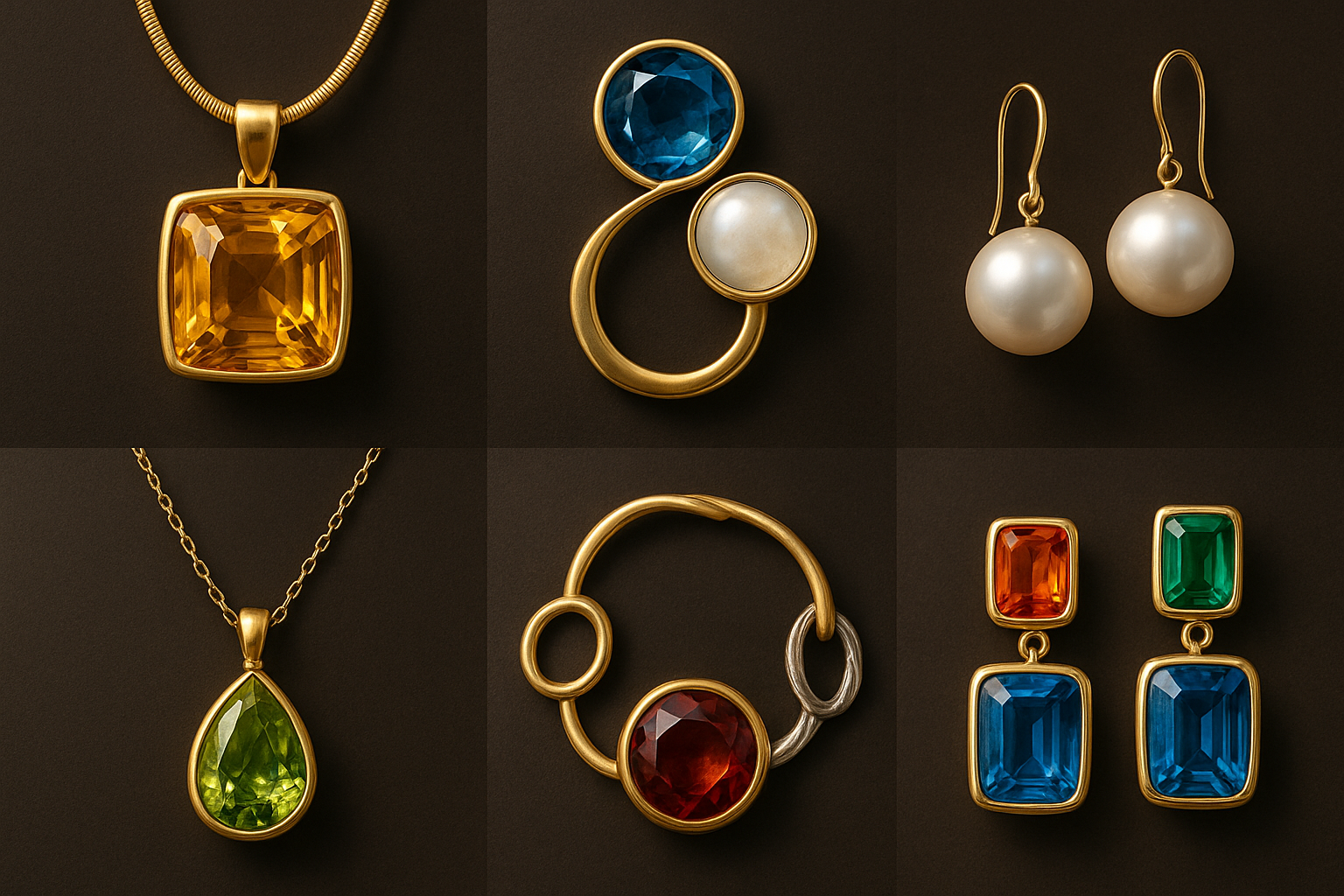
Statement pendants and brooch return
Jewelry in 2026 is moving with confidence: fewer “tiny” pieces meant to disappear, more pieces designed to anchor an outfit.
Statement pendants are back as intentional centerpieces—often with sculptural metalwork and bolder proportions. Brooches are also returning, not as delicate nostalgia but as graphic accents that can be worn on lapels, scarves, evening bags, and even belts.
Value-wise, these categories reward design signatures: motifs and construction techniques that a buyer can recognize years later.
Pearls, bezel settings, and mixed metals
Three trends converge here:
Pearls are shifting from uniform strands to baroque character, layering, and mixed-material pairings.
Bezel settings are gaining momentum because they protect a stone’s edges and suit a modern, clean silhouette.
Mixed metals have matured from “rule-breaking” into “intentional.” Two-tone and multi-metal pieces read collected—especially when the proportions are controlled.
For runway-driven perspective on stacking, layering, and expressive combinations, Forbes highlights these movements in “4 Defining Jewelry Trends In 2026—From Bold Florals To Stacking”.
Colored gemstones momentum
Colored stones are momentum trends and heritage trends—depending on how you buy them.
If you want a jewelry piece to hold value, think like a curator:
prioritize stones with credible certification
prefer timeless cuts and settings that won’t date quickly
understand treatment status and disclosure
Treated stones can be beautiful and wearable, but treatment can complicate valuation because it changes how rarity and durability are perceived. Untreated, well-documented stones typically inspire more confidence at resale.
What tends to hold value in 2026: 2026 luxury watches and jewelry trends that hold value
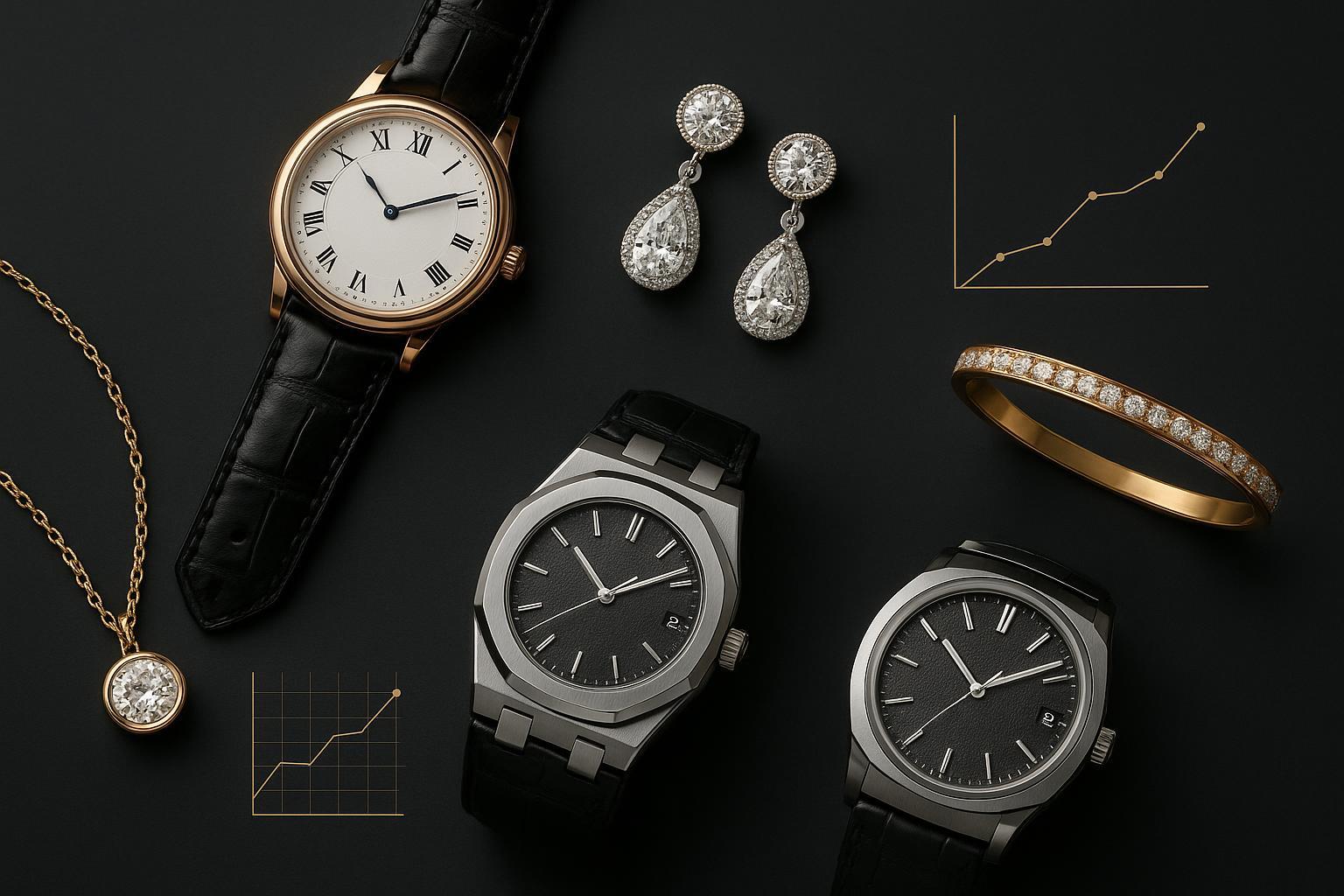
Watches: Big Three references and provenance
In 2026, blue-chip watch value retention is still anchored by the Big Three—Rolex, Patek Philippe, Audemars Piguet—plus a handful of lines that have become culturally “obvious.”
But provenance is what converts fame into price.
A watch that is easy to verify (serial consistency, service history, correct parts, clean paper trail) is easier to sell without friction. And friction is where discounts are born.
Jewelry: Iconic lines and untreated stones
For jewelry, value retention concentrates in two places:
Iconic lines that are widely recognized and continuously supported (so buyers know what they’re looking at).
Stones and materials that are defensible—with certification and clear treatment disclosure.
Untreated stones aren’t automatically “better,” but they are often simpler to price because they reduce uncertainty.
Timing, condition, and service history
Condition isn’t aesthetic—it’s financial.
For watches: service history matters because it can confirm water resistance checks, movement health, and parts integrity.
For jewelry: condition is about stone security, prong wear, clasp integrity, and whether any repairs were done cleanly.
If you remember one thing: the most expensive mistake is buying a beautiful piece that comes with an ambiguous story.
Sustainability, provenance, and technology
Digital passports and blockchain traceability
The luxury market is building tools that make ownership easier to verify. Digital passports and traceability initiatives won’t eliminate counterfeits, but they can reduce uncertainty when the brand (or an authorized ecosystem) stands behind the record.
In adjacent luxury categories, VERTU frames provenance as a core pillar of “true luxury” alongside materials, craft, and service—see Luxury Phone Brands: How VERTU Defines Ultra‑Luxury. The watch and jewelry parallel is straightforward: the more brand-verified your ownership trail is, the less you rely on trust alone.
Recycled metals and responsible sourcing
Sustainability in 2026 isn’t a slogan; it’s due diligence.
Responsible sourcing and recycled metals matter for two reasons:
they align with evolving collector values (and future buyer expectations)
they reduce reputational risk for pieces meant to be worn publicly
For value retention, documentation is the theme again: a sourcing story that can be evidenced is more durable than one that’s merely implied.
Concierge and personalization
The next frontier of luxury ownership isn’t more choice—it’s better judgment, delivered discreetly.
In practice, the highest-value clients increasingly expect:
a consent-first clienteling approach (minimal oversharing, precise requests)
personalization that feels like memory, not surveillance
verification support when purchases are time-sensitive or high-risk
VERTU’s ownership model is a useful example of how luxury brands combine private service and personalization without turning the experience into marketing noise. Its concierge layer is positioned as an execution capability (help that can actually do things), while its technology lens increasingly includes AI-enabled personalization in luxury experiences—see Key Tech Trends Every Luxury Leader Should Watch in 2025 and the brand’s overview of concierge services in the Luxury Lifestyle Guide.
Risks, timing, and portfolio fit
Volatility, premiums, and auctions
Auctions create headlines, but they’re not a daily pricing oracle.
The risk in 2026 is paying a “story premium” without realizing it: a recent auction result can reset expectations even when liquidity is thin. For awareness-stage collectors, treat auctions as signal—not as a guarantee.
Natural vs lab-grown diamond trade-offs
Lab-grown has become a serious category, but it behaves differently in resale.
Natural stones typically hold the strongest long-term narratives of rarity. Lab-grown can make sense when your priority is design, scale, or ethical clarity—but if resale is a core requirement, understand that the secondary market may price lab-grown with more depreciation.
The right question is not “which is better,” but “what role is this piece playing in my collection: wearable art, status symbol, or value-preserving asset?”
Position sizing and rebalancing cadence
Think of your collection like a wardrobe with optional liquidity.
Avoid concentrating too much value into one piece unless you’re certain you could sell it in multiple markets.
Reassess quarterly: brand pricing moves, CPO program expansion, and shifting tastes can change the exit conditions.
A simple cadence: once per quarter, review what has become easier to verify (and therefore easier to sell), and what has become harder to explain.
Conclusion
Core takeaways for 2026:
The market rewards what it can recognize quickly and verify confidently.
In watches, materials like titanium and brand-controlled CPO programs reinforce trust—but documentation still decides the final price.
In jewelry, durability-driven settings (like bezels), intentional mixed metals, and well-documented stones tend to age better than purely seasonal silhouettes.
Act now by improving your “provenance hygiene”: keep receipts, service records, certificates, and high-quality photos in one secure place. What you can prove, you can sell.
What to monitor quarterly: CPO policy changes, retail price increases, auction sentiment vs real liquidity, and any shift in how leading houses document provenance.
Disclosure: This article references VERTU pages. Editorial judgment remains the priority.
![How to Scan Receipts and Documents with Your Phone [Full Guide]](https://cdn.sanity.io/images/e0gp1l2g/production/0db13feec1d5e72b8a8a5f976d1f3e86619c9228-3840x1860.webp?w=180&h=180&q=78&auto=format&fit=crop)
![How to Scan Receipts and Documents with Your Phone [Full Guide]](https://cdn.sanity.io/images/e0gp1l2g/production/0db13feec1d5e72b8a8a5f976d1f3e86619c9228-3840x1860.webp?w=800&h=450&q=82&auto=format&fit=crop)
![Top 10 Two-Tone Carbon-Fibre Watches for Men [2026 List]](https://cdn.sanity.io/images/e0gp1l2g/production/18870799ba33fab0e038968359cd5772d7d7db30-1024x576.webp?w=800&h=450&q=82&auto=format&fit=crop)
![Top 10 Luxury Watches with Digital Complication Displays for Men [Latest]](https://cdn.sanity.io/images/e0gp1l2g/production/c4f6bf8c080f291c39f7cc85c7344ecff2fd3799-1024x553.webp?w=800&h=450&q=82&auto=format&fit=crop)