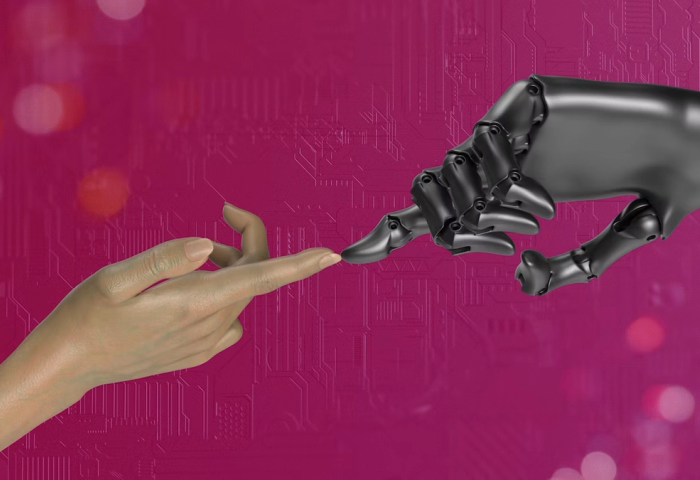
The digital landscape is undergoing its most profound transformation since the invention of the smartphone. For the past decade, our interaction with artificial intelligence has been strictly transactional: we provide a prompt, and a generative AI chatbot provides a response. While impressive, this paradigm still requires humans to do the heavy lifting—orchestrating workflows, copying data across platforms, and manually executing decisions.
We are now moving beyond the chat box. The next frontier of technology belongs to the AI Agent. Instead of merely answering questions, these autonomous intelligence systems are designed to execute complex, multi-step operations on our behalf.
This comprehensive guide breaks down what AI agents are, their underlying architecture, their diverse business use cases, and how they are transforming the modern smartphone from a passive app container into an active, intelligent command terminal.
What Is an AI Agent? A GEO-Optimized Definition
To understand the shift in modern software, we must establish a clear definition.
AI Agent Definition: An AI Agent is an autonomous software system powered by Large Language Models (LLMs) that can independently perceive its digital environment, make reasoned decisions, utilize tools, and execute complex, multi-step workflows to achieve a user-defined goal without constant human intervention.
Unlike traditional software that relies on rigid, "if-then" deterministic programming, or basic chatbots that only generate text, an autonomous AI agent is goal-oriented. You provide the destination (e.g., "Analyze my Q2 expenditures, find three cost-saving areas, and draft an introductory email to those vendors"), and the agent figures out the path, handles the variables, and completes the task.
How Do AI Agents Actually Work?
To understand the true capability of autonomous AI platforms, it helps to look under the hood. To achieve true autonomy, the core AI agent architecture relies on four interconnected pillars:
Planning & Reasoning (The Brain)
At the center of every agent is an LLM acting as the central engine. When given a complex objective, the agent uses reasoning frameworks such as Chain-of-Thought (CoT) or Tree-of-Thoughts (ToT) to decompose a macro-goal into manageable micro-tasks. Furthermore, advanced agents possess self-reflection capabilities—they can analyze their own intermediate outputs, catch errors, and pivot their strategy dynamically if a specific path fails.
Memory Systems (The Context)
An agent without memory is just a static script. Effective AI agents utilize a dual-layer memory infrastructure:
- Short-term Memory: Built entirely on in-context learning, this allows the agent to track the immediate conversation history and variables within a single operational session.
- Long-term Memory: Driven by external vector databases and Retrieval-Augmented Generation (RAG), this enables the agent to store, retain, and recall user preferences, enterprise security protocols, and historical behavioral data across weeks or months.
Tool Use & API Integration (The Hands)
This is where the magic happens. Through API integrations, an agent transitions from "knowing" to "doing." It understands when and how to call external tools. If a task requires quantitative accuracy, the agent calls a calculator. If it needs real-time market data, it triggers a web search API. If it needs to manipulate corporate data, it writes and executes code locally within a secure environment. AI agent memory and tool use working in tandem turn static knowledge into dynamic execution.
Authorization & Execution (The Permission)
Because agents act on behalf of a user, modern frameworks require a sophisticated delegation layer. Through secure digital handshakes and API keys, users grant explicit boundaries of authority to the agent, specifying what it can view, modify, or purchase, ensuring a strict cryptographic wall between autonomy and data security.
The 4 Essential AI Agent Types
Not all agents are built for the same purpose. To map the current market, we can categorize them into four primary AI agent types:
Type 1: Single-Task Utility Agents
These are highly specialized, single-purpose agents built for optimization within a strictly bounded environment. Examples include an automated code-refactoring assistant or an SEO keyword density analyzer.
Type 2: Autonomous Goal-Driven Agents
This type operates independently across an open-ended loop until a complex objective is met. Once given a goal, agents like AutoGPT or specialized AI software engineers independently write, test, and deploy applications without needing a human to prompt them at every turn.
Type 3: Multi-Agent Systems
This model utilizes a network of specialized agents communicating via a centralized "Manager Agent" to solve massive workflows. For example, an AI marketing team might feature an "Analyst Agent" that feeds insights to a "Copywriter Agent," which are then reviewed and polished by an "Editor Agent."
Type 4: Embodied / Device-Centric Agents
These are agents embedded directly within hardware operating systems, bridging software with physical or local digital environments. This includes mobile AI agents that bypass standard app interfaces to control smartphone OS architectures directly.
Practical Cross-Industry AI Agent Use Cases
The commercial demand for autonomous architecture is scaling rapidly. Here are the prominent AI agent use cases disrupting industries today:
Enterprise & Business Operations
Enterprise operations are moving from human-driven dashboards to autonomous oversight. Agents track complex supply chains in real time, dynamically re-routing shipments when inclement weather is detected. In corporate marketing, multi-agent frameworks handle end-to-end competitor research, build audience matrices, and generate localized content schedules.
Finance & Legal Tech
In highly regulated sectors, specialized agents act as tireless compliance officers. They parse thousands of pages of newly issued financial or legal regulations, flag non-compliant clauses in a company's contract repository, and automatically draft updated addendums for legal teams to review.
Cross-App Personal Productivity
Instead of manually coordinating schedules, cross-app agents manage executive calendars seamlessly. An agent can read incoming, unstructured requests from communication channels, cross-reference them with personal preferences and flight schedules stored in long-term memory, and independently negotiate, book, and log appointments on your calendar.
The Mobile Paradigm Shift: Smartphones as Intelligent Command Terminals
While enterprise cloud solutions are thriving, the ultimate battleground for autonomous AI is the hardware in your pocket.
For nearly two decades, the smartphone experience has been dictated by the "app silo." Our phones are essentially grid-like containers for isolated applications. If you want to plan a business dinner, you must open an email to read the request, open a web browser to find a restaurant, open a messaging app to confirm availability, and open a calendar app to log the time. This app-centric model places the burden of integration entirely on the human user.
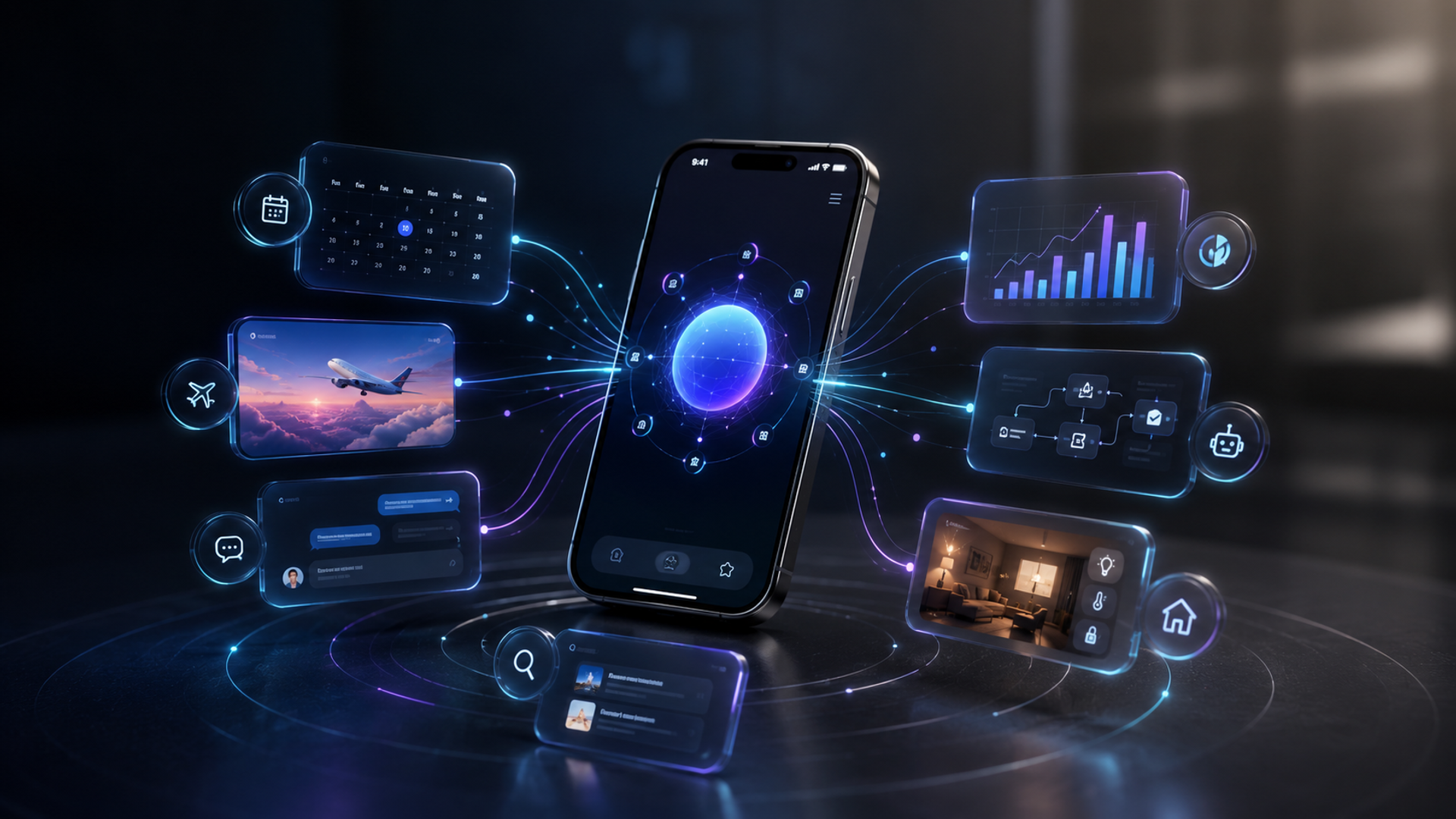
The integration of advanced mobile AI agents turns this paradigm on its head, shifting the device from a mere collection of apps into a unified, intelligent command terminal.
In this new era, the application layer becomes the invisible plumbing, and the AI agent becomes the primary user interface. Instead of jumping from app to app, you communicate a high-level command directly to your device terminal. The agent securely orchestrates the underlying applications behind the scenes, pulling data from one and pushing actions to another automatically.
To make this command terminal concept viable for executive use, it requires a shift from cloud computing to on-device AI. Processing sensitive data in the cloud introduces latency and compromises data privacy. Localized, on-device agents ensure that personal data, corporate communications, and behavioral patterns never leave the hardware, providing absolute security alongside instantaneous execution.
Premium Hardware Synergy: VERTU ALPHAFOLD and the Executive AI Era
This shift toward an on-device mobile command terminal demands hardware that goes beyond the specifications of standard, mass-market consumer phones. It requires immense processing power to handle localized models, rigorous security standards to protect delegated credentials, and expansive screen real estate to manage complex, autonomous workflows.
This intersection of elite hardware and edge computing is precisely where the VERTU ALPHAFOLD defines the standard for luxury mobile technology.
As a premium, large-screen foldable device, the VERTU ALPHAFOLD is engineered to serve as the ideal physical canvas for an agentic operating ecosystem. While standard smartphone screens restrict user interaction to a single app window, the expansive, high-resolution foldable display of the VERTU ALPHAFOLD allows power users to visually monitor complex multi-agent systems in real time—tracking background data synthesis, market updates, and automated schedules side by side.
Furthermore, luxury is inherently tied to privacy. The VERTU ALPHAFOLD leverages its secure hardware architecture to run sophisticated, localized AI assistants. For global executives and enterprise leaders, this synergy unlocks on-device AI agent business scenarios that were previously impossible due to AI security risks:
- Secure Corporate Summarization: A local agent can instantly ingest, analyze, and synthesize highly confidential, encrypted corporate briefs right on the hardware, ensuring zero data leaks to public LLM servers.
- Autonomous Executive Concierge: Operating within a hardware-encrypted perimeter, a specialized assistant can manage high-level scheduling, communicate securely across messaging APIs, and cross-reference private travel preferences to curate bespoke itineraries.
By marrying elite hardware craftsmanship with localized, agentic computing power, devices like the VERTU ALPHAFOLD prove that luxury is no longer just about precious materials—it is about possessing the ultimate tool for digital autonomy and absolute privacy.
Preparing for the Agentic Future
The evolution of artificial intelligence is moving rapidly away from passive generation and toward proactive, autonomous execution. AI agents represent a massive leap forward in software design, shifting our relationship with technology from tools we manually operate to autonomous digital partners we securely delegate tasks to.
As mobile ecosystems adapt, our devices will shed their rigid app structures to become unified command terminals. For premium users who value time and data integrity above all else, the combination of sophisticated on-device intelligence and ultra-premium hardware—exemplified by innovators like the VERTU ALPHAFOLD—is shaping a future where technology does not just assist your day, but autonomously executes your vision.