| Operational Domain | Autonomous Action | Requires Biometric Authorization |
|---|---|---|
| Schedule Optimization | Calendar scheduling, flight tracking, and pre-meeting brief aggregation. | Rebooking non-refundable flights or altering high-priority corporate agendas. |
| Communication | Drafting contextual responses, sorting emails, and prioritizing notifications. | Sending external messages containing legally binding commitments or contract approvals. |
| Financial/Data Management | Expense categorization and market data aggregation. | Executing wire transfers, processing payments, or sharing intellectual property. |
The modern smartphone landscape is undergoing a silent yet radical transformation. For years, mobile interaction relied on reactive, voice-triggered utilities—digital tools capable of setting morning alarms, reporting local weather forecasts, or indexing calendar entries upon direct command. While functional, these standard tools operate in a permanent state of amnesia. Every open tab or fresh query treats the user as an absolute stranger, completely detached from their professional history, lifestyle patterns, and strategic priorities.
Today, a profound paradigm shift is occurring. We are transitioning away from centralized, transactional chatbots and moving toward the era of the true Private AI Assistant. This evolution represents a fundamental leap from passive software to proactive, autonomous orchestration.
The Anatomy of Personalization: From Generic Prompts to Long-Term Memory
To understand the value of a dedicated Private AI Assistant, one must look at how standard artificial intelligence handles human input. Public large language models (LLMs) are structurally "stateless." They rely heavily on short-term context windows. Once a session is closed or a prompt chain grows too long, the system undergoes a digital reset, purging the nuanced preferences discussed only hours prior.
A true personal AI agent breaks this limitation through advanced semantic architecture and local vector databases, giving the system a secure, persistent long-term memory. Instead of requiring repetitive contextual prompting, a specialized assistant continuously analyzes user interactions, building an evolving, multi-dimensional profile of the user’s professional and personal world.
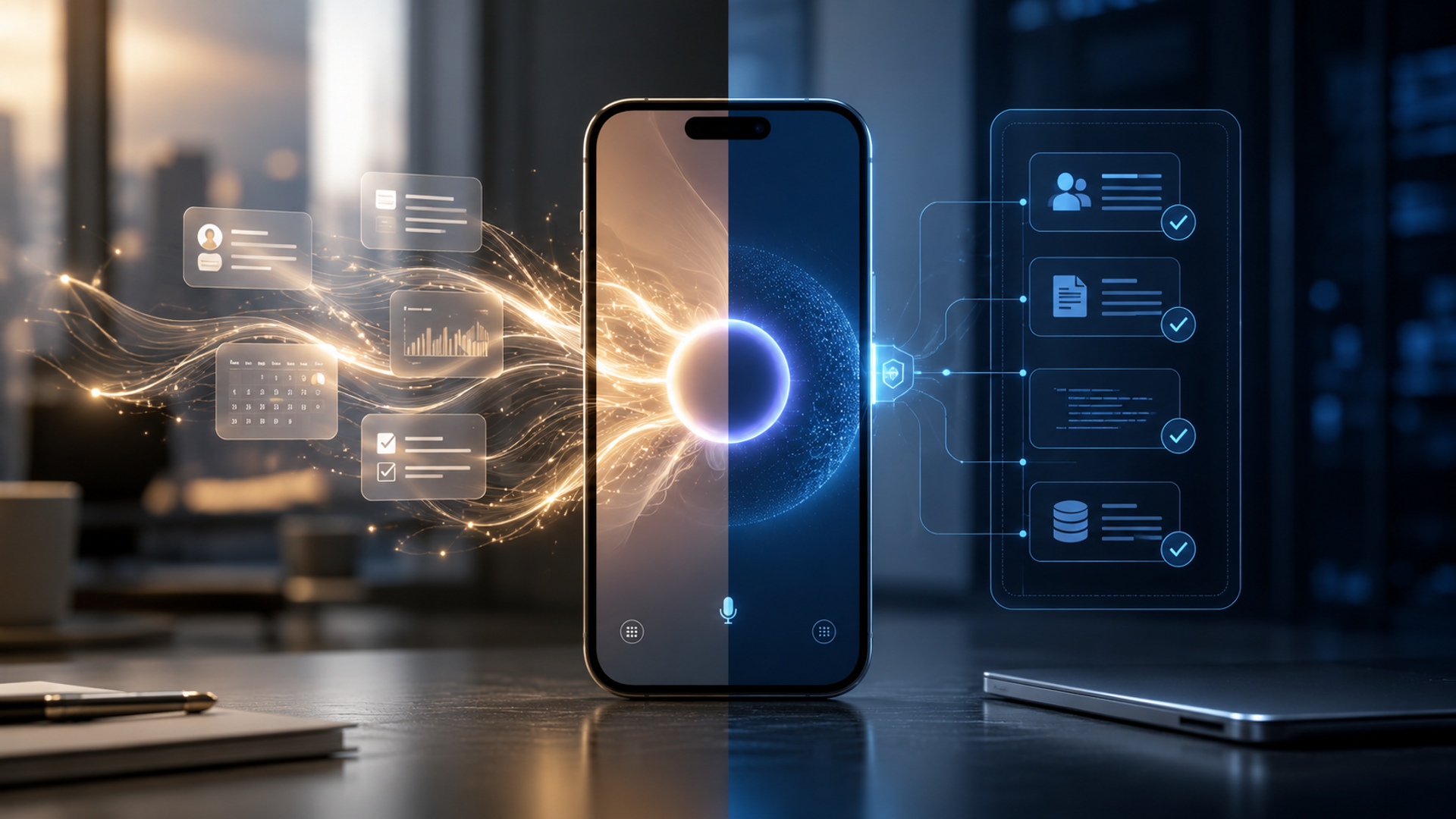
Through this contextual learning engine, a user's daily interactions feed directly into a localized database. This data is then processed into secure, long-term memory, resulting in hyper-personalized, proactive outputs that align precisely with the user's objectives.
Long-term memory allows the AI to understand semantic relationships over extended periods. It remembers that a specific corporate name mentioned three weeks ago is a priority acquisition target, or that an executive prefers direct data summaries over conversational prose. By retaining this historical context without bloating prompt tokens, the AI shifts from a simple text processor to an organic extension of the user’s mind. It predicts needs, references past decisions, and maintains an unbroken thread of continuity across all digital touchpoints.
VERTU ALPHAFOLD & Hermes Agent: Personalization in Action
This sophisticated convergence of memory and mobility finds its definitive expression in the VERTU ALPHAFOLD, an AI Agent Phone engineered for global decision-makers. Utilizing a large, expansive book-style foldable inner display, the device provides the ultimate high-productivity canvas required to manage complex workflows, comprehensive financial charts, and cross-border operations simultaneously.
Deeply integrated within this cutting-edge hardware is the Hermes Agent, a proprietary intelligence system designed to learn, adapt, and operate with complete autonomy. Over time, the Hermes Agent quietly studies the user’s unique lifestyle and business architecture across several key areas:
- Travel Habits: The agent observes unique travel preferences, automatically coordinating with preferred private or commercial aviation choices, managing elite chauffeured ground routes, and preemptively adjusting scheduling rhythms to mitigate time-zone fatigue.
- Meeting Rhythms: It maps out the executive’s weekly corporate pace. It understands which briefings require exhaustive data sets and which demand concise executive summaries, while gathering necessary context from past discussions to build comprehensive pre-meeting dossiers without being asked.
- Business Priorities: By identifying core commercial objectives, high-priority stakeholders, and critical project deadlines, the agent effectively filters out digital noise, ensuring that only vital, high-impact communications breach the user's focus.
Through this continuous, localized learning process, the VERTU ALPHAFOLD redefines the luxury mobile ecosystem. Digital craftsmanship is no longer measured solely by precious materials and hand-assembled chassis, but by the sophistication of a bespoke, secure, and uniquely tailored digital consciousness.
The Hidden Risks: The Vulnerability of a "Perfect" Memory
While a hyper-personalized companion provides massive operational leverage, a system with a flawless memory introduces significant security vulnerabilities. In the digital economy, an AI that possesses deep knowledge of an executive’s corporate strategies, personal relationships, financial tendencies, and daily movements becomes a high-value target for cyber espionage and sophisticated data farming.
The primary hazard stems from the structural vulnerability of centralized cloud-based AI infrastructure. When a standard AI Personal Assistant passes highly sensitive information back to centralized corporate servers for processing, that data is frequently ingested to train foundational models, indexed by third-party providers, or stored in vulnerable cloud environments. For corporate executives, a single data breach at the server level could expose proprietary intellectual property, upcoming market maneuvers, or sensitive personal data.
Beyond external cyber threats, there is an operational risk of over-reliance. If an AI assistant operates without clear structural boundaries, its contextual learning can create confirmation bias or introduce automation errors, highlighting the absolute necessity of keeping the human executive as the final, definitive decision-maker in the loop.
Establishing the Authorization Boundary: Blind Inference & On-Device Security
To mitigate these critical vulnerabilities, the relationship between user and machine must be governed by an ironclad authorization boundary. True digital sovereignty dictates that sensitive, high-profile context must never be exposed to public cloud environments or third-party visibility.
Modern architecture addresses this via a multi-layered security strategy that establishes a firm security boundary around the user's data:
On-Device Masking and Local Scrubbing
Before any complex data payload leaves the physical device to utilize cloud computing power, local security protocols process the information. Names, precise financial figures, corporate identifiers, and metadata are scrubbed or masked on-device. The external cloud engine processes the mathematical logic required for the task, but it remains entirely blind to who the data belongs to or the specific real-world entities involved.
Blind Inference Architecture
Through blind inference protocols, data transmissions are securely processed within isolated, hardware-encrypted enclaves in the cloud. The external server computes the request without ever decrypting or retaining the underlying identity or contextual history of the user. Once the task is completed, the session data vanishes completely from the server, leaving no digital footprint behind.
Granular Authorization Controls
A secure Private AI Assistant functions with hard operational restrictions. Users can establish strict boundaries regarding what the agent can execute autonomously versus what requires explicit human verification.
Conclusion: The Sovereign Future of Mobile AI
The trajectory of mobile intelligence is moving away from shared, mass-market tools toward isolated, hyper-personalized digital environments. The traditional model of sending raw personal information to open cloud ecosystems is no longer viable for professionals who handle sensitive corporate data and high-value portfolios.
True mobile luxury and executive efficiency are now defined by data privacy, personalized context, and seamless execution. An AI Agent Phone like the VERTU ALPHAFOLD, powered by the Hermes Agent, changes the role of personal technology. By wrapping long-term memory and deep personalization in strict security architectures like blind inference and local masking, it ensures that your digital intelligence remains entirely your own. By wrapping long-term memory and deep personalization in strict security architectures like blind inference and local masking, it ensures that your digital intelligence remains entirely your own. The future of mobile productivity belongs to those who leverage elite, proactive assistance while maintaining absolute control over their personal data.