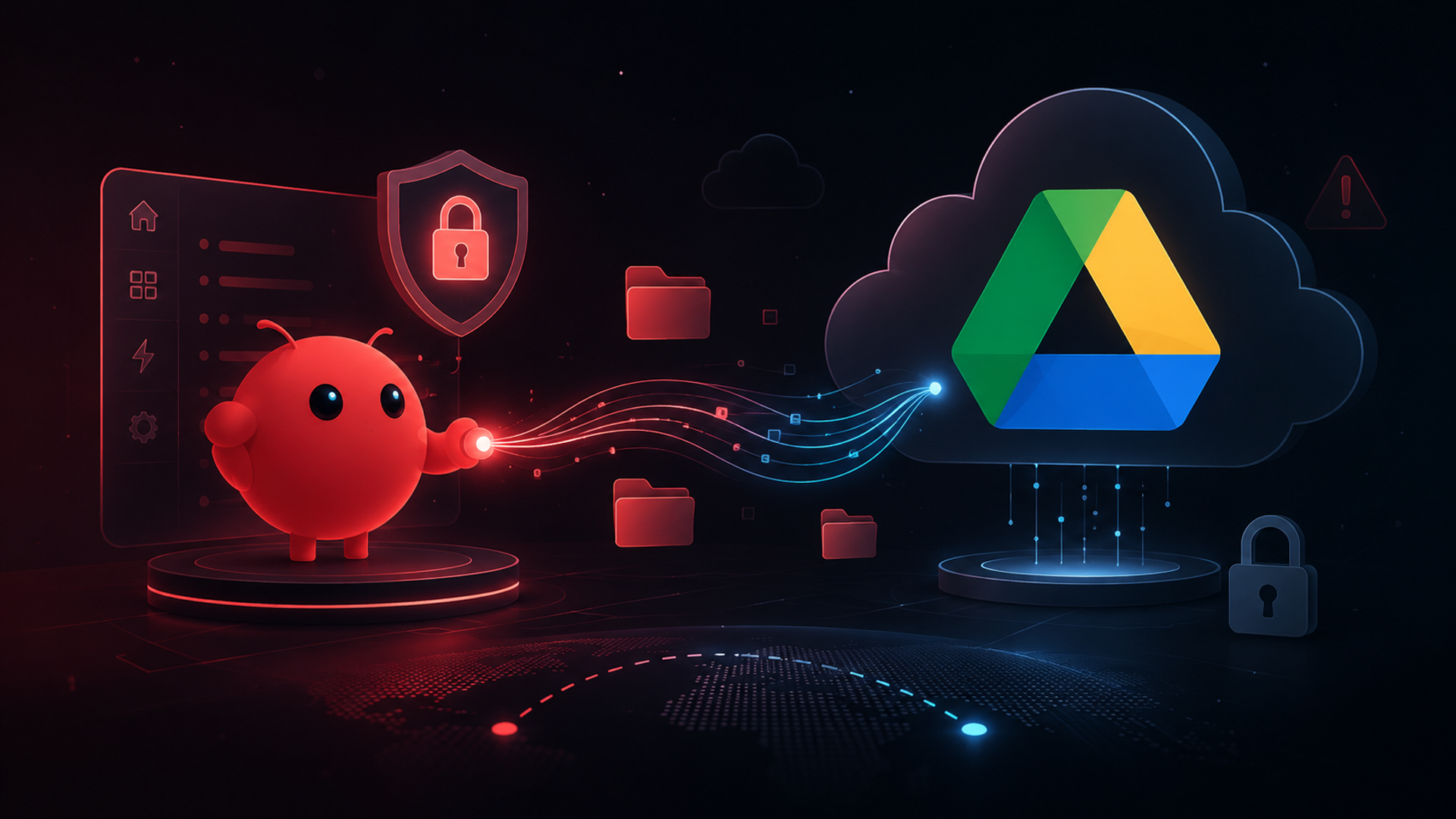
As autonomous AI agents redefine personal and professional productivity in 2026, tech enthusiasts and power users are constantly looking for ways to bridge open-source AI frameworks with their daily enterprise tools. Among these frameworks, OpenClaw has emerged as a highly versatile autonomous agent capable of cross-application workflows.
However, to unlock its full potential, users frequently seek an OpenClaw Google Drive integration. Connecting an AI agent to your primary cloud storage allows it to read, analyze, and organize your files automatically. But how seamless is this process? CanOpenClaw access Google Drive files safely? And what are the hidden risks, such as the dreaded OpenClaw Google suspension?
This comprehensive guide covers everything you need to know about setting up the Google OpenClaw bridge, the security hazards involved, and a revolutionary hardware alternative that bypasses the headaches entirely.
Can OpenClaw Access Google Drive Files?
The short answer is yes. OpenClaw can access your Google Drive files, but because it is an open-source framework rather than a native Google Workspace application, it cannot do so out of the box. It requires a middleware or an execution bridge to communicate with Google’s API sandbox.
To establish an OpenClaw Google Drive integration, the agent relies on two primary technical mechanisms:
- Model Context Protocol (MCP) & Third-Party Plugins: Frameworks like Composio or customized MCP servers act as an authorization layer, allowing OpenClaw to translate natural language prompts into structured API requests.
- Command-Line Integration Tools (gogcli): Advanced users often deploy tools like gogcli (a command-line interface for Google Drive) as a "skill" within OpenClaw. When you command the agent to read a file, OpenClaw executes background terminal commands via gogcli to fetch or upload the data.
High-Value Use Cases of the Integration
Once configured, the integration allows OpenClaw to perform complex, multi-step autonomous tasks:
- “Scan my Google Drive for all contract PDFs received this month, extract the total values, and compile them into a new Google Sheet.”
- “Monitor a specific shared folder and automatically draft email replies in Gmail based on newly uploaded project briefs.”
Step-by-Step Guide: How to Set Up OpenClaw Google Drive Integration
Setting up the openclaw google extension capabilities requires technical comfort with cloud consoles, API permissions, and local server configurations. Below is the standard protocol to connect the two systems.
Step 1: Configure the Google Cloud Console
To allow any external agent access to your workspace, you must create a dedicated project in the Google Cloud Platform (GCP).
- Go to the Google Cloud Console and create a new project named "OpenClaw Integration".
- Navigate to the API Library and search for the Google Drive API (and optionally the Gmail API if you want cross-app scheduling). Click Enable.
- Configure the OAuth Consent Screen. Since OpenClaw will run locally or on your private server, set the User Type to Internal or External (Testing Mode). Add your personal Google account as a authorized test user.
Step 2: Generate OAuth 2.0 Credentials
- Go to the Credentials tab in GCP.
- Click Create Credentials and select OAuth client ID.
- Choose Desktop Application or Web Application depending on how your OpenClaw instance is hosted.
- Download the resulting JSON file. Rename it to client_secret.json and place it into your OpenClaw project directory or your bridge tool's config folder.
Step 3: Initialize the Bridge Tool (gogcli or MCP)
If you are using gogcli to handle the heavy lifting:
- Initialize the tool via your terminal: gogcli init.
- Link the downloaded client_secret.json to authenticate.
- OpenClaw will generate an authentication URL. Paste this URL into your browser, log into your target Google account, and grant the requested Read/Write permissions.
- Copy the authorization code provided by Google back into your terminal to generate the permanent token.json file.
Step 4: Map the Skill in OpenClaw
Finally, update your OpenClaw config.yaml or Python environment to recognize the Google Drive skill pathways. Test the setup by prompting: "List the names of the last 5 files modified in my Google Drive."
OpenClaw Google Suspension & Data Security Risks
While the automation capabilities are impressive, deploying a DIY OpenClaw Google Drive integration introduces severe account and security vulnerabilities that high-net-worth individuals and corporate executives cannot afford to overlook.
The Threat of Account Ban (OpenClaw Google Suspension)
Google employs incredibly strict automated anti-abuse systems to protect Workspace data. Because OpenClaw is an autonomous agent, it operates via rapid, algorithmic API calls.
- Rate-Limit Violations: If an open-source loop or a bug causes OpenClaw to hammer the Google API with hundreds of requests within seconds, Google’s fraud detection will instantly flag the activity.
- Unverified App Suspension: If your GCP project remains in "Testing Mode" long-term while executing heavy data transfers, Google may permanently lock or suspend the associated Google account under suspicion of automated data harvesting or malicious bot activity. Recovering a suspended account that holds years of critical business emails and files is a bureaucratic nightmare.
Severe Privacy & Leakage Hazards
OpenClaw requires high-level Read/Write tokens to manage your files. If you host your OpenClaw instance on a vulnerable local machine or an unencrypted cloud virtual machine (VM), a single security breach exposes your entire Google Drive to hackers. Furthermore, open-source models often lack strict data isolation boundaries, meaning your sensitive financial or personal data could accidentally leak into public log files or unencrypted caches.
Is the Technical Hassle Worth the Anxiety?
For busy executives, enterprise leaders, and elite professionals, time is the most valuable commodity. Spending hours configuring GCP consoles, managing expiring OAuth tokens, debugging gogcli terminal errors, and constantly worrying about a sudden Google account suspension defeats the entire purpose of an efficiency tool.
People want the power of cross-app AI scheduling, but they need it to be secure, private, and requiring zero setup.
The Ultimate Solution: Skip the Setup with VERTU ALPHAFOLD
If you want the cutting-edge capabilities of an autonomous AI agent without the fragile technical setups and data risks of open-source tools, VERTU ALPHAFOLD offers the ultimate premium alternative.
The VERTU ALPHAFOLD luxury foldable smartphone completely bypasses the need for complex API integrations by featuring a deeply integrated, hardware-level AI assistant: the Hermes Agent.
Hermes Agent vs. OpenClaw: Memory and Evolution
While OpenClaw acts as a rigid, session-isolated executor that requires manual coding to learn new skills, the Hermes Agent is built to remember and evolve:
- Long-Term Memory: Unlike OpenClaw—which treats every session as a blank slate and forgets your preferences—the Hermes Agent safely retains a running memory of your lifestyle, professional habits, and communication preferences. It gets smarter the more you use it.
- Continuous Self-Evolution: Hermes Agent dynamically adapts its cognitive models over time. Instead of requiring you to manually install GitHub extensions or update Python scripts, it self-evolves natively on the device to handle increasingly complex task configurations.
Seamless, Safe Cross-App Scheduling
Because the Hermes Agent is built natively into the secure, dual-sandbox ecosystem of the VERTU ALPHAFOLD, it achieves what OpenClaw struggles to do safely: secure cross-app scheduling.
Without requiring a single line of code, any complex GCP configuration, or high-risk third-party tokens, Hermes Agent can securely look across your local files, calendars, and enterprise apps to manage your day. It orchestrates your digital workflow seamlessly while keeping your data strictly private inside Vertu's encrypted hardware environment—completely eliminating the risk of a Google account suspension.
Conclusion
An OpenClaw Google Drive integration showcases the incredible potential of autonomous AI, but its reliance on fragile API setups, constant terminal upkeep, and the looming threat of account bans make it a risky choice for non-technical users and high-profile professionals alike.