| Feature | OpenClaw |
|---|---|
| Primary Function | Real-world task execution via messaging |
| Memory | Persistent, local |
| Integrations | WhatsApp, Telegram, Slack, Signal |
| Key Tasks | Email, scheduling, workflow automation |
| Operation | Local |
The future of productivity is here, and it's driven by autonomous AI agents. With groundbreaking options emerging, how do you choose the one that will truly empower your workflow? Navigating this complex landscape requires a clear understanding of the leading contenders.
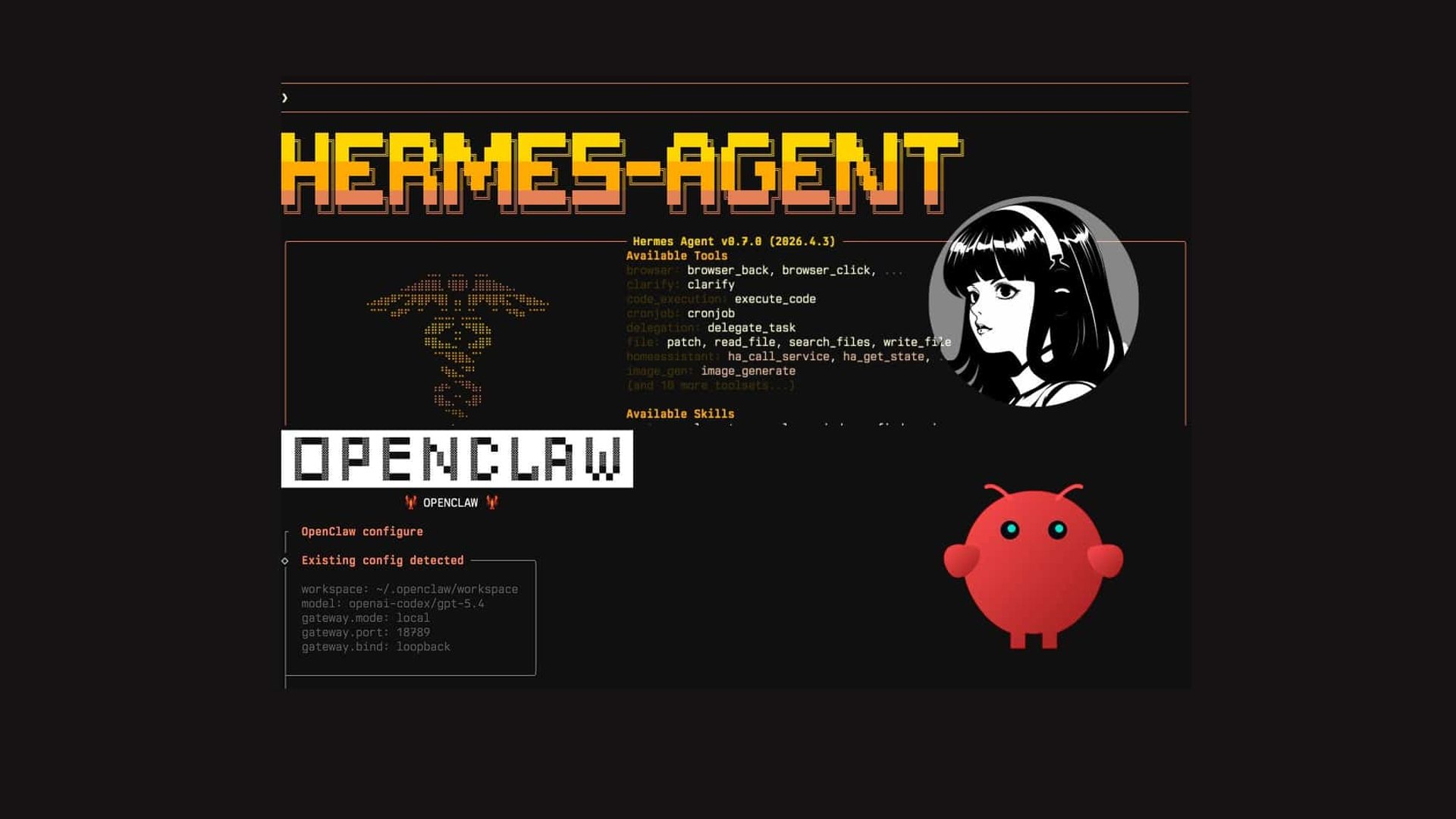
In 2026, the debate between Hermes Agent vs OpenClaw is heating up. Both offer powerful solutions for structured automation and personal productivity, but they approach these tasks with distinct philosophies and capabilities. Understanding their differences is crucial for making the right investment in your AI future.
This article will dissect the core features, strengths, and potential limitations of both Hermes Agent and OpenClaw. We'll guide you through their integration potential and identify which agent best suits your unique user profile and automation needs.
Top 2 Autonomous AI Agents for 2026: Hermes Agent vs. OpenClaw
The landscape of autonomous AI agents is rapidly evolving. By 2026, two distinct approaches stand out for their innovative functionalities. OpenClaw focuses on real-world task execution through messaging, while Hermes Agent offers a streamlined framework for developer productivity. Understanding their core differences is key to leveraging their respective strengths in the coming year.
OpenClaw (AI Agent)
OpenClaw operates as an autonomous AI assistant designed for executing real-world tasks. It leverages persistent, local memory to maintain continuity across interactions. This agent integrates with messaging platforms such as WhatsApp, Telegram, Slack, and Signal. Its capabilities include email management, calendar scheduling, and workflow automation. OpenClaw also performs proactive system interactions, enhancing personal productivity.
Hermes Agent (AI Agent Memory Framework)
Hermes Agent provides an integrated and opinionated memory framework for AI agents. It offers ready-to-use components for common memory requirements. The framework prioritizes out-of-the-box functionality and simplified setup. It aims to deliver a cohesive ecosystem and an enhanced developer experience. Hermes Agent likely functions as a proprietary or larger ecosystem component.
| Feature | Hermes Agent |
|---|---|
| Primary Function | AI agent memory framework |
| Development Focus | Rapid development, out-of-the-box functionality |
| Components | Ready-to-use for common memory needs |
| Ecosystem Integration | Cohesive, enhanced developer experience |
| Setup | Simplified |
The Hermes Agent vs OpenClaw comparison highlights two distinct paths in AI agent development. OpenClaw emphasizes direct user interaction and task completion within existing communication channels. Hermes Agent focuses on the underlying infrastructure, empowering developers to build agents more efficiently. Both contribute to the growing autonomy and utility of AI systems in 2026.
1. OpenClaw (AI Agent)
Based on credible sources, OpenClaw is designed for executing real-world tasks through messaging platforms, utilizing persistent local memory. It integrates with popular apps like WhatsApp and Telegram for email management, scheduling, and workflow automation. You can automate routine tasks by simply sending commands via your preferred messaging app. Start by integrating OpenClaw with one messaging platform you use daily and assign it a simple task, like summarizing daily emails.
2. Hermes Agent (AI Agent Memory Framework)
Based on credible sources, Hermes Agent offers an integrated memory framework for AI agents, providing ready-to-use components for common memory needs. It prioritizes out-of-the-box functionality and a simplified setup for developers. Developers can significantly speed up the creation of AI agents by leveraging Hermes Agent's pre-built memory solutions. If you're building a new AI agent, explore Hermes Agent's components to see if they meet your memory requirements.
Understanding OpenClaw: Features and Capabilities in 2026
OpenClaw functions locally on user hardware, utilizing persistent memory for task continuity. This AI agent framework supports extensive integrations, aiming for structured automation. Its capabilities extend to proactive system interaction, positioning it as an open-source AI assistant. Understanding its strengths and weaknesses is key for effective deployment, especially when considering alternatives like a Hermes Agent vs OpenClaw.
OpenClaw's Core Functionality
OpenClaw integrates directly with messaging platforms. Users can interact with OpenClaw via WhatsApp, Telegram, Slack, and Signal. This allows for direct control and task execution through familiar communication channels. The framework prioritizes local operation, ensuring data remains on the user's system.
OpenClaw's Integration and Automation
As an AI agent framework, OpenClaw facilitates workflow automation. It supports extensive integrations to streamline tasks. The system aims for self-improvement, acting as a proactive assistant. This design enables it to interact with systems and execute commands.
OpenClaw's Strengths and Weaknesses
OpenClaw offers a heartbeat feature for proactivity and community support through its open-source nature. However, it can exhibit unpredictability. Users may encounter forgotten tasks or hallucinated results. Pricing is variable, impacted by LLM token usage, which can incur costs. Security and governance present challenges for some users.
| Feature/Aspect | OpenClaw | Hermes Agent (Hypothetical) |
|---|---|---|
| Operation | Local | Unknown |
| Integration | Messaging Platforms | Unknown |
| Automation | Workflow Automation | Unknown |
| Reliability | Variable | Unknown |
| Cost | LLM Token Usage | Unknown |
Exploring Hermes Agent: Design and Developer Focus in 2026
Hermes Agent offers an integrated, opinionated AI agent memory framework. Its design prioritizes rapid development with ready-to-use components for common agent memory needs. This approach streamlines the creation of sophisticated AI agents.
Hermes Agent's Design Philosophy
Hermes Agent centers on providing pre-built solutions for recurring memory challenges. Developers gain access to components addressing typical AI agent requirements. This philosophy reduces the need for custom memory implementations.
Key Advantages of Hermes Agent
Hermes Agent delivers out-of-the-box functionality, simplifying setup. Its cohesive ecosystem enhances the developer experience. This focus on ease of use accelerates AI agent framework implementation. For developers comparing options, understanding these benefits is key. For instance, in a Hermes Agent vs OpenClaw discussion, Hermes Agent's integrated nature stands out.
| Feature | Hermes Agent | Openclaw (Hypothetical) |
|---|---|---|
| Setup | Simplified, integrated | Unknown |
| Components | Ready-to-use, opinionated | Unknown |
| Ecosystem | Cohesive | Unknown |
| Developer Focus | Rapid implementation | Unknown |
Hermes Agent's Use Cases
Hermes Agent suits scenarios demanding quick deployment of AI agents with robust memory. It supports advanced concepts like parallel subagents. Context engineering capabilities allow for more sophisticated AI agent framework development. This enables developers to build complex AI systems efficiently.
Direct Comparison: Hermes Agent vs. OpenClaw for Your Needs in 2026
Choosing between Hermes Agent and OpenClaw in 2026 depends on your project's specific integration and customization requirements. This comparison highlights key differences to guide your decision. Understanding these distinctions ensures you select the framework that best aligns with your development goals.
Integration and Modularity
OpenClaw excels in direct messaging integration. Its memory framework offers modularity, allowing providers flexibility. Hermes Agent provides a cohesive ecosystem. It focuses on out-of-the-box functionality for rapid integration.
| Feature | OpenClaw | Hermes Agent |
|---|---|---|
| Messaging | Direct integration support | Integrated within ecosystem |
| Memory Framework | Modular, provider flexible | Cohesive, pre-defined |
| Setup | Requires configuration | Simplified, out-of-the-box |
| Integration Speed | Potentially slower due to configuration | Faster, streamlined |
Ease of Use vs. Customization
Hermes Agent prioritizes ease of use. It offers a streamlined developer experience. This makes it suitable for quick implementation. OpenClaw, while potentially more complex, offers fine-grained control. It provides extensibility for deep customization.
Reliability and Predictability
OpenClaw can exhibit unpredictability. This stems partly from its use of LLMs, contributing to variability. Hermes Agent focuses on an opinionated, cohesive solution. This approach likely leads to greater reliability for its intended use cases.
Open-Source vs. Proprietary Considerations
OpenClaw is an open-source AI agent. This fosters community support and transparency. Hermes Agent is likely proprietary. It operates within a larger ecosystem. This offers a more managed, potentially less flexible solution for structured automation.
Selecting the right framework hinges on your priorities. If direct messaging and memory flexibility are paramount, OpenClaw presents options. For rapid deployment and a managed experience, Hermes Agent offers a streamlined path. Evaluate your project's long-term needs against these core differences.
FAQ (Frequently Asked Questions)
Q1: What are the main differences between Hermes Agent and OpenClaw?
A1: OpenClaw emphasizes local execution, messaging integration, and open-source flexibility. Hermes Agent prioritizes rapid development, a unified ecosystem, and out-of-the-box capabilities for building AI agent frameworks.
Q2: Is OpenClaw suitable for personal productivity in 2026?
A2: Yes, OpenClaw enhances personal productivity by managing tasks, emails, and schedules through messaging platform integrations. It acts as a self-improving AI assistant for daily workflows.
Q3: What makes Hermes Agent a good choice for developers?
A3: Hermes Agent offers developers a simplified setup, a cohesive ecosystem, and an enhanced experience for rapid AI agent framework implementation. This allows for quicker iteration and deployment.
Q4: Can OpenClaw handle natural language cron tasks?
A4: OpenClaw's ability to handle natural language cron tasks depends on its specific interpretation of scheduled commands received via its messaging interface. It supports workflow automation.
Q5: What are the security and governance challenges associated with autonomous AI agents like OpenClaw?
A5: Challenges include data privacy with local operation, potential misuse of integrations, and ensuring AI outputs align with intended actions. Robust security measures are critical.
Conclusion
In 2026, the choice between Hermes Agent and OpenClaw hinges on your specific needs for autonomous AI. OpenClaw excels in local control and deep messaging integration for structured automation, while Hermes Agent offers a swift, out-of-the-box solution for rapid AI development. Understanding this crucial Hermes Agent vs OpenClaw distinction is key to unlocking your productivity.
To make the right decision, carefully assess your technical skill, desired level of customization versus speed of deployment, and your specific integration requirements. Factor in potential LLM costs for OpenClaw and the comprehensive ecosystem of Hermes Agent. Align your choice with your 2026 goals for intelligent automation.
Embrace the future of AI by selecting the agent that empowers you most. Start exploring Hermes Agent or OpenClaw today and take the first step towards a more productive and automated tomorrow!