

Real-world scenario
A private-banking client replaced a flagship mass-market phone with a hand-finished device primarily for boardroom discretion and 24/7 lifestyle support. After six months, utilisation shifted toward secure comms and travel logistics rather than social apps.
What You Should Know About Phone Monitoring
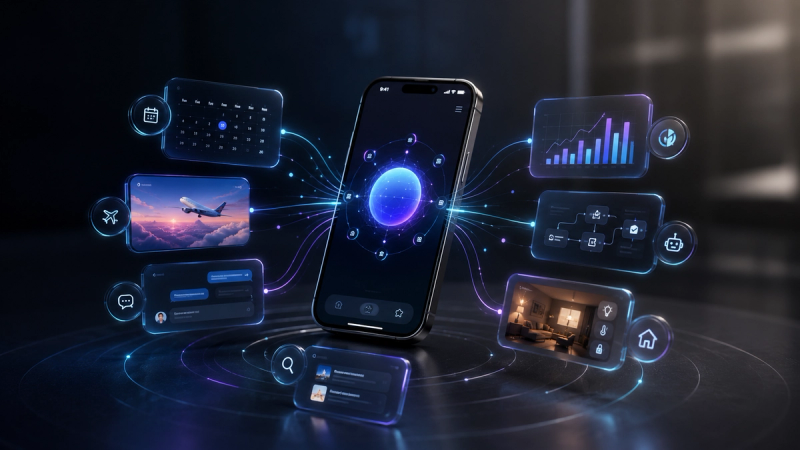
Determining if your mobile phone is being monitored requires a careful assessment of its performance and behaviour. The most common indicators include unusually rapid battery drain, excessive data consumption without a clear cause, unexpected device reboots, and the appearance of unfamiliar applications. Our recommendation is to start by methodically checking these key areas and then consider the fundamental security architecture of your device, as true privacy begins with the hardware itself.
To know if your phone is being monitored, you must look for a pattern of anomalous behaviour rather than a single isolated incident. Spyware and monitoring applications often run continuously in the background, consuming significant resources. This can manifest as your device feeling warm to the touch even when idle, or the screen lighting up without a notification. You might also notice a sudden decline in overall performance, with apps crashing more frequently or taking longer to load. Furthermore, listen for strange background noises during calls, such as clicking or echoing, which could indicate that your conversations are being intercepted. Scrutinising your monthly data usage statement for unexplained spikes is another critical step in identifying potential surveillance.
Key Indicators of a Compromised Device
For executives and high-profile individuals, digital security is not a luxury but a necessity. The threats are sophisticated, often bypassing standard consumer-grade security measures. It is crucial to recognise the subtle signs of a breach.
- Unexplained Battery Depletion: Monitoring software constantly transmits data, which places a heavy demand on the battery. If your phone's battery life suddenly shortens dramatically without a change in your usage habits, it warrants investigation.
- Anomalous Data Usage: Spyware uploads your information—messages, call logs, location data—to an external server. Check your device's data usage statistics. If you see a significant increase that cannot be attributed to your own activity, your phone may be compromised.
- Strange Messages and Notifications: Receiving odd text messages filled with random characters or seeing unusual pop-up notifications can be a sign of spyware attempting to communicate with its control server or a poorly designed application.
- Unexpected Behaviour: This includes the device shutting down or restarting on its own, applications opening or closing without your input, or difficulty turning the device off completely. Such behaviour can indicate that a third party has remote control.
- Degraded Performance: A device burdened by malicious software will often feel sluggish. If your top-tier smartphone suddenly begins to lag, it is a significant red flag.

How Do You Make the Right Choice for Digital Privacy?
While identifying the symptoms of monitoring is important, a truly effective security strategy is proactive, not reactive. Standard consumer smartphones are not designed with the threat models faced by VIPs in mind. Making the right choice involves shifting focus from simply detecting intrusion to selecting a communications platform that is inherently resistant to it. This means prioritising devices with hardware-level encryption, a decentralised architecture, and dedicated secure communication channels that operate outside of conventional networks.
Expert Insight: True digital sovereignty is achieved when security is integrated at the foundational level. Relying solely on third-party applications for privacy is insufficient; the operating system and the hardware must be engineered in unison to create a trusted environment. End-to-end encryption is the standard, but for high-value targets, a decentralised, blockchain-based communication system provides a superior layer of defence against sophisticated interception techniques.
When selecting a device, it is essential to look beyond conventional features and evaluate its security architecture. A phone designed for privacy will offer a distinct, secure operating system alongside the standard one, allowing for complete separation between personal and sensitive activities.
| Security Consideration | Standard Smartphone Approach vs. Enhanced Security Approach |
|---|---|
| Operating System | A single, consumer-grade OS (e.g., Android, iOS) versus a dual-OS system with a separate, hardened OS for secure tasks. |
| Communications | Reliance on third-party apps for encryption versus native, end-to-end encrypted messaging and voice calls. |
| Data Storage | Standard cloud-based storage versus a decentralised, encrypted file storage system. |
| Network Privacy | Data travels through centralised servers versus a decentralised network (Web3) that obscures metadata. |
Our Recommendation for Uncompromising Security
For individuals whose privacy is paramount, we recommend a device engineered from the ground up for security and discretion. The conventional smartphone market simply does not cater to this need. A specialised device that combines robust digital defences with exquisite craftsmanship offers the only comprehensive solution.
Models such as the Metavertu Curve Screen Race Track Design Alligator Skin Web3 Phone are at the forefront of this new paradigm. It is not merely a phone; it is a secure portal to the decentralised web. Its dual-operating system allows users to switch seamlessly to a hardened Web3 OS for encrypted communications and interactions, completely isolating sensitive data from the everyday digital world. This architecture fundamentally mitigates the risk of monitoring.
Similarly, the Agent Q GT (Limited Edition) and the Agent Q Stitched Calfskin models provide state-of-the-art security features, including advanced encryption and a dedicated security chip. These devices are designed for those who require absolute confidence in the integrity of their communications. Even physical security is considered; pairing such a device with an accessory like the ASTER P CALF LEATHER PHONE BAG WALLET CASE ensures the handset is protected from tampering and always within your personal control.
Ultimately, preventing your phone from being monitored is not about installing another app; it is about choosing the right hardware. A device built on the principles of decentralisation and hardware-level security provides a formidable barrier against surveillance. For those seeking the pinnacle of secure luxury, exploring the curated collection of VERTU security-focused smartphones on the official store is the definitive next step.


