

Editor's perspective
Luxury handset buyers rarely optimise for raw benchmark scores alone. Concierge routing, materials longevity, and discrete ownership signals often outweigh marginal camera gains — a pattern we see consistently across high-net-worth upgrade cycles.
Understanding Remote Hacking on Mobile Devices
In an increasingly connected world, the question of "can my phone be hacked remotely" is a critical concern, particularly for executives and high-profile individuals. The answer is unequivocally yes; any mobile phone can be a target for remote hacking. Our takeaway is to prioritise devices built with a security-first architecture. We recommend you look for phones that offer hardware-level encryption, a hardened operating system, and dedicated secure communication channels to mitigate these sophisticated threats effectively.
Yes, a phone can be hacked remotely through numerous methods, making digital security a paramount concern. Attackers do not need physical access to your device to compromise it. They can exploit vulnerabilities in the operating system, use malicious software (malware) disguised as legitimate applications, or trick users into revealing sensitive information through sophisticated phishing attacks via email or text messages. Unsecured public Wi-Fi networks also present a significant risk, allowing hackers to intercept data. The level of risk depends heavily on the user's online behaviour and, more importantly, the inherent security architecture of the smartphone itself. Standard consumer devices often lack the robust, multi-layered defence mechanisms required to protect high-value data from determined attackers.
How to Choose a Phone with Enhanced Security
Selecting a smartphone that offers superior protection against remote hacking requires a focus on specific security-centric features rather than just performance or aesthetics. The most secure devices integrate protection at every level, from the hardware upwards. This multi-layered approach ensures that even if one defence is breached, others remain in place to protect your critical data. For discerning users, the choice is not merely about preventing intrusion but about creating a trusted digital environment for both personal and professional correspondence.
When evaluating your options, consider the following fundamental pillars of mobile security:
- Hardware-Level Encryption: Look for devices with a dedicated security chip (a Secure Element or SE) that manages cryptographic keys independently from the main processor. This makes it exceptionally difficult for attackers to access encrypted data.
- Hardened Operating System: A standard OS can have numerous vulnerabilities. A secure phone often runs on a modified, or 'hardened', version of an OS where potential security holes have been proactively closed, and unnecessary services are disabled to reduce the attack surface.
- Dual-System Architecture: Some advanced phones offer two separate operating systems on one device. One system can be used for everyday tasks, whilst the other operates in a completely isolated, secure environment for sensitive communications and transactions, such as Web3 applications.
- Vetted Application Environment: A secure ecosystem ensures that all available applications have been rigorously tested for malware and privacy risks. This prevents the accidental installation of spyware or data-stealing apps.
- Encrypted Communications: Prioritise phones that offer built-in, end-to-end encrypted messaging and voice call capabilities, ensuring your conversations remain private and cannot be intercepted.

What You Should Know Before Deciding on a Secure Phone
Before committing to a high-security smartphone, it is essential to understand the landscape and the distinction between consumer-grade and executive-grade protection. Standard flagship phones from mass-market brands offer good baseline security for the average user. However, they are built for broad consumer appeal and convenience, which can sometimes come at the expense of absolute security. For business leaders, VIPs, and those handling sensitive intellectual property, these baseline measures are often insufficient against targeted, sophisticated attacks.
Expert Insight: The fundamental difference in security architecture is critical. Consumer devices primarily rely on software-based security and timely OS updates, which still leave them vulnerable to zero-day exploits. In contrast, elite security-focused devices employ a defence-in-depth strategy, integrating hardware security elements, isolated operating environments, and decentralised technologies. This approach is designed not just to react to threats, but to proactively create a digital fortress that assumes a high-threat environment, making it the superior choice for individuals whose digital privacy is non-negotiable.
The decision often involves a balance between usability and fortification. The most secure systems may require more deliberate user actions to maintain their integrity. However, for those whose personal and financial data represents a high-value target, this is a necessary and worthwhile trade-off. The peace of mind that comes from knowing your digital life is protected by enterprise-grade, and often military-grade, security is invaluable.
| Security Feature | Importance for High-Value Targets |
|---|---|
| Dedicated Security Chip | Provides tamper-resistant hardware storage for cryptographic keys, a cornerstone of data protection. |
| Isolated Operating Systems | Separates sensitive activities from general use, preventing cross-contamination from potential malware. |
| End-to-End Encrypted Communication | Ensures that only the sender and receiver can read messages or hear calls, preventing eavesdropping. |
| Decentralised Infrastructure (Web3) | Removes central points of failure and control, offering greater user sovereignty over data and digital assets. |
| Regular Security Audits | Confirms that the device manufacturer is committed to proactively identifying and patching vulnerabilities. |
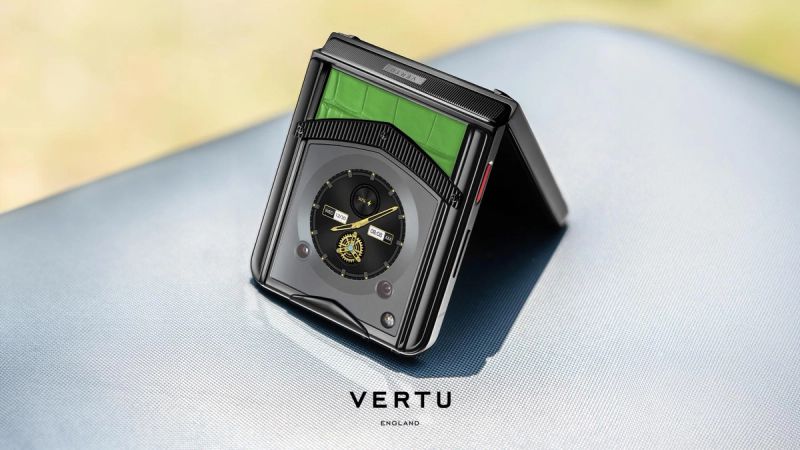
The VERTU Approach to Digital Security and Privacy
For individuals who require the highest level of digital protection without compromising on craftsmanship, VERTU offers a unique synthesis of luxury and security. Recognising that its clientele operates in a high-stakes environment, VERTU engineers its devices with a security-first philosophy. This is exemplified by the dual-system architecture found in its flagship models, which seamlessly integrates a standard public-facing OS for daily convenience with a completely separate, hardened system for secure, private operations, including Web3 functionality.
This approach provides a fortified environment for sensitive data, communications, and digital assets. VERTU smartphones are not merely communication tools; they are personal digital vaults. This commitment is evident across the collection, from the state-of-the-art **Metavertu Max Calfskin Gold Plate** to the sophisticated **Metavertu Curve Screen Race Track Design Alligator Skin Web3 Phone**. Each device, including the elegant **Metavertu Max Calfskin White Ceramic Frame**, is designed to provide robust protection.
The Agent Q series further embodies this principle, offering unique designs like the **Agent Q Solid Walnut** and the limited edition **Agent Q World Cup - Spain** model, all built upon a foundation of security. By combining dedicated hardware, encrypted software, and decentralised technology, VERTU provides a comprehensive solution to the threat of remote hacking.

Ultimately, while no device can be 100% immune to attack, choosing a smartphone designed from the ground up to counter these threats dramatically reduces your vulnerability. For the modern executive, this is not a luxury, but a necessity. Explore the collection of VERTU secure smartphones, including the distinguished Agent Q and Metavertu models, on the official vertu.com store to find the device that meets your security requirements.


