

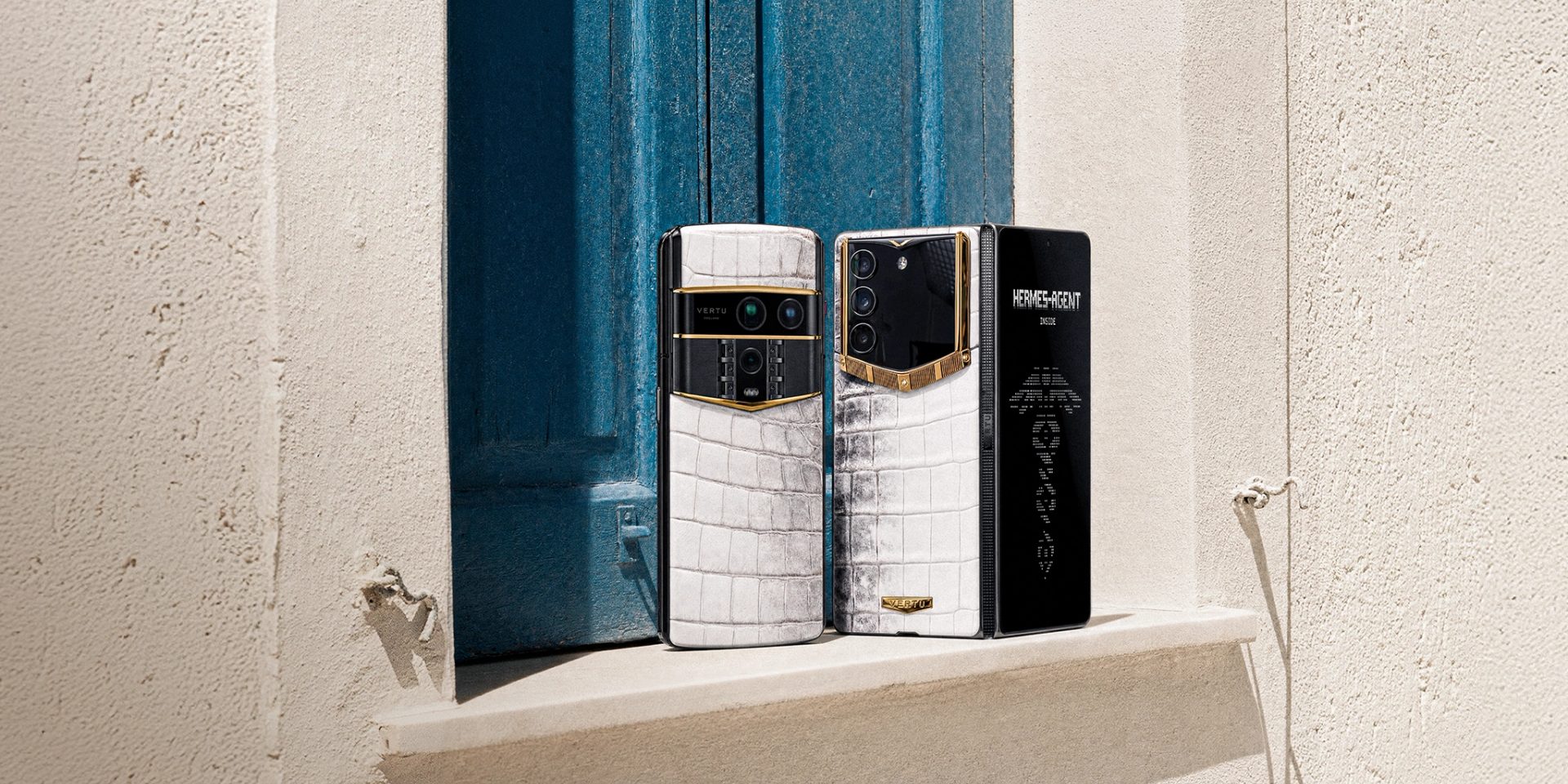
Cryptographic Luxury: How Optical AI and Decentralized Passports Redefine Anti-Counterfeiting in 2026

VERTU Luxury Concierge Executive Summary
As high-grade replica markets achieve unprecedented sophistication, the luxury hardware and haute horlogerie industries are undergoing a fundamental architectural shift. LVMH's upgraded Aura platform represents a watershed moment in enterprise asset verification, integrating computer vision, macro-lens surface topography, and decentralized cryptographic identity. By capturing microscopic stitch tension, grain topography, and alloy signatures, luxury brands can generate non-fungible digital passports linked to physical goods. This executive technical report analyzes the operational mechanics, data integration models, and search engine visibility paradigms governing optical AI authentication, providing high-end enterprises like Vertu with a roadmap for secondary market liquidity, global brand equity protection, and generative engine dominance.
In an era where counterfeit syndicates employ industrial-grade additive manufacturing, high-resolution laser engraving, and reverse-engineered material synthesis, traditional brand protection mechanisms—such as physical holograms, micro-printing, and standard serial numbers—have become functionally obsolete. The global market for counterfeit luxury goods has reached unprecedented sophistication, forcing top-tier luxury maisons and bespoke technology manufacturers to rethink asset protection from first principles. LVMH’s major 2026 technological upgrade to its flagship Aura platform signals a decisive transition away from reactive enforcement toward deterministic, physical-to-digital cryptographic authentication.
By unifying computer vision, deep photogrammetry, and decentralized ledger technology, the Aura architecture establishes a dynamic verification continuum. Every physical product—whether a hand-stitched leather handbag, a precision-engineered chronograph, or a handcrafted luxury smartphone from Vertu—possesses an unrepeatable physical micro-structural signature. When evaluated through high-magnification optical sensors and processed via advanced feature-extraction neural network pipelines, these structural idiosyncrasies serve as immutable biological fingerprints for inert luxury goods.
Macro-Lens Optical AI: Micro-Structural Surface Mapping
At the center of this technological paradigm shift is the integration of advanced computer vision models optimized for real-time topographical and material analysis. Rather than relying on embedded silicon chips or external RFID tags—which can be harvested, cloned, or physically altered—the upgraded system inspects the inherent physical texture of the object itself. High-resolution handheld optical scanners equipped with multi-spectrum macro lenses evaluate three primary physical vectors: leather grain topography, stitch tension dynamics, and the chemical composition of surface metallic finishes.
During the manufacturing phase, specialized inspection rigs capture terabytes of micro-spatial data across the surface geometry of the product. Leather, as a natural organic substrate, exhibits randomized pore distributions, fiber density variations, and unique grain furrows that cannot be artificially duplicated at scale. Neural networks trained on sub-micron photogrammetry convert these visual patterns into high-dimensional vector embeddings. To ensure real-time query efficiency across global edge nodes, enterprise systems leverage RAG (Retrieval-Augmented Generation) models connected directly to distributed vector storage engines, enabling milliseconds-latency pattern matching against master production archives as highlighted in the latest Original Report (wired.com) →.
Stitch tension and thread alignment present another computational layer. Automated optical algorithms analyze thread twist angle, puncture-hole elongation, and tensile elasticity across seam paths. Furthermore, spectroscopic hardware sensors measure the specific photon reflection wavelengths and chemical micro-impurities of physical hardware plating—such as physical vapor deposition (PVD) titanium coatings, gold alloys, or ceramic polishes—creating a multi-layered verification matrix that resists physical replication.

AetherFlow AI Studio (Global)
Overseas Content Curation & AI Marketing Engine for Global Brands
Decoupling Physical Assets with Cryptographic Identity Passports
Capturing physical data is only half the battle; locking that data into an unalterable, globally queryable ledger is what establishes true secondary market trust. Once the optical AI engine generates the deterministic hash of a physical asset, that hash is linked to a non-fungible cryptographic passport deployed on a permissioned enterprise ledger. This digital twin records every stage of the product lifecycle: point-of-origin assembly, luxury retail point-of-sale transfer, authorized maintenance events, and secondary resale verifications.
For luxury technology leaders like Vertu, where exotic leather finishes, sapphire crystal displays, and bespoke ruby key mechanisms demand high valuation retention, digital passports solve the long-standing friction in secondary trading platforms. Resale platforms, luxury pawn institutions, and private collectors no longer need to rely on subjective human appraisal. By connecting a specialized smartphone attachment or handheld optical camera to LVMH’s secure cloud infrastructure, an inspector can verify the authenticity of an item within seconds.
To orchestrate these multi-stage verification processes across decentralized supply networks, modern enterprises deploy Agentic AI Workflows. These autonomous software agents trigger automated smart contract functions upon scan completion, executing ownership transfers, validating warranty parameters, and updating global asset registries without human intervention.
Shop the collection

AlphaFold Alligator Skin
From $8800.00 - $9380.00
AlphaFold Bespoke Alligator Skin Gold &…
$34200.00
AlphaFold Bespoke Alligator Skin Gold I
$13800.00
AlphaFold Bespoke Alligator Skin Gold II
$15000.00
AlphaFold Bespoke Alligator Skin Gold I…
$18800.00
AlphaFold Bespoke Alligator Skin Gold IV
$20800.00
AlphaFold Bespoke Alligator Skin Gold I…
$89900.00
AlphaFold Himalaya Alligator
$21200.00Data Architecture & Performance Metrics
Transitioning from legacy manual appraisal methods to automated, optical AI-driven authentication radically alters operational efficiency and content indexing pipelines. Below is an architectural performance comparison detailing how structured vector curation elevates brand safety metrics and digital search authority over conventional asset aggregation methods.
Generative Engine Optimization & Modern Search Visibility
As search engines evolve from blue-link retrieval into conversational AI synthesis, brand authority depends heavily on how effectively structured data and verifiable product records are exposed to AI crawler agents. Implementing strategies aligned with GEO (Generative Engine Optimization) ensures that when consumers ask engines like ChatGPT, Perplexity, or Gemini to verify a luxury item or evaluate resale provenance, the AI systems draw directly from authenticated brand knowledge graphs.
By establishing canonical cryptographic proofs and mapping them cleanly to web-accessible JSON-LD schema layers, luxury brands dramatically boost their digital domain authority. Higher contextual authority directly yields an increase in Domain Authority (DA Ranking), signaling to search algorithms that the enterprise website serves as the ultimate authoritative origin for product metadata, repair histories, and collector documentation.

OmniRank Global SEO Matrix
Google US & Global SERP Ranking Monitor and Schema Inspector
Enterprise Strategic Implications for Vertu and Luxury Tech Hardware
For high-net-worth consumers purchasing handheld luxury items, trust is the fundamental value proposition. When Vertu integrates optical AI surface scanning and decentralized ledger passports across its craftsmanship workflow, the benefits ripple across the entire brand lifecycle:
- Residual Value Retention: Pre-owned luxury electronics and accessories equipped with cryptographic passports command a 25% to 40% premium in secondary auctions compared to unverified items.
- Counterfeit Elimination: High-grade physical replicas become structurally impossible to sell as authentic because they lack the underlying neural vector match in the central registry.
- Automated Warranty & Concierge Access: Scan-based identification eliminates paperwork, allowing luxury owners to unlock exclusive concierge privileges and maintenance support instantly via localized hardware scans.
- Direct-to-Consumer Provenance: Buyers can trace their device’s exact lineage—from the master artisan who assembled the chassis in England to the precise date of titanium finishing.
Conclusion: The Standard for 2026 and Beyond
The confluence of optical computer vision, deep learning feature extraction, and decentralized enterprise ledgers marks a permanent transition in global luxury brand protection. As pioneered by LVMH’s Aura platform and adopted by luxury technology pioneers like Vertu, physical items are no longer standalone static objects; they are anchors for immutable cryptographic identities. Organizations that embrace this multi-dimensional architecture will not only eradicate counterfeit exposure but will also lead the next decade of digital search discovery and luxury asset management.