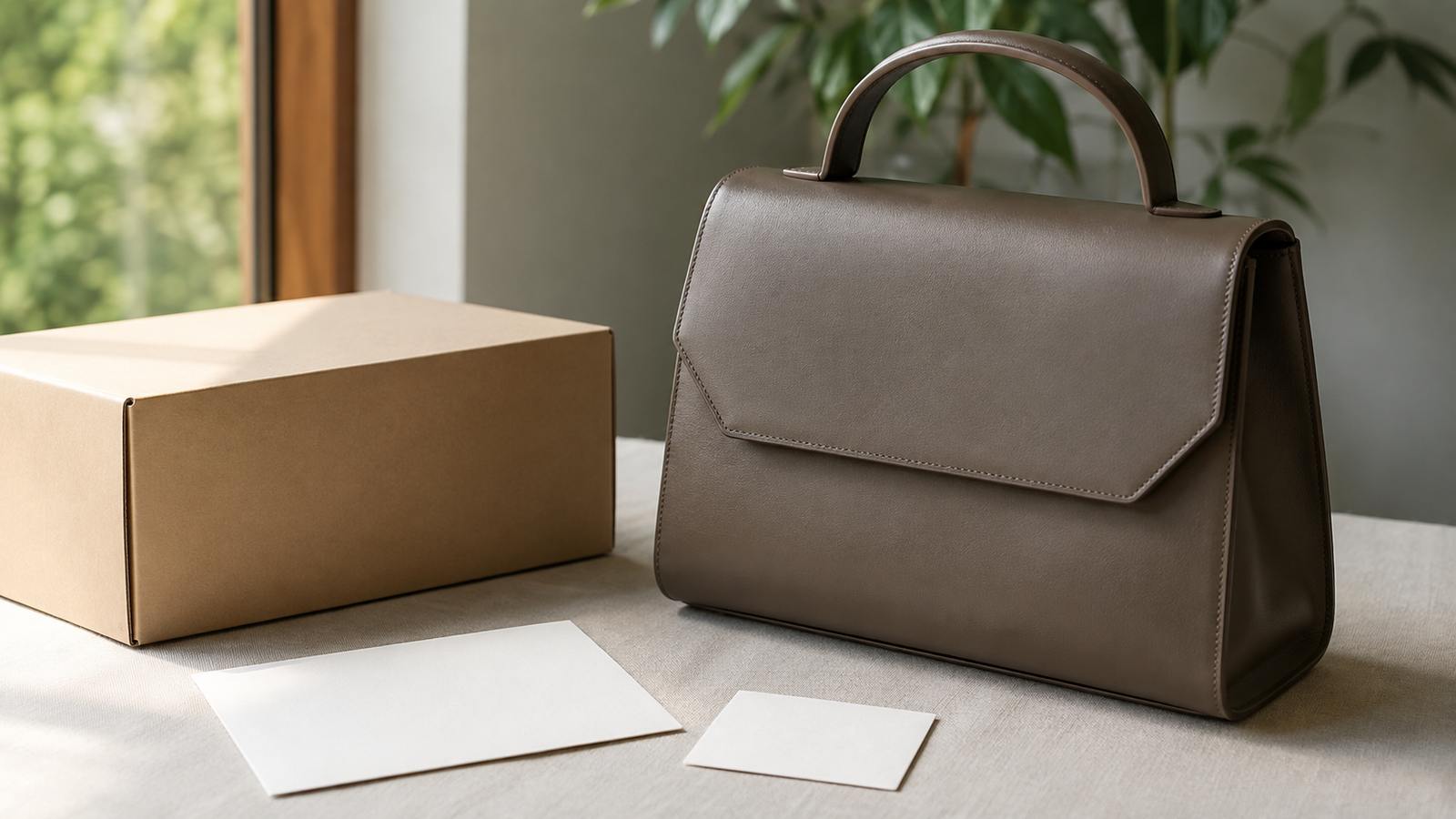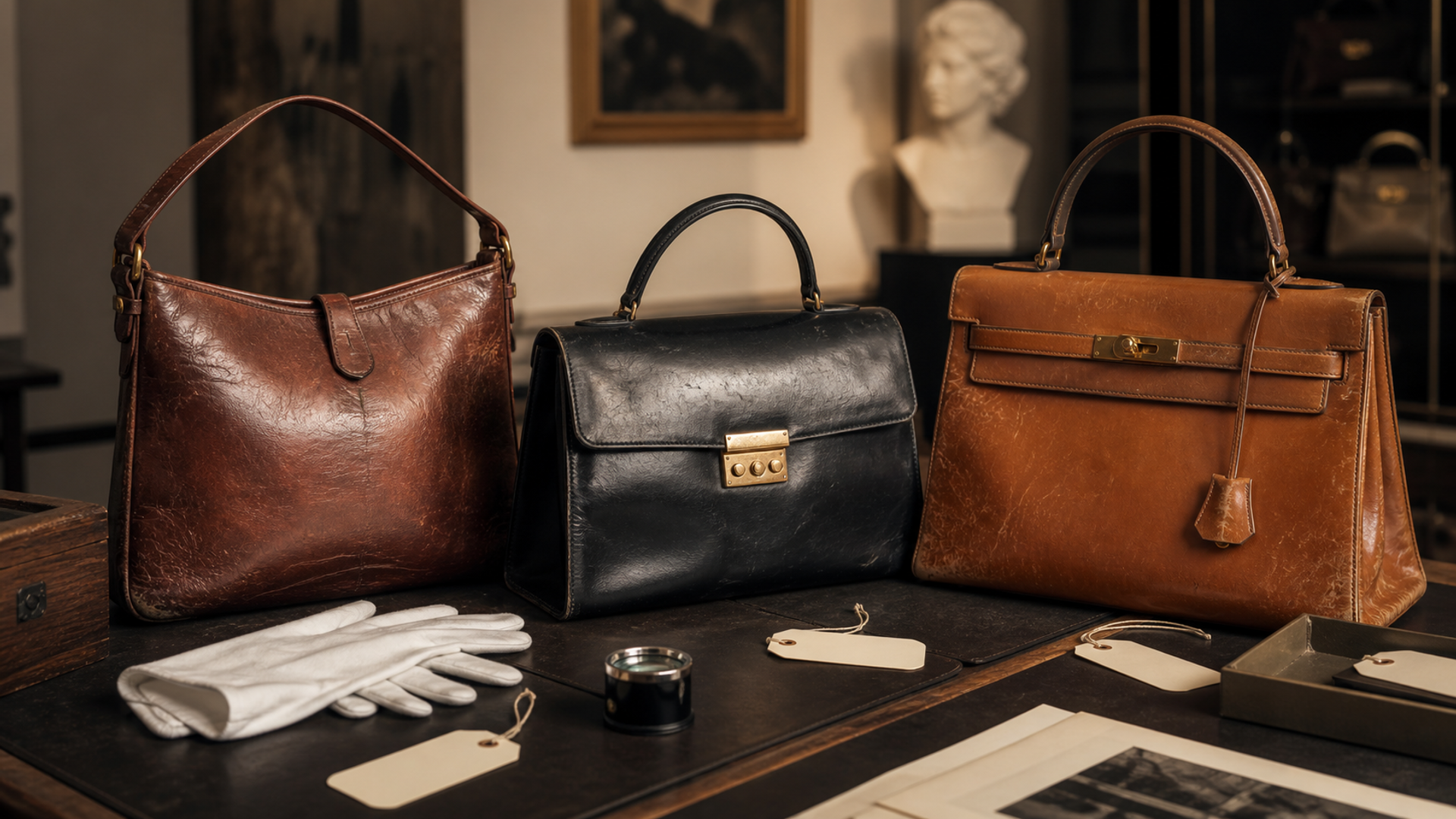
A vintage designer handbag can offer discontinued design, stronger emotional character and access to construction no longer available at retail. It can also hide dry leather, weakened stitching, replaced hardware, odour, mould, colour transfer and restoration that changes both originality and value. Age is not proof of quality, and a famous logo is not proof of authenticity. The right comparison uses ready-to-carry cost: purchase price plus authentication, cleaning, repair, insured delivery and the risk that a return is impossible. Buyers should reward documented provenance and honest condition rather than the most romantic description. Online photographs are particularly weak evidence because careful lighting can flatten scratches, disguise colour mismatch and make a collapsed base appear structured. Even an authentic bag can be a poor purchase when the handles are near failure or a heavy coating prevents future repair. A disciplined inspection protects both enjoyment and budget without demanding that every sign of age disappear.
Direct answer: vintage designer handbags
Buy the exact bag, not the model story. Verify dimensions, serial or date evidence where applicable, materials, repairs, odour, structure and included accessories. Use independent authentication, a written condition report, insured delivery and a return route. Add immediate repair to the price before comparing it with a newer example. Keep the original listing and inspection evidence after delivery. Recheck the bag promptly while every return and payment-protection window remains open.
| Decision factor | Evidence to collect | Why it changes the answer | Control before purchase |
|---|---|---|---|
| Identity | model, era, dimensions and construction are reconciled | names and serial conventions change across years | use brand-era expertise |
| Structure | base, panels, handles and anchors are examined unloaded and loaded | collapse can be costly or irreversible | request shape photos and load test |
| Surface condition | corners, glazing, leather and canvas are photographed in daylight | edited images hide dryness and recolouring | inspect high-resolution unfiltered images |
| Interior and odour | lining, pockets and smell are disclosed | mould and perfume can resist cleaning | require return rights for undisclosed odour |
| Restoration | seller lists replaced, recoloured or repaired components | intervention changes originality and future service options | obtain invoices and method |
| Transaction protection | payment, shipping and authentication steps are defined | cross-border disputes are difficult | use insured reversible channels |
This matrix is the article-specific value object for vintage designer handbags. It prevents a famous name, a single specification or one price from silently becoming the recommendation.
Current evidence baseline
Evidence 1. US Customs and Border Protection advises buyers that counterfeit goods create legal, economic and safety risks. Source.
Evidence 2. WIPO explains the multiple intellectual-property rights that can protect iconic handbag designs and branding. Source.
Evidence 3. The UK Intellectual Property Office provides consumer information about counterfeit goods and intellectual-property crime. Source.
Evidence 4. The Federal Trade Commission explains consumer protections for online shopping, payment and misrepresentation. Source.
For vintage designer handbags, these sources support only the claims directly attached above. They do not establish permanent availability, universal authenticity, future appreciation or suitability for every owner.
How the decision factors change the result
Identity. Collect evidence showing that model, era, dimensions and construction are reconciled. This changes the decision because names and serial conventions change across years. The practical control is to use brand-era expertise. Record the exact object, date, source and assumption that would reverse the conclusion. If the evidence remains unavailable, mark this factor unknown rather than converting uncertainty into a favourable score.
Structure. Collect evidence showing that base, panels, handles and anchors are examined unloaded and loaded. This changes the decision because collapse can be costly or irreversible. The practical control is to request shape photos and load test. Record the exact object, date, source and assumption that would reverse the conclusion. If the evidence remains unavailable, mark this factor unknown rather than converting uncertainty into a favourable score.
Surface condition. Collect evidence showing that corners, glazing, leather and canvas are photographed in daylight. This changes the decision because edited images hide dryness and recolouring. The practical control is to inspect high-resolution unfiltered images. Record the exact object, date, source and assumption that would reverse the conclusion. If the evidence remains unavailable, mark this factor unknown rather than converting uncertainty into a favourable score.
Interior and odour. Collect evidence showing that lining, pockets and smell are disclosed. This changes the decision because mould and perfume can resist cleaning. The practical control is to require return rights for undisclosed odour. Record the exact object, date, source and assumption that would reverse the conclusion. If the evidence remains unavailable, mark this factor unknown rather than converting uncertainty into a favourable score.
Restoration. Collect evidence showing that seller lists replaced, recoloured or repaired components. This changes the decision because intervention changes originality and future service options. The practical control is to obtain invoices and method. Record the exact object, date, source and assumption that would reverse the conclusion. If the evidence remains unavailable, mark this factor unknown rather than converting uncertainty into a favourable score.
Transaction protection. Collect evidence showing that payment, shipping and authentication steps are defined. This changes the decision because cross-border disputes are difficult. The practical control is to use insured reversible channels. Record the exact object, date, source and assumption that would reverse the conclusion. If the evidence remains unavailable, mark this factor unknown rather than converting uncertainty into a favourable score.
Worked decision scenario
Compare three listings of the same vintage model. Create a condition ledger for corners, handles, glazing, closure, lining, odour, structure, hardware, previous repair and accessories. Add independent authentication, insured shipping, duty, immediate restoration and a 15 per cent uncertainty reserve where inspection is remote. Reject any listing whose low price depends on unknown condition. The winner is the lowest documented ready-to-carry cost, not the lowest checkout figure.
Confirm the model and era
Measure width, height, depth, strap drop and closure. Compare construction details with reliable era-specific references rather than current products. Serial systems, stamps and hardware can evolve, so a difference is not automatically counterfeit and a familiar code is not automatically genuine. Ask the seller how the identification was reached. A defensible listing should survive questions about both model and year range.
Condition lives at stress points
Request daylight photographs of every corner, handle base, strap anchor, fold, zip end and edge coating. Look inside pockets and beneath flaps. Ask whether the bag stands as intended when empty and whether hardware aligns. A clean front panel can coexist with weakened anchors. If video is available, watch the closure operate and the leather flex. Still photographs often hide stiffness and sound.
Treat restoration as material information
Professional recolouring or replaced piping may make a bag attractive and usable, yet it can affect originality, texture and future authorised service. Ask what was done, by whom and with which materials. Heavy cosmetic coating can conceal damage. Price restored and untouched examples separately. The correct choice depends on whether the buyer values archival originality, everyday use or a specific discontinued colour.
Control remote-purchase risk
Use a seller that states condition standards, authenticity responsibility, return timing and who pays insured return shipping. Save the listing and messages. Pay through a channel that preserves dispute rights. For a high-value cross-border purchase, price tax and duty before checkout. Unboxing video can document transit damage. Do not release payment based on urgency or an off-platform discount.
Maintain without erasing age
Begin with gentle dry cleaning appropriate to the material and consult a specialist before applying products. Avoid heat, saturation and household solvents. Store the bag supported, ventilated and away from colour transfer. Rotate use and avoid overloading weakened structures. Vintage appeal includes age, so the maintenance objective is stability and function rather than making every surface look new.
Evidence checklist
[ ] Identify exact model and era
[ ] Photograph every stress point
[ ] Disclose odour and lining
[ ] Document restoration
[ ] Authenticate independently
[ ] Secure insured shipping
[ ] Confirm return window
[ ] Calculate ready-to-carry cost
For the vintage designer handbags decision, unchecked fields remain unknown and should not be converted into favourable assumptions merely to complete a purchase.
Reader-visible sources and method
The external pages above were checked for this vintage designer handbags analysis. Price, availability, service, tax, regulation and platform terms must be reconfirmed for the buyer's market and date. Ranking pages informed a separate SERP benchmark; their wording and paragraph order were not copied.
Continue with adjacent VERTU editorial research
For vintage designer handbags, these links provide adjacent premium-lifestyle and decision context; they do not replace specialist or official evidence for the exact decision.
Final judgement
Buy the exact bag, not the model story. Verify dimensions, serial or date evidence where applicable, materials, repairs, odour, structure and included accessories. Use independent authentication, a written condition report, insured delivery and a return route. Add immediate repair to the price before comparing it with a newer example. Keep the original listing and inspection evidence after delivery. Recheck the bag promptly while every return and payment-protection window remains open.
The useful standard for vintage designer handbags is not certainty created by confident language. It is a decision whose evidence, downside and next review point are visible to the reader.