Blancpain traces its name to 1735. Vacheron Constantin was founded in 1755 and makes the narrower, important claim of being the oldest watch manufacture in uninterrupted operation. Breguet opened its Paris workshop in 1775. These statements sound similar, but they are not interchangeable. A serious history of old watch brands must separate a founding record from continuous production, present-day corporate ownership and the survival of original workshops or archives. For the adjacent decision, see our men's luxury watch brands buyer's map.
That distinction makes the history more interesting, not less.
Ten historic houses at a glance
| Brand | Founding date commonly used by the house | What collectors should verify |
|---|---|---|
| Blancpain | 1735 | Brand history, later interruption and revival |
| Vacheron Constantin | 1755 | Documented uninterrupted activity |
| Breguet | 1775 | Paris workshop, inventions and surviving archives |
| Girard-Perregaux | 1791 | How the house links earlier roots to the modern company |
| Baume & Mercier | 1830 | Baume family origins and later Mercier partnership |
| Longines | 1832 | Factory history and serial-number archives |
| Jaeger-LeCoultre | 1833 | LeCoultre workshop and later Jaeger relationship |
| Patek Philippe | 1839 | Patek, Czapek and the later Philippe partnership |
| Ulysse Nardin | 1846 | Marine chronometer heritage |
| Omega | 1848 | Louis Brandt workshop and adoption of the Omega name |
The table follows dates used in the brands' own histories. It is not a ranking of quality, rarity or investment performance.
1. Blancpain, 1735
Blancpain's official history begins when Jehan-Jacques Blancpain registered as a watchmaker in Villeret village records in 1735. The brand therefore describes itself as the world's oldest watch brand.
Collectors should know the continuity caveat. The name passed through different owners and production histories before its modern revival. That does not erase the 1735 record, but it makes Blancpain's claim different from Vacheron Constantin's uninterrupted-manufacture claim.
What to look for today: Villeret dress watches, Fifty Fathoms dive-watch history and the modern manufacture's approach to complicated movements.
2. Vacheron Constantin, 1755
In 1755, 24-year-old Jean-Marc Vacheron hired an apprentice in Geneva. The surviving contract acts as the house's birth record. Vacheron Constantin states that it has remained active without interruption since then.
This continuity gives collectors a chain of production, archives and craft transmission rather than a name revived after dormancy. The house's Historiques collection makes that archive visible through modern interpretations of past references.
What to look for today: hand finishing, Geneva traditions, Métiers d'Art and the relationship between historic references and current Historiques models.
3. Breguet, 1775
Abraham-Louis Breguet opened his workshop on Paris's Île de la Cité in 1775. His work shaped watchmaking language and mechanisms far beyond the company that still bears his name. Breguet's official records also preserve orders and relationships with historic clients.
The modern house is Swiss-owned and manufactures in Switzerland, while its origin story is Parisian. That cross-border history is part of Breguet, not a contradiction to hide.
What to look for today: engine-turned dials, Breguet hands and numerals, Classique references and the house's documented archive culture.
4. Girard-Perregaux, 1791
Girard-Perregaux uses 1791 as its foundation date, linking the house to Jean-François Bautte and later to the partnership represented by the Girard-Perregaux name. The corporate genealogy is more complex than a single workshop opening.
Collectors should read the timeline rather than repeat the date alone. The Three Bridges architecture is a clearer expression of the brand's identity than age by itself.
What to look for today: Bridges watches, Laureato design and well-documented vintage movements.
5. Baume & Mercier, 1830
The Baume brothers established their watch business in 1830. The later partnership with Paul Mercier produced the current name and expanded the design direction of the house.
This is a useful example of why brand age can describe a lineage rather than an unchanged sign above one door.
What to look for today: accessible Swiss mechanical watches, Clifton models and the house's balance between formal and everyday designs.
6. Longines, 1832
Auguste Agassiz entered watchmaking in Saint-Imier in 1832, the date Longines uses for its origin. The company later consolidated production at the site that gave Longines its name. Its winged-hourglass trademark and extensive serial records are especially useful to vintage owners.
What to look for today: archival extracts, historic chronographs, pilot watches and restrained dress designs.
7. Jaeger-LeCoultre, 1833
Antoine LeCoultre founded his workshop in the Vallée de Joux in 1833. The later relationship with Parisian watchmaker Edmond Jaeger eventually formed Jaeger-LeCoultre.
The house is often called the watchmaker's watchmaker because of its long movement-making role, but collectors should focus on specific calibres and commissions rather than a slogan.
What to look for today: Reverso design, Atmos clocks, ultra-thin calibres and high complications.
8. Patek Philippe, 1839
The company began in 1839 through Antoni Patek and Franciszek Czapek. Adrien Philippe later joined, and the Patek Philippe name followed. The partnership history matters because it explains why early pieces and records may use different names.
What to look for today: provenance, archive extracts, case and movement matching, complications and the condition of highly finished components.
9. Ulysse Nardin, 1846
Ulysse Nardin founded his company in Le Locle in 1846. The house became closely associated with marine chronometers and precision instruments used at sea.
Its collector interest is broader than nautical branding. Historic observatory work, pocket chronometers and modern experimental movements each tell a different part of the story.
What to look for today: marine chronometer lineage, Freak engineering and documented vintage pieces.
10. Omega, 1848
Louis Brandt opened a workshop in La Chaux-de-Fonds in 1848. The company later adopted the Omega name after the success of the Omega calibre. That means the business predates the name now on the dial.
What to look for today: serial research, chronometer and sports-timing history, Speedmaster provenance and the difference between an original configuration and later service parts.
Why the "oldest" claim is difficult
At least five questions can change a ranking:
Are we dating a founder's first workshop or the modern legal company?
Did production continue without interruption?
Was the brand name dormant and later revived?
Did a merger create a new identity from older businesses?
Does the surviving archive support the marketing date?
This is why Vacheron Constantin can be the oldest manufacture in continuous operation while Blancpain can use an earlier origin date. Both statements can be defensible when written precisely.
Does an old name make a watch more collectible?
No. Age is context, not a valuation model. Collectors pay for a combination of reference, condition, rarity, provenance, originality, movement, design and current demand. A mediocre or heavily altered watch from an old company does not become important by inheritance.
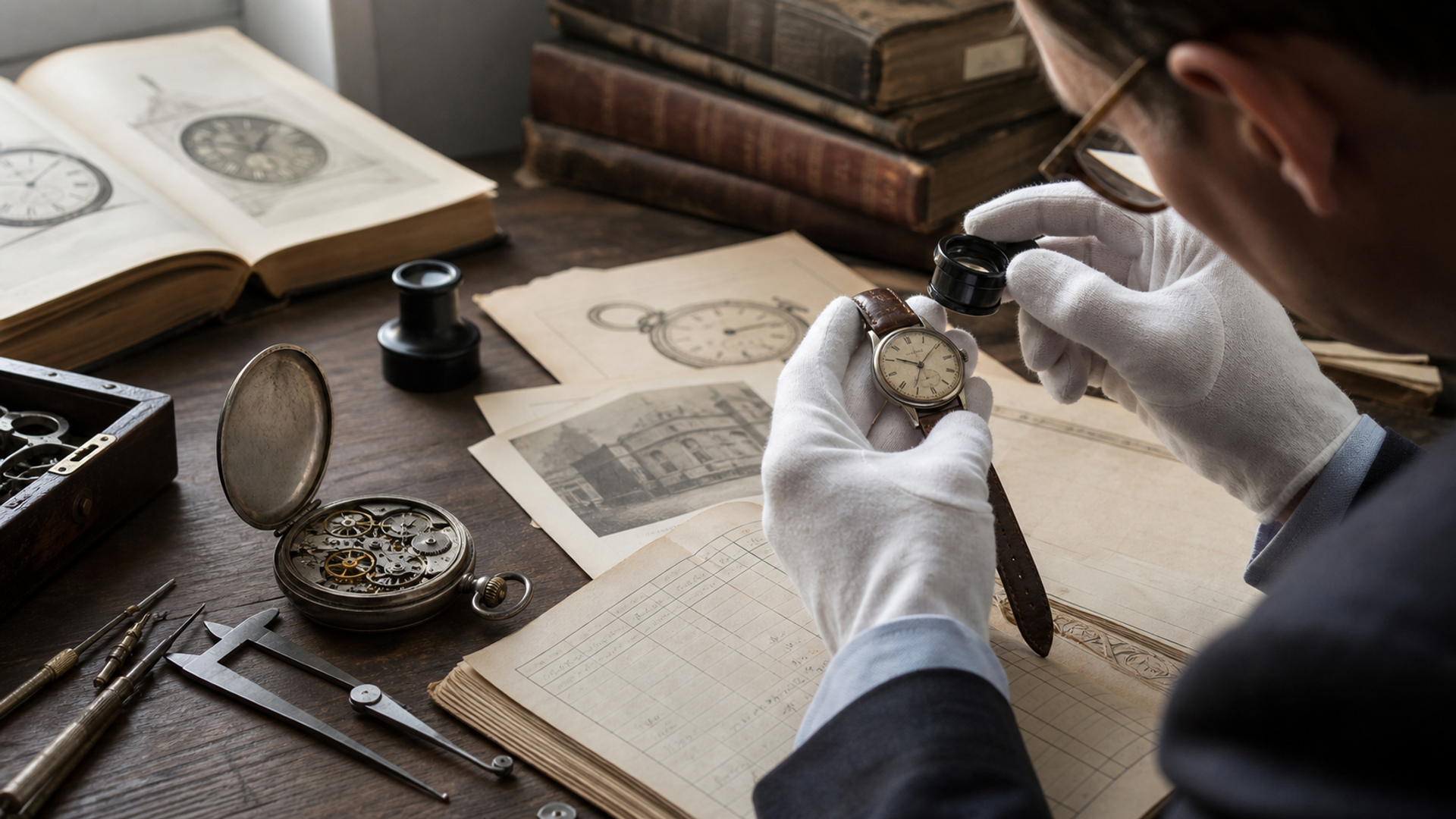
History becomes valuable when it can be attached to the object. An archive extract, known production run, original invoice or documented service record is more useful than a generic paragraph about heritage.
Four history traps in watch listings
The first trap is calling every old company a manufacture. Some houses designed and assembled watches while buying movements or components from specialists. That was normal watchmaking practice, not evidence of fraud.
The second is treating a founder's date as uninterrupted corporate existence. A brand may stop production, change owners or be revived. The date can remain culturally important, but the wording should change.
Third, sellers sometimes attach a famous house's entire history to an unrelated reference. A 1990s quartz watch does not become an eighteenth-century object because the logo has an old origin. Research what the specific model contributed.
Fourth, "archive" is used loosely. A manufacturer-issued extract, an auction-house description and a dealer's typed certificate carry different evidential weight. Ask who issued the document, what records were consulted and whether the paper confirms production, sale, configuration or merely a serial-number range.
Restoration can erase the evidence
An old watch may need work to remain wearable, but aggressive restoration can remove the surfaces and components that connect it to history. Polished lugs, a refinished dial, replaced hands and a modern service bezel may improve appearance while reducing collector interest. Agree on the conservation goal before service and request the return of replaced parts where policy allows.
Photograph the case, dial, movement and numbers before sending the watch away. Ask for a written estimate that separates essential mechanical work from optional cosmetic work. If originality matters, instruct the workshop not to polish, refinish the dial or replace visible components without approval. A careful service preserves both function and the evidence future collectors will need.
A collector's verification checklist
Compare case, movement and dial numbers where the brand provides them.
Request an archive extract or official history when available.
Separate original components from period-correct and later service parts.
Research the exact reference, not only the brand.
Treat investment claims with scepticism; future resale is never guaranteed.
Budget for specialist inspection and service before purchase.
Verdict
Blancpain has the earliest date on this list. Vacheron Constantin has the strongest uninterrupted-operation claim. Breguet has an unusually influential founder and archive. The other houses show how workshops, partnerships, factories and names evolve over two centuries.
For a collector, the date is the opening line. The watch itself still has to prove the rest of the story.