A Labubu figure can combine vinyl or another plastic, textile pile, paint, adhesive, metal hardware, card tags and printed packaging. Those materials do not age in the same way. Bright display light can fade colour and weaken fibres; high humidity supports mould and can affect tags or metal; pressure bends ears and boxes; an airtight container can trap moisture or degradation products. Collector storage therefore starts with the most vulnerable component, not the most visible one.
This guide adapts preventive-conservation principles to ordinary home display. It does not claim that a toy needs museum climate control, and it does not substitute for Pop Mart's product-specific instructions. The goal is proportional care: avoid direct sun, keep conditions moderate and stable, support the object without compression, handle it cleanly and preserve the identity trail separately.
> The short answer: Keep mixed plush-and-vinyl figures out of direct sunlight, below damp conditions, supported without pressure and documented with tags and receipts. Avoid sealing a recently handled or humid object in an unventilated box.
The evidence boundary
The Canadian Conservation Institute notes that light damage to textiles is cumulative and irreversible, while damp conditions encourage mould. Its plastics guidance identifies stress, pollutants, light, temperature and humidity as major deterioration agents. These are collection-level principles, not a Labubu-specific guarantee. Use them to rank risks, then follow any official care label supplied with the figure.
At-a-glance decision matrix
| Check | Current signal | Decision use |
|---|---|---|
| Light exposure | Direct sun, bright window light and display hours | Reduce dose |
| Humidity and mould | Condensation, musty smell, spots or consistently damp room | Isolate and dry the environment |
| Plastic enclosure | Sticky film, odour, fogging or no ventilation | Avoid trapped emissions |
| Physical support | Bent ears, flattened pile, leaning body or box pressure | Support the shape |
| Dust and handling | Surface grime, skin oils and frequent repositioning | Prevent before cleaning |
| Tags and packaging | Creases, acidic contact and detached identity material | Store flat and linked |
| Inspection rhythm | Seasonal climate changes and condition drift | Review twice yearly |
The matrix is deliberately asymmetric: a hard failure in identity, safety, compatibility or policy wording cannot be cancelled by several attractive features. Work from the controlling source to the practical test, and date every fact that can change.
Light exposure
Light damage accumulates through intensity and time. Rotate display, use blinds or UV control and turn cabinet lighting off when nobody is viewing. Do not trust a clear acrylic box to block all damaging radiation unless its specification is known.
Decision: Reduce dose. Evidence to retain: Direct sun, bright window light and display hours.
Humidity and mould
Textiles and surface soils can support mould at high relative humidity. A cheap humidity monitor is more useful than guessing. Do not brush suspected mould through the collection or seal it with neighbouring pieces; isolate it and seek conservation advice for valuable objects.
Decision: Isolate and dry the environment. Evidence to retain: Condensation, musty smell, spots or consistently damp room.
Plastic enclosure
Some plastics release volatile products as they age, and sealed storage can concentrate them. Use stable archival materials and modest ventilation unless a conservator specifies a sealed system with an appropriate sorbent. Never put a damp figure straight into a bag.
Decision: Avoid trapped emissions. Evidence to retain: Sticky film, odour, fogging or no ventilation.
Physical support
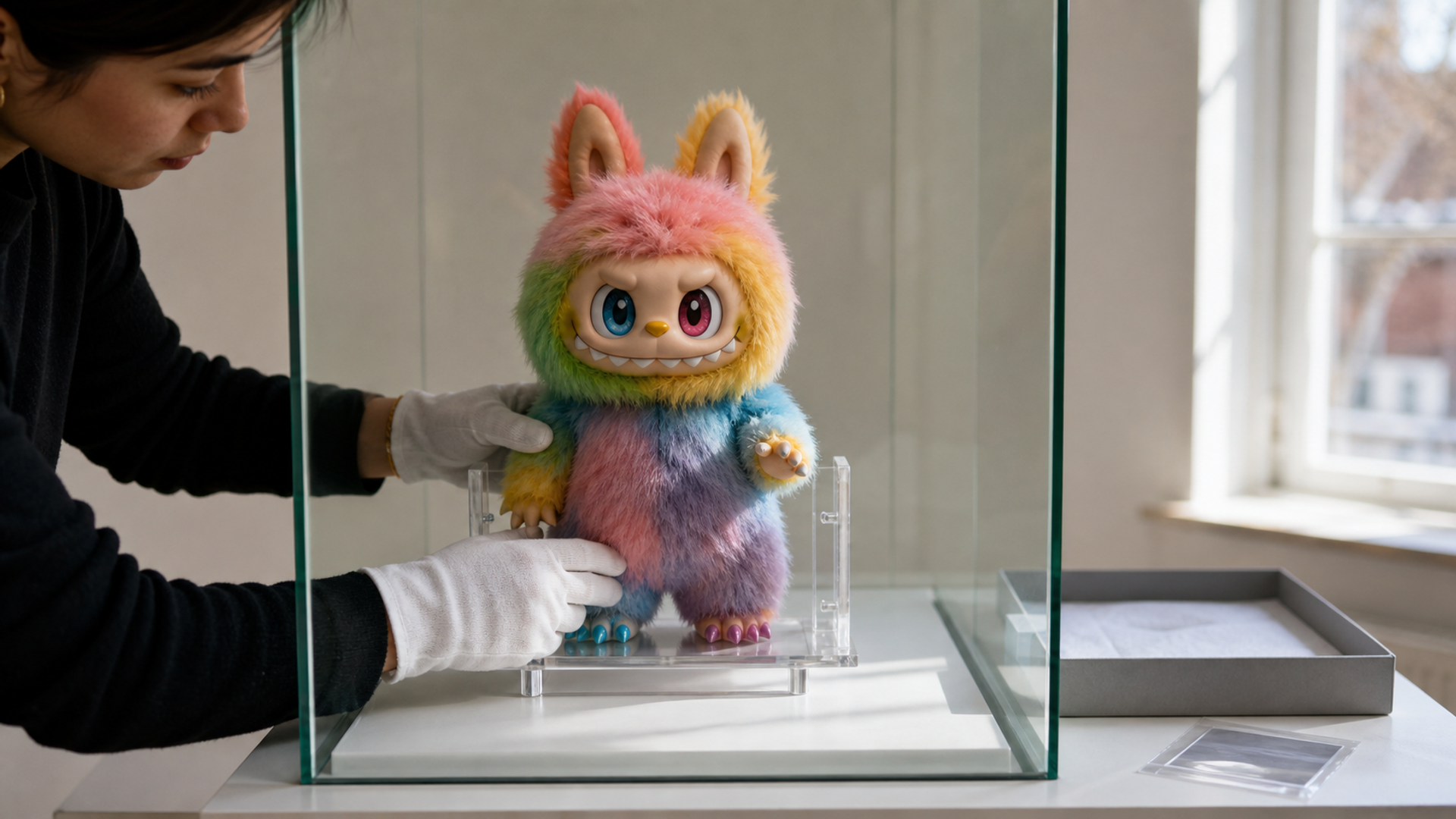
Use an inert, padded support that spreads weight without dye transfer. Leave clearance around projecting parts. Do not hang a heavy figure indefinitely from a small loop if the design was intended for short-term carrying rather than permanent display.
Decision: Support the shape. Evidence to retain: Bent ears, flattened pile, leaning body or box pressure.
Dust and handling
Clean hands and a dust enclosure reduce the need for intervention. Avoid household solvents, wipes and aggressive brushing unless the maker approves them. Test any cleaning method on an inconspicuous area and stop if colour or pile changes.
Decision: Prevent before cleaning. Evidence to retain: Surface grime, skin oils and frequent repositioning.
Tags and packaging
Tags can aid identification but can scratch, crease or stain adjacent material. Photograph them attached, then decide whether to keep them in place or in a labelled archival sleeve. Never invent a provenance chain after separation; use an inventory number that links object, tag, receipt and box.
Decision: Store flat and linked. Evidence to retain: Creases, acidic contact and detached identity material.
Inspection rhythm
Photograph the same angles under similar light and note odour, tackiness, fading, distortion, corrosion and pest evidence. A short repeatable check catches change earlier than a perfect display inspected only once.
Decision: Review twice yearly. Evidence to retain: Seasonal climate changes and condition drift.
Put the framework into a real decision
A collector displays six figures on a sunny shelf above a radiator. Two sit in clear bags, one is compressed against a case wall and every paper tag remains attached. The first action is not to buy a more expensive cabinet. Move the shelf away from direct sun and heat, relieve pressure, inspect for damp or sticky surfaces and photograph each item and tag. Only then choose a dust enclosure with enough space and sensible air exchange.
Mixed materials require mixed care
A collectible figure can combine plastic, textile fur, thread, adhesives, paint, paper tags and metal fittings. Each responds differently to light, heat, moisture, pressure and cleaning. A sealed display may reduce dust while trapping moisture; a bright open shelf may improve ventilation while accelerating fading.
Use the most vulnerable component to set display conditions. Keep figures away from direct sun and strong spotlights because light damage is cumulative and usually irreversible. Avoid radiators, hot window bays and rapid temperature changes. Leave space around fur and projecting parts so they are not permanently compressed, and support the body rather than hanging weight from ears, clothing or tags.
Paper tags deserve a separate decision. If a tag affects provenance, photograph both sides, record how it is attached and avoid repeated bending. Do not laminate, tape or write on it. An archival sleeve beside the figure may reduce handling, but first decide whether detaching the tag changes condition or authenticity. Retain packaging dry and unfolded where practical, without forcing painted surfaces against printed card or plastic windows.
Inspect monthly for musty odour, condensation, tackiness, colour transfer, insects, fur matting and stress at joints. If mould is suspected, isolate the object and seek a conservator; household sprays can stain textiles, soften plastics or disturb paint. The Canadian Conservation Institute evidence used here is general collection care, not a Pop Mart-specific instruction. Adapt it cautiously and never describe a treatment as maker-approved unless the maker says so.
Keep a dated decision record
A useful record for this specific decision contains the following fields: Light exposure: Direct sun, bright window light and display hours; Humidity and mould: Condensation, musty smell, spots or consistently damp room; Plastic enclosure: Sticky film, odour, fogging or no ventilation; Physical support: Bent ears, flattened pile, leaning body or box pressure; Dust and handling: Surface grime, skin oils and frequent repositioning; Tags and packaging: Creases, acidic contact and detached identity material; Inspection rhythm: Seasonal climate changes and condition drift. Add the source URL, access date, market or account, person responsible for the check and the point at which the answer would change the decision. Do not overwrite an earlier observation when the facts move; append a new dated entry so the sequence remains visible.
Finish with one of four outcomes: proceed, wait, request evidence or decline. State the reason in one sentence and name the unresolved risk that remains. If another person must review the choice, they should be able to reconstruct it without relying on a screenshot detached from its source. This short record also makes later performance review more honest: the team can see whether the article's recommendation was based on facts available at publication or on information learned afterwards.
The useful outcome may be to wait, narrow the configuration, request written confirmation or decline the transaction. That is not indecision. It is the point of turning a volatile headline or complex ownership question into evidence that another person can review.
Action checklist
Move display away from direct sun and heat.
Measure humidity instead of guessing.
Leave clearance around ears and limbs.
Use clean stable supports.
Store receipts and tags with an inventory ID.
Avoid untested cleaners.
Photograph condition twice a year.
Complete the checklist before transferring money, erasing a device, changing a tenant-wide setting or exposing an irreplaceable object. Where a source is market-specific, repeat the check for the country, account and configuration that actually applies.
Related VERTU reading
These internal links answer adjacent decisions; they do not replace the current primary source for this article.
Sources and verification
Canadian Conservation Institute: caring for plastics and rubbers
Canadian Conservation Institute: storage for costume accessories
Sources were accessed on 21 July 2026. Product availability, prices, software settings, weather guidance, insurance wording and event details can change. Recheck the live source before acting. Health, legal, insurance and emergency references are general information, not individual professional advice.
Final view
Good storage is quiet: less light, less damp, less pressure and less unnecessary cleaning. Treat the figure as a mixed-material object and preserve its documentary identity alongside its physical condition. A collector who can show stable photographs, tags and purchase evidence has a stronger record than one who relies on a pristine-looking box with no history. If the object becomes sticky, mouldy or structurally unstable, stop experimenting and obtain specialist advice.