A luxury fountain pen can look perfect in photographs and still be a poor writer. Nib geometry, feed, cap seal, filling system, material stability and past repair determine whether the object starts cleanly, writes at the intended angle and can be serviced years later. A rare colour or limited number does not compensate for a cracked section, sprung nib or unavailable filling-system part.
The first inspection should therefore begin with writing behaviour and serviceability, then move to cosmetics and provenance. This is especially important online, where sellers may describe a pen as ‘unused’ without knowing whether old ink has dried inside it or whether the nib was swapped. The inspection card below gives a buyer a reproducible way to compare a modern authorised-retail purchase, a vintage pen and a collector-edition consignment without pretending they carry the same risks.
> The short answer: Buy the pen that fits your hand, writes consistently and has a credible service path. Treat rarity, packaging and provenance as value layers after nib, feed, filling system and structural condition have passed.
What is confirmed, and what is not
Montblanc’s current writing-instrument service guide separates care recommendations, nib cleaning, nib exchange and service. That illustrates an important ownership principle: routine cleaning, fit correction and mechanical repair are different interventions. Other makers use different systems, parts and policies, so check the exact brand and model.
Ink and material advice is model-specific. Do not soak a complete pen, use household solvents or force a piston based on a generic forum instruction. If the pen is valuable, unfamiliar or made from sensitive vintage material, stop and consult a competent specialist.
collector pen inspection card
| Check | Evidence or current signal | Decision use |
|---|---|---|
| Nib identity and geometry | Maker mark, material, width and shape match the model and seller description | Inspect under magnification |
| Writing fit | The pen works at the buyer’s normal angle, pressure and script size | Personal test |
| Feed and flow | Ink delivery keeps pace without flooding, starving or hard starts | Test after cleaning |
| Filling system | Piston, converter, cartridge, sac or vacuum mechanism operates smoothly and seals | Service-cost gate |
| Cap seal and body | Cap threads, snap, inner cap, clip, section and barrel are structurally sound | Condition gate |
| Material and trim | Resin, celluloid, ebonite, lacquer, metal and plating are identified rather than guessed | Care-plan gate |
| Service route | Authorised or specialist repair can handle the nib and filling system in the buyer’s region | Ownership gate |
| Provenance and completeness | Invoice, reference, edition evidence, box and papers reconcile with the object | Collector-value gate |
A strong score in one row cannot cancel a hard failure in identity, safety, permission or recovery. Date every fact that can change and keep market, account, device or object configuration attached to the evidence.
Nib identity and geometry
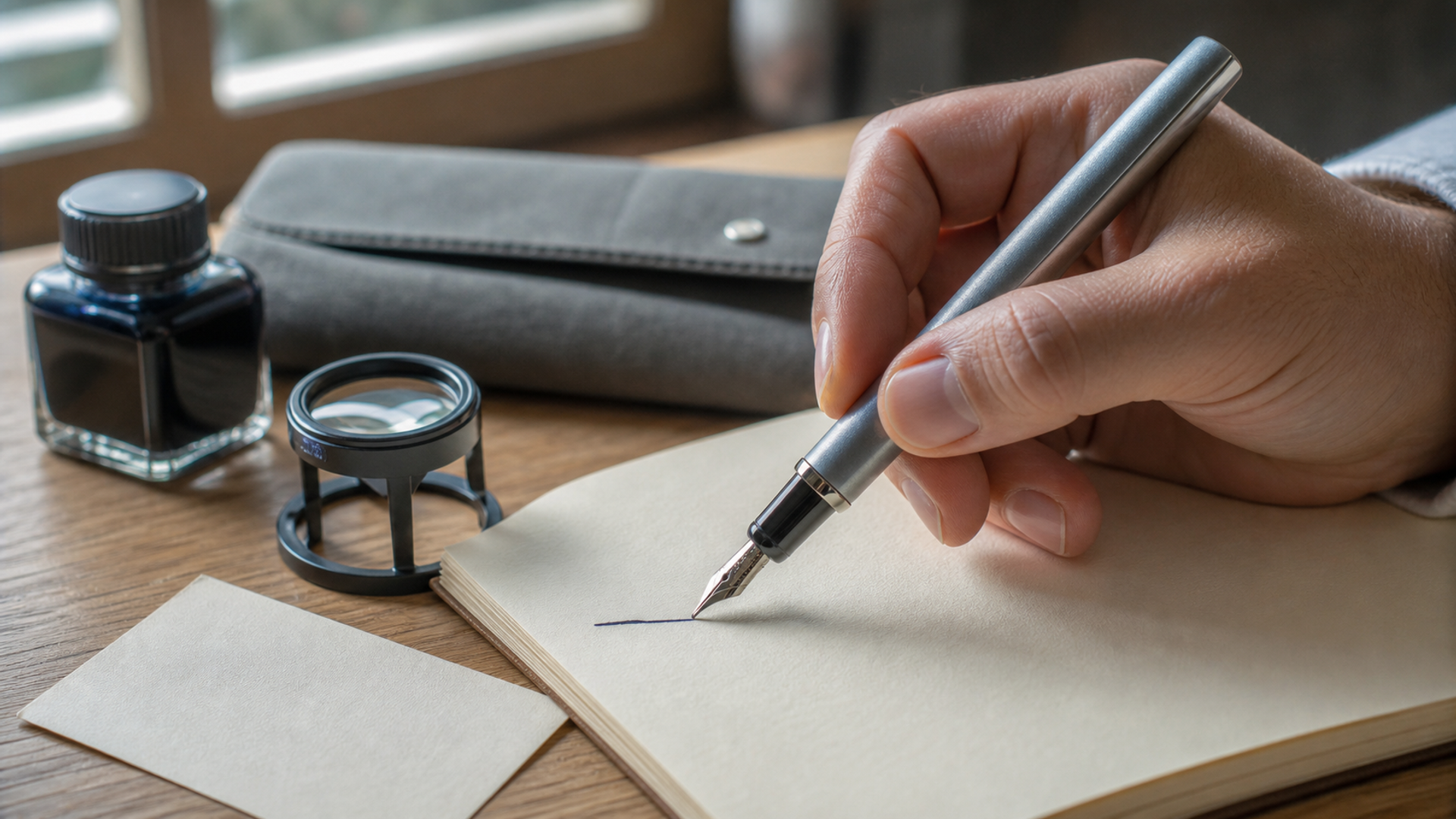
Look for uneven tine height, bent shoulders, cracks around the breather hole, excessive tipping wear and signs of aggressive grinding. A nib can be authentic but not original to the pen. Ask whether it was exchanged, tuned or customised, by whom and for what writing angle. A smooth dip test cannot fully prove flow from the pen’s own filling system, but obvious scratch, misalignment or instability is a reason to pause.
Decision use: Inspect under magnification. Evidence to keep: Maker mark, material, width and shape match the model and seller description.
Writing fit
Use the paper and writing style closest to daily use. Test slow curves, quick notes, starts after a pause and repeated downstrokes. Fountain pens should not require damaging pressure. A broad wet nib may be beautiful for signatures and impractical for compact diaries; an extra-fine nib may expose paper texture. Record the purpose before the test so prestige does not redefine what ‘good’ means.
Decision use: Personal test. Evidence to keep: The pen works at the buyer’s normal angle, pressure and script size.
Feed and flow
A dirty pen can mimic a defective feed, while a damaged feed can be hidden by saturated dip testing. Ask what ink was used and whether the pen was flushed. Inspect fins and alignment where visible without dismantling. Test after a short capped pause and during sustained writing. Do not push a tool into feed channels or heat-set an unfamiliar material without qualified guidance.
Decision use: Test after cleaning. Evidence to keep: Ink delivery keeps pace without flooding, starving or hard starts.
Filling system
Fill with water or permitted ink only when the seller and material allow it. Watch for stiffness, leakage, inadequate draw and moisture behind components. Vintage sacs and seals are consumable; proprietary modern converters can also become unavailable. Ask what parts the current service network will support and whether independent repair is realistic. Never force a stiff piston to complete a sale demonstration.
Decision use: Service-cost gate. Evidence to keep: Piston, converter, cartridge, sac or vacuum mechanism operates smoothly and seals.
Cap seal and body
Check for hairline cracks under oblique light, distortion, cross-threading, loose trim and ink staining. The cap must seal well enough to reduce drying, but design performance varies. Smell can reveal degraded vintage materials but is not a definitive test. Photograph every flaw and distinguish stable patina from active cracking or corrosion. Avoid ultrasonic cleaning unless the exact materials are known to tolerate it.
Decision use: Condition gate. Evidence to keep: Cap threads, snap, inner cap, clip, section and barrel are structurally sound.
Material and trim
Different materials respond differently to light, heat, moisture and chemicals. Ask for the maker’s material description or a specialist opinion. Do not market a pen as precious metal, lacquer or rare resin without evidence. Check hallmark or reference information privately. A beautiful surface with brassing or discolouration may still be desirable, but the price and care plan should reflect it.
Decision use: Care-plan gate. Evidence to keep: Resin, celluloid, ebonite, lacquer, metal and plating are identified rather than guessed.
Service route
Record current service contact, estimate process, shipping requirements and whether cosmetic refinishing is optional. Ask about nib exchange windows for a new pen and parts policy for older models. A limited edition with no practical repair route may be a display object rather than a daily writer. Preserve every service document because later collectors need to know what changed.
Decision use: Ownership gate. Evidence to keep: Authorised or specialist repair can handle the nib and filling system in the buyer’s region.
Provenance and completeness
Packaging alone is not authenticity. Match model details, serial or edition information and original sales evidence while protecting personal data. Record ownership and service gaps as unknown. A replaced nib or repaired piston can be legitimate and improve function, but it must not be presented as untouched originality. For valuable transactions, use an independent specialist rather than relying on online photographs.
Decision use: Collector-value gate. Evidence to keep: Invoice, reference, edition evidence, box and papers reconcile with the object.
Put the framework into a real decision
Print one inspection card for every candidate pen. The front records identity, materials, nib, filling system, dimensions, source and asking price. The reverse records six writing observations: first stroke, slow line, fast line, pause restart, sustained paragraph and cap-off tolerance. Add condition photographs and the seller’s written repair disclosure.
Compare pens by intended role. A daily note-taker needs reliability, comfortable weight and available service. A signature pen can prioritise expressive width. A historic collector piece may justify limited use but demands stronger provenance and conservation. If buying remotely, make the return and inspection period long enough to fill, write, clean and recheck the pen under the seller’s permitted procedure. Do not ink a supposedly unused collector item if doing so would invalidate return; agree the inspection method first.
A decision record another person can audit
Create a dated record containing the exact object, device, system or route; the source URL and access time; the person responsible for verification; and the condition that would change the recommendation. Preserve earlier observations instead of overwriting them when facts move. For product, policy and service claims, record the market and configuration. For private identifiers, store a redacted public copy and a controlled private copy.
End with one of four outcomes: proceed, wait, request evidence or decline. State the reason in one sentence, list the unresolved risk and name the next review date. This makes later performance review more honest: an editor can see what was knowable at publication rather than judging the decision with hindsight.
Action checklist
Define the writing role before choosing nib width.
Inspect nib identity and geometry.
Test starts, flow and sustained writing.
Operate the filling system without force.
Check cap seal, threads and structural cracks.
Identify materials before cleaning.
Confirm a current service route.
Record every repair and replacement.
Reconcile provenance without publishing identifiers.
Related VERTU reading
These links cover adjacent decisions. They do not replace the current primary source or the exact configuration under review.
Sources and verification
Sources were accessed on 21 July 2026. Product availability, software features, laws, official alerts, policies, prices and service terms can change. Recheck the live source before acting. Legal, financial, insurance, health, travel-security and conservation references are general information rather than individual professional advice.
Final view
A luxury pen earns daily value at the point where craft meets the writer’s hand. Inspect nib, feed, filling system and body; then verify service and provenance. Rarity can deepen enjoyment, but it cannot make a damaged mechanism reliable or a mismatched nib original. The strongest purchase is one whose writing behaviour and history can both be explained.