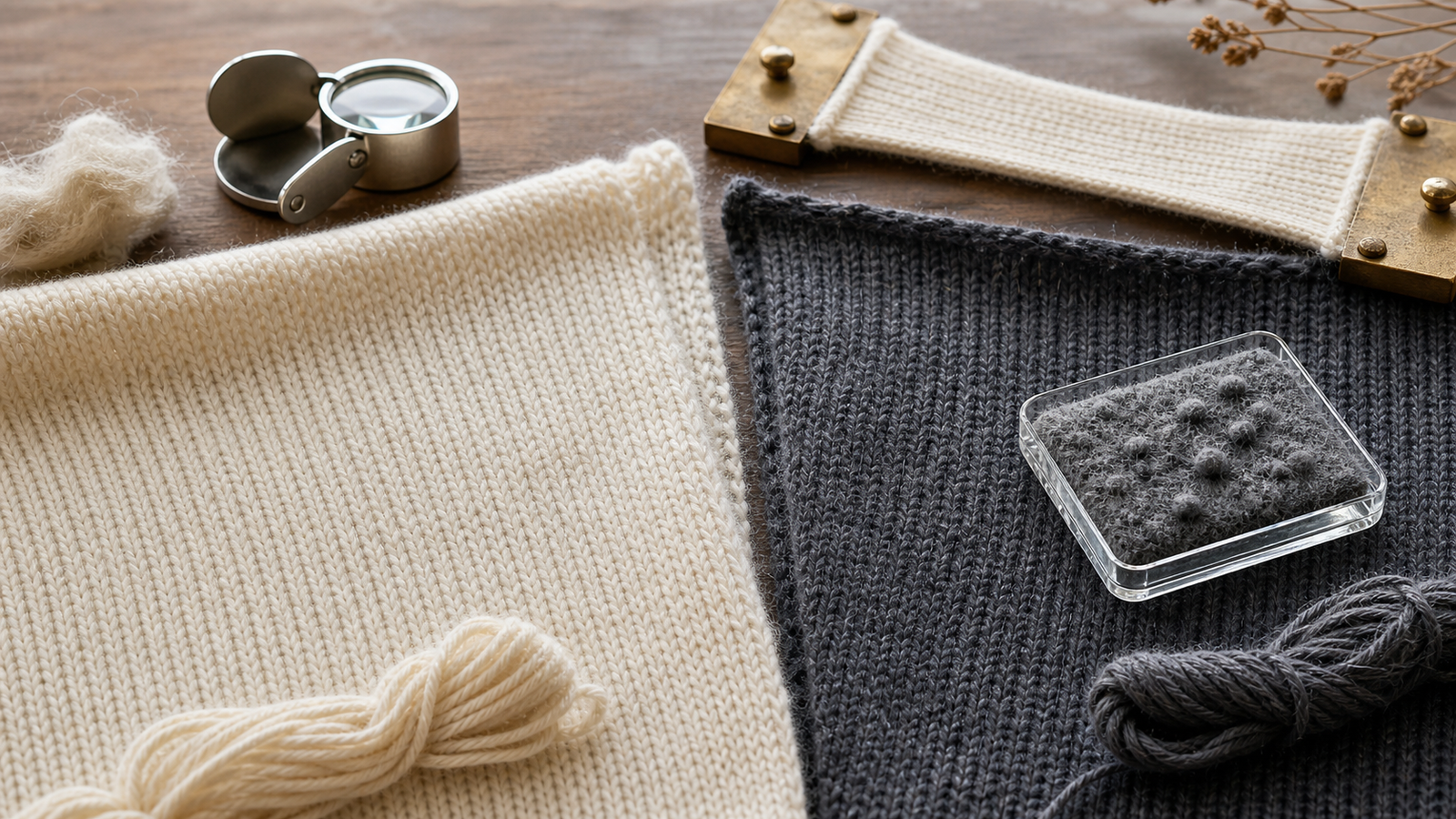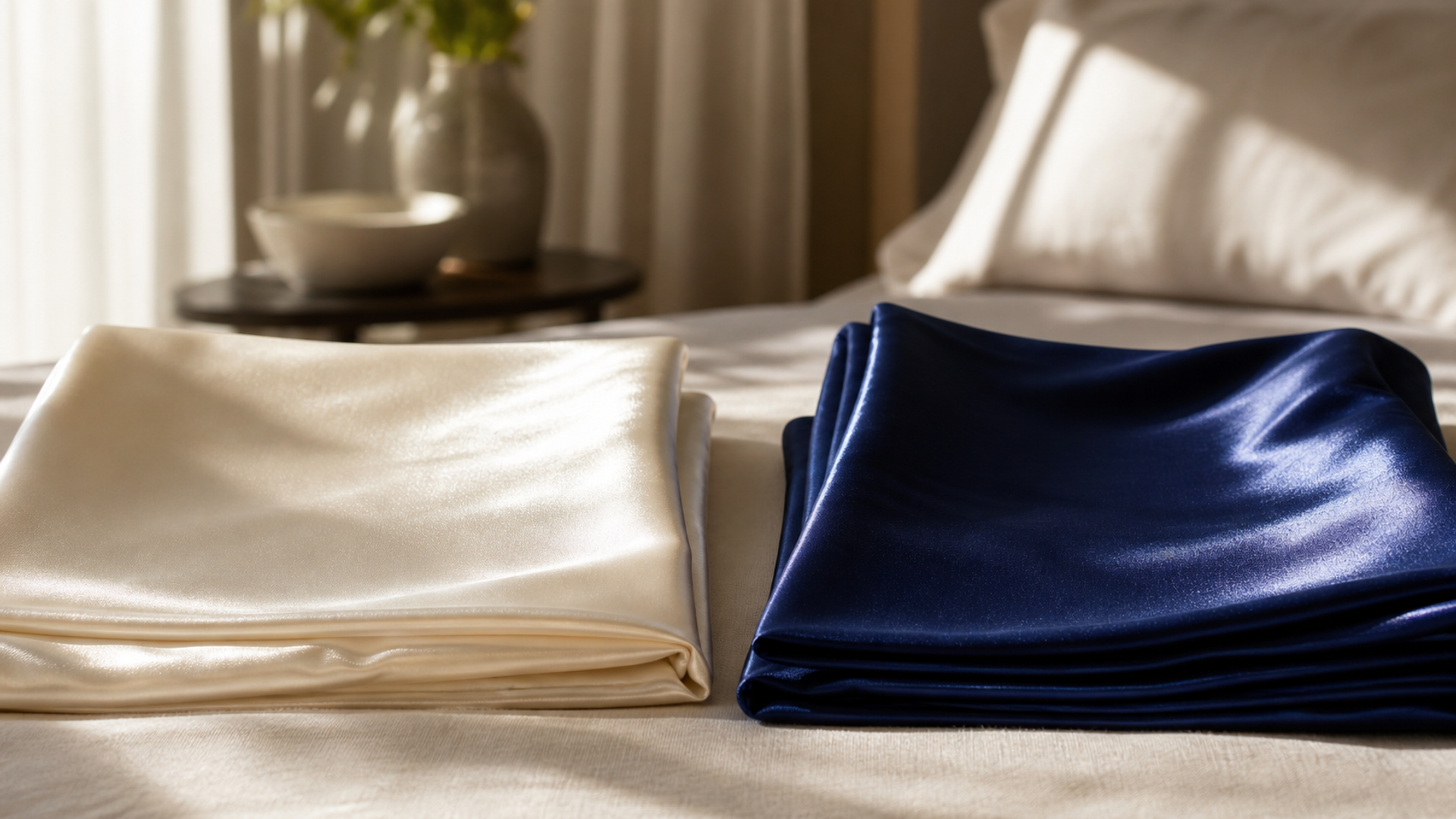
Choose silk when you want a natural protein fibre, temperature comfort and the particular hand of a well-made silk textile. Choose satin when you want a smooth sleep surface at a lower price or with easier care—but first identify what the satin is made from. Silk is a fibre. Satin is a weave. A product can therefore be silk satin, polyester satin, nylon satin or another fibre woven to produce a glossy face and smoother surface.
That distinction resolves much of the confusion around pillowcases, sheets, sleep masks and robes. “Satin” on its own does not reveal breathability, fibre quality, chemical finish or durability. “Silk” on its own does not prove that a fabric is heavy, well woven or suitable for machine washing. The right comparison is not silk versus satin as mutually exclusive materials; it is a specified silk construction versus a specified satin construction for a particular use.
The fabric decision in one table
| Question | Silk fabric | Satin fabric | What to check on the label |
|---|---|---|---|
| What is it? | A natural protein fibre produced by silkworms | A weave with a smooth face and longer floats | Fibre percentages and weave, not only the front label |
| Surface feel | Can be smooth, soft and low-friction | Usually smooth and glossy on the face | Compare both sides and feel seams and piping |
| Temperature | Often comfortable across changing temperatures | Depends heavily on fibre; polyester can feel warmer or less breathable | Fibre content, fabric weight and room conditions |
| Moisture behaviour | Absorbs moisture but needs thoughtful drying | Polyester satin absorbs little; other fibres vary | Care label and complete textile composition |
| Care | Often hand wash, delicate cycle or specialist clean | Polyester satin is often easier to wash | Shrinkage, detergent and drying instructions |
| Durability | Strong for its weight but weakened by abrasion, sunlight and poor washing | Float structure can snag; synthetic fibres may be robust | Zips, rough nails, pets and laundry routine |
| Price | Usually higher, especially at greater fabric weight | Wide range; synthetic satin can be inexpensive | Compare fibre, weight, stitching and closure |
| Ethical inquiry | Sericulture, labour and processing require scrutiny | Fossil-based synthetics and finishing require scrutiny | Supplier-specific evidence rather than “natural” or “vegan” shorthand |
Silk is a fibre; satin is a structure
Textile museums routinely describe objects with both a fibre and a weave. A Smithsonian collection record, for example, can identify silk as the material and satin as the weaving technique. The Metropolitan Museum of Art similarly discusses historic silk textiles with varied structures. This is not academic trivia: it tells the shopper which questions a product page must answer.
A silk pillowcase is often woven in satin because the smooth face is desirable. A polyester pillowcase can use the same broad weave family and appear glossy, yet the fibres behave differently around heat, moisture, static and washing. Silk can also be woven as twill, crepe, organza or other constructions that do not feel like bedding satin.
If a listing says only “silky satin”, assume nothing. Look for an exact declaration such as “100% mulberry silk, satin weave” or “100% polyester satin”. “Silk-like” and “satin silk” can be marketing phrases rather than fibre disclosures.
Hair: friction matters, but construction still controls the result
A smooth pillow surface may reduce mechanical friction compared with a rougher fabric, particularly for textured, fragile or styled hair. That can mean less snagging, fewer crease marks and less disruption overnight. The benefit is physical rather than magical: the surface lets hair move with less resistance. Seams, embroidery, pilling and a rough reverse side can cancel the advantage.
Silk satin often offers an especially supple surface. High-quality polyester satin can also be smooth, though static and heat perception differ between people. Hair products transfer to fabric, so washability matters. A pillowcase that is too precious to clean regularly is not an effective sleep product.
Do not treat “anti-frizz” or “prevents breakage” as an absolute clinical promise. Hair health depends on moisture, chemical treatment, styling tension, health and routine. A smooth pillowcase is one controllable part of the environment. The best test is a clean, fully specified product used for several weeks without changing the rest of the routine.
Skin: smoothness is not skincare
Smooth fabric can reduce pressure creases and drag, especially for side sleepers, but it does not treat acne, wrinkles or dermatological disease. Oils, skincare products, sweat and microorganisms still accumulate. Pillowcases need regular cleaning at a temperature and method compatible with the material.
Silk absorbs some moisture and can feel comfortable, yet claims that it preserves every drop of skincare are overstated. Polyester satin absorbs less, but lower absorption does not automatically make it healthier. Occlusion, heat and detergent residue can matter more for sensitive skin.
People with eczema, allergies or active skin conditions should follow medical advice and prioritise a reliable cleaning routine. Fragrance-free detergent and complete rinsing may be more consequential than choosing the most expensive fibre.
Temperature and sleep comfort
Silk’s reputation for thermal comfort comes from a combination of fibre properties, fine yarns and fabric construction. A light silk textile can feel cool on first contact and manage small changes in moisture. A heavy silk duvet or tightly woven pillowcase behaves differently. Marketing that calls all silk “cooling” ignores room temperature, fill, mattress, humidity and the sleeper’s physiology.
Synthetic satin varies. Polyester typically absorbs little moisture and can feel clammy to some warm sleepers, but a lightweight, well-constructed polyester satin may be comfortable in an air-conditioned room. The weave’s smooth surface can feel cool initially even when heat dissipation later differs.
For a hot sleeper, test a pillowcase before buying an entire sheet set. Bedding comfort is a system: fitted sheet, duvet, mattress protector, sleepwear and ventilation all contribute.
Momme, thread count and other numbers
Silk bedding is often sold by momme, a measure related to fabric weight. A higher number generally indicates more silk per area, but it is not a universal quality score. Very light silk may feel delicate; very heavy silk may be less airy. Weave density, yarn quality, degumming, dyeing, finish and sewing also matter.
Thread count is frequently used for cotton and sometimes appears in satin marketing. It can be manipulated through multi-ply yarn or counting methods and is not a substitute for fibre disclosure. For synthetic satin, grams per square metre, opacity, recovery and seam quality may be more informative.
Ask to see the care label and return policy. A credible seller should not hide basic composition behind a proprietary softness name.
Care and the real cost of ownership
Silk can be damaged by high heat, aggressive enzymes, bleach, prolonged sunlight and rough abrasion. Some modern silk bedding is labelled for a gentle machine cycle; other pieces require hand washing or specialist cleaning. Follow the product’s instructions rather than a generic internet recipe. Use a wash bag where advised, avoid overloading and dry away from harsh heat.
Polyester satin is often easier to wash and faster to dry. That can make it the more hygienic practical choice for a busy household, frequent traveller or teenager. It can also retain oily residues or odour differently, so detergent choice and rinsing still matter.
Closures deserve inspection. Concealed zips keep pillows in place but can catch fabric. Envelope closures are simple but may gape. Poor piping and rough labels create the very friction the product is meant to reduce.
Calculate cost per comfortable, clean night rather than purchase price alone. A silk pillowcase that lasts through careful rotation can be good value; one ruined by an incompatible laundry routine is not.
Ethics and environmental questions
Silk production involves silkworm cultivation, processing, water, energy, dyes and labour. Conventional sericulture usually kills the pupae before moth emergence to preserve continuous filaments; alternative “peace” or eri silks use different methods but need specific verification. “Natural” does not settle welfare or environmental questions.
Polyester is derived largely from petrochemical feedstocks and can shed microfibres. Its durability, low wash temperature and long service life may offset some impacts, but sweeping claims are unreliable without lifecycle scope. Recycled polyester also requires evidence about source and processing.
Buy fewer, better-specified pieces, wash them correctly and keep them in use. Longevity is the environmental attribute the owner can most directly control.
Choosing by use case
For a premium pillowcase
Choose a well-specified silk satin when natural fibre, supple hand and temperature feel justify the care. Choose quality polyester satin when frequent washing, price and low-fuss travel use matter more. In both cases, reject rough seams and vague composition.
For a full sheet set
Test heat and movement before committing. Silk sheets can be costly, slippery and demanding to launder. A mixed bedding system—silk pillowcase with breathable cotton or linen sheets—may deliver the desired hair benefit without making every sleep surface delicate.
For a sleep mask or bonnet
Check the material touching hair and skin, elastic tension, seam placement and washability. A silk exterior with a synthetic lining may not provide the expected contact surface. Comfort and fit determine whether the item stays in place.
For travel
Synthetic satin packs easily and can be washed quickly. Silk offers a refined feel but needs protection from snagging and leaked toiletries. A washable pillowcase in a dedicated pouch is more useful than relying on a hotel’s fabric claims.
Buyer checklist
Does the label state exact fibre percentages?
Is “satin” the weave, and what fibre forms it?
What is the fabric weight or silk momme?
Are both sides, seams and closures smooth?
Can the item be washed as often as the household requires?
Does the sleeper run hot or use heavy skincare and hair products?
Are cooling, anti-ageing or anti-breakage claims supported and properly limited?
Is the return window long enough for a real sleep test?
Are labour, fibre origin or recycled-content claims traceable?
Will the owner maintain the product without excessive dry cleaning or replacement?
Verdict
Silk is the better luxury material when the buyer values natural fibre, nuanced temperature feel and a supple surface enough to accept higher price and careful maintenance. Satin is the better specification when the objective is simply a smooth face, especially on a tighter budget or demanding wash schedule—but its fibre must be disclosed. For most shoppers, the smartest first step is not an entire bedding set. It is one well-made, fully labelled pillowcase tested against the actual sleep, hair and laundry routine.
Related VERTU reading
Explore fibre and construction language in 20 luxury fabrics every designer should know. For the separate question of measuring sleep rather than changing the sleep surface, compare a smart ring with a smartwatch for sleep and recovery.